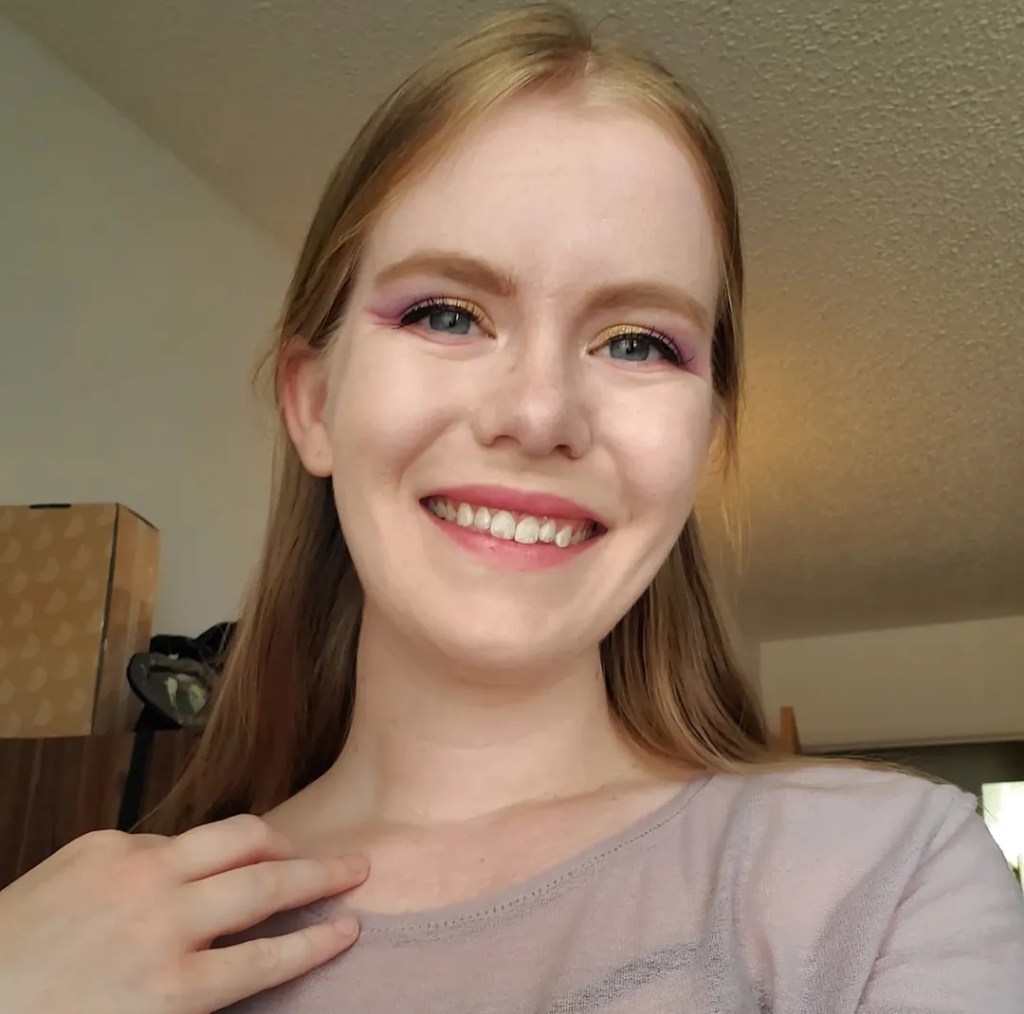
Curatorial Thought and the Transformation of Contemporary Art: A Conversation with Elettra Fiumi on Cultural Production

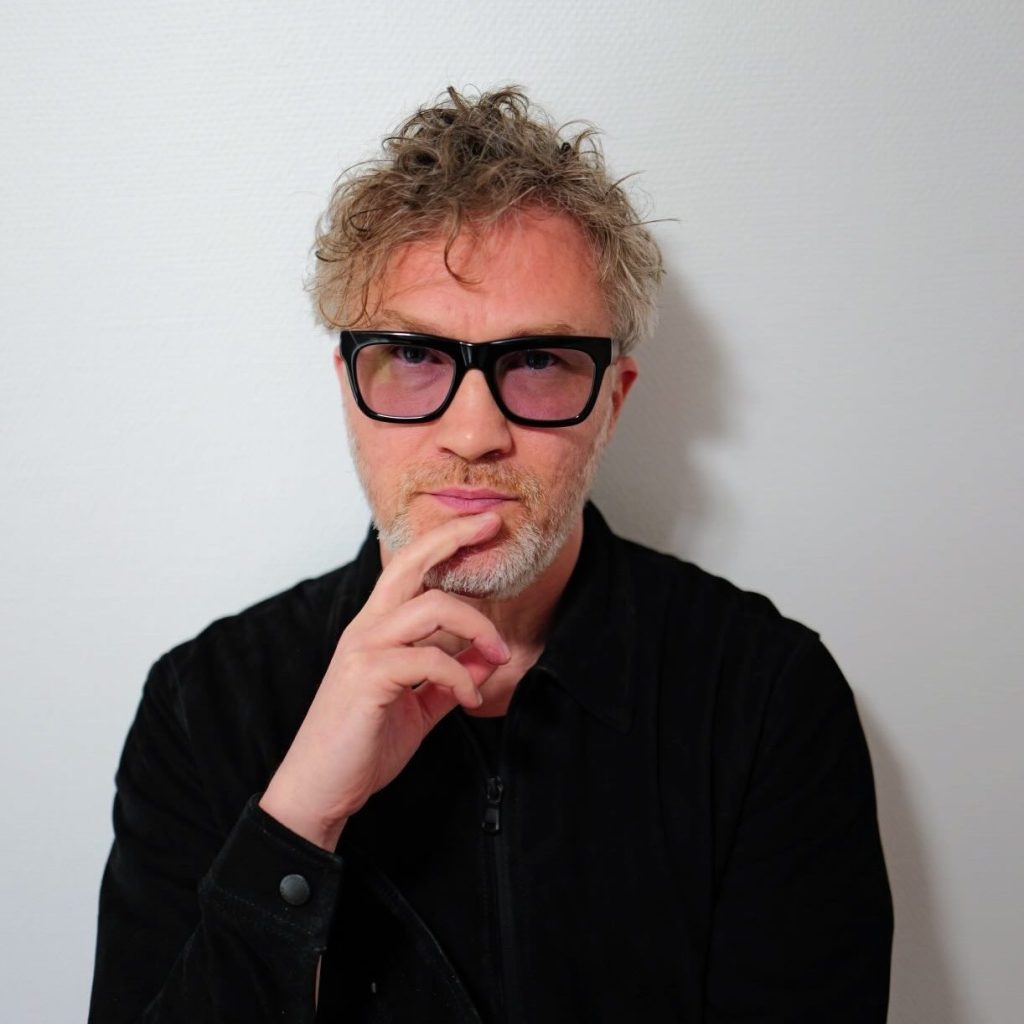
Interview Series: Interviews with Curators, Artists and Cultural Thinkers | Interview: Gökhan Çolak

Visual Storytelling and Interdisciplinary Research

Your work brings together documentary cinema, cultural research, and visual storytelling. In your view, how does film production function as a field of inquiry for reflecting on contemporary art and cultural production?

Film has always been my way of thinking through ideas. That’s where my deep thinking happens, while I translate complexity to engaging storytelling. When I make a documentary, the process of research, of sitting with a subject for months or years, of finding the visual language to hold a complex idea, that is itself a form of inquiry. With “Radical Landscapes,” for example, I spent 10 years inside the archive of the 9999 group, my father’s radical architecture collective from late 1960s Florence. The film became a way to ask questions about utopia, about the relationship between art and politics, about what gets remembered and what gets erased, about life and death. Documentary cinema documents while offering new knowledge. It creates a space where cultural production can be examined, questioned, and felt, all at once.

In your documentary projects, you often focus on themes related to art, architecture, and cultural heritage. How does this interdisciplinary approach shape your creative process?

I’ve never been able to stay inside one discipline, and honestly I think that’s where the most interesting work happens. My background spans journalism, documentary, digital media, architecture (through my family), and now AI filmmaking. Each of these fields has its own way of seeing, its own rigor. When I approach a project about cultural heritage, I’m thinking like a researcher and a filmmaker simultaneously. The architecture informs the framing. The journalistic instinct pushes me to ask harder questions. The artistic impulse gives me permission to be poetic. This layering is central to how I work. A project like the 9999 Archive research required me to be an archivist, a daughter, a historian, and a visual storyteller all at once. Those roles inform and deepen each other.

Archive, Memory, and Cultural Heritage

In several of your projects, you engage with archives and historical materials, reinterpreting visual and cultural memory. What does working with archives mean to you as a process of research and discovery?

Archives are alive. That’s the first thing people misunderstand. They think of archives as static, settled, dusty. But when you enter an archive, especially one you have a personal connection to, you’re entering a conversation with time. I am the custodian of the 9999 Archive, the collection of work left by my late father and his collaborators in the Florentine radical architecture movement. Working with that material has been one of the most profound creative experiences of my life. You find things you didn’t expect. You discover connections the original creators may not have seen. You hold a sketch from 1971 and suddenly understand something about the present. For me, archival work is a form of listening. And the act of reinterpreting that material through film, through exhibitions, through new technologies, is how we keep cultural memory honest and dynamic rather than frozen. The coolest thing? A million stories told in a million ways can stem from the same archive.

Digital Transformation and New Media

Today, visual culture and storytelling are increasingly shaped by digital tools and new media technologies. How do you think this transformation is influencing artistic production and forms of visual narration?

We’re living through a fundamental shift in who gets to tell stories and how. Digital and AI tools have democratized production in ways that would have been unimaginable when I started in journalism and documentary. But what interests me most right now is the emergence of AI as a creative medium. I work as a Creative Partner with platforms like Seedance, Runway, Sora, Leonardo, Pika, InVideo, CapCut, and ElevenLabs, and I’ve been making AI films since early in this wave back in 2022. What I see happening is that the tools are changing the grammar of visual storytelling. You can now create imagery that sits between photography and painting, between documentary and dream. The transformation is both technical and conceptual. It’s in how we think as much as in how we make and what we produce. It’s forcing us to rethink what an image is, what authorship means, what “real” looks like. For visual culture, that’s enormously exciting and also demands real critical thinking.

Artificial Intelligence and Creative Production

In recent years, you have also explored AI-assisted visual production and cinema. How do you evaluate the creative possibilities that artificial intelligence offers for filmmaking and visual culture?

AI has given me a new language. My upcoming film “Alma Robot,” which won four international awards, is a hybrid work that used AI-generated imagery alongside live footage I shot in Patagonia under Paolo Sorrentino’s mentorship. What AI allows me to do is visualize the interior, the emotional, the abstract, in ways that traditional cinematography can’t always reach. I can give form to memory, to grief, to transformation. The films that matter are still driven by a point of view, by craft, by something the filmmaker needs to say: the message. I teach AI filmmaking at Franklin University Switzerland and in workshops internationally, and the first thing I tell my students is that the technology is only as interesting as the person using it. That’s why I focus a lot on students understanding the importance of their Voice. The creative possibilities are extraordinary, but they require the same rigor and intentionality as any other form of cinema.

Creative Practice Between Past and Future

Your work often combines historical research with experimental production using new technologies. How do you establish a balance between exploring cultural heritage and experimenting with emerging technologies?

For me, there’s no tension between research and new tech. In fact, they need each other. The radical architects of 1960s Florence were themselves technologists and dreamers. They used the tools of their time, Super 8 film, performance, inflatable structures, to imagine different futures…while they explored the topic of human vs tech in the actual artwork. When I use AI to reinterpret or extend their work, I’m continuing that same impulse. The 9999 group believed art should be experimental, interdisciplinary, and forward-looking. Working with their archive through contemporary technology feels like honoring their philosophy. Heritage gives you roots. Technology gives you reach. The balance comes from never letting one override the other. You stay grounded in research, in history, in genuine understanding of the material. And then you let the new tools open doors you couldn’t have opened before.

Cinema, Exhibitions, and Art Institutions

Some of your films are presented not only in cinematic contexts but also within museums and art institutions. How do you see the relationship between cinema and contemporary art institutions evolving?

The boundaries have been dissolving for years, and I think that’s a good thing. My work has been shown in film festivals and in art contexts, and each space brings out something different in the same piece. Cinema in a theater is a temporal experience; you surrender to the filmmaker’s rhythm. In a gallery or museum, the viewer has more autonomy, more time, more space to circle back. What I find most interesting is how AI cinema is accelerating this convergence. AI-generated films often have a painterly, textural quality, a feeling of time-suspended that feels very much at home in exhibition spaces. And the questions they raise about authorship, about the nature of images, about technology and humanity, are questions that contemporary art institutions are uniquely equipped to hold. I think and hope we’ll see more and more filmmakers working across both worlds, and that the distinction between “cinema” and “art” will matter less than the quality of the thinking.

Aesthetics and Narrative Construction

When constructing a visual narrative, which aesthetic or intellectual approaches influence your storytelling?

I come from a very specific visual lineage. Growing up Florentine, surrounded by Renaissance architecture and the radical experiments of my father’s generation, and the Florence Film Festival my parents founded and ran, as well as their later subtitling company they started from our home, gave me a deep sense that beauty and ideas are inseparable. My aesthetic is grounded in composition, in light, in the emotional weight of an image and its meaning. Intellectually, I’m drawn to the space between the personal and the political, the intimate and the historical. I think a lot about Walter Benjamin’s idea of the “dialectical image,” the way a single visual moment can hold past and present in tension. I also carry my journalism training with me. There’s a commitment to truth, to specificity, to earning every claim you make. Even in my most experimental AI work, I’m always asking: what is this image doing? What does it mean? Is it honest? I love the editing process because of this final decision making.

The New Generation of Creators

As both a filmmaker and educator, you work with younger generations of creatives. What do you see as the main opportunities and challenges that young artists and filmmakers face in the digital age?

The opportunity is extraordinary. The tools available today mean that a student with a laptop can create work that would have required a full production crew ten years ago. In my university classes at Franklin University Switzerland or teenagers at Locarno Film Festival, I watch students go from first concept to finished AI film in a matter of days or weeks. The creative barrier to entry has never been lower. But that’s also the challenge. When everyone can make something, the question becomes: do you have something to say? The risk of the AI era is a flood of technically impressive but emotionally empty work. What I try to give my students is a framework for thinking, for developing a point of view, for understanding why they’re making something before they figure out how. The other challenge is critical literacy. Young creators need to understand these tools deeply enough to use them with intention. Many stem from the Covid era and grew up on socials and screens so the curiosity, engagement with others and hunger to learn is something very delicate to see in them. The ones who combine technical fluency with voice, confidence, sensitivity and genuine artistic vision are going to do remarkable things.

The Future of Visual Culture

Finally, considering the evolving relationship between contemporary art, cinema, and technology, how do you envision the future of visual storytelling in the coming years?

I think we’re heading toward a moment where the categories we’ve relied on, film, art, design, technology, will feel increasingly inadequate. So will the vocabulary to understand, discuss and argue about it all. The most compelling work is already happening in the spaces between disciplines. AI cinema is one example. The 9999 Archive work is another: a project that is simultaneously historical research, family memoir, and experimental media. What excites me is that the next generation of creators won’t have to choose between being a filmmaker or an artist or a technologist. They can be all of those things at once, the way the radical architects of the 1960s were simultaneously designers, architects, philosophers, performers, and provocateurs. They said, “The most important project was the project of our life.” The future of visual culture belongs to people who can think across boundaries, who understand both the weight of history and the possibilities of new tools, and who have something urgent and human to say. That’s what I’m working toward, in my films, in my teaching, and in everything Fiumi Studios does.

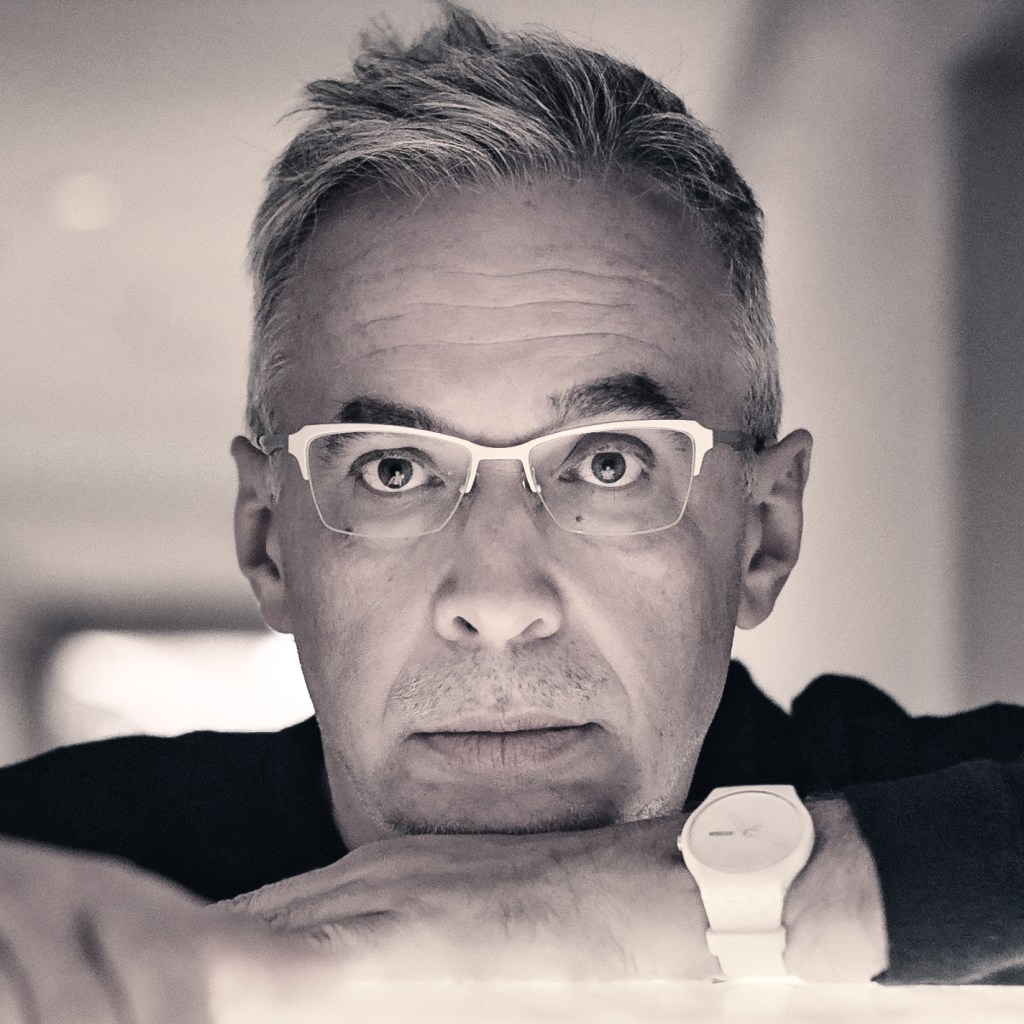
From Excellence Theory to the Digital Age: The Evolution of Public Relations An Interview with James E. Grunig

Interview Series: The Transformation of Public Relations in the Digital Age | Interviewer: Gökhan Çolak

The Academic Development of Public Relations

Public relations was long perceived primarily as a practice-oriented profession. However, your work played a significant role in establishing it as a theoretical and academic field. In your view, what were the most critical turning points in the academic development of public relations?

This is a fascinating question, but it also would require the writing of a book or, at least, a journal article to answer it adequately. Fortunately, I coauthored an article in 2023 that addressed this question in detail.1 1 I must point out, however, that the article exclusively addressed the academic development of public relations in the United States. Other regions and countries may have experienced a different academic development of the discipline. The United States generally has been credited with leading the public relations discipline, but some scholars in other countries have challenged that assumption.

The article to which I am referring was published as part of a special issue of Journalism and Mass Communication Quarterly that celebrated 100 years of publication of the journal. JMCQ is the premier journal of the (U.S) Association for Education in Journalism and Mass Communication. In the United States, public relations was taught first in schools of journalism and mass communication, although it now is taught equally in departments of communication and, occasionally, in other academic departments. My program at the University of Maryland, for example, was housed in the College of Journalism until it was moved to the Department of Communication in 2005. The special issue contained 22 articles reviewing articles published in JMCQ over its first 100 years for specialized areas such as journalism, mass communication, advertising, and (in my case) public relations. I am proud to say that the first author of the article was my grandson, James Hollenczer, who at the time was a graduate student at the University of Oklahoma.

I will quote directly from this article, but first I would like to provide a general overview of the history of public relations education in the United States. The first courses in public relations generally were offered at the time of World War I in schools of journalism and generally were taught by the public information officers of the university or by local practitioners. It wasn’t until the 1950s and 1960s that schools of journalism (and sometimes) mass communication employed full-time public relations educators. Most were former practitioners who did not hold an advanced degree. Exceptions were Scott Cutlip of the University of Wisconsin and Otto Lerbinger and Edward J. Robinson of Boston University. They used research from disciplines such as psychology, sociology, mass communication, and political science in textbooks that they authored. Theories of persuasion and public opinion were prominent, and the emphasis was on messaging and persuasion to influence public opinion and behavior. In the 1960s, I was among a few young scholars who developed specialized theories of public relations. Glen Broom and I, who were in that group, were both Ph.D. students at the University of Wisconsin at the time—where we were influenced by Cutlip. My first theory was the situational theory of publics, which focused on the public side of public relations rather than the organization side. Broom originally focused on coorientation theory, which was a forerunner of current theories of organization-public relationships. Later, in collaboration with David Dozier, a Ph.D. student at Stanford University, Broom developed a theory of managerial and technical roles. At about the same time, I introduced the models of public relations, and both roles and models became components of Excellence theory. Robert Heath, who was educated at the University of Illinois and was another prominent scholar at the time, applied principles of rhetoric to public relations.

In the late 1990s and the turn of the century, rhetorical and critical scholars (often in Europe and outside the United States), challenged our approach, which I believe used theory and research to professionalize the practice of public relations. They argued that public relations was mostly a means for organizations to exercise their power over publics. Recently, many have insisted that public relations theory and research should turn away from organizations and focus on empowering publics. I generally disagree with the critical argument that my theories and similar ones are exclusively means to benefit organizations. I began my research career by focusing on publics with my situational theory. The purpose of both the symmetrical model and the Excellence theory was on developing the profession of public relations in a way that would benefit both organizations and publics.

The article in JMCQ used Thomas Kuhn’s historical theory of the stages of development of a scientific discipline to describe the 100 years of public relations scholarship. The following quote provides a conclusion to my answer to this question:

This article discusses the evolution of public relations from its pre-science period to the present day, according to Kuhn’s classic model. In the early days, public relations was focused on systematic efforts to influence public opinion, but scholars began to doubt the accuracy of this approach by the 1950s. In the 1960s, the field faced conceptual challenges and was stagnant in its pre-theoretical formula, but in the 1970s, researchers began to conceptualize people as active communicators with motives and interests. The 1980s and 1990s saw a focus on understanding the different models of public relations, and in the 21st century, the
field shifted toward a multifunctional definition of public relations, with a focus on relationship theories, ethics, public behavior, and technology. . .

At a qualitative level, the fundamentals of the discipline have undergone a “revolutionary” development that can be traced over a century, leading public relations scholars and professionals to rethink themselves and revise their disciplinary culture. In the pre-theoretical stage, public relations was mostly reduced to the mechanistic dimension of “influence” and “propaganda.” This
produced an asymmetrical search for visibility and persuasion in which organizations sought to impose themselves and their own private scopes over an abstract idea of “public opinion.” Then, in the second half of the 20th century and along with the development of the mass media system, some decisive challenges enlarged the traditional vision of public relations: the reconceptualization of “receivers” in terms of “active communicators” and the segmentation of an undifferentiated “environment” into specific categories of stakeholders and strategic “publics.”

Indeed, the historical evolution of the discipline in the context of JMCQ suggests that, in a hyper-mediated and post-pandemic world, public relations is reaching a mature stage of development. A model shift at the theoretical level, as the one mentioned, encourages the idea that public relations is a resource not only for corporate leaders and organizations generally, but also anyone interested in the study of group behavior. (pp. 948-949)

The Four Models of Public Relations

Your four models of public relations remain among the most influential conceptual frameworks in the discipline. Considering the current digital media environment, do you believe these models still retain their explanatory power?

My first research in the 1960s was on the behavior of publics, which I believed had been ignored in public relations research. I began this research in my Ph.D. dissertation, which was on communication and agricultural development in Colombia. In the dissertation, I studied large landowners (latifundistas), and I followed this with a similar study of peasant farmers (minifundistas). I returned to the United States after two years in Colombia believing that organizations were more often responsible for a lack of economic development than were publics. Thus, I began a period of about 15 years of research on the public relations (communication) behavior of organizations, while also continuing my research on publics.

To explain my development of the models, it is helpful to understand that researchers generally look for two sets of characteristics (variables) to explain something they are interested in: independent and dependent variables. The dependent variables are the
characteristics we want to explain (such as public relations behavior), and the independent variables are the characteristics that explain or sometimes predict when the dependent variables occur. I tried several dependent variables to describe public relations behavior and eventually settled on the four models as a good description of how public relations professionals behave. I also tried several independent variables to explain why PR departments practice different models—such as the nature of an organization’s
environment, the type of technology used in an organization, the hierarchical structure of the organization, and the power of the public relations department. Eventually, I found that the education and knowledge of PR people and the beliefs of organizational leaders of what public relations is and does best explained which model was practiced. In addition, our research showed that organizations that practiced the two-way symmetrical model were more successful, socially responsible, and ethical than those who practiced other models.

After many studies of these models, my colleagues and I concluded that they were useful descriptions of different types of public relations behavior, although they probably were overly simple. In addition, we found that organizations often use more than one of the models at the same time and use different models for different communication programs (such as media relations, community relations, or marketing communication.) In the Excellence study, we identified four dimensions that lie beneath the models: symmetrical vs. asymmetrical, one way vs. two-way, mediated vs. interpersonal, and ethical vs. unethical.

For example, the press agentry model is asymmetrical, one-way, mediated, and unethical. Ideal public relations behavior, therefore, is two-way, symmetrical, either mediated or interpersonal, and ethical. These four dimensions, therefore, provide better descriptions of how public relations is practiced and of a normative ideal practice than the four models alone. However, although simple, the four models are still useful to explain public relations to students, organizational leaders who choose a type of PR practice, journalists, and people in general who don’t understand public relations. In addition, I don’t believe the current digital environment has reduced the explanatory power of the models or their underlying dimensions. Instead, digital methods have simply provided new ways of implementing the models.

Two-Way Symmetrical Communication

The two-way symmetrical model is often described as the ideal form of public relations. Yet, in practice, many organizations continue to rely on one-way communication strategies. Do you see symmetrical communication as a realistically achievable model, or primarily as a normative ideal?

The four models of public relations, and the underlying dimensions I just described, have proven to be good descriptions of the different ways that public relations is practiced by different kinds of organizations. Such theoretical descriptions of public relations practice are variables in what is called a positive (or descriptive) theory. The two-way symmetrical model is a positive theory, and it was found to be practiced in the United States, Canada, and the United Kingdom in the Excellence study. Other researchers have found that the model is practiced in many other countries, although it is not used everywhere.

The symmetrical model also is a normative theoretical concept. Many critics of the model seem to misunderstand the nature of a normative theory. They seem to believe that a normative concept only exists as an ideal and not as a reality. However, a theory would not be a good normative theory if it could not be found in real life. A normative theory must exist in real life and do what it is theoretically supposed to do, such as improve relationships between organizations and publics. I believe symmetrical theory meets this standard and that our research has identified organizations that practice it. As a result, it provides a benchmark for effective and ethical public relations.

At the same time, we know that it is difficult to practice the symmetrical model in some organizations, countries, and cultures. Organizations that believe public relations is a way to dominate their publics aren’t interested in symmetrical communication. Many organizational executives have never heard of public relations being practiced in that way. Public relations practitioners who come from other disciplines such as marketing, advertising, or journalism practice what they know. Marketing and advertising people usually practice the press agentry or two-way asymmetrical models. Journalists typically practice the public information model. Many practitioners, also, cannot practice the symmetrical model because they lack the knowledge or experience to do so.

The question, therefore, is whether all the different ways of understanding, practicing, and teaching public relations are equally good. Would we recommend them to organizational executives or clients or teach them to students: Is every model or every dimension of the models an ideal or normative model? My answer is no. I recommend and teach the two-way symmetrical model. I think it produces relationships that have greater value for publics, organizations, and society. Nevertheless, I know that the model is more difficult to practice in some cultures and political and economic systems than in others. If the model can’t be practiced, I believe the problem is with the culture and political and economic system—not with the public relations profession. In some systems, public relations strives to keep the powerful in power, and it deserves all the criticism it typically receives. However, I believe there is a gradual way to get around this problem. If we as scholars and practitioners can subtly introduce the symmetrical model in practice, it might gradually change the system in which it is practiced. That is not easy, but I could not practice public relations in any other way regardless of the situation in which I work.

Excellence Theory

Excellence Theory positioned public relations as a strategic management function within organizations. Today, do you believe communication professionals are truly integrated into organizational decision-making processes?

As this question states, the major finding of the Excellence study was that participation in the strategic management of an organization was the most important characteristic of excellent public relations. It was even more important than the symmetrical model. Excellent public relations departments were most likely to practice that model, but they also practiced one or more of the other models. Most commonly they practiced both the two-way symmetrical and two-way asymmetrical models. The common element of those models is two-way communication, and the best way to practice two-way communication is to conduct research as a form of organizational listening. In subsequent research, four colleagues and I found that conducting or using research was the major indicator of public relations’ participation in strategic management.2 If a public relations department does not use research, it seldom has anything to contribute to strategic management and is generally not integrated into organizational decision-making processes.

The other reason many practitioners are not included is because of what I call institutionalization. This means that traditions, beliefs, and customs reinforce the idea that public relations is a one-way, asymmetrical, and unethical practice used to reinforce the
interests of the powerful. Institutionalization occurs among organizational executives, clients of PR firms, journalists, PR practitioners themselves, and people in general. It is extremely difficult to break free from an institutionalized set of ideas; and, as a result, public relations often continues to be practiced as it always has been. I have done everything I can to break out of this institutionalized means of practicing public relations, and I have encouraged other scholars and professionals to do the same.

The answer to this question, then, is yes and no. Research on and observation of public relations people have identified examples of practitioners in many countries who are integrated into strategic management. Integration is most common in multinational corporations, but it also can be found in small organizations that are less institutionalized and where public relations can be changed more easily. Most practitioners, however, still are not part of strategic management; and much work is needed to change the practice to make it possible for them to be included.

Public Relations and Democratic Society

Your work frequently highlights the constructive role that public relations can play in democratic societies. However, critics often associate public relations with manipulation. To what extent do you think these criticisms are justified?

As I said in response to your previous questions, many, if not most, public relations practitioners and their client organizations still believe that public relations is a way to manipulate the media, government, employees, customers, stockholders, and other
stakeholders to think and behave as the organization wants. This manipulation wouldn’t be so bad if these practitioners truly understood and had the interests of publics in mind. A good example is health communication, where communicators with good intentions try to persuade their publics to engage in healthy behaviors. Often, however, health communicators don’t understand why publics engage in seemingly unhealthy behaviors; and their messages are ignored. If they researched—listened to—their publics before preparing messages, these communicators generally would be more effective. Unfortunately, communicators and their clients typically believe that an organization’s interests are the same as public interests. Sometimes they are right; more often they are wrong.

I recently wrote an essay on the role of public relations in facilitating social inclusion in a democratic society.3 At this point in my life, social inclusion seems to be the thread that has run through my work, beginning with my research on ways to include Colombian peasant farmers in the decision making of the organizations with which they need relationships and with society in general. Publics typically have different identities, as defined, for example, by race, wealth, poverty, sexual orientation, location, culture, occupation, gender, education, or political philosophy. Organizations typically include the problems of some of these publics in their strategic decision making and exclude others. Publics that are excluded, however, often have problems they would like organizations to help solve. Others encounter problems created by the consequences of organizational decisions. Public relations, I believe, can provide a means of organizational listening that includes these otherwise socially excluded publics. To serve as a means of social inclusion, however, public relations usually must be practiced as a strategic, symmetrical, research-based profession—i.e., following the principles of the Excellence theories.

Digital Platforms and Symmetrical Communication

Digital platforms and social media theoretically enable more interactive communication between organizations and their publics. Do you think these developments have strengthened the model of symmetrical communication, or have they produced new forms of asymmetrical communication?

When digital platforms for communication were first introduced, I was optimistic that they would encourage symmetrical communication and make organization-centric asymmetrical communication difficult. Public relations practitioners once believed that they could control the information going to their publics. However, now that many sources of information are available on the internet and social media, it is almost impossible to control the information going to publics. Search engines, and now artificial intelligence, make it easy for actively communicating members of publics to get information about organizations—their
decisions, behaviors, products, ethics, social responsibility, and competitors. At the same time, these platforms make it easy for organizations to research and listen to their publics, understand their problems, and give them a voice in strategic decision making. Thus, symmetrical communication should have become institutionalized by now.

However, a new phenomenon has emerged that I called de facto social exclusion in the article I described in my last answer. Individuals, organizations, and publics typically communicate with others who share the same identities and problems and exclude
themselves from communicating with those who are different. De facto social exclusion has been encouraged by narrow-minded media and digital platforms. It also makes people susceptible to misinformation. The phenomenon is particularly evident in political communication in the United States, in which organizations and publics have organized themselves into warring ideological factions. Therefore, I believe you are correct in suggesting that digital platforms have encouraged new forms of asymmetrical communication.

I don’t yet have a firm solution to this problem of de facto social exclusion. I believe the eventual solution will be to educate young people about different forms of thinking and communicating so that they don’t fall into the trap of close-mindedness and confirmation bias when they communicate with others. Cognitive scientists and communication scientists know a lot about these processes, and we need to teach people about them at early ages. It’s also important to include these theories in the education of public relations professionals.

Algorithms and Organizational Communication

Communication environments today are increasingly shaped by algorithms. How do you think algorithmic media environments are transforming the relationship between organizations and their publics?

On the one hand, algorithms can be helpful to both organizations and publics by channeling relevant information to and from publics and minimizing the onslaught of irrelevant information that most of us typically receive in traditional and digital media. Identifying what information is relevant to information seekers has been the primary focus of my situational theory of publics, and that theory is relevant to this question. The theory explains that people are most likely to actively seek or passively acquire information that is relevant to problems they recognize, that involve them, and that they can do something about. I call these variables problem recognition, involvement recognition, and constraint recognition. These variables explain when, why, and about what people communicate.4 In doing so, they explain what information members of publics are most likely to use. Algorithms can filter such relevant information from irrelevant information—thus increasing the probability of successful messaging. The same principles can be used to explain the information coming from publics that public relations practitioners are likely to pay attention to.

However, both active and passive communication behaviors can lead to de facto social inclusion. The result is a dilemma: How can publics and organizations seek information from each other that is relevant to problems they face without falling into the trap of de facto exclusion of sources with different identities and solutions to problems? Algorithms can filter information into categories that either include others or exclude them. Algorithms derived from our previous communication behaviors, therefore, could be inclusive or exclusive. A solution to this dilemma is to expand our communication behaviors to include relevant information from sources we might usually avoid—thus expanding the algorithm and eventually organization-public relationships.

Ethics and Public Responsibility in Public Relations

There is often a tension between organizational interests and the broader public interest. In your view, how should public relations professionals navigate this balance?

Public relations scholars and professionals have debated whether the public relationsfunction should be the ethical conscience of an organization or of organized publics. Critics of the profession, however, believe that public relations is inherently unethical and could never serve this role. Those of us who have an expansive view of public relations believe its role should include monitoring and supporting ethics and public responsibility in strategic management. The question, therefore, is what is required for public relations people to serve in this role. I have addressed this question in detail in another article.5

In that article, I described seven ethical problems that public relations people typically encounter. These included personal ethical decisions; relationships with clients and other practitioners; loyalty to organizations, publics, and society; choice of a client or
organization; advocate and counselor roles; secrecy and openness; and digital media.

In that article, I also constructed a theory of public relations ethics and social responsibility. I believe that public relations professionals need a theory of ethics before they can advise others on what behaviors are ethical or unethical. Ethical scholars have developed two types of theories: consequentialist (teleological or utilitarian) and rules-based (deontological). A consequentialist theory maintains that the morality of a decision or behavior depends on the consequences it has on others, such as whether an organization’s behavior has positive or negative consequences on its publics. The same theory would apply to the consequences that a public has on an organization or requests from that organization. Consequentialist ethics becomes complicated, however, when a decision or behavior has positive consequences for the organization but not its publics, or vice versa. Or, when the
decision or behavior has positive consequences for some publics but not others or for society at large. This is why the term utilitarian also is used for the consequentialist approach. The proposed solution is “the greatest good for the greater number.” With that rule, however, some participants generally experience positive consequences and others negative consequences. As a result, minorities usually are disadvantaged.

Rules-based or deontological ethicists, on the other hand, solve this problem by proposing moral rules for judging the ethics of a decision or behavior. Shannon Bowen, of the University of South Carolina, developed such a set of rules for public relations in her doctoral dissertation at the University of Maryland, and I recommend reading her research. She developed these rules mostly from the work of Immanuel Kant. Her dissertation and several other articles on ethics can be found on the research website ResearchGate.net (https://www.researchgate.net/profile/Shannon-Bowen), including an article on the ethics
of artificial intelligence.

Two rules that I think are especially important for public relations are disclosure and symmetrical communication. With these rules, I have constructed an uncomplicated ethical theory for public relations that contains both consequences and rules:

Teleology: Ethical public relations professionals should monitor the consequences that potential organizational decisions or behaviors might have on publics.

Deontology: Ethical public relations professionals then have the moral obligation to disclose these consequences to publics that are affected and to engage in symmetrical communication with them about resolving the consequences.

The same rule applies to publics, such as activist groups, that request or even demand consequences from organizations and to organizations that affect each other, such as governments and corporations. In addition, the disclosure rule can be used to make asymmetrical communication activities morally acceptable. That is, the rule states that organizations using asymmetrical communication methods have the moral obligation to disclose the source of their communications. This rule, for example, would rule out such activities as forming front groups with fake name, news releases that don’t disclose the source of the alleged “news story,” or activist groups that don’t reveal their funding sources.

I also believe that the concept of consequences helps to understand the nature of social or public responsibility. Socially responsible organizations should attempt to eliminate or manage the negative consequences of their behaviors on publics, such as pollution, discrimination, or overpricing of products. In addition, publics or other organizations, such as regulators, that request consequences from organizations need to acknowledge and manage those consequences. When consequences conflict, these different groups again have the moral obligation to engage in symmetrical communication to acknowledge the competing consequences and attempt to negotiate their differences.

Organizations can also judge the value of proactive social responsibility programs, such as charitable contributions, sponsorships, or special events, by assessing the potential positive consequences of these programs on publics with which they have a relationship or need to have a relationship—rather than developing such programs only for publicity or “image
making.”

The Future of Public Relations Education

Public relations education has expanded significantly around the world. Yet there are ongoing debates about the gap between academic education and professional practice. Do you believe such a gap still exists today?

Ideally, education for professional public relations should work like education in other professions, such as medicine. The most important contribution of educators is research. They develop theories to improve practice and then do research to determine if these theories have worked or could work in practice. They consult with practitioners to learn about problems they experience that research could help to solve and advise them on new approaches suggested by research. The research is published in academic journals for peer review. The theories and examples of the theories being used in practice then form the substance taught in university classrooms and for continuing education of practitioners through professional organizations, short courses, and occasional lectures. In the Excellence study, for example, we learned that excellent public relations practitioners have relevant
knowledge gained in one of four ways: undergraduate or graduate education in public relations, continuing education, reading academic and professional journals, and consulting with academics or other practitioners with similar advanced knowledge.

This approach to professional education is becoming more common in public relations, but it is not found universally. There are several reasons. Academics often conduct research that has little relevance to practice, and professionals ignore it. Many practitioners have little formal knowledge of public relations, make little attempt to gain it, and badmouth it to
others. Other practitioners learn outmoded ideas from each other and pass them on to client organizations. That explains why the press agentry model, which is the least effective and ethical, is still probably the model most practiced around the world.
For these reasons, there often is a gap between academic education and professional practice. I have seen notable progress in my 65 years of public relations practice and education. Nevertheless, we still have work to do.

The Future of Public Relations

Finally, in an era marked by rapid technological transformation, how do you envision the future of public relations? Which research areas should the next generation of scholars focus on?

I think there is little question that digital and social media along with artificial intelligence will dominate the future of public relations. Scholars already are devoting a great deal of attention to these new forms of communication. At the same time, I don’t think these new technologies make our best current public relations theories outmoded.

Unfortunately, these technologies can be used for ineffective and unethical public relations, just like old technologies. They also can be used to implement theories such as the Excellence theory. I have become excited about artificial intelligence, for example, just from my personal use. It is a wonderful way to explore several sources to learn what publics are experiencing and the problems they face. Thus, AI can be used for research. It also can be used to monitor the ethics and social responsibility of organizations. At the same time, we have seen that the new technologies can be used for similar purposes as old technologies
were used in ineffective, unethical, and irresponsible public relations practice. Therefore, we need ethics scholars and critical scholars to continue to shine light on these practices.

I hope that research will continue to be done to learn how to implement the strategic, symmetrical, and ethical principles of Excellence theory in different settings around the world. At the same time, theories should never be static and should grow and be improved by continuing research. For example, my colleagues and I proposed several years ago that the Excellence principles are generic principles that can be used in different cultures and political and economic systems, if they are adapted to specific conditions in different settings. We call this theory generic principles and specific applications. I have seen a great deal of research in different countries that has done just that. The same is true for other theories such as principles of crisis communication, ethics, and dialogue. I urge scholars not to throw out older theories just so they can contribute something new. I believe we should merge the old and the new so that the profession grows and scholars avoid reinventing the wheel.

Sources:

1 Hollenczer, J. J., Grunig, J. E., Lee, H., Yeo, S-N, & Martino, V. (2023). From pre-science to paradigm shift: A Kuhnian analysis of 100 Years of public relations scholarship. Journalism and Mass Communication Quarterly 100, 933-957. DOI: 10.1177/10776990231181417. This article can be read at https://www.researchgate.net/publication/376683843_From_Pre-
Science_to_Paradigm_Shift_A_Kuhnian_Analysis_of_100_Years_of_Public_Relations_Scholarship
.


2 Tam, L., Kim, J.-N, Grunig, J. E., Hall, J. A., & Swerling, J. (2020). In search of communication excellence: Public relations’ value, empowerment, and structure in strategic management. Journal of Marketing Communications, 28, 183-206. DOI: 10.1080/13527266.2020.1851286.
This article can be read at https://www.researchgate.net/publication/346952365_In_search_of_communication_excellence_
Public_relations’_value_empowerment_and_structure_in_strategic_management.


3 Grunig, J. E. (2023). Public Relations, Social Inclusion, and Social Exclusion. Journalism & Communication Monographs, 25(2), 90-108. https://doi.org/10.1177/15226379231167120. This article can be read at https://www.researchgate.net/publication/370613663_Public_Relations_Social_Inclusion_and_Social_Exclusion_tp=eyJjb250ZXh0Ijp7InBhZ2UiOiJwcm9maWxlIiwicHJldmlvdXNQYWdlIjoiaG9tZSIsInBvc2l0aW9uIjoicGFnZUNvbnRlbnQifX0#fullTextFileContent.


4 For more background on the situational theory of publics and its successor, the situational theory of problem solving, see this chapter: Grunig, J. E., & Kim, J-N. (2018). Publics approaches to health and risk message design and processing. In R. Parrott (Ed.), The Oxford encyclopedia of health and risk message design and processing (Vol. 3, pp. 345-372). New York: Oxford University Press. DOI: https://10.1093/acrefore/9780190228613.013.322. This article can be read at https://www.researchgate.net/publication/317953256_Publics_approaches_to_health_and_risk_message_design_and_processing.


5 Grunig, J. E. (2014). Introduction: Ethics problems and theories in public relations. Revue internationale communication sociale et publique, 11, 1-14. https://doi.org/10.4000/communiquer.559. The article also is available in French. This article can be found at https://www.researchgate.net/publication/264196079_Introduction_Ethics_problems_and_theories_in_public_relations.

The World Behind a Face: The Human and Narrative-Oriented Aesthetics of Photography with Doro Guzenda

Interview Series: Photography in the Digital Age | Interviewer: Gökhan Çolak

Photography by Doro Guzenda | https://doroguzenda.com/

Your photographic practice often places people and their personal stories at the center. As a photographer, how do you position the human face and body as a medium of visual storytelling?

For me, the human face is not simply a subject — it is a landscape of lived experience. In portrait photography I am less interested in appearance than in presence: that fragile moment when a person stops performing and allows themselves to simply exist in front of the camera. The face and body become a visual language through which memory, emotion, and identity can emerge.

You studied at the Łódź Film School, an institution known for its strong cinematic tradition. How has this background influenced your photographic aesthetics and compositional approach?

Studying at the Łódź Film School profoundly shaped the way I think about images. Cinema teaches you to think not only in frames but also in atmosphere, rhythm, and narrative tension. Even when I create a single photograph, I try to build a frame that feels like a fragment of a larger story — an image that suggests what happened before and what might unfold after the moment captured.

Portrait photography is often described not only as the production of an image but also as the creation of a relationship. How does the interaction you establish with your subjects shape the visual narrative of your photographs?

A portrait is always a relationship. The photograph is only the visible result of an invisible process: trust. When that trust
appears, the person in front of the camera begins to reveal something more authentic than any pose could produce. My role as a photographer is to create a space where that authenticity can emerge naturally.

In your portfolio, thematic series such as Women, Men, Love & Marriage, and Family & Kids stand out. Do you see these categories simply as practical groupings, or as an attempt to capture different social and emotional stages of human life?

These categories reflect more than a practical structure. They represent different emotional and social dimensions of human life. Childhood, individuality, partnership, and family are stages through which identity evolves. Through photography, I am interested in observing how these relationships shape the way people see themselves and one another.

Digital technologies have radically transformed the production and circulation of photography. In your view, how has this transformation affected photography’s relationship with authenticity, intimacy, and documentary truth?

Digital technology has dramatically accelerated the production and circulation of images. However, authenticity in photography has never depended on technology itself — it depends on intention. Documentary truth is not only about what the camera records, but about the ethical relationship between the photographer, the subject, and the viewer.

Portrait photography often involves a delicate balance between spontaneity and staging. How do you establish an aesthetic and ethical balance between these two dimensions in your work?

Portraiture always exists somewhere between observation and interpretation. Light, space, and composition create a visual framework, but the most meaningful moments are rarely fully controlled. I try to create conditions where spontaneity can happen, rather than directing every gesture.

What are your thoughts on the role of photography in shaping social memory and personal identity? In particular, how do you see family and personal portraits functioning as cultural documents for the future?

Photography is one of the most powerful tools for preserving both personal and collective memory. A family portrait may seem ordinary today, but decades later it can become an invaluable cultural document. Photographs quietly accumulate meaning over time, revealing how people lived, how they loved, and how they understood themselves.

Are there particular artists, photographers, or traditions in cinema and art history that have influenced your visual language?

I am inspired by photographers who approach portraiture as a way of understanding society and the human condition. August Sander’s systematic exploration of people and social identity, as well as Sebastião Salgado’s deeply humanistic documentary work, have been particularly influential for me. Their photographs demonstrate how portraiture can move beyond representation and become a form of visual anthropology. At the same time, cinema has strongly influenced my visual language, especially in the way atmosphere and narrative tension can shape a single frame.

Social media has become a central space for contemporary photographic culture. How do you think these platforms are transforming the aesthetics and meaning-making processes of photography?

Social media has transformed photography into a global and immediate form of communication. Images travel faster and reach wider audiences than ever before. At the same time, the speed of this circulation can sometimes reduce the depth of engagement. The challenge for photographers today is to create images that still have the power to slow the viewer down and invite reflection.

Finally, how would you define the role of photography in today’s world? Do you see it primarily as a tool of witnessing reality, or as a medium for more personal and emotional narratives?

Today photography occupies many roles simultaneously. It documents reality, but it also interprets it. The most compelling photographs often exist somewhere between these two dimensions — where observation meets emotion, and where a single image can carry both personal and universal meaning.

The Communicative Construction of Visual Design from Theory to Digital Media: A Theoretical Perspective on Cinema, Image, and Poetic Thought with Dr. Esen Kunt”

Interview Series: Media Arts, Visual Communication Design, and Technologies | Interviewer: Gökhan Çolak

Esen Kunt | Istanbul Nişantaşı University Faculty Member and Author; Founder and Creative Director of Istanbul Deleuze Studies.

Image, Thought, and Film Theory

How do your studies, which center on the relationship between image and thought, establish a theoretical affinity with Gilles Deleuze’s theories of cinema and the image? Laura Mulvey’s concept of the male gaze remains a central reference in film studies. In your view, how should this concept be rethought in the face of digital and post-cinematic images?

I conceive the relationship between image and thought not as a hierarchical link between an image that represents and a consciousness that reads it, but as two thresholds that mutually produce and transform one another. For this reason, the image is not, for me, the visual counterpart or illustration of thought; rather, it is a surface upon which thinking itself takes place—an evental field.

This approach, of course, establishes a direct connection with Deleuze’s texts—particularly Cinema 1: The Movement-Image and Cinema 2: The Time-Image. However, this connection is not so much a mode of reading that applies Deleuze’s concepts as it is a relationship that folds the possibilities of thought he opened toward other directions. Deleuze’s treatment of the image not as a mental representation but as a force operating through the body, space, and time constitutes one of the fundamental thresholds of my work.

I often approach the relationship between image and thought on a cartographic plane. In other words, the image is not an object that carries a fixed meaning; rather, it is a practice of mapping that traverses memory, the body, geography, and time. Deleuze’s notion of the ‘brain-screen’ marks a critical turning point for me: thought is no longer an internal representation but becomes an event that occurs outside—on the surface, on the screen. At this point, the image is no longer a vehicle for thought; it becomes thought itself.

In my own work, I develop this approach particularly through rhizomatic memory, cartographic imagination, and bodily surfaces. I treat the image not as a record that represents the past, but as a passage—continually rewritten—that opens between past and present. This intersects with Deleuze’s understanding of the time-image: a nonlinear, branching, and layered conception of time. For me, however, this temporality is not only cinematic; it is also geological, bodily, and spatial.

For this reason, I interpret the relationship between image and thought less through ‘meaning production’ than through relations of force. What interests me about an image is not what it shows, but what it sets into vibration—which layers of memory, which bodily sensations, and which spatial associations it activates. This orientation leads me not so much to read the image as to think with it, even to observe the image in the act of thinking.

In short, Deleuze’s philosophy of cinema and the image functions in my work less as a reference point than as a threshold for thinking. My effort to remove the image from the domain of representation and approach it instead as a shared surface of thought, memory, and the body establishes a line that both converses with Deleuze and opens toward other directions. I sustain this line as a field of production that moves between text, image, map, and body—fluid, unsettled, and resistant to fixation.

Laura Mulvey’s concept of the male gaze remains powerful because it makes unmistakably clear that the gaze is never innocent—that seeing is always bound up with power, desire, and the body. However, in my view, this concept is no longer sufficient on its own in the face of digital and post-cinematic images. The issue today is not merely who is looking, but where the gaze is constructed, how it circulates, and the extent to which it no longer belongs to any single subject.

In classical cinema, the gaze was largely fixed within a single perspective—anchored in the position of the camera and at the center of the narrative. In digital and post-cinematic images, however, the gaze loses its center. What we now encounter is not merely the gaze of a male subject, but dispersed, fragmented, and plural regimes of vision produced by algorithms, interfaces, platforms, and data flows. For this reason, I believe it is necessary today to rethink the male gaze not as belonging to a stable subject, but as a visual apparatus.

At this point, Deleuze’s understanding of the image becomes decisive for me. The image is no longer an object viewed by a subject; rather, it is a field of force that affects the body, time, and space. In post-cinematic images, the gaze spreads beyond the eye to encompass the entire body—manifesting in scrolling movements, tactile gestures, and repetitive viewing loops. The gaze is no longer purely visual; it transforms into a haptic, temporal, and embodied experience.

For this reason, it seems more meaningful to me today to read the male gaze not merely as a ‘male’ gaze, but as normative modes of looking. Although this normativity may appear independent of gender in digital images, it establishes a regime that re-disciples the body through speed, exposure, transparency, and constant visibility. In other words, the gaze does not disappear; it changes form.

In my work, what interests me about this transformation is not so much reversing the gaze as dispersing it. I engage with images that disrupt the camera’s dominant position, refuse to fix the gaze, and do not place the viewer in a position of comfort. This is less a feminist counter-gaze than a strategy that destabilizes the gaze itself. Here, the image does not satisfy desire; it suspends it, delays it, and leads it astray.

In this sense, post-cinematic images do not invalidate the male gaze; rather, they multiply it, branch it out, and render it less visible. We are no longer speaking of the dominance of a single gaze, but of gazes that intersect, collide, and at times become subjectless. This invites us to ask not so much who wields the gaze, but what the gaze does. For me today, the central issue is this: an image concerns not only whom it belongs to, but also whom it touches. And perhaps the most political question now is not how these images compel us to look, but how they compel us to feel.

Visual Culture and the Agency of the Image

Within the context of W. J. T. Mitchell’s question ‘What do pictures want?’, what does it mean for you to approach visual culture not merely at the level of representation, but as an active and thinking field? How does Hans Belting’s anthropological approach to the image offer a theoretical framework for understanding the historical and cultural circulation of images in your work?

For me, W. J. T. Mitchell’s question ‘What do pictures want?’ became a threshold that radically transformed the direction of how I understand images. This question invites us to move beyond seeing the image as a passive representation and instead to think of it as if it were a subject endowed with desire, demand, and agency. What matters here is not whether images literally ‘want’ anything, but how we come to recognize them as a field of activity.

I approach visual culture not as a display window through which meanings are presented, but as a field in which thought, memory, and the body are set into motion. The image does not merely show something; it calls, compels, unsettles, and delays. Mitchell’s question shifts the focus from ‘What does the image say?’ to ‘What does the image do?’ This is a crucial displacement in my work, because here the image is no longer a representation—it is an event.

At this point, Hans Belting’s anthropological approach to the image provides a complementary theoretical ground for my work. Belting treats the image neither solely as a mental representation nor merely as a material object; rather, he conceptualizes it as an entity that circulates between body, environment, and media. While this approach explains the historical and cultural continuity of images, it also takes into account how they are experienced in embodied ways. My concept of Pellicule Corporalis comes into direct contact with Belting’s line of thought. Here, the body is not the carrier of the image; it is the surface upon which the image takes place. The image inscribes itself onto the body, resonates within it, and is deferred through it. When it comes to cinematic or post-cinematic images, the image no longer resides solely on the screen; it circulates across the skin, within the folds of memory, and along sensory thresholds.

While Belting’s image anthropology demonstrates how images historically change hands and migrate, my interest concentrates on the traces this migration leaves on the body. As images circulate across cultures, they do not merely change form; they also transform regimes of embodied perception. For this reason, visual culture is, for me, not only a domain in which images proliferate, but an ecology in which bodies are recalibrated.

When I think Mitchell and Belting together, the image is no longer a silent object nor merely a text to be read. It becomes an entity that demands, circulates, relocates, and compels us to shift our own positions. In my work, the relationship established with the image aims less at decoding it than at thinking alongside it. Because, to my mind, the image wants this:

Not to be looked at, but to be responded to.

Not to be understood, but to be sustained within the body. And perhaps most of all, to be displaced.

Performativity, Text, and the Body

With the work of Judith Butler in particular, debates on performativity have redefined the relationship between text and body. How do you position performative literary texts within this theoretical framework?

Judith Butler’s notion of performativity fundamentally transformed the relationship between text and body, because it demonstrated that language does not merely represent—it acts. What is spoken, written, and repeated comes to constitute the body, revealing identity, gender, and subjectivity not as outcomes but as processes. This marked a critical threshold for me: the text is no longer about the body; it happens within the body.

I position performative literary texts within the framework opened by Butler, yet by extending it further. I conceive of the text not as a vehicle of expression, but as a bodily event. Writing here is not a structure that carries meaning; it is a sequence of actions that leaves traces on the body, generates rhythm, and organizes breath and time. The reader, in turn, is no longer simply one who ‘reads’ the text, but becomes a body that shifts position along with it. The concept of rhizomatic memory carries this performativity onto a non-linear plane. A performative text is not a structure with a single beginning or end; it is a multi-centered network that connects different temporalities, voices, and bodily sensations. As the text is repeated, it does not become fixed; with each reading, it activates another layer of embodied memory. In this sense, the performative text operates within a regime of repetition, as Butler suggests—but this repetition produces less the reproduction of the norm than a deviation that sets the norm into vibration.

The concept of Pellicule Corporalis defines the surface of the text here. The body is not the carrier of the text; it is the pellicle upon which the text is inscribed. Words come into contact with the skin, spread through the voice, and are cut by the breath. The performative literary text does not exist to be read, but to take place within the body. For this reason, such texts often do not feel complete; they remain open, fragile, and inclined toward incompletion—because the body itself is never a closed whole.

For me, performative literature releases language from representation and places it within a bodily temporality. The text here is not a repository of meaning, but an instruction for movement, a call to gesture, a sensory threshold. The reader does not decode the text; rather, they pause with it, walk with it, wait, and hesitate. In this way, literature ceases to be a silent domain and becomes an encounter between bodies.

In this context, the performative text is also politically significant. Every text written upon the body is simultaneously negotiating with regimes of power, normativity, and visibility. My interest is drawn not to forms that stabilize the body, but to those that displace it—disturbing its comfort and disrupting its rhythm. This constitutes a writing practice that reverses the normative repetitions of Butlerian performativity and opens lines of flight.

Ultimately, for me, the performative literary text is neither merely a literary genre nor simply a theoretical application. It is a form of writing that thinks together with the body.

“The text does the following here: It does not narrate. It touches.

It does not define. It sets into vibration. It does not represent. It happens.

And perhaps most importantly: It remains in the memory of the body.”

Space, Visual Culture, and Poetic Cartography

Considering figures such as Edward Soja and Henri Lefebvre, who think visual culture together with space, how does your approach of ‘poetic cartography’ relate to this body of literature? In your work The Tacit Geologies of the Bosphorus, you address space as intertwined with narrative and thought. Is it possible to read this approach alongside Michel de Certeau’s understanding of space and everyday practices?

“To think space together with visual culture does not, for me, mean treating it as a measurable or representable surface. On the contrary, I conceive of space as a process woven through time, memory, and embodied experience. In this respect, Henri Lefebvre’s notion of the production of space and Edward Soja’s concept of Thirdspace mark important thresholds for me, as they demonstrate that space is neither merely a physical nor a mental category, but a domain that is lived, felt, and continuously reconstituted.

However, my approach of poetic cartography establishes less a relation of full alignment with this literature than one of deviation. While Soja and Lefebvre open space through social relations and structures of power, I approach space also as a sensory, fragile, and tacit entity. Poetic cartography is not a map that explains space; it is a practice of drawing that renders perceptible the inner rhythms, gaps, and interruptions of space. The map here is not an outcome. The map is the movement of thought. The line does not impose a boundary; it carries vibration. The Tacit Geologies of the Bosphorus emerged precisely as a result of this approach. I did not treat the Bosphorus as a historical or geographical object, but as a layered memory—an embodied, geological, political, and affective entity. Space here is not the backdrop of the narrative; it is the narrative itself. Stone, water, current, and silence shape the language of the text.

This approach can certainly be expanded—without confining it—by extending the discussion to Giuliana Bruno’s Atlas of Emotion and reading it alongside Michel de Certeau’s understanding of space and everyday practices; indeed, such a reading generates a productive tension. De Certeau’s idea of ‘writing space through walking’ intersects, for me, with the notion of space as a surface of bodily inscription. Yet I do not regard this walking as solely a human-centered practice. In The Tacit Geologies of the Bosphorus, it is not only the body that walks; geological time, currents, sediments, and suppressed memories walk as well.

While de Certeau demonstrates how space is appropriated through everyday practices, my interest lies in how space resists, how it remains tacit, how it never fully discloses itself. Poetic cartography is a practice that respects this reticence. It does not attempt to render everything visible; rather, it deliberately leaves certain gaps and silences outside the map. For this reason, my maps are never complete—because space itself is never complete.

Poetic cartography is not an aesthetic that represents space within visual culture; it is a mode of writing that thinks alongside space. Here, space is not read; it is listened to. It is not merely seen; it is excavated. The map does not orient; it disorients.

And perhaps most importantly, it proposes this:

Space is not a surface that belongs to us; it is a memory through which we pass.

The Digital Image, Circulation and the Archive

In the context of the circulation of digital images, Hito Steyerl’s concept of the ‘poor image’ makes visible not only the loss of resolution, but also the historical and spatial layers of images. Within your approach of poetic cartography, what kind of intellectual and aesthetic possibility does this ‘impoverished yet dense’ state of the image offer?

Hito Steyerl’s concept of the ‘poor image’ is highly significant for me because it demonstrates that digital images are not merely copies degraded by a loss of resolution; rather, they are entities that intensify, accelerate, and leave traces through circulation. As the poor image loses visual quality, it gains historical and spatial weight. In a sense, the more the image relinquishes resolution, the closer it moves toward memory.

In my approach of poetic cartography, this ‘impoverished yet dense’ image is not an object to be represented, but a line of circulation to be mapped. The image’s loss of pixels is not, for me, a deficiency; it is the way layered time rises to the surface. Low resolution strips the image of smoothness, producing cracks, gaps, and delays. It is precisely within these fissures that the image begins to think.

A sentence I frequently return to from The Tacit Geologies of the Bosphorus in this context is this:

“Blur is sometimes not the absence of vision, but the density of memory.”

Steyerl’s poor image operates in my poetic cartography as a trace in displacement. The image does not belong to a fixed location; it circulates between screens, loses context, and reconnects. This circulation renders the image less archivable and more experiential. The map here is not a collection, but a network of passages.

When considering questions of the archive, memory, and layered temporality in visual culture, at which points does Georges Didi-Huberman’s approach to the image intersect with your work?

At this point, a strong intersection emerges with Georges Didi-Huberman’s understanding of the image. Didi-Huberman never conceives of the image as a completed whole; for him, the image is a remnant, a shell, a burn mark. It does not represent the past; it carries the wound that the past continues to open in the present. This approach directly resonates with my conception of rhizomatic memory.

Following what glimmers in the dark—what remains unsaid, what is unseen—has profoundly shaped my methodologies of writing and thinking with both passion and insistence. I am, moreover, an ardent and even obsessive reader of Didi-Huberman’s texts—devoted enough to follow the trail of the fireflies.

Didi-Huberman’s relationship with the archive is particularly decisive for me: the archive is not a sealed repository of memory, but a structure that continually reopens, leaks, and remains incomplete. Poetic cartography is concerned precisely with this leakage. The image does not freeze within the archive; on the contrary, it displaces the archive.

In this context, Pellicule Corporalis offers a critical threshold for thinking about the embodied dimension of the digital image. The poor image is not merely a file circulating across screens; it is a vibration that resonates within the body. The condition of ‘survival’ that Didi-Huberman seeks in the image acquires here a form of embodied continuity. The image may lose resolution, yet it does not lose its bodily impact. As I often emphasize in my texts and visual works:

The more the image becomes impoverished, the closer it moves to the body.

For this reason, the circulation of digital images is not, for me, a story of loss, but a geography of intensified memory. Steyerl’s poor image and Didi-Huberman’s residual image converge in poetic cartography: both read the image not through lack, but through its capacity to survive. Ultimately, in my work, the digital image is not data to be archived, but a layered sediment of time. It is not mapped; it is traced.

It does not represent; it wounds. And perhaps most importantly, it reminds us of this:

Even in its poorest state, the image continues to think.

Theoretical Communities and Interdisciplinarity

How do the discussions carried out under the umbrella of Istanbul Deleuze Studies provide a theoretical opening for visual culture, cinema, and philosophy studies in Türkiye? Rosi Braidotti approaches interdisciplinarity as a mode of thinking that transcends anthropocentric regimes of knowledge while carrying ethical and aesthetic dimensions. In your work—particularly in The Tacit Geologies of the Bosphorus—which brings academic production into dialogue with creative writing, mapping, and aesthetic experience, what kind of intellectual and productive positioning does this posthumanist interdisciplinarity represent for you?

The most significant contribution of the discussions conducted under the umbrella of Istanbul Deleuze Studies to visual culture, cinema, and philosophy in Türkiye lies in approaching Deleuze not as a ‘theoretical authority,’ but as a practice of thinking. Here, Deleuze does not offer a closed system of concepts; rather, he creates an open intellectual field that circulates across disciplines, branches outward, and comes into contact with local experiences. Such a theoretical community functions by decentering theory. As cinema, visual culture, architecture, literature, and philosophy become articulated with one another under this framework, concepts lose their fixed meanings; they shift, relocate, and become re-embodied. In a city like Istanbul—dense with historical, political, and geological layers—discussing Deleuzian thought in this way prevents concepts from remaining abstract, bringing them instead into contact with space, the body, and everyday experience.

For me, the primary space opened by Istanbul Deleuze Studies lies in transforming theory from an individual domain of expertise into a collective ground for thinking. Within this terrain, theory is used not to explain, but to think together, to deviate, and to take risks. This, in turn, offers visual culture and film studies in Türkiye a perspective oriented toward becoming, process, and force—one that moves beyond representation-centered readings. Additionally, there is a long-developed project of mine—emerging from my postdoctoral research, which will begin operating interdisciplinarily in 2026. Let us simply say that it is a multilayered initiative through which we will establish significant entanglements among architecture, contemporary art, visual culture, literature, performance arts, and, of course, philosophy—very soon.

At this point, Rosi Braidotti’s understanding of interdisciplinarity as a posthumanist ethical and aesthetic practice provides a highly formative framework for my own work. Braidotti conceives interdisciplinarity not merely as a passage between methods, but as a positioning that transcends anthropocentric regimes of knowledge. The issue, then, is not simply to place different disciplines side by side; it is to rethink, together, the subject who produces knowledge, the body, and the world.

The Tacit Geologies of the Bosphorus can be read as a work in which this posthumanist interdisciplinarity becomes concrete. In the text, the human is not the center of the narrative. Geological layers, currents, stone, sediment, and silence become active components of thought. Writing here is not a human story, but a field of encounter with nonhuman forces. This approach, as Braidotti suggests, renders thought not only a critical practice, but also an ethically responsible one.

When I think of academic production as intertwined with creative writing, mapping, and aesthetic experience, interdisciplinarity becomes for me not a method, but a mode of existence. Text, map, and image do not explain one another; they displace one another. This disrupts the linear progression of knowledge. In The Tacit Geologies of the Bosphorus, the map does not represent geography; it thinks alongside writing. Writing does not explain; it excavates.

In this context, posthumanist interdisciplinarity signifies, for me, the redistribution of thought—no longer as an activity belonging solely to the human mind, but as something dispersed among bodies, materials, spaces, and images. This distribution is as much an aesthetic gesture as it is an ethical choice. For a mode of thought that does not place the human at the center is also one that is more attentive, slower, and more responsible.

Ultimately, theoretical communities such as Istanbul Deleuze Studies and Braidotti’s posthumanist interdisciplinarity converge in a shared space within my work: theory here is not a closed domain of knowledge, but a common ground opened by thinking, writing, and mapping together.

And perhaps most importantly, it reminds us of this:

Thought is never produced alone. It gathers, circulates, and transforms— toward what shimmers in the dark.

I would also like to thank you for these thoughtful and evocative questions; it is truly valuable for us, as a journal, to be part of this collective project. I extend my gratitude to the entire team for their meticulous and dedicated work.

Creative Labor, Visibility and Resistance in the Platform Society: Jess Rauchberg on Influencer Culture, Digital Activism and Marginalized Experiences

Interview Series: Surveillance Capitalism, Public Sphere, and Digital Regimes | Interviewer: Gokhan Colak


Influencer Culture, Creative Labor, Authenticity

Alice Marwick’s conceptualizations of micro-celebrity and self-branding examine how authenticity is produced within influencer culture. In your research on influencers, creative labor, and particularly the representation of marginalized identities, at what points do you observe this discourse of “authenticity” becoming empowering, and at what points does it turn into an exploitative mechanism?

For marginalized creators, authenticity is a double-edged sword. In both my research and professional experience as a content creator, authenticity is a contentious strategy. You need to simultaneously prove authenticity while also accept that you’re going to be scrutinized by a platform’s algorithmic recommendation system and audiences alike. This becomes complicated when your identity becomes a brand.

How do you convey “realness”when working and speaking with audiences that may be conditioned to devalue or distrust you? And how do you “keep it real” while simultaneously working to build your platform? As a disabled content creator, I encountered this all the time: DMs asking me to “prove” my disability. I would often finding mutual creators on the subreddit pager/IllnessFakers, where 200,000 members hope to expose disabled and chronically ill creators for “faking it” because they were showing their disability too much.

Digital Activism, Platforms, Sustainability

Zeynep Tufekci argues that while activism in the digital age has gained speed, it often lacks organizational depth. In your analyses of micro-activism shaped through disability, body politics, and everyday experiences on platforms such as TikTok, how do you evaluate the capacity of this form of visibility to generate long-term political transformation?

In the first big wave of social media and content creation platforms (late 2000s, 2010s), Internet spaces were hubs for marginalized communities to challenge mainstream narratives about political existence and current events. (Definitely not just something unique to disability communites!) Twitter, especially, was an important tool for various disability communities.

Hashtags served as indexing tools to link different conversations together. Movements like #CripTheVote, #PowerToLive, and #DisabilityTooWhite catalyzed important conversations about ableism, racism, and political power. It also brought other people into the conversation. The hashtags weren’t gatekept behind closed doors. While these hashtag movements weren’t always “big,” they also brought attention to every day experiences about disability and political change.

However, the enshittification of Twitter following Elon Musk’s acquisition of the platform in 2022 really dissolved disability communities and organizing on the platform. In this case, micro-activism becomes a verybprecarious circumstance and isn’t always possible when the platform removes protections for hate speech or is filled with spam bots. This doesn’t mean people aren’t organizing on other platforms, like Bluesky or TikTok, but the centralized hub of advocacy isn’t the same.

Affective Publics, Emotional Labor, Public Sphere

Zizi Papacharissi’s concept of affective publics suggests that the digital public sphere is constituted through emotions. In your work on TikTok narratives, personal storytelling, and the visibility of marginalized bodies, how do you define the boundary between the solidarity- producing potential of emotional publics and the instrumentalization of emotional labor?

For many disabled creators, the personal truly is political and embodied. Digitally mediated work like content creation, influencing, and livestreaming aren’t just about obtaining social, economic, and cultural capital for disabled creators who monetize their labor. There’s also an embodied, emotional feeling to this work. In my research and personal experience as a disabled creator who made disability-centric content, emotional appeals and advocacy become central to creative work. That boundary is often murky and messy. This can differentiate based on the type of creative labor you engage with, but the instrumentalization of emotional labor can contribute to some of the authenticity negotiation problems I spoke about in a previous response. Yes, disability advocacy and self-branding can help build awareness and support creators from an economic standpoint, but at what cost?

Public Relations, Ethics, Public Interest

Grunig’s normative theory of public relations proposes an ethical model of communication based on dialogue and reciprocity. From your perspective at the intersection of critical PR and activism, particularly within a platform-based visibility economy, to what extent do you believe such symmetrical and ethical communication models are feasible in practice?

I’m thinking about these very questions in some new projects about what authenticity means in creator culture now that GenAI tools are pervasive in platform economies. For instance, in one forthcoming book chapter I’m working on, I examine the labor of human influencers who promote GenAI Technologies through false storylines and personae. This is becomign increasingly common on platforms that prioritize short-form content and e- commerce, such as TikTok and Instagram.

One such creator went viral in late 2025 for claiming her Ph.D. advisor stole her research. But when other creators looked into it, there were many inconsistencies between what she was telling audiences. What her content showed. The creator claimed she was a sociology phd student, but there was no concrete evidence that she was even enrolled as a university student, and all of her videos featured the same GenAI product. Like consumers in the early 2000s with print advertising, we’re currently experiencing an authenticity overload, where audiences are oversaturated with information, and it’s more diffuclt to tell if a creator’s “realness” is actually genuine. This has some dangerous implications for symmetical and ethical brand communication in the creator economy. Why should I invest in a product, idea, or belief if I can’t prove that it’s authentic? I believe we’re entering an authenticity collapse, where there is little distinction between fact and fiction. İt’s all about how platforms, brands, and creators can profit from spectacle, even if that spectacle isn’t rooted in reality.

Algorithms, Visibility, Inequality

José van Dijck’s “platform society” approach argues that digital platforms are not neutral tools but normative structures. Based on your research into algorithmic visibility, content moderation, and the experiences of marginalized communities, which aspects of platform design do you see as most actively reproducing social inequalities?

Platform companies also want to accrue the biggest possible profit. If they believe the presence of disabled people will turn brands and audiences alike away, and drive down their profits, they will not prioritize disability visibility. This is also the case for other marginalized groups across race, gender, class, and sexuality.

Platforms reflect dominant social values and beliefs about who we should see and who holds power. İf disabled people are devalued and pushed out of physical public and labor spaces, this will be reflected into the platform’s design and algorithmic recommendation systems—the latter which ultimately shapes visibility and participation in digital publics. It’s not that an algorithmic recommendation system is doing something new when it censors or decides to remove protections for disabled users. They’re drawing on previously existing ideas and beliefs that ultimately come from the contexts they’re designed and created in.

Academia, Activism, Public Knowledge

Considering your work that brings together influencer culture, digital activism, disability studies, and critical communication scholarship, what do you see as the most urgent responsibility of academia today: to document these practices, to critique them, or to develop directly transformative interventions?

I think this is ultimately an industry issue. Communication and media scholarship is truly behind other sibling fields (e.g., anthrolopology, sociology, English and cultural studies, gender studies) when it comes to disability centered research. İn the last five years, there has been one job in North American higher education that specifically called for expertise in disability and communication/media studies. I’m focused on that context because that’s where I live and work. I would imagine it’s a similar issue across other geopolitical contexts. We won’t be able to document, critique, or develop interventions if universities and industries aren’t investing in disability studies. And not just “studies of disabled media users or workers,” but disability critique as central to knowledge making and creative practices that can contribute to worlds where EVERYONE counts.

Disability Studies, Everyday Life, Counter-Narratives

In your research on the representation of disability, body politics, and everyday experiences on digital platforms, how do you construct counter-narratives to the “inspirational stories” so often reproduced by mainstream media? Do you believe these counter-narratives are genuinely capable of producing transformation within the digital public sphere?

I think disabled creators’ engagement with platform affordances can absolutely challenge ableist narratives and tropes such as the “tragedy” of disability, supercrips, and inspiration porn. In my research on disabled TikTok creators pushing back against algorithmic suppression and heightened harassment, I found that creators used play and strategic engagement to both bring attention to social issues while also pushing back agains the idea that disabled people need to be saved or need pity from nondisabled audiences.

In North American culture (the geopoltical context I create, research, and write from) disabled people are historically pushed out of public life and are not seen as “equals” or even “human.” So platforms definitely offer an avenue to support communities, bring people together, and challenge these harmful, ableist mediations (though people may still face ableist harassment or suppression).

Digital Ethnography, Researcher Positionality

In the context of your research with influencers, TikTok communities, and marginalized groups, how should the ethical positioning of the researcher be rethought within digital ethnography and qualitative analysis? What limits and responsibilities have your own studies Revealed to you in this regard?

Nondisabled researchers often ask me, “Can I research disability and creators if I’m not disabled myself?” I think-at least in North American academia—there is this belief that you must be disabled yourself in order to write and research about disability. But lived experience does not automatically mean you are an academic expert in that subject. I’m not here to poliçe or control what other scholars are writing about. Moreover, I believe disabled scholars, who are underrepresented in academia, should not be left to do the labor of disability research. İ do think researchers need to bring an ethics of care to their work. There’s a difference between writing and researching and theorizing lived experiences. Disability isn’t a monolith, and i don’t claim that my theoretical and ethnographic work is the end-all-be-all of disability media studies. We need a multiplicity of voices, findings, and ideas. And we need to be responsible when we do that.

Information Integrity and the Public Sphere: Contemporary Challenges of Journalism in a Post-Truth World

Interview Series: New Media, Digital Culture and Algorithm | Interviewer: Gokhan Colak

Marcelle Chagas Do Monte | Journalist, founder of Rede JP, and Researcher at the Mozilla Foundation’s Tech and Society Program

Journalistic Trajectory and Professional Positioning

How did your journey into journalism begin? What social or personal motivations were decisive in your choice of this profession?

My journey into journalism began at the intersection of social inequality and informational injustice. Growing up in Brazil, I witnessed how entire communities—Black, peripheral, Indigenous, and favela residents—were systematically misrepresented or simply rendered invisible by mainstream media. At the same time, there was a striking lack of journalists from these groups in the main spaces of news production. This absence was not neutral: it shaped public policies, influenced the allocation of resources, and defined who was considered worthy of attention, credibility, and protection.

Journalism became, for me, a tool to confront these structural silences and to build bridges between lived experience, scientific knowledge, and public debate.

How did your journey into journalism begin? What social or personal motivations were decisive in your choice of this profession?

My professional trajectory has been shaped by work in newsrooms, in science communication, and later in the fields of digital rights and technology policy. These experiences revealed how power operates through information flows and how narratives can both reproduce historical inequalities and challenge them.

Today, I position myself at the intersection of journalism, communication, and digital inclusion, with a focus on rights advocacy. I work on mapping local flows of information and disinformation, especially in vulnerable territories, using participatory methodologies. This path led me to join the Mozilla Foundation as a Fellow, where I investigate not only informational ecosystems in traditional territories but also community perceptions of artificial intelligence. I understand journalism not as a neutral observer, but as a democratic infrastructure with social responsibility, particularly in contexts marked by historical exclusion and algorithmic asymmetries.

Truth, Information Integrity, and Disinformation

How do you define the concept of “information integrity” in the context of journalism? What does this approach seek to achieve beyond traditional fact-checking practices?,

Information integrity concerns the health of the entire informational ecosystem: who produces knowledge, which voices are amplified or silenced, which interests structure the circulation of content, and how technologies shape visibility. There is no information integrity without diversity of voices, protection against manipulation, the مواجهة of hate speech, and accountability for the actors who organize this system.

In this sense, information integrity seeks to ensure transparency, plurality, contextualization, and informational justice throughout the entire information cycle—from production and dissemination to interpretation and social impacts. It is about creating the conditions for society to sustain a public sphere grounded in facts, plural, trustworthy, and free from systemic manipulation.

Based on your field experience, what kinds of impacts have you observed disinformation having on local communities? How do you assess the local manifestations of misinformation produced at a global scale?

In my fieldwork in favelas, quilombola territories, Indigenous communities, and urban peripheries, I have observed how disinformation deepens pre-existing vulnerabilities. False narratives about health, climate change, elections, and public security circulate locally, combining with historical distrust toward institutions. Content produced at a global scale—such as conspiracy theories, scientific denialism, or anti-vaccine campaigns—is reconfigured according to local cultural, linguistic, and affective codes. This process gives rise to what I call “territorialized regimes of disinformation,” in which global narratives are reprogrammed to operate locally, producing deep and long-lasting social effects.

Digitalization, Platforms, and Algorithmic Power

We observe that digital platforms have significantly transformed journalistic practice. Do you consider this transformation primarily a democratizing opportunity, or has it created new forms of dependency and control?

Digital platforms have unprecedentedly expanded possibilities for publication and participation. However, this democratization is structurally ambiguous. While historically marginalized groups have gained new means of expression, they now operate under opaque regimes of algorithmic governance, extractive data economies, and engagement architectures that privilege polarization.

Field research in Indigenous and quilombola territories shows that digital trust still relies primarily on relationships of proximity and affectivity, in contrast to the low levels of trust in formal institutions. Platforms have ceased to be mere technical intermediaries and have become central political actors in defining what is visible, legitimate, and relevant in the public sphere, guided by market logics rather than democratic principles.

What consequences does the algorithmic determination of news visibility have for the structure of the public sphere and the culture of democratic debate?

As the coordinator of a journalistic organization, the Black Journalists Network for Diversity in Communication, I observe that the growing dependence of journalism on these infrastructures also strains the editorial autonomy of news outlets and collectives. The result is not only the proliferation of disinformation, but a structural erosion of the foundations that sustain public dialogue.

Inequalities, Representation, and Media Diversity

How do racial, class-based, and geographical inequalities within the media landscape shape news production processes and forms of representation?

Racial, class, and territorial inequalities are not external to journalism: they are embedded in newsroom composition, agenda-setting, source selection, and narrative framing. When decision-making spaces remain socially homogeneous, entire realities are interpreted through perspectives that fail to recognize their complexity and legitimacy.

In Brazil, research we have conducted—most recently in partnership with Thomson Media on the sustainability of independent journalism—has shown that outlets led by underrepresented populations receive the least funding and face the greatest barriers to inclusion in institutional circuits of knowledge production. Partnerships with the State University of Rio de Janeiro have also highlighted the low presence of Black professionals and women in the country’s major newsrooms.

Do you view diversity and representation in the media more as an ethical responsibility, or as a structural necessity for journalism to sustain its public function?

Thus, diversity is not merely an ethical issue but a structural condition for journalism to fulfill its public function. Without epistemic diversity, it is impossible to fully understand social reality, identify emerging risks, or build trust with populations that are simultaneously the most affected by disinformation and the least represented in media systems. Representation entails redistributing not only visibility, but also authority in the production of meaning.

Ethics, Pressures, and Future Perspectives

In the context of censorship, self-censorship, and economic pressures, what do you see as the most fundamental structural challenge journalists face today?

The most profound structural challenge facing journalism today is the convergence of economic precarity, platform dependency, and political polarization. Professionals operate under financial instability, legal harassment, digital surveillance, and coordinated disinformation campaigns, which foster both explicit censorship and self-censorship. These conditions weaken investigative journalism, long-term reporting, and the capacity to hold power accountable.

In the context of advancing artificial intelligence, automation, and data-driven journalism, the future of the profession will depend on political and ethical choices. These technologies can strengthen investigation, expand multilingual access to information, and support complex analysis, but they can also intensify power concentration, narrative standardization, and large-scale manipulation.

In light of developments such as artificial intelligence, automation, and data-driven journalism, what kind of future do you foresee for journalism over the next decade?

In the coming decades, the role of journalism as a public good will be increasingly contested. I see as central the strengthening of community-rooted media, philanthropic models for the sustainability of the profession, open infrastructures, and AI approaches grounded in human rights and social justice. The future of journalism will depend on its ability to rebuild trust, pluralism, and information integrity as pillars of democratic life.

The Future of Journalism in a Digital World: A Conversation with Caitlin Barker at the Intersection of Culture, Politics and Society

Interviewer: Gokhan Colak

Caitlin Barker | Journalist, Writer and Radio Host

What were the key turning points that led you into journalism? How do you personally define the relationship between storytelling and journalism?

I’ve wanted to be a storyteller since I was little. Before I could even read and write, I was always making up little stories and telling them to my parents and friends. But journalism came into my life when I was in college. At the time, I had really just been looking for a job, and I saw that my college radio station was hiring, so I applied. Initially I thought I was just going to be a secretary for the station, not actually behind a microphone, but one thing led to another, and two years later I was hosting my own music show, anchoring the news program and contributing stories to it weekly.

Those stories were what really made me fall in love with journalism, because I got to talk to so many interesting people, whether over the phone or in-person, and I learned that storytelling doesn’t have to be limited to fiction. There are so many amazing stories out there, closer than you would ever think they are, and so many amazing people who are so excited to tell them. To me, that’s what makes journalism so special.

In your work at The Click, you write at the intersection of culture, politics, and society. How do you see the relationship between these fields, and what role should journalism play within this intersection?

Culture, politics, and society are all things that are constantly changing, and being a journalist covering those topics means you have to keep up with how those things impact each other. Personally, I think a lot of media is connected to the political climate during the time which it was produced. You can see that when you follow trends of certain themes gaining popularity and then fading away in the pop culture world. Whether it’s a positive or a negative reflection of policy and society, I think to be a journalist covering these things, you have to be able to pick up on patterns like that.

Today, journalism is increasingly practiced through digital platforms. Do you see digital journalism primarily as a space of opportunity, or as a source of concern?

I think digital platforms are majorly spaces for opportunity. Nowadays, there are so many digital outlets for different beats and niche interests, which I absolutely consider an opportunity for journalists, especially for freelancers and new journalists who are trying to find their footing in the field. In my opinion, the more options for places to pitch, the better!

Based on your experience in local journalism, how do you evaluate the differences between local media and national/international media in terms of news production and responsibility?

I think it’s both a responsibility and a privilege to be a local journalist, because you have access not only to the people and the places on which you’re reporting, but also access to knowing what kinds of stories are important to the people in those areas. On some level, the stories that they care about, you probably also care about because you live there. But it’s also important to always keep your ears open, always be listening for the local stories that other people aren’t finding. Those are the ones that aren’t going to make it to national news, but they might be the ones that are most important to the community being impacted. Those are usually the stories the end up being my favorites.

How has your background in radio broadcasting influenced your approach to journalism? What perspectives has it given you in terms of voice, rhythm, and narrative style?

Part of why I love working in multiple mediums as a journalist is because broadcast and radio journalism often operate on different narrative structures than written journalism. I often find myself considering how I might produce a written story differently if it were on the radio and vice versa. I think practicing both, and being able to experiment with different angles and structures has definitely made me a better storyteller.

In your work on popular culture, how do you observe its intersections with political, economic, and social processes? In your view, how does popular culture function as a key to understanding contemporary society?

I touched on this earlier, but I definitely find it beneficial to trace patterns in media as they relate to the time they were produced. One of the ways I’ve looked into the most is music. If you trace music through the decades, you find so much that is an overt response to political climates, societal and beauty standards, and really any issue the artists saw in the world around them, whether it’s 1920s jazz, 1970s rock, or 2000s hip-hop. I think the same can be said when you look at what tropes are popular in movies and books across the decades. If you know to look for the places where art imitates life, you’ll really start seeing how all of these topics are connected.

One of the biggest challenges journalists face today is combating disinformation and manipulation. How do you position journalistic ethics within this context?

As the presenter of information, you have to be extremely meticulous with word choice, especially when you’re reporting on something as polarized as politics. When you use words that carry strong positive or negative connotations, you have to make sure you’re using it in a way that is presenting information rather than implicitly telling the audience how to feel. That’s why I find it super important to have a network of other journalists that you can share your work with, who will check you on little things like that that might seem unimportant or tedious. It always helps to have a second set of eyes that can catch the things you might miss yourself.

What place do “human stories” hold in your approach to news? What elements make a subject worth turning into a story?

This sounds cliche, but a subject becomes a story when it has a beginning, middle, and end. It needs to have a person, place, thing, or idea to follow, because that’s what keeps the reader or listener or viewer interested. There needs to be stakes— if X happens or doesn’t happen, it will impact the subject in Y way. As I mentioned, human interest stories are some of my favorites, because they really have the power to transform a subject that someone might not think they’re interested in, to something they just can’t put down. They just have to have something that hooks them in and keeps them invested.

How do you think the rapid development of artificial intelligence technologies will affect journalists and the journalism profession? How might this transformation reshape news production, the role of the journalist, and the trust relationship with audiences?

Journalism is a field that truly has an unknown future. Artificial intelligence definitely contributes to its unpredictability, so I think it’s something to be cautious of, but I also think that a lot of people, by nature, really value human-produced work. One of the things I love about radio, for example, is that it’s so much more special when there’s a person live in the studio. It feels more personal, as do stories that are written by real people. Humans can capture emotions in a way that AI can’t, and I don’t think we should downplay that fact. If anything, I think we should count on those human connections and continue to consume human-made media even more with the rise of AI.

You are continuing your journalism education while actively working in the field. How does the relationship between academia and practice operate for you?

I hold my education and my professional work with the same weight, especially since journalism is a field where you really learn through practicing. So much of studying journalism is hands-on work that allows you to actually produce stories and receive professional feedback on them, while also learning about ethics and being able to make really amazing connections. Whether you’re studying, practicing professionally, or both, every piece you produce makes you a better journalist, so I try to treat every story as a learning experience, whether it’s for my degree or my career.

Finally, what advice would you give to the new generation of journalists? What does it mean to be a journalist in the digital age?

Consume the media you want to produce. Find journalists to look up to. Make connections. Don’t be embarrassed to reach out first. Take advantage of your locality, especially if you don’t see it represented in media and journalism a lot. As a journalist, I’ve been so lucky to be coming into this field in the digital age, because I’ve made so many connections and met so many great people through social media and going to school online. Many of them I’ve never met in-person, but they’ve been vital in my career. I would definitely advise new journalists to take as much advantage of that as they can.

The Conscience of the Abandoned Moment: On Memory, Silence, and Resistance with Ed Kashi

Interview Series: Visual Witnessing, Documentary Practice and Public Memory | Interviewer: Tugba Bahar

ED KASHI | Photojournalist Filmmaker, Speaker, and Educator

Ed Kashi’s journey, spanning over four decades, is far more than a professional record of witnessing; it is the manifestation of a profound reverence for the world’s diverse cultures and an unshakeable belief in storytelling’s capacity to heal our shared reality.
While maintaining a ‘front-row seat’ to the most intimate and shattering moments of the human condition, Kashi has navigated the world with a camera that serves as a silent guide into the heart of different civilizations, currently arriving at the most refined
harvest of his career. Having created a philosophical rupture in documentary photography with his theory of the ‘Abandoned Moment’which honors the chaotic flow of life and intuitive surrender over Henri Cartier-Bresson’s rationalist ‘Decisive
Moment’the artist is currently safeguarding his legacy as a ‘gardener of memory,’ entrusting his vast 45-year analog and digital archive to the Briscoe Center. Even as he defends the moral credibility of photography against the rising ‘digital noise’ of artificial
intelligence, he observes the very lands where he was censored in 1991 with a transformative maturity, now returning as a distinguished jury member. This conversation is a profound search for human truth, navigating from haptic memory to
the ethical boundaries of ‘advocacy journalism,’ and from the political weight of silence in the Middle East to the realization of hope as a radical necessity.

You have entrusted your 45-year archive to the Briscoe Center with the meticulous care of a ‘gardener of memory.’ Following this monumental handover, where do you perceive yourself within the narrative, and what is your current ‘inner climate’? Does this feel like a final farewell to a chapter, or a new beginning, unburdened and liberated?

By donating the main elements of my archive, I’ve accomplished a few important things all at once. I am freed up physically from my archive, especially in this more digital and remote working environment we find ourselves in today. It provides a
secure resting place form my legacy, so gives me a certain peace of mind. My work is now accessible to researchers, educators, media, students, etc, so it confirms the reason I do this work, to illuminate and capture moments in time and history. Finally, this act is like a puncuation mark in my life and in my work. I can feel secure that up to this point my work has meaning and a place, yet I can continue to create and contribute to that legacy.

IMAGE: FOTODOK Book Club: Abandoned Moments — ED KASHI

In an era where AI relentlessly perfects the visual, could the ‘errors’ and randomness inherent in your ‘Abandoned Moment’ philosophy be the most ontologically reliable elementsof a photograph? Is defending the ‘mistake’ a form of philosophical resistance against digital forgery?

That is an interesting idea, but that’s not my intention with Abandoned Moments. It’s really about the freeform experience of making images when you’re not in control of the moment. I will say that with AI and digital manipulation, authentic images will gain more power and importance.

IMAGE: The Game of Life — ED KASHI

In “The Game of Life,” your choice to ‘paint’ digital images with physical baseball materials (pine tar, sunflower seeds, etc.) suggests a haptic search for roots within an assimilated identity. Do you find that the clarity of memory resides in these physical residues rather than in the precision of pixels?

The Game of Life was my attempt to mix physical elements, photographs and ephemera to explore my relationship to fatherhood, the loss of a father, the importance of baseball as a binding source for myself and my son, and the acceptance of being an immigrant. I did not grow up thinking of myself as an immigrant. Baseball was my babysitter. I grew up in the physical World as a human and as a young photographer, working in the darkroom, etc. This project was a chance to combine both worlds into a deeply personal statement.

Within your ideal of candid intimacy, does the mere presence of the camera eventually force the subject into a ‘performance’ of naturalness? How do you remain certain that your presence as an observer has not fundamentally transformed the essence of the scene?

It is impossible for my presence to not transform a situation, but with candid intimacy, my goal is to create images that leave the viewer feeling like they are there but my camera is not. I’ve found that some people do perform and some are shy and almost
avoid the camera. Some of that comes down to individual personalities, the context and cultural mores.

While documenting the process of aging, how do you frame the tension between the deformation of the body and the continuity of the soul? In iconic frames like the final moments of Maxine Peters, can photography truly capture a sense of ‘timelessness’ while overcoming the physical toll of time?

I learned early on in that project that I would need to find a visual language that avoided the decay and sadness of growing old. I also accepted that the wrinkles of an aging body could be beautiful, and like Maxine’s last moments, death could be a
beautiful moment, especially when surrounded by loved ones and in a secure and dignified manner.

IMAGE: Ed Kashi – The VII Foundation

Through your work with Talking Eyes Media, do you ever encounter a dilemma of aesthetics: can a photograph being ‘too beautiful’ diminish the raw power of the tragedy it depicts? Does aesthetic perfection risk trapping the viewer in a state of
passive admiration rather than mobilizing them toward action?

This question has been raised many times in the past, especially in the context of photojournalism’s coverage of conflict and human tragedy. This conversation has definitely created change in the profession, forcing many practitioners to search for new ways to tell these kinds of stories and shed light on these difficult issues. For myself, I always look to preserve the dignity of the people I photograph, while showing their situation in a truthful and impactful way. The larger concern now is the sheer volüme of imagery that people are seeing, plus the violent imagery that we now accept and take for granted in popular culture. I am constantly amazing at how much violence we see in streaming shows and mainstream movies. Are we getting inured
and numb? At least with still images you are forced to look, dwell, think, read a caption to gain more context, and ultimately allow the brain to focus more acutely.

IMAGE: Workshops & Events — ED KASHI

For 45 years, you have witnessed the world’s darkest corners and deepest trajedies from a ‘front-row seat.’ Does such proximity to suffering eventually create a kind of ‘visual callousness,’ or does every release of the shutter touch the wound as if for the
first time? After all you have seen, is maintaining hope for humanity a vision you choose, or a necessity you are bound to?

I remain hopeful about humanity, but these days it’s getting harder to hold onto this more positive view. As I continue to make images and tell visual stories, I hold onto my values and goals; to tell human stories without hiding from the tough issues, while
also showing the resilience, dignity and power of people and organizations to do better. I see it more as solutions journalism, or advocacy storytelling.

What does it feel like to transition from being a censored witness in Diyarbakır in 1991 to a jury member evaluating Turkey’s visual landscape in 2025? How do you interpret being on the side of the ‘selector’ today, when you were once pursuing a
reality that was forbidden to even be recorded?

If you live and work long enough, you get to see how dramatically certain places, issues and relationships can change. In relation specifically to Turkey, it’s a government and culture that continues to demonize and discriminate against it’s
Kurdish minority. What makes Turkey so important and truly one of the most amazing places on earth, is it’s not just one thing. Turkish people represent a wide range of political views, progressive and inclusive sentiments and a highly educated class of
people.

IMAGE: Wikimedia Commons

How do you interpret the widespread silence within the art world regarding contemporary Middle Eastern conflicts? As an ‘advocacy journalist’ with roots in Baghdad, does ‘witnessing’ begin for you at the moral boundary where the luxury of
neutrality ends? Is silence, for an artist, ultimately a desertion of truth?

Having roots in the Middle East but growing up as an American, it has been my work that has brought me to these places of my ancestors and forced me to recognize my heritage and look at the present situation there. It’s a complex place where too many
people are prisoners of their own histories. I am thankful my father came to America, so I could grow up without that baggage. In terms of the situation more specifically in Gaza and Israel, there is no logic or reasoning for what has happened and it’s hard to
imagine Israel rehabiliting it’s standing in the world anytime soon. Having worked in Israel and Palestine close to 20 times since 1991, I have also found it difficult to continue to find hope or understand how to tell this story. The cruelty and growing
hatred. The dehumaniziation of the “other” has only served the extremists on both sides. As a photojournalist, I try to remain neutral in my public stance, which is a paramount ethical value to maintain. As an artist, there is more freedom to express
personal opinions in both your work and your public stance. Having said that, I remain appalled by the actions of Israel and also of Hamas. As I stated in 1996, working on my project about messianic jewish settlers in the West Bank, both the settlers and
Hamas are obstacles to peace. I hold that view now more then ever.

Much like the defiant boy soaring over the bonfire on your book’s cover, what do tens of thousands of frames whisper to you today? Has this ‘living dossier’ brought you to a state of final peace, or has it propelled you into a deeper curiosity fueled by the
‘abandoned’ energy of uncertainty?

I search for inner peace on a Daily basis and it’s a struggle that I know I’ll carry with me until the end. Isn’t it a natural part of being human? My experiences and the images and stories I’ve created bring a kind of inner peace, yet they are a constant
reminder of the hard work we must all do to try to make our World a better place.

IMAGE: A Period in Time by Ed Kashi | Photo Article

From Travel Writing to Local News: A Professional Journey with Hailey Fulmer

Interview Series: Creative Writing Adventures of Young Journalists

Academic Journey

What motivated you the most to pursue a graduate degree in journalism at NYU?

I was motivated to pursue a graduate degree in journalism at NYU because of my passion for storytelling. I wanted to pursue a career where I could have a platform to write and showcase my work, but more importantly, I wanted to make a difference with my voice. I enjoy providing others the opportunity to share their stories and the value they bring.

I graduated with my Bachelor’s degree in English at Mount St. Mary’s University in May of 2024. I spent the first month of that summer job searching; however, I felt like something was missing. Many of my family and friends encouraged me to become a teacher; however, I knew it wasn’t for me. I felt very lost in my future career at first, because I knew I loved to write, but unfortunately, an oversaturated job market was not in my favor. I pursued an English degree because I wanted to pursue writing, and I was not willing to give that up.

With further discussion with family and friends, the idea of pursuing my master’s had been thrown around, but I didn’t know exactly what I wanted to do yet. I decided to set up a virtual meeting with one of my career counselors for further guidance. He encouraged me to apply to NYU’s AJO (American Journalism Online). With only about a month until the deadline, I applied and was accepted. I never thought that this was the path I was going to take, but everything about the program– the community, support system, and the academic growth– I wouldn’t trade it for the world.

Creative Background & Journalism

How do you think your background in creative editing and theater has influenced your approach to news writing?

I enjoy creating visual scenes that appeal to a reader’s eye, and I believe that creative writing and theater have helped me express a range of emotions in my reporting. In theater, I enjoyed acting out and studying scenes that express vulnerable emotions. During my undergrad, I wasa part of a play called The Wolves, which was about a group of high school soccer players experiencing young adulthood and navigating their issues. I played the goalie, a character who is a perfectionist and suffers from anxiety attacks. In one scene, I was on stage alone, and my character had a moment of breaking down. It was just me on the stage, and I had to capture the intense emotions– hyperventilating, crying, screaming, and anger. With creative writing, you create different emotions and images, but in the form of writing. Even if I am writing a hard news story, you need to be able to garner a reader’s attention, so having the ability to carry heavyemotions in your writing is important.

Travel Writing Inspiration

How did your study abroad experience in Dublin shape your interest in travel writing? Could you share a standout memory from your time there?

For one, studying abroad is probably one of the best experiences you could ever have in your young adulthood. No matter what you are studying, it really opens your mind, and it not only helps shape your academic and career goals, but you also gain so much personal growth. I decided to do it in my fall senior year, which is not typically ideal, but before I started my college journey, I told myself that I would do it, and it was then or never. While I was there, my professor assigned us assignments that catered to Irish culture– we not only wrote, but we also read a lot of travel writing. One of the stories, “Europe Through an Open Door” by Rick Steves, is a travel book that encourages travelers to experience what is beyond typical tourist destinations. This story opened my mindto focus on destinations that are underappreciated. So, when I would write, I made sure to find experiences that were as unique as possible.

I would sit alone in a small, quiet pub away from the city and learn some of its history. My friends and I did a ‘staycation’ in a small town called Sligo. Our Airbnb was in the middle of nowhere, and we had to walk almost an hour to get to town. We wanted to go to a small Irish pub down the road, which was difficult to get to since taxis rarely came out where we were. Finally, when our taxi driver pulled up to our Airbnb, he laughed when we told him we were going to ‘Ellen’s Pub’. It made sense when we arrived; it looked like a shack-like building. We ended up chatting with some locals, and a small Irish band gave us an intimate concert in the backroom– it was dark, and it felt as if I was sitting around a campfire listening to classic Irish tunes. Moments like those give you opportunities to write about personal and engaging experiences.

The connections that you can make while exploring another country create memories you will never forget, eager to write down quickly in your journal, which will later turninto a developed narrative.

Storytelling Approach

When covering topics like the job market, do you prioritize human stories or data in your reporting? What advantages do you find in your approach?

Covering topics like the job market, I tend to prioritize human stories rather than reporting. I mostly do this because these types of stories are personal to me, and I think people’s stories are more raw instead of throwing a reader a bunch of data to read. Not that a lot of data is bad, but for me, I enjoy focusing on the story aspect because those emotions from real people get reactions from other people. When you get reactions from other people, they are more inclined to advocate what you are advocating for, and then you know you have made a difference. I actually just had a job interview, and one of my stories that talks about the job market caught the hiring manager’s eye. He referenced it, which made me feel really good because it’s like, if a hiring manager brought up one of my stories I wrote about the decline of the job market, then I clearly made some kind of difference.

I also enjoy telling the stories of others because it amplifies their voice and makes them feel seen and heard. I have recently interviewed a lot of political figures in my area, and they talked about how they feel about the current political environment. They shared where they came from, their journey to how they got towhere they are today and what has inspired them in their careers. Being given a platform to share these stories is very rewarding.

AI and News Production

How do you evaluate the impact of artificial intelligence (e.g., Google Gemini) on news production processes, particularly in stories like Marc Robin and Fulton Theater?

I evaluate a lot of this impact by asking myself how we can use it, without getting rid of the human aspect of the craft. Although many of us disagree with artificial intelligence, it stillcontinues to evolve, so we may eventually reach a point where it’s difficult to avoid it. When I interviewed Marc Robin, the current artistic director of Fulton Theater, he talked about how they started to incorporate the Google Gemini with grant research, so it really speeds up thatprocess and leaves more room for creative development on the theater’s end, which I think is great.

If we can use it separately to leave room to further develop the craft of journalism, then journalists can further elevate their stories. In my interview with Robin, he expressed hisconcerns over the overuse of AI. Artificial intelligence is not able to mimic human emotion, so similarly to theater, as journalists, you are expressing the emotions of other people. 

There are many ethical boundaries along with AI, but there is so much practical use to it. I think many people, especially in this industry, may be opposed to it. But, I would say in my program, I have learned a lot about its practical use, and I have found myself utilizing it as a research tool.

Local Journalism & Audience Connection

In focusing on local and specific news like election security in Pennsylvania, what do you think is the most effective way to build an emotional connection with your readers?

I focus a lot of my coverage on policies and issues that are important to communities in Pennsylvania. I want readers to be able to feel how much the story is rooted in their community— specifically Pennsylvania as a swing state, there is a lot at stake with elections. Right now, there are specific areas that are seeing a lot more blue especially after the No Kings Day protest.

I see the passion in the people that I talk to, and I translate that passion into a story. A lot of the local politicians I talk to have families, and they see a lot of issues that directly impact their children and their experiences, so translating that in my reporting carries a lot of weight. For
me, the most effective way I have found to build this emotional connection is to talk to local people who are passionate about specific issues and get their story out there. I also incorporate the “what’s next” aspect of the story, basically what could happen if a certain outcome would occur with a policy or election. It develops a connection for readers because these issues may directly impact them personally.

Political Coverage Insights

What were some key findings from your work on campaign ads during the 2024 election cycle? What do you pay attention to when reporting on such content?

Many of my key findings were based on how meaningless the ads were, despite Pennsylvania being a swing state. I paid a lot of attention to how much each candidate was spending on political ads. Despite the increased expenditures from previous elections, people didn’t seem to care for it. I think this comes from people already deep into their beliefs and wanting to see more action. People that I talked to rather see the money being spent on more beneficial projects. It’s important to pay attention to what people actually care about, because you see a lot of things that politicians say or advertise things, but there may be little action on their end. You have to really pay attention to what people actually care about when reporting crucial moments in an election season.

Future Perspectives

Are there new areas you plan to focus on in your journalism career? For example, digital journalism, data journalism, or freelance work?

My goal one day is to get into investigatihtve journalism. I really want to invest my time in underrepresented communities. A dream of mine is to go into film and produce a documentary to cover the work I do. Kiki Mordi’s work as an investigative journalist has been really inspiring to me. She produced a BBC documentary called Sex for Grades exposing lecturers in Ghana and Nigeria that were sexually harassing their students. In the documentary she also shared her own experience of sexual abuse and harassment.

She experienced a lot of misogynistic attacks, which says how much the media can try to silence your work. I look up to her because despite attacks online, she pushed through the people that tried to discredit her. For me, I want to think about the community that I am doing this work for and how they are impacted because it’ll always remind me how much change you can really bring with your work.

An Ecology of Words: Jordan Rosenfeld’s Journey From Writing Craft Books to Eco-Thriller

Interview Series: “The Ecology of Narrative Between Writing and Nature”

You mentioned that Fallout was the result of a nine-year-long effort. Which phase of this process was the most challenging for you?

I didn’t write it in one pass. It was a process of starting and stopping as the ideas unfolded, and I made time in between my work and childrearing. I think the hardest part was figuring out how I was going to bring the story to a satisfying conclusion without being predictable, or too complicated or stretching plausibility.

How did you craft the psychological connection between Justine’s involvement with the eco-anarchist group and the loss of her child?

The character of Justine already has a connection to the eco-anarchist group before the loss of her child, but it seemed to clear to me that as a character who has suffered her worst fear and greatest loss, she now has “nothing to lose” in a sense. So it made sense that she is now freed in a new way to pursue this group that takes huge risks in pursuit of their goals. But it’s all, in its own way, a part of her avoiding her grief. The book is essentially trying to get her to face that grief.

The novel questions the “dirty” decisions that environmental movements sometimes must make. Do you think activism inherently involves such moral grey areas?

I don’t think of activism as requiring moral grey areas, per se—I think of it as answering and addressing the moral gray areas of larger systemic issues and systems of power that dominate. To undermine systems of power of means to “look” morally grey when really it’s that they’re forced to sidestep traditional, societal and even sometimes “legal” means of achieving their ends because they don’t have the power.

What kind of sensitivity did it require to address ecology and motherhood together?

I wrote from my own experiences as a mother (while not one who experienced child loss directly, I could quite easily connect to that feeling), and as someone watching climate change ravage my own state and the World. Where other kinds of “sensitivity” came to play was to make sure I wasn’t representing anyone of a different race or experience in a harmful way, so I engaged a sensitivity reader.

Your nonfiction books, especially Make a Scene and Writing the Intimate Character, focus on scene creation and character depth. Which of these techniques did you particularly try to implement in your novel Fallout?

I’ve written about writing craft and taught writing for over 20 years, so I think I’ve pretty much internalized these concepts now. Thus I’m not “focusing” on these particular techniques as I write—the story is just playing out in my mind. I think, if anything, I’m starting to focus more intentionally at the sentence level lately, however, as I feel I have the others pretty dialed in.

Your upcoming book, The Sound of Story, focuses on voice and tone. What aspects did you pay attention to when crafting character voices in Fallout?

It was important to me that the characters sounded unique, different from one another, particularly my three main co-protagonists, but also the many women of Project Nemesis. So, for example, I made Zoe a little more terse and to the point, and Justine more longwinded, and Hannah to sound like her youthful age. I tried to think about their lexicon and syntax given their experiences and jobs, etc. But I wrote Sound of Story after Fallout (Though I have been teaching courses on the topic).

Your novel highlights issues faced by low-income and Black communities in the context of environmental justice. What motivated you to include this theme in your fiction?

I credit my parents for always caring about justice of all kinds, and for raising me with maybe a little more awareness than the average person in my position. I also credit a lot of activists and writers that I’ve been exposed to over the last say 15-20 years for having really taught me how to fill in gaps in my own white privileged knowledge. But also reading. When you read widely and by people of all ethnicities and life experiences, it hopefully expands your mind to look at the realities of injustice all around us.

What narrative possibilities did writing an ecological crisis story through a journalist character offer you? How do you think a journalist character adds depth to an ecological crisis-themed narrative?

Well, I think writers are always creating ciphers for the experience of being a writer and I am a journalist, though not an investigative one like Justine, so it wasn’t a total stretch. I needed her to be persistent, someone who doesn’t give up easily, who has tenacity and strives for the truth. Journalism worked on several levels. It also gave her a way “in” to a group that otherwise would probably never have accepted her.

How did you maintain long-term creative motivation while writing your novel? Did your book, A Writer’s Guide to Persistence, serve as a guiding resource during this process?


Long term creative motivation is a process of coming back to my writing practice again and again. In in fact, part of what it means to me now (at nearly age 51) to be a writer is that: you start and stop, and start and stop, and sometimes the stopping goes on longer than before, but I have always always returned to it. I think A Writer’s Guide to Persistence was one of the ways I came back to my writing after my son was born (he’s now 17).

You have taught creative writing courses through the University of Oslo and Brown University’s summer program, as well as  teaching online classes and keeping the Substack newsletter, Writing In the Pause. How do you discuss novel writing alongside technical writing practices within these platforms? How do they complement each other?

I teach many aspects of novel writing through my classes, and through my writing books. My Substack blog is where I process aspects of writing craft and personal experiences at the same time, hopefully in ways that keeps it from being dull. I like to talk about process almost more than craft these days, because I’ve grown very interested in the different ways we approach writing, and how we can keep ourselves creatively fulfilled even when so many terrible things are going on in the World around us.

In case you would like it, here is my most current bio:
Jordan Rosenfeld is author of seven books on the craft of writing including How to Write a Page-Turner, the bestselling Make a Scene, Writing the Intimate Character, A Writer’s Guide to Persistence, Writing Deep Scenes and Write Free. She is also the author of three novels Fallout, Forged in Grace and Women in Red. Jordan’s articles and essays have been published in hundreds of publications, such as The Atlantic, LitHub, The New York Times, The Rumpus, Salon, and Scientific American. She teaches online writing classes and at numerous writing conferences, such as the Writers’ Digest Conference, the San Francisco Writers Conference, and the Redwood Writers Conference. She is a freelance manuscript editor and writing coach, and author of the popular Substack, Writing in the Pause. http://www.jordanrosenfeld.net