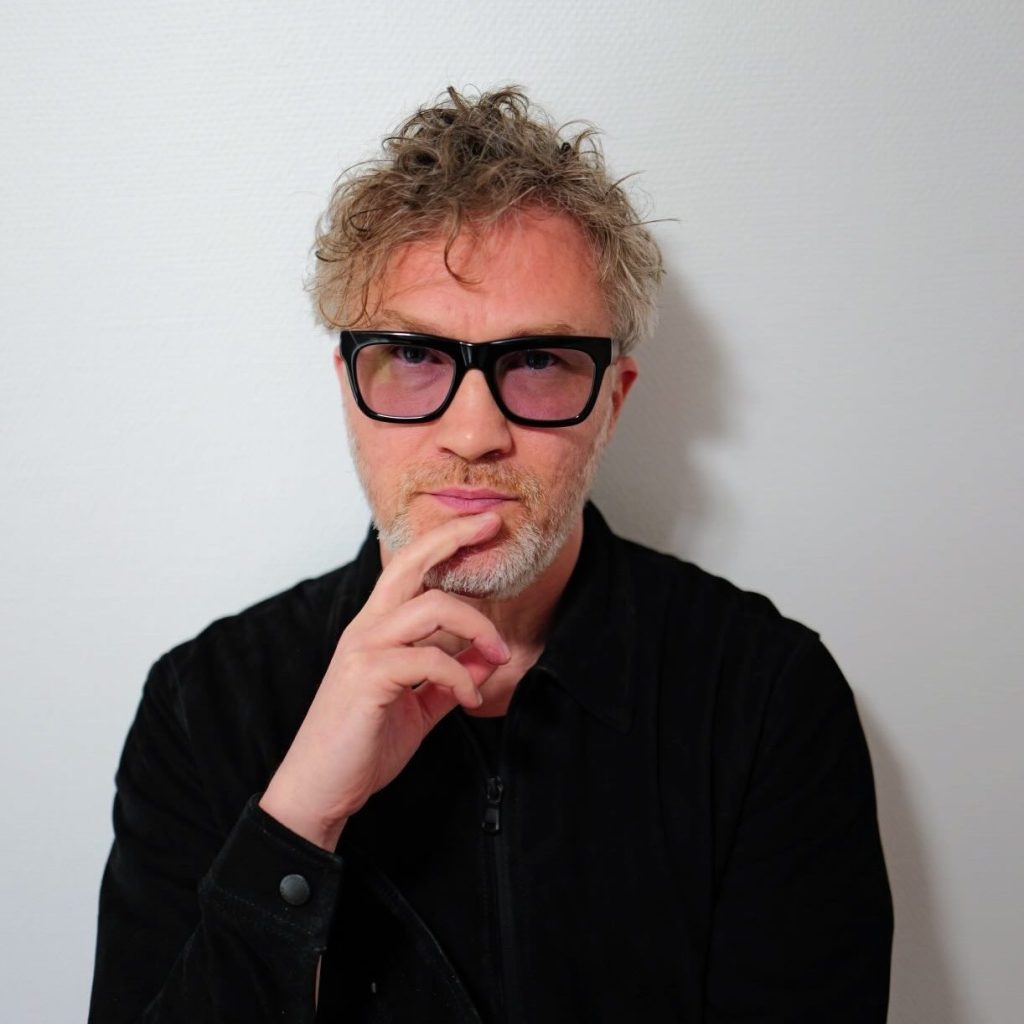
Interview Series: Global Platforms Cultural Intelligence: Art, Power and Value | Interviewer: Gökhan Çolak
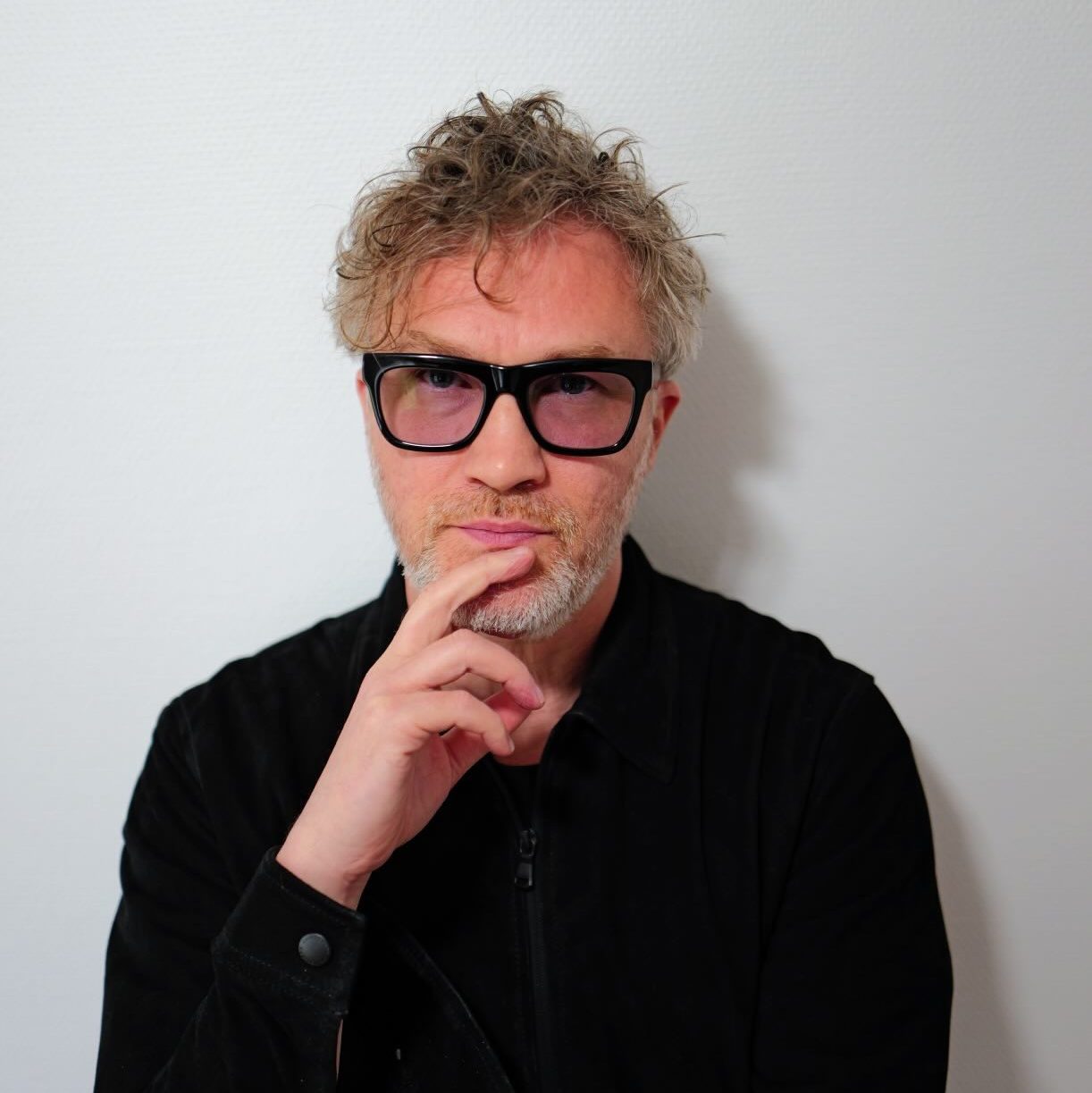
Observer or Participant? Is Distance Even Possible in the Art World
“The Art Bystander” suggests a very deliberate sense of distance and perspective. How do you define the idea of being a ‘bystander’? Is it truly possible to remain an external observer in the art world, or does one inevitably become part of the system—and even an active player within it? How do you personally navigate that balance?
For me, the idea of the “bystander” is not about passivity. It is about position. A bystander is someone who is close enough to understand the codes of the room, but not so absorbed by them that they stop seeing the room itself. In the art world, that distinction matters because proximity can be seductive. Access, relationships, fairs, dinners, studio visits, institutional circles—these are not neutral spaces. They shape how value is perceived and how narratives are repeated.
I do not think one can remain entirely external to the art world, especially once one begins writing about it, advising within it, or helping artists and collectors navigate it. Observation itself becomes a form of participation. The question is not whether one is inside or outside, but whether one can preserve enough intellectual distance to remain honest. I navigate this balance by treating distance as a discipline rather than a location. The Art Bystander allows me to be present, but not uncritical; engaged, but not merely promotional. The aim is to look at the art world from within its mechanisms, while still asking what those mechanisms obscure.
Media, Culture, Strategy: Three Languages, One Practice
You position your work at the intersection of media, culture, and strategy—three fields that often operate with very different priorities. How do these domains come together in your practice, and where do you see the most significant points of tension between them?
Media, culture, and strategy each speak a different language. Media is concerned with visibility, rhythm, audience, and narrative. Culture is slower; it asks what a work, artist, or movement means beyond the immediate moment. Strategy is more pragmatic: it asks how positioning, timing, relationships, and context can create long-term value.
In my practice, these three fields come together because the art world no longer operates in separate compartments. An artist’s visibility is shaped by media. Their meaning is shaped by cultural context. Their sustainability is shaped by strategy. To work seriously in this space today, one has to understand all three.
The tension is that media often wants speed, culture requires depth, and strategy demands clarity. The danger is reducing art to content, or turning cultural value into a purely marketable asset. My role is to resist that flattening. Strategy should not simplify culture; it should protect its complexity while making it legible to the right audiences.
Between Narrative and Strategy: The Dynamics of a Hybrid Model
The Art Bystander operates both as an editorial platform and a strategic advisory. How does this dual structure shape your perspective? In what ways do storytelling and market realities reinforce—or challenge—each other in your work?
The dual structure of The Art Bystander—as both editorial platform and strategic advisory—gives me a particular perspective on the art world. Editorial work teaches you to listen: to artists, exhibitions, institutions, markets, and cultural shifts. Advisory work teaches you to interpret: to understand how perception becomes positioning, and how positioning can influence value.
Storytelling and market realities are deeply connected, but they are not the same thing. A strong narrative can open doors, but it cannot compensate for weak work indefinitely. Equally, strong work can remain invisible if it lacks context, advocates, or the right institutional and cultural framing.
The hybrid model allows me to see both sides. I am interested in how stories are built, but also in what they serve. The best narratives do not fabricate importance; they reveal it. They help an artist, collector, or institution articulate why something matters now—and why it may continue to matter later.
Art and the Market: How Is Value Constructed?
The relationship between art and commerce remains deeply debated. In your view, what is the most misunderstood—or perhaps romanticized—aspect of today’s art world? How is value actually constructed within this tension?
The most romanticized idea in the art world is that value emerges purely from aesthetic quality. Aesthetic force matters enormously, but value is constructed through a wider ecology: artistic language, scarcity, provenance, institutional recognition, critical discourse, collector confidence, timing, geography, and social consensus.
The market is not separate from meaning; it often translates meaning into price. But that translation is imperfect. Some of the most important work is undervalued for decades, while some highly visible work is overdetermined by hype. The illusion is that price and value are interchangeable. They are related, but not identical.
Recent market data makes this tension visible. The Art Basel and UBS Global Art Market Report 2026 describes a modest recovery in 2025, with the global art market reaching approximately USD 59.6 billion after two years of decline, while art fair sales rose to 35% of dealer turnover, their highest share since 2022. That suggests a market still built around physical presence, relationship-building, and trust, even as digital discovery continues to reshape attention.
For me, the real question is not “What is this worth today?” but “What structures are making it worth something—and are those structures durable?” That is where editorial intelligence and strategic analysis meet.
The Evolution of the Collector: From Aesthetics to Narrative
We’ve seen notable shifts in how collectors make decisions in recent years. Today, what carries more weight: the intrinsic aesthetic qualities of a work, or the narrative, positioning, and social context surrounding it? And how is this shift influencing artistic production itself?
Collectors still respond to beauty, materiality, and instinct, but today those qualities rarely stand alone. Increasingly, collectors want context. They want to understand the artist’s trajectory, the cultural conversation around the work, the institutional relevance, the market architecture, and the emotional or intellectual world they are entering by acquiring it.
This does not mean aesthetics have become secondary. Rather, aesthetics are now read through narrative. A work is not only an image or object; it is part of a larger ecosystem of meaning. That is particularly true for younger collectors, who often approach collecting through identity, culture, lifestyle, digital fluency, and social context.
The Art Basel and UBS Survey of Global Collecting 2025 found that high-net-worth collectors allocated an average of 20% of their wealth to art in 2025, up from 15% in 2024. Art Basel also reported that younger collectors, especially Gen Z, show a stronger tendency toward digital art collecting; one Art Basel feature noted that 68% of Gen Z women surveyed owned a digital artwork.
This shift inevitably influences artistic production. Artists are increasingly aware that their work circulates not only in galleries, but through feeds, texts, fairs, residencies, podcasts, archives, and communities. The risk is that artists begin producing for legibility. The opportunity is that artists can build worlds—not just isolated works.
The Rise of Algorithms: Who Are the New Curators?
Digital media has fundamentally reshaped visibility and curation in the art world. Would you say that curators and institutions still hold primary influence, or have algorithms and platforms become the new gatekeepers? How does this shift affect quality?
I do not think curators and institutions have lost power. But they no longer hold power alone. We are now in a layered system of gatekeeping. Institutions confer legitimacy. Galleries create market structure. Critics and editors create discourse. Algorithms create visibility. Platforms create access. The new curator is not one person or one institution; it is an infrastructure. Algorithms have become powerful because they decide what is seen before anyone has time to decide what is important. They reward speed, recognizability, affect, and repetition. That does not necessarily destroy quality, but it changes the conditions under which quality is encountered. The work that travels best online is not always the work that lasts.
Research on algorithmic amplification in cultural content shows that recommender systems are often optimized around engagement, retention, and revenue, and that these systems can amplify certain creators or categories while overlooking others. That is precisely the problem for art: visibility becomes measurable, while significance often remains slow, ambiguous, and resistant to metrics. The challenge is not to reject platforms, because they are now part of cultural life. The challenge is to develop better forms of mediation around them. We need human judgment more, not less—but it has to learn how to operate inside algorithmic conditions.
Artificial Intelligence and the Redistribution of Power
With the rise of digital media and the rapid development of artificial intelligence, the mechanisms of production, distribution, and valuation in the art world are undergoing a profound transformation. How do you frame this shift? Do you see it as a genuine democratization of the art world, or rather as a redistribution of power toward new actors—algorithms, platforms, and technology companies?
I would frame AI not simply as a democratization of the art world, but as a redistribution of power. It democratizes certain tools of production: more people can generate images, test ideas, create visual worlds, and enter creative conversations without traditional technical barriers. But production is only one part of power. Distribution, legitimacy, ownership, data, and monetization are another.
In that sense, AI shifts power toward new actors: technology companies, model builders, data owners, platforms, and those who control computational infrastructure. The barrier to making images has fallen dramatically, but the barrier to meaningful attention may be higher than ever. The scale of this shift is not theoretical. Stanford’s 2025 AI Index reported that generative AI attracted USD 33.9 billion in global private investment in 2024, an 18.7% increase from 2023, while 78% of organizations reported using AI in 2024, up from 55% the previous year.
The art market is already absorbing this transformation. Hiscox’s Art and AI Report found that 40% of collectors expected more people to buy AI-generated art, while 82% of collectors wanted clearer distinctions between AI-generated art and human-made work. Christie’s 2025 “Augmented Intelligence” auction, its first sale dedicated entirely to AI art, totaled USD 728,784 and became a useful case study in the simultaneous excitement and backlash surrounding AI art. That contradiction is the point. AI is opening doors, but it is also building new walls. The future will depend on whether artists, institutions, and cultural platforms can shape the rules—or whether they simply adapt to rules written elsewhere.
The Crisis of Originality: Rethinking Value
As AI accelerates and multiplies artistic production, the notion of originality is increasingly called into question. In this context, what ultimately defines the value of an artwork today—technical execution, conceptual depth, context, or the narrative constructed around it?
AI forces us to separate originality from novelty. Novelty can now be generated endlessly. Originality, in a deeper sense, has to do with intention, judgment, context, risk, and necessity. The question is no longer, “Has this image ever existed before?” but “Why does this work need to exist, and what kind of intelligence—human, cultural, material, conceptual—does it embody?”
Technical execution is becoming less rare. Conceptual depth, ethical clarity, and contextual intelligence are becoming more important. In an AI-saturated environment, the artist’s value may lie less in making every mark by hand and more in defining the system, selecting the dataset, constructing the prompt logic, editing the outputs, framing the work, and taking responsibility for its meaning.
Recent research supports this more nuanced view. A 2024 PNAS Nexus study of more than 4 million artworks by over 50,000 users found that text-to-image AI increased creative productivity and peer-evaluated favorability, but also that average content novelty declined over time. A separate study by Anil Doshi and Oliver Hauser found that generative AI can improve individual creative outputs while making outputs more similar to one another. This captures the central paradox: more creativity at the individual level can produce less diversity at the collective level.
Legally, the question of originality is also being redefined. The U.S. Copyright Office stated in 2025 that works involving AI may be protected where there is sufficient human authorship, but that prompting alone is not enough to establish copyrightable human expression. For me, the value of an artwork today is increasingly located in the triangle between concept, context, and consequence. What is the idea? Where does it sit culturally? And what does it change in the way we see?
The Art World as Illusion
From the outside, the art world often appears as a space of strong narratives and prestige. From your perspective, what is the biggest illusion within it? What are we perhaps misreading or overestimating?
The biggest illusion in the art world is coherence. From the outside, it can appear like a highly organized system with clear hierarchies, stable taste, and objective validation. In reality, it is much more contingent. It is built from relationships, timing, belief, scarcity, access, desire, fear, scholarship, speculation, and social performance. We often overestimate consensus. A market result can look like consensus. A museum acquisition can look like consensus. A waiting list can look like consensus. But many forms of consensus in the art world are fragile; they are produced by repetition and reinforced by visibility.
Another illusion is that the art world is purely progressive because it speaks the language of criticality. It can be intellectually radical and structurally conservative at the same time. It celebrates disruption, but often relies on very traditional systems of access and endorsement. What interests me is not exposing the illusion cynically, but understanding how it works. Every cultural field has myths. The art world’s myths are unusually powerful because they convert belief into value.
Future Scenarios: Between Excitement and Uncertainty
Looking ahead to the next five to ten years, where do you anticipate the most radical shifts in the art world will occur? And what excites you the most about this future—while also giving you pause?
The most radical shifts over the next five to ten years will happen around authorship, visibility, provenance, and institutional authority. Artists will increasingly work across mediums, systems, archives, code, performance, data, and physical objects. Collectors will become more hybrid in their behavior, moving between painting, digital art, design, luxury objects, experience, and cultural patronage. Institutions will have to become not only spaces of display, but spaces of interpretation, technological literacy, and trust.
We are already seeing this future take shape. Digital art is moving from a speculative niche into a more established collecting category, especially among younger collectors. At the institutional level, DATALAND in Los Angeles is scheduled to open on June 20, 2026, positioning itself as the first Museum of AI Arts and framing machine intelligence, data, and human imagination as part of a new museum model.
What excites me is the expansion of artistic language. Artists can now work with systems, simulations, datasets, and living archives in ways that were previously unimaginable. What gives me pause is the possibility of cultural sameness: a future where everything looks innovative but feels strangely optimized, where visibility replaces depth, and where the infrastructures of creation are controlled by actors outside the cultural field.
The opportunity is to build a more intelligent art world—not just more technological, but more reflective. One that understands algorithms without surrendering to them. One that uses AI without abandoning authorship. One that expands access without confusing access with equity. That, to me, is the real task ahead.
 prcarnetworld.com
Leave a comment