

INTERVIEW SERIES: Beyond the Frame — A Journey into Cinema, Storytelling, and the Depths of Human Experience INTERVIEWER: Gökhan Çolak | INTERVIEWEE: Geert Lovink

Editor’s Note
In its early years, the internet was shaped by ideals of freedom, openness, and participation. Today, however, those ideals have largely given way to a digital order defined by a handful of global technology corporations. Platform capitalism, algorithmic governance, the data economy, and generative artificial intelligence are reshaping not only the way we communicate, but also how we think, socialize, work, and experience the public sphere. Digital culture is no longer merely a technological phenomenon; it has become a central arena where politics, economics, culture, and everyday life intersect.
Among the leading voices in critical media theory, Geert Lovink has spent nearly three decades examining and conceptualizing this transformation. Through his work on platform dependency, network culture, the psychological architecture of social media, and alternative digital infrastructures, he exposes the widening gap between the promises of the internet and its contemporary realities.
In this interview for PR Carnet World Magazine, Lovink reflects on the internet’s transformation from a public sphere into an ecosystem dominated by platform monopolies, the place of artificial intelligence within platform capitalism, the future of network culture, and the prospects for rebuilding independent communication infrastructures. Offering a critical perspective on the defining crises of the digital age, this conversation invites readers to rethink technology not simply as a force of innovation, but as a question of power, culture, and democracy.
Over the past two decades, the internet has evolved from a decentralized network of communities into an ecosystem dominated by a handful of platforms. How do you assess this transformation, and what has been lost in the process?
The downfall of distributed computing, community networks, and the decentralized internet as a public domain likely began with the influx of venture capital and the related conservative-libertarian values, already visible in Wired magazine in 1996-97. The defining essay on The Californian Ideology was published in 1995. The ‘pioneering’ decade was already conservative-libertarian, operating in the shadow of Reagan. While this is known as the globalist-neo-liberal era of Clinton and Blair, the foundations were laid for a different internet culture, driven by the privatization of public (telecom) infrastructure. The Creative Commons movement was too weak to counter these forces. Web 2.0, which culminated in ‘social media,’ was built on the remains of speculative dotcom-mania investments and ‘dark fiber’ infrastructure that had to be used for something. The origins of Big Tech date back to that post-dotcom industry reconstruction period, even though the companies were founded in different years: Amazon in 1994, Google in 1998, and Facebook in 2004. They could only expand once the access issue was resolved and enough fiber-optic, Wi-Fi, and mobile phone towers became operational. The smartphone rollout was the killer app.

In your recent books, Stuck on the Platform and Platform Brutality, you examine the structural power of digital platforms. Do you see platform dependency as primarily a technological problem, an economic problem, or a cultural condition?
No doubt, user dependency is a psycho-cultural issue. It is also a financial and economic problem. With venture capital and economies of scale, it is fairly easy to reach monopoly status. Instead of dealing with competitors, once you reach a critical mass, you invite others to participate on your platform as suppliers, advertisers, and users. I am not suggesting that tech is neutral or innocent. Without venture capital that once fueled hypergrowth at all costs, a website can only grow in an evolutionary way. No matter how superior, sustainable, or user-friendly, the ‘European’ solution without VC money will remain niche and go nowhere. This is why Fin and Tech need to be decoupled. What can help is the infrastructure approach. Tech needs to be taken away from its ‘totality’ claim so that it is no longer seen as a solution for everything, taking over the collective psyche and public space, as well as the nervous system and brain of each subject. Tech needs to be downgraded to the pragmatic tool level and give up its all-encompassing ‘spheric’ hegemony. These days, we see this repeated, with AI presented as a universal solution to every problem. In the current AI debate, the issue is not software superiority but chips and scale, paired with a war between competing revenue (metering/tokenization) models.
You have often challenged the optimistic narratives surrounding digital media. Looking back, which promises of the internet age have failed most dramatically, and why?
Our claim that the internet was essentially a public sphere has been weak. In the 1970s, this still would have made sense, but no longer in the neo-liberal 1980s and 90s, let alone in the right-wing authoritarian 2020s. What failed is the claim that an inherently democratic internet would be an egalitarian forum. These days, the Internet arguably undermines democracy. Literally nobody associates social media with public debate. This shift dates back to the post-dotcom period, when the egalitarian forum and list cultures lost out to the influencer-centric design of the blog. The weblog introduced the idea that a ‘follower’ was a ‘guest’ on the website of a blogger. The user-as-follower then became a software persona with only one option: respond (which, not much later, was further reduced to a like). Zuckerberg’s refusal to introduce the ‘dislike’ button contributed to the gradual end of the internet as a public discursive space. Fast-forward twenty years, and the ‘flame wars’ of the 1990s have turned into toxic echo chambers dominated by AI chatbots. Today, the term ‘hate speech’ sounds innocent and outdated. Most of it is now machine-generated, manipulated algorithms anyway. One would almost feel nostalgia for Habermas’s construction of rational public debate. But I won’t. There will not be a restoration of old-school mainstream media, simply because they lost their monopoly. Should we feel sorry for the tumbling journalist class? I don’t. I can only laugh at their paternalistic attitudes in the past. Having worked a lifetime on alternative, tactical, self-organized media, I am glad we no longer have to deal with their arrogance. The internet they looked down on for decades has crushed them—for the right reasons. Instead, the future lies in independent investigative journalism and critical-theory assemblages like our small center and its networks.
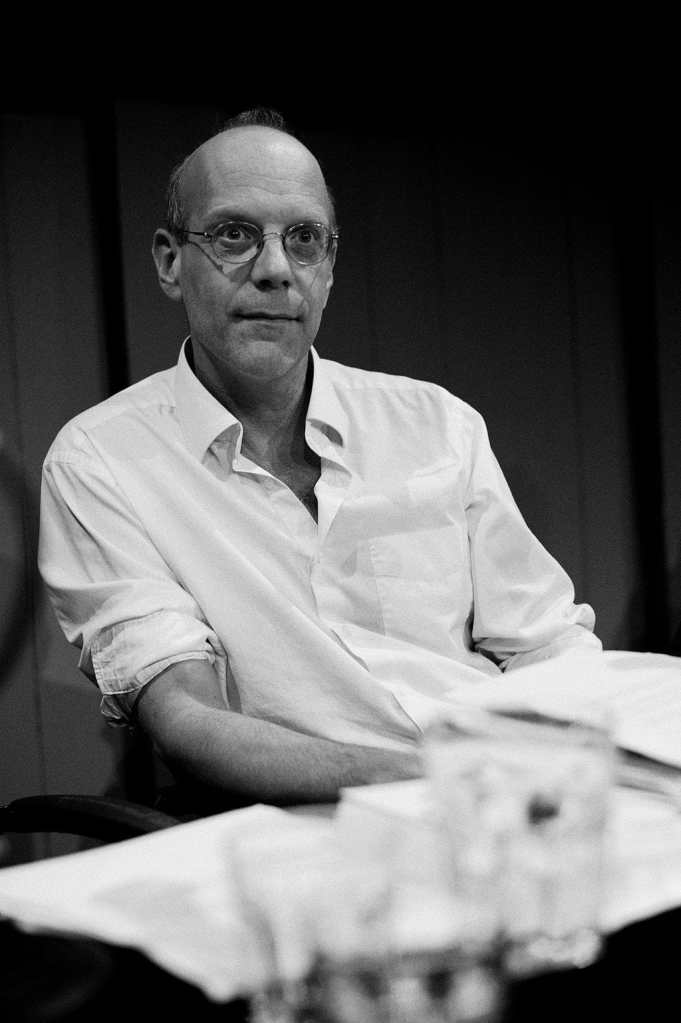
Social media platforms increasingly shape not only communication but also emotional life. In what ways do contemporary digital environments influence subjectivity, identity formation, and psychological well-being?
Arguably, the media have done this over the centuries. It is a key insight of Friedrich Kittler and others of the German media theory school. The Gutenberg Press sensitized the emerging bourgeois class to Romantic poets and, later, to the grand 19th century novels and philosophy. Reading Nietzsche, Marx, and other socialist pamphlets, and Freud is unthinkable without the industrial printing presses. The strange part of the internet’s big rollout is that it happened in an era of regression and stagnation. A product of the Cold War welfare state, opening up during the roaring 1990s neo-liberal era, the global impact on the daily lives of billions peaked during right-wing populism, geopolitics, climate crises, and COVID.
What you’re stating has become a mainstream position. I know, it’s the thesis of my book, Sad by Design, from 2019. Earlier in my work, I emphasized its nihilistic energy. This remains a powerful, creative, yet negative force. That dynamic changed around 2016. The growing depression and melancholy, intensified by a specific social media architecture (following, liking, swiping), sets off an introvert trend in which the ego can’t meet the techno-social requirements anymore. Implode or explode, the Dude asks in the meme. Most turn the psychic energy inward. It is not hard to understand what internet culture you get when you crossbreed nihilism with depression. This is what young people encountered online. This was the counter-culture, and still is.
Over the coming years, the techno-social condition might change. A decade into the psycho-mental retrograde regime, measures are slowly taken. Policy is primarily focused on policing teenagers—not on regulating platforms (let alone building viable alternatives). I have always been in favor of liberation and rebellion, smashing the yuppie tech system, not policing youngsters. Let’s look down on that poor Zuckerberg creature and his creepy apps. He incorporates the corrupt power. But that’s not happening, also thanks to artists. Every young generation walks into his trap. For a good 15 years, there’s been no youth revolts, at least not in the West. I am not defending the use of a smartphone by an 8-year-old, nor do I feel compelled to take them away. I simply do not believe in the medicalization of the debate, as Jonathan Haidt is advocating. Even his critic, Candice Odgers, is walking into this trap. To hell with the brain! Blow it up—in full psychedelic fashion. Do not hand over the Media Question to priests, psychologists, or doctors. Even social scientists, with their data and methods, should be avoided. Become incalculable. Figure out for yourself how you would prefer to communicate with your friends and comrades and how you would organize vital information. Don’t be lame to delegate this to a third party whose sole interest is to sell you ads, influencers, AI slop, and other crazy shit. You will come up with something better. And I am not going to tell you which channels to use. Let that be a secret. It is not that hard.
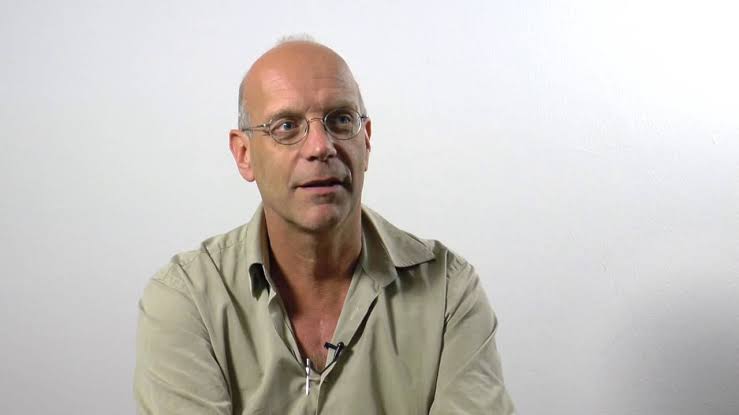
The concept of ‘network culture’ has been central to your work. Has network culture entered a new phase under artificial intelligence, algorithmic governance, and platform monopolies, or are we witnessing the exhaustion of the network paradigm itself?
Networks have been literally dead for a decade. They have been incorporated into centralized platforms—and then dissolved. They may still exist in the background, but they are no longer a living entity. A renaissance of the network as a techno-social form is entirely possible but unlikely to happen soon. The network was an alternative to the fixed 20th century social formationssuch as family, village, church, party, and nation, which have failed. Decentralized systems could have resulted in new forms of connection and commitment—but it didn’t. Technically, networks still exist, yet they have disappeared in the background and consolidated as ‘infrastructure’. While decentralized and federated can still be worthy goals, I would focus on cultivating cultural disdain towards platforms and AI. This is different from the ‘German’ romantic ‘offline’ notion. We need to move away from the digital totality and its spheric, invasive aspect. The tool character can deliver this. Use it—and then put it away. This is an easy task compared with the challenges posed by growing economic inequality or climate change.
Digital culture is often presented as participatory and democratic. Yet power appears increasingly concentrated in a small number of corporations. How should we rethink participation under these conditions?
Participation is a rather weak metaphor, no? Our involvement in the platforms is full-on; it is a 100% emotional full-time commitment. We’re not just giving input. If only. In that case, we would say something and walk away. Participation in a context of large, manipulative players is fake.
Your research has explored alternative infrastructures, independent publishing, and cultural self-organization. What possibilities remain for building meaningful alternatives outside dominant platforms?
Coming from the 1980s and 90s, alternative media operated as autonomous, parallel worlds. Due to gentrification and the rise of right-wing populism, such infrastructures could no longer be maintained, and struggled to reinvent themselves under the new digital regime. Ironically, it was during the Arab Spring, when Facebook was supposedly on the ‘right’ side, that I left in a first mass exodus against its privacy violations. This was the time we started ” Unlike Us. Fast forward 15 years, and alternatives have matured, yet the dependency has become a new form of totality (welcome back, Wilhelm Hegel!). The ‘accountability sink’ (Dan Davies) has been a reality we learned to live with. Of course, no one is responsible for the social media blues.
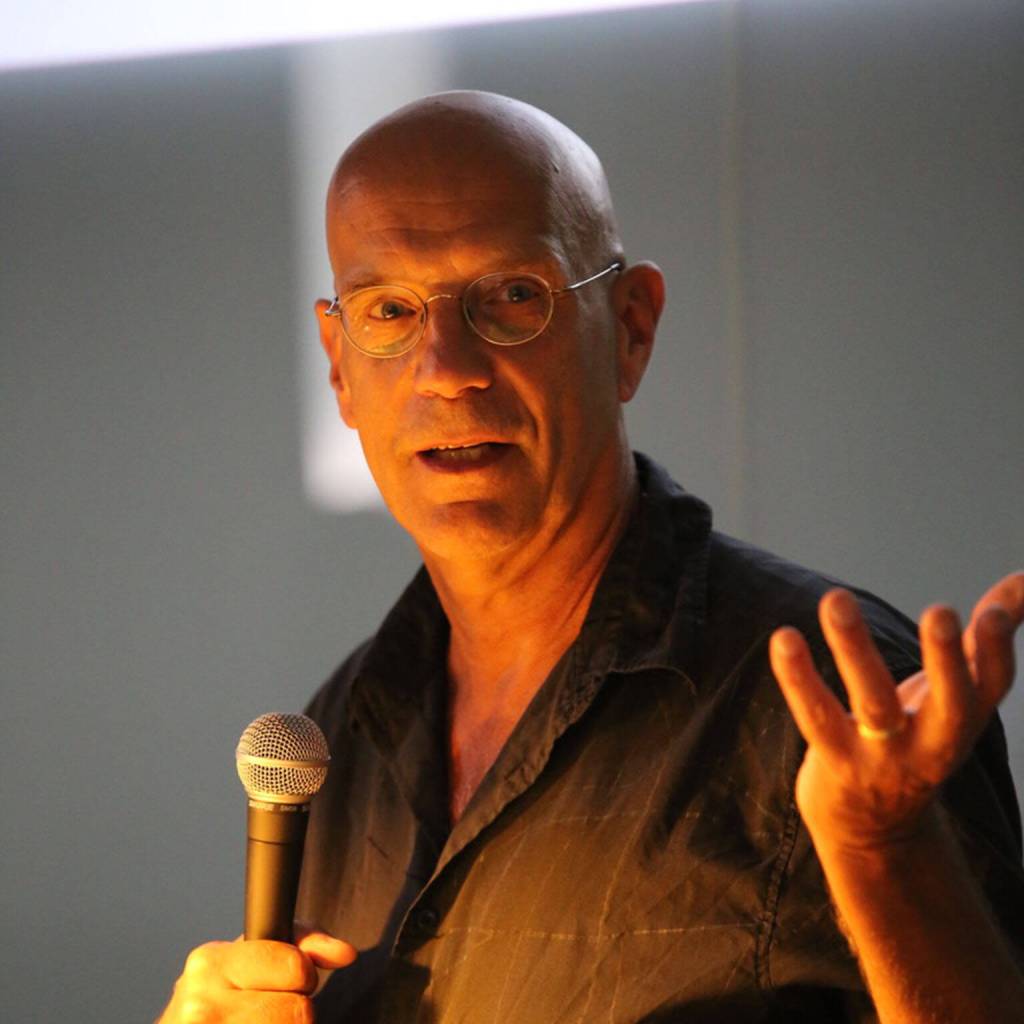
Critics argue that artificial intelligence represents a new turning point in digital culture. How do you situate generative AI within the broader history of internet development and platform capitalism?
Ever since the 1955 schism in cybernetics, AI has gone its own path, going through summers and winters. Apart from chatbots and algorithms, AI did not have a significant impact on the development of internet culture—until 2021-22. We had to wait till datacentres and Big Data, combined with Evidia chips, only then, with the arrival of LLMs and ChatGPT, Google’s search engine imperative started to decline. Its impact spread quickly, from automated software production to digital identity and ‘artificial girlfriends’. What is happening now is the elimination of middle-management jobs. Unpredictable at this point is not the automation drama but the AI future business model, as we’re still in the AI bubble. Much like dotcom mania, the outcome is uncertain. The fact is that there are already very few players. Unknown factors include the costs of AI processing plants (data centers are different entities altogether). The building and running costs are astronomical—incl. scarce resources such as electricity and water. As the internet has developed over the past three decades, the AI industry has stood for centralization and political control—not just in the US but also in China. The invasion of Taiwan only adds to this picture. War may emphasize and accelerate entirely different technologies. Why should this be a complex, centralized infrastructure that can be bombed out of existence in a minute? The development of an insignificant consumer product like the drone by Ukrainian artists, designers, and programmers over the past four years is a powerful reminder that tech follows dark, dialectical paths. Not just larger and faster, but tactical and smaller.
The Institute of Network Cultures has fostered numerous experimental projects and critical communities. After 22 years, it’s leaving the Amsterdam Polytech to become an NGO. Looking back, what lessons have you learned about sustaining independent intellectual and cultural networks in a platform-dominated era?
That’s a moving question. One cannot presume to be rewarded for criticism. In NL, only positive contributions are valued. On top of that, I am not a manager and have not been able to grow the center with grants. From early on, I should have employed a grant writer. We were good at getting small cultural subsidies for events and publications because of our background in the visual arts. From 2011, this dried up, and due to my ‘late’ track record, I never entered the academic funding scene. In this country, it is not recommended to enter these circles in your 40s or 50s, which is perhaps different from Southern Europe, where reputation comes with age. The larger picture is more interesting. Our initial interest with nettime was to build up a vocabulary and practice of internet criticism (much like literature, film, and theatre). It is significantly big enough as a cultural medium, right? It did not turn out that way. After three decades, the structural confusion about how to deal with this medium remains: economics, finance, or tech? To this day, one cannot study internet culture. The critical discourse is poor and always running behind the facts. Look at the political class, obsessed with their smartphones.
At my school, interactive media and web design were quickly ditched in favor of app design, and now the school is in tatters due to AI. The field of communication design is in a panic. The future labor market will not need ‘prompt designers’. Our Asterix and Obelix village has been proud that it survived—but that’s not a strategy. I still believe in building up communities, movements, scenes, and tribes (previously known as ‘networks’). They will thrive outside of the depressing automation circus. Gen Z responds well to the freedom that a hangout place like INC provides. But even they are reluctant to design autonomous communication, debate, and aesthetics outside the realm of surveillance machines.

As you approach a new phase following your retirement from institutional roles, what do you believe is the most urgent question in the media context?
I will become a freelance media theorist again and pick up my life where I left off in the early 2000s. Maybe I will be a more successful grant writer, but I doubt it. We all hope our Institute of Network Cultures can somehow reinvent itself. I was always good at achieving a lot with little or no money. What’s urgent is the Media Question itself. In my view, this is related to the architecture of the techno-social. AI has no answer to the question of how Team Human (Doug Rushkoff’s genius category) will sort out its internal communication and conflicts. The Canadian media theorist I learned a lot from, Arthur Kroker, predicted in the 1990s that media would become extinct because they’re too slow. They mediate and slow down information flows. They are exchanges themselves. They select, filter, and censor, if you like. Another way to say this is that we create stories from the world’s chaos. In my school, Esther Hammelburg works on this interesting tension between liveness and storytelling. Our Stream Art Network, initiated by UKRAiNATV in Krakow, experiments with distributed spheres. The 18-second TikTok/Insta video is the current measure of all things. The summarizing AI technology claims to do this all better, but its biases make all its results boring and flat. I fear that the coming mess of poly-crises and wars will liberate us from all these mundane issues and help us to reinvent what vital communication and media should look like. This is a sad conclusion, as we should have also been able to do a better job without so much organized collapse, violence, and misery.
Interview Photos: Holland Festival, Universiteit van Amsterdam, V2-Lab for the Unstable Media, MEET | Digital Culture Center, Unsound.pl, REDCAT, Letras Libres, Digicult, EL PAİS
Leave a Reply