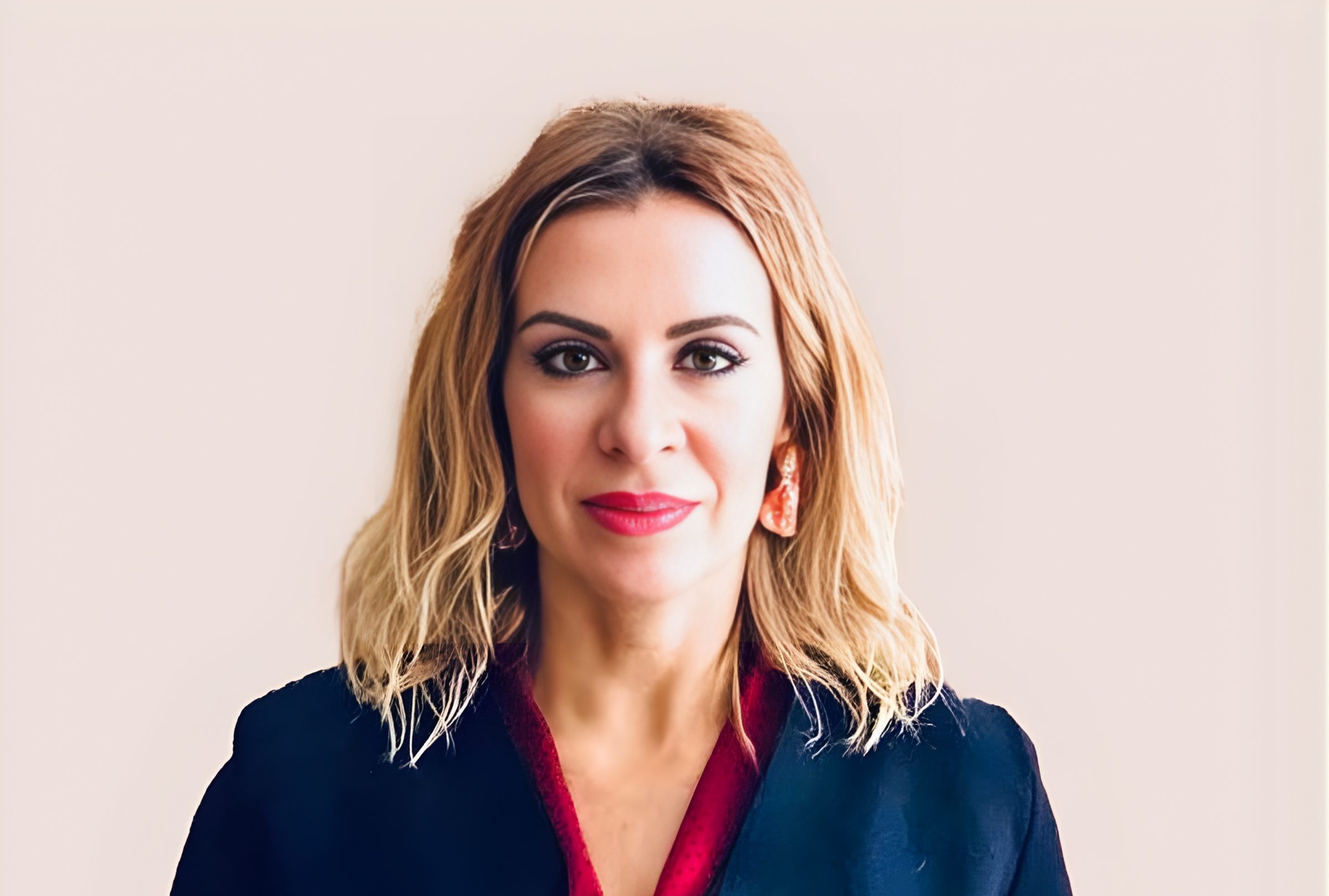
Media & Culture Analyst / Director of Education & Heritage EKKOMED / Ex. Director CIFEJ/ UNESCO MIL Alliance Repr. for EU & N.A. / EU Media Literacy Expert / Researcher / Educator
The Transformation of Media Literacy
How has the concept of media literacy transformed over the past two decades? What fundamentally distinguishes media literacy today from traditional media education?
The beginning of the new century with the technological revolution hand-in-hand transformed societal and communication paradigms with regards to media as information mechanisms. We shifted gradually but steadily from traditional, one-to-many passive model of communication to a non-linear, interactive one-to-one and one-to-few forms of communication. Hence, the context of news consumption has changed into a meta-McLuhan era where “the content is the Kinq” requiring new and more complex metacognitive skills.
Media and Information Literacy (MIL) has now shifted away as a traditional media education pedagogical mechanism to broad citizenship concepts, such as media pluralism, user empowerment, active participation and intervention in public affairs (good governance), towards resilient, knowledge and democratic societies. At the same time, MIL is nurtured as a tool to question media industry structures, such as media hegemony and ownership models, whereas it is also suggested as a prebunking mechanism towards digital well-being and ethics.
Today’s media literate citizens are the ones who not only can make informed choices and understand the nature of content and services, but the ones who can truly and fully take advantage of the opportunities offered by new communication technologies, for public good.
AI-Generated Reality and the Crisis of Truth
How do you evaluate the transformation of the concept of “reality” in the age of AI-generated content? In particular, how do you think younger generations’ perception of truth is being affected?
Embracing the constructivist point, where both truth and lies are constructed mechanisms — assembled from selected facts, framed through a perspective, shaped by language and culture, Greek poet and writer Nobel Prize Winner, Odysseas Elytis, once said that “Truth is ‘made’ by someone just as a lie — let’s try to construct truth on terms that are more open and impartial”.
In journalistic settings, media professionals usually proclaim truth based on certain perspectives – cultural, political, personal bias – of the same story. This is the main element defining the post-truth era where we do not have to know all the truths necessarily but understand the context under which each truth – and lie – has been constructed.
When we are talking about Generative Artificial Intelligence (GenAI), where computer algorithms resemble human-created content to perfection, this acquires a whole new meaning. We are all nodes in vast digital, algorithmically curated networks and hence easy to manipulate. On that note, we can never be 100% sure of whether the content we are being faced with is AI-constructed or not. We need to constantly be suspicious and, through MIL, develop our own defense mechanism that will help us understand the context rather than the content perse.
Global Challenges in Media and Information Literacy
Drawing from your work within the UNESCO Media & Information Literacy Alliance, where do you currently see the greatest global crisis in media literacy?
In the digital convergence era where societies are being characterized by information smog and hyper-information paradigms, the main challenge is not about How and Where to find the information we need – well, GenAI and algorithms are working intensely with us on that – but What do we do with the information waves and the socio-economic context they are derived from. That is to say, there is a bountifulness of resources and repositories today; needless to say, that the quantity and quality of information we receive through various platforms largely determines our choices and subsequent actions, actions that may have a micro impact (fulfilling our desire to know about something, satisfying our brain cells on curiosity & knowledge), or macro – societal impact (enriching our societal knowledge and leading us to social action for change).
The greatest challenge as I see it, is the “devaluation of information as a universal public good for all”, as a human right for everyone who should be able to appreciate the importance of being a well-informed citizen. A citizen who can hold opinions without interference (social, technical, political). A citizen who is free to seek, receive and impart information and ideas through any media and regardless of frontiers, exactly as Article 19 of the Universal Declaration of Human Rights (1948) proclaimed decades ago in the post-war era. This freedom of information (as receiver, as consumer or as sharer) should not be taken for granted, there have been numerous social struggles and conflicts in the past to earn this right.
For me, personally, the 1,000,000 question is “What kind of information do we actually need?”. According to recent studies, readers and especially young people have distanced themselves from reading the news being addicted to online news, either doom scrolling or simply endless image scrolling with no purpose. The UNESCO MIL Alliance is the global network of UNESCO, counting over 400 organizations and 200 individual experts from over 100 countries. Envisaging the vision of UNESCO in education set over 40 years ago since the Grunwald Declaration in 1982, it is systematically engaged in empowering all citizens to have a voice. It does this through a range of awareness campaigns, strategies and policy initiatives that aim exactly to bring citizens back to engaging with quality content and trustworthy information – and that is the main freedom of news critical thinking if we want to truly feel and act as empowered citizens.
Disinformation as a Cultural and Political Structure
Today, disinformation is no longer merely a problem of false information; it has also become a cultural, political, and psychological issue. How do you analyze this multidimensional structure?
It is true that everyone today has their own “volcano of opinions” (Dobelli) that is widely erupted depending on the news agenda, mainly through social media platforms. As UNESCO notes, especially in times of crisis, the desire to believe good news can outweigh the need to cross-check the facts for validity and accuracy. Having said that, disinformation is only a part of the information-pathogenic social phenomena of our times, today. Due to multiple political and cultural channels involved, as well as the contexts under which disinformation may develop, it has that same interdisciplinary character as media literacy ecology. But at the same time, disinformation spreads rapidly due to the attachment of human nature to a “fast news society” (no time to cross-check, trusting my filter bubble). This overflow and spread of information, however, leads to a new state of “pseudo-educated citizens”, where we think that we know the truth hence we share it as such. And this is more dangerous than the complete absence of it.
Digital Policy, Regulation, and Public Responsibility
Do you find the European Union’s policies on digital literacy and disinformation sufficient? Especially in the age of artificial intelligence, in which areas do you believe stronger public policies are needed?
Ever since EU Lisbon Strategy 2000 that recognized for the first time the need for strong knowledge societies through the development of cognitive structures, the EU has set up a concrete policy on developing media and digital literacy skills in lifelong learning settings: from soft law action (eg. policy papers, guidelines, Expert Groups and recommendations) to more normative structures, notably the AVMSD, the DSA, the MFA, the AI Act and lately the Media Democracy Shield. At the same time, special consideration has taken place for educators and school media literacy in typical education settings, where media literacy is mentioned in the Digital Education Action Plan, the updated DigiComp Edu skills framework and the Guidelines for Using AI and Combatting Disinformation in the classroom, where I was honoured to be among the experts group editors. Let me mention indicatively, that during 2021, over 200,000 schools comprising the European eTwinning school network across Europe, were actively engaged with the annual theme on “Media Literacy and Misinformation”.
So, yes, the Commission has dealt with MIL in an interdisciplinary and nuanced approach, there is no doubt on that – yet there is always room for more systematic commitments especially on behalf of the digital platforms rules enforcement.
Critical Citizenship in the Digital Ecosystem
You frequently emphasize the concepts of “critical media knowledge” and the “autonomous media-literate citizen.” In today’s digital ecosystem, do you think it is still possible for individuals to remain genuinely independent and critical?
I would like to take you back to the beginning of the 21st century: in this new, fascinating (from a technological point of view) era, the main feeling surrounding the digital revolution was that of a “digital euphoria”, where we were all very enthusiastic about the great opportunities for new communication, entertainment and networking pathways ahead of us. After the first decade, the digital euphoria gave place to a somewhat “digital scepticism” prevalent until nowadays, focusing on the challenges and the new media norms that enchanted us like the Greek mythological “sirens” in Homer’s Odyssey – to link with the new film premiere “Odyssey” (2026), out this July.
But if we want to have critical media autonomy, irrespective of any EU and UNESCO measures and policies, we should not forget that we do not only have the right but also the responsibility to be truly informed, meaning to say that we all have our personal footprint that we ought to self-regulate. This is imperative, if we wish to give place to a new identity of prosumers (producers – users – consumers), one where we are all critical prosumers who act ethically and proactively in the digital environments.
As an ancient proverb says,“if you live by the sea, it’s better to learn how to swim rather than build a walled garden”.
Children, Education, and Early Media Exposure
Children and young people are now exposed to media environments at very early ages. At what age do you think media literacy education should begin, and how should it be structured?
Long due and debated issue. While I am not exactly a behavioral expert, I would definitely argue that media literacy as a state of mind against visual stimuli should be cultivated to toddlers as early as possible. Kids today, from the moment they are born, are the so-called screenagers; they are faced with a camera (their parent’s camera), and they develop their own digital footprint without their consent, long before they are able to speak, walk and realize the world. All visual stimuli that trigger a response in the brain — colors, images, movement, faces, symbols, light, patterns that are connected to screen content, are introduced early on, with often contradictory studies on emotional engagement and cognitive skills development. It is widely accepted that early screen exposure, should be limited and strictly monitored in pre-school age – not just for brain development reasons but mainly for developing a media- free communication interaction with their environment and a solid basis for fostering a critical mindset for later. This refers mainly to addictive mechanisms of short videos online with no real sequence in content.
On the other hand, following recent discussions with children film producers through CIFEJ, the International Center of Films for Children and Young People, we have come to the conclusion that when pre-schoolers watch kids films together with their parents (family viewing) this is proven to be actually beneficial for their cognitive development, for unleashing their imagination towards their first exploration of the world. So, being unconventional here, I say yes to early meaningful engagement as family viewing, I say yes to developing young screenwise viewers, I say yes to developing empathy through film narratives.
Artificial Intelligence and Critical Thinking
There are both hopes and concerns surrounding the integration of artificial intelligence into education systems. Do you believe AI will strengthen critical thinking, or does it risk weakening it?
We have to be concrete on what exactly do we mean with AI in Education. Are we talking about managing and demystifying the content of AI, about engaging with AI as facilitator in teaching procedure or about creating with AI? Only when we have defined our needs, we can talk about how to deal with AI in typical settings. Taking from recent Greek school experience, AI is being hastily introduced as a facilitator in the classroom, lacking whatsoever the critical skills needed for deconstructing GenAI content. It is all a matter of use. If we want to fully benefit from AI, we need to approach it as a tripole of Ancestral Intelligence – Human Intelligence – Artificial Intelligence to strengthen our critical thinking through the media in a new form of Entangled Intelligence. And this is not an easy equation to solve…
Cultural Memory and Digital Media Environments
How do you interpret the relationship between cultural memory and digital media? Does digitalization help preserve cultural diversity, or does it contribute to the emergence of a more standardized global culture?
MIL is the new alphabet of reading and writing through the media. Young people as pro-sumers use new technologies to communicate, consume, learn, interact, create, share media experiences. Early on, as MA student in the UK (thank you Sussex), back in the globalization era, I was introduced to the concept of “glocal” culture where the global was entangled with the local. This as part of preserving cultural memories in the new digital environments entailed the need to echo the global trends and safeguard the local memories at the same time. Media Literacy emerged then – without even me realizing it – as a responsive cognitive mechanism that through the 3Cs dimensions (Critical, Cultural, Creative), could help enclose the past into new pathways of the future. After all, preservation of cultural heritage and memory is not only about saving our past, but securing our future and making sure that future generations are able to acquire that sense of belonging and sharing human identity and values. And what better way to achieve that, than through developing the 3Cs of media literacy skills?
Ethics and Responsibility in Contemporary Media Culture
In today’s media environment, the concept of ethics appears increasingly fragile. What do you consider the most important ethical responsibility for journalists, academics, and content creators in this new era?
For journalists, as media professionals and news gatekeepers, the main challenge is to realize the extreme power they have on their hands, as beholders of information and be able to manage this power for public good. This is translated, for instance, in their accurate and neutral, unbiased reporting, their responsibility for fact-checking and cross-checking of their resources, their understanding of social media architecture (filter bubbles, echo chambers, algorithms), news oversight reporting and whistleblowers, Big Data reporting, and all these under the MIL prism and relevant regulation.
For academics, the main challenge is how to engage in a realistic dialogue with the MIL practitioners, since evidence-based research is greatly needed if we mean to say that research can actually be translated into policy action and have impact.
For content creators and influencers as new actors in the field, the challenges are many and contradictory to their own interests, as they are key influential figures among media and creative industry and part of competitive knowledge societies – I would suggest to start with abiding by the rules set by the European Commission, notably the DSA and UNESCO Guidelines for Influencers, that force them to take actual measures for minors protection in the digital contexts, measures regarding combatting hate speech, misinformation, propaganda, media stereotypes, ethical content and well-being online.
But for all, what is needed is to achieve cognitive immunization against information disorder phenomena and hence nurture a “collective new media intelligence”. This is the only way that can eventually lead us to human superorganisms (Christakis & Fowler) where empathy and humanism are the main driving forces.



Leave a Reply