
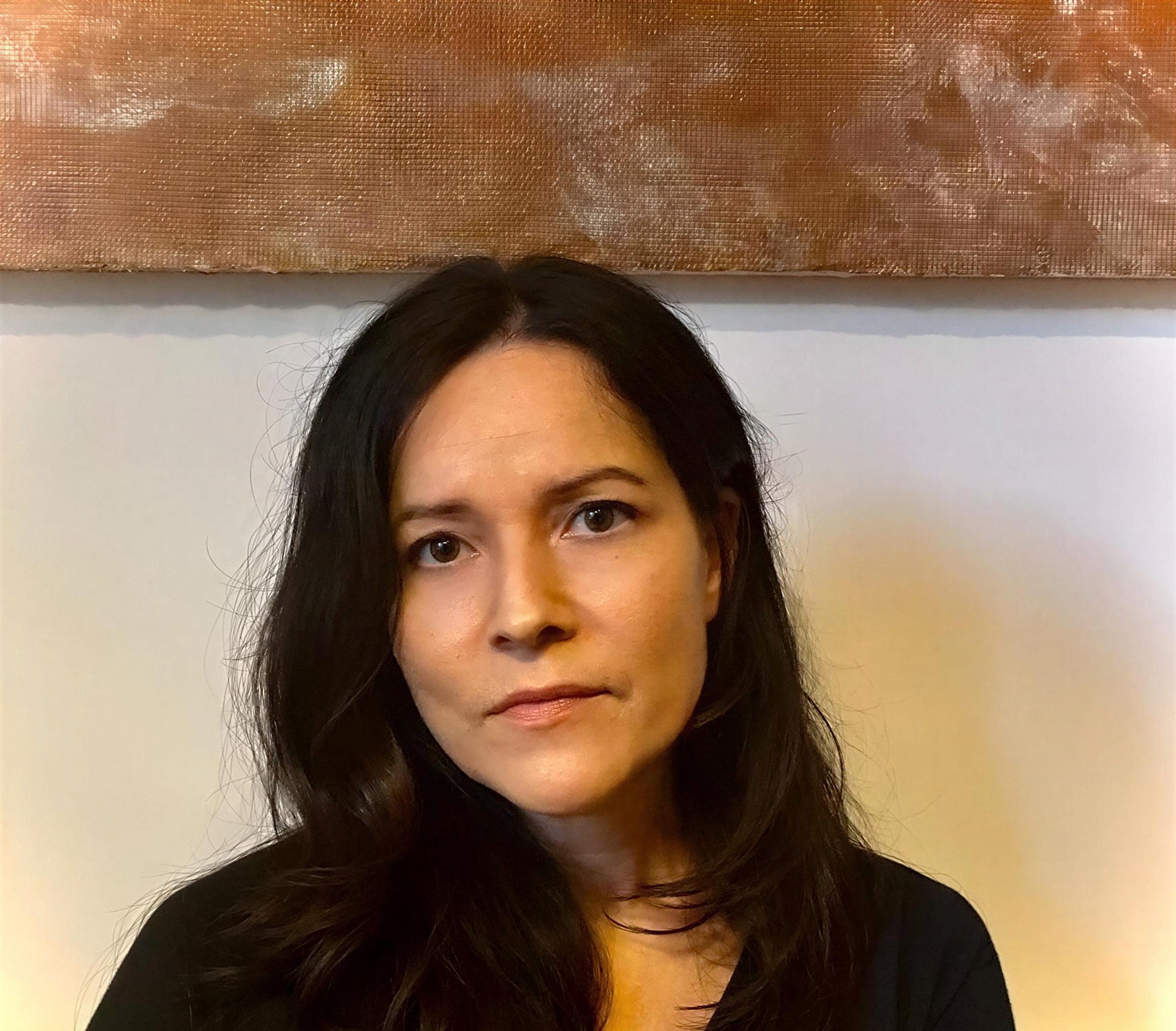
INTERVIEW SERIES: Image Futures in the Age of Post-Photography INTERVIEWER: Gokhan Colak & Marie Green INTERVIEWEE: Natasha Chuk

From Representation to Computation
Your work suggests that photography is no longer defined by the camera alone but by a broader computational ecology. In this transition from representation to computation, how should we rethink the ontology of the photographic image? Has the photograph ceased to be an index of reality and become instead a dynamic process of data production?
This is a question I’ve been sitting with for some time now. Vilém Flusser’s concept of the technical image is especially useful for me to gauge where I stand in terms of whether photography has lost its indexicality as it becomes more computational. For Flusser, photography was always the product of an apparatus that translated the world into technical information according to a particular system.
In that sense, photography, even analog photography, is computational to some degree. Put this way, photography is broader than simply being the endpoint of a camera’s encounter with the world. Photographs have always emerged from an ecology of systems inside and outside of the camera that interact with each other to collect, organize, and transform information into images, starting with cameras, film stock, and sensors, then moving onto software, visual displays, and interfaces, and now neural networks and rendering engines. Light remains fundamental to photography and synthetic images, though it now involves both natural and synthetic forms.
There’s no doubt that the systems producing photographs today are vastly more complex than any single camera, analog or digital, which makes it difficult to compare one discrete form to another and, incidentally, sheds light on the ways that photography necessarily operates outside of the camera. I’m especially grateful for Michelle Henning’s A Dirty History of Photography: Chemistry, Fog, and Empire (2026) for calling attention to this and providing me with additional historical insight into the environmental aspects of photography. Still, I wouldn’t say photography has moved from representation to computation. It encompasses both, with computation becoming the primary condition, or set of conditions, for photographic representation to take place.

The Post-Photographic Condition
In Photo Obscura, you challenge conventional definitions of photography. Do you see post-photography as the end of photography, or rather as its conceptual expansion into algorithmıc and networked forms of image-making?
“I’m pointing to the impulse of trying to index, capture, or model the world using technical systems. Even when we’re not using cameras and there isn’t a referent in the traditional sense, the works I talk about often retain photography’s core concerns with ties to the physical world and using new ways of producing evidence and articulating human experiences. I describe this as “photographic” to refer to various ways of structuring relationships between the world we inhabit, the machines/medium we’re using, and our own perception of things.”
In Photo Obscura: The Photographic in Post-Photography, I argue that post-photography isn’t the end of photography, or its replacement. If anything, I see it as a conceptual expansion of photography that extends its logic beyond the camera as a discrete object. Throughout its history, photography has shifted alongside new technologies and developed new ways of organizing visual experiences. Digital imaging and computational photography, for example, represent significant technical shifts, but they don’t sever photography from its past. They compel us to reconsider what constitutes an image as “photographic” through its structuring of relationships between the world, technical systems, and human perception.
One of the broader arguments I make in the book is that photography is often a point of departure for contemporary artistic practice that may result in an artwork that looks anything but photographic. In this way, we seem to recognize, or even amplify, the value of a photographic image by making it a substrate to be translated into sculpture, installation, performance, virtual environments, computational systems, or other material forms.
Photography becomes foundational precisely because it carries traces of historical, geographic, material, and personal experience into new artistic configurations. Even when the photograph ultimately disappears as a recognizable image in these types of artistic interventions, its logic, material history, and relationship to the world inform the work and give it meaning. As such, this expanded use of the photographic image maintains many of photography’s core concerns with evidence, indexicality, memory, and perception.

Artificial Intelligence and Visual Epistemology
Generative AI systems produce images that often appear convincing despite having no direct relationship to lived events. How do these synthetıc images reshape visual epıstemology? Are we wıtnessing a transformation not only in how images are created, but also in how knowledge itself is constructed through images?
I think AI-generated images force us to reconsider something that has always been true about visual media, which is that images don’t simply represent the world, they play a part in producing it by shaping what we perceive, recognize, remember, and ultimately what we come to believe. GenAI images join photography, cinema, television, advertising, social media, maps, data visualizations and other visual media to contribute to certain ways of seeing and, by extension, ways of knowing. For much of the 20th century, photography occupied a privileged epistemological position because of its presumed indexical relationship to reality. Even today, we often evaluate photographs according to whether they’re truthful or deceptive, if they’re “authentic” or manipulated. But I think those binaries have always been problematic. Photography has never been a neutral reflection of the world. It has always selected, aestheticized, and organized experience in ways that shape systems of belief while appearing simply to document them. This is important to keep in mind as we consider newer and even more complex forms of image-making.
GenAI adds another layer to this history and the question of how an image acquires meaning and authority, especially considering how it’s built upon training on vast troves of existing images, visual conventions, and cultural assumptions. This is why I think we need a more sophisticated language for discussing AI imagery than simply asking whether its depictions are true or false. Those questions might still be important in contexts like journalism or forensic evidence, but they don’t adequately explain how images function culturally or how they came to be. We need to ask different questions about which visual traditions an image inherits, or what aesthetic conventions it’s attempting to mobilize. This tells us something about the model’s training and the ways the system attempts to understand the world through images and language. We should also wonder which assumptions it reinforces and what kind of cultural information it leaves out. This is an opportunity to rethink visual epistemology more broadly, and to understand that the power of images, including photographic images, doesn’t reside solely in their ability to record or reflect the world, but in their capacity to shape how the world is imagined, interpreted, and believed to be.

Machine Vision versus Human Perception
Today, billions of images are produced not for human viewers but for machines—through computer vision, surveillance systems, autonomous vehicles, and algorithmıc recognition. How does this shift from human-centered vision to machine vision alter our understanding of perception, observation, and visual culture?
AI has really pushed machine-vision into view, but I think it’s important to recognize that humans have always been technical. For Bernard Stiegler, we are fundamentally prosthetic beings, meaning our relationship to the world is constituted through tools and technical systems that extend our cognitive and perceptual capacities. He draws on Martin Heidegger’s idea that technologies are both instruments we use and the modes through which the world is disclosed to us. With this in mind, machine vision doesn’t mark the beginning of technologically mediated perception. It’s part of a much longer history of technical seeing that can be traced back, at least, to the invention of linear perspective in the 15th century, which formalized vision into a geometric system we can calculate. This history is important because perspective in all visual contexts became a tool that transformed how the world can be organized, navigated, understood, and controlled. Photography, cinema, aerial imaging, satellite imaging, and digital computation each play their part in extending this goal by incorporating different frameworks for perception. Machine vision continues this tradition, even as it introduces a noticeable shift in scale and automation.
Another important difference is that machine vision increasingly operates as a form of machine-to- machine perception, where images are produced, analyzed, and acted upon without direct human interpretation.Billions of images, what Harun Farocki referred to as operational images, circulatewithout ever being intended for human eyes. Cameras monitor traffic, satellites continuously observe the Earth’s surface, facial recognition systems match identities, and computer vision models interpret environments in real time. This has significant political implications, as machine vision is deeply entangled with surveillance, state power, and corporate infrastructures that increasingly mediate everyday life. Photography also historically has participated in systems of identification, policing, census-taking, and territorial control, so there is historical continuity in that, but what’s different now is the extent to which these systems have become hidden and inseparable from ordinary experience. They’re embedded in our phones, our cities, our transportation networks, our workplaces, and our homes. There is no meaningful “off” switch from them, and we continuously contribute to their operations through everyday actions. We tend to think of taking pictures with our smartphones as a somewhat banal act, but every image we make also generates data about what we look like, our movements, our habits, and our relationships. This information is collected and analyzed by technical systems that shift the nature of visual culture. A single image carries multiple forms of meaning that function semiotically (readable to humans) and computationally (readable to machines), with various potential actions tied to both. Yet, again, this shift reminds me that vision and ways of seeing have always been culturally, technically, and politically. The fact that machine vision systems are ubiquitous and increasingly hidden makes that realization easy to overlook.

Authenticity Beyond the Index
Photography has traditionally been associated with authenticity because of its indexical relationship to reality. In an era of synthetic media and AI-generated imagery, should authenticity still be understood as a property of the image itself, or has it become a matter of context, intention, and interpretation?
I tend to shy away from the language of authenticity because it suggests that photographs possess an inherent truthfulness that can either be preserved or lost. That assumption shaped much of 20th century photography theory, where indexicality became synonymous with authenticity, as if photography maintained a stable, one-to-one relationship with the world. I think indexicality is a rather unstable idea because of this. Photography does more than point to a single external referent, being the product of decisions, technologies, histories, institutions, and ways of seeing that shape what becomes an image in the first place. Even analogue photography is subject to a broad range of lenses, film stocks, chemical processes, printing techniques, archives, circulation, and cultural conventions that we tend to collapse into a single idea of photography. In this way, authenticity exists on a spectrum.
I credit GenAI and other synthetic images for making the complexity of photographic images more apparent, having reignited, for many people, the question of indexicality. It may sound controversial, but I believe that synthetic images still maintain material and conceptual ties to lived experience, but those ties should be understood as multiple rather than singular, meaning they index many things at once: a physical event, a computational process, a dataset, a rendering engine, a prompt, a software environment, or the infrastructures where an image is produced, distributed, and encountered. As I stated earlier, even analog photography is shaped by the perceptual capacity of its systems, from the camera, to film stock, to the photographer, and to the environmental conditions. This is why I encourage the interpretation of photographs both in terms of what they represent visually, but also of what they represent materially. Every image carries with it traces of the technical systems that made it possible. The image is inseparable from the ecology that produced it. In digital environments, this includes all sorts of systems: cameras, sensors, software, compression algorithms, cloud storage,recommendation systems, and networked platforms. From a technical standpoint, digital images don’t exist as stable objects. They are continuously active, and every upload, download, screen refresh, algorithmic recommendation, and repost creates new instances/copies of a single image. In a sense, each viewing produces another original. To me, that doesn’t weaken the image’s relationship to reality. I think it merely expands our understanding of what reality consists of. But to put this in a slightly different context, I also like to think of photography and other image systems in terms of abstraction. Photography is already an abstraction of lived experience, and increasingly synthetic images suggest an increase in abstraction. Post-photography, as a broad term, is useful here for the way it recognizes these considerably more complex and distanced connections to the world.
Archives, Memory, and Algorithmic History
Digital archives increasingly rely on algorithms to classify, retrieve, and even generate vısual content. How might artificial intelligence transform collective memory and historical narratives? Could algorithmıc archives become active producers of history rather than passive repositories of the past?
The premise of this question is important because we’re finally coming around to understanding the influence of archives, even analog/material archives, as knowledge systems that aren’t passive repositories of historical artifacts and information. Photography, museums, libraries, film, and audio recordings are all active producers of history, shaping collective memory by determining what is preserved, how it’s classified, and what’s visible or accessible over time. Every archive privileges certain histories and perspectives while inevitably suppressing or omitting others. In that sense, collective memory has always been technologically mediated.
Traditionally, archives can be interpreted by historians, artists, or the general public, but digital archives introduce a different relationship to searchability and interpretation, using algorithms to shape what is accessible and, in the case of AI, using archives as training material. In this way, they become interpretation machines: together, they are designed to identify statistical patterns, predict relationships, generate new images and texts, and fill gaps based on probabilities. AI’s interaction with historical data is interesting because it allows us to discover unexpected connections across enormous collections that would be difficult to process individually, which could open new possibilities for historical analysis and visualization. But it also raises significant concerns about the ways it flattens information into patterns and overlooks subtleties. AI doesn’t understand cultural or historical context. If certain communities, events, or perspectives have been underrepresented historically, AI isn’t designed to identify and correct those omissions, and may actually reinforce existing biases by its own statistical design. And, of course, one of the concerns I always have about automation is the obfuscation effect of its speed, which in this case means the gaps that already exist within historical collections would go completely unnoticed by human users.

The Politics of Visibility
Every imaging technology privileges certain ways of seeing while excluding others. As AI systems become increasingly influential in producing and curating visual culture, what new forms of visibility and invisibility are emerging? Who gains the power to define what becomes visible, credible, or hıstorically sıgnificant?
This question connects to something I mentioned earlier about the need for new forms of critical awareness and analysis. Every imaging technology privileges certain ways of seeing while rendering others less visible. Also, to answer this question, it’s worth distinguishing between AI-generated images and other AI toolsI that organize how we access knowledge, like those which summarize information, rank search results, recommend images, generate answers, and make decisions on our behalf. In that sense, the question of visibility extends beyond image production and concerns the conditions that make information available to us.
Again, AI tools are implemented to both retrieve and interpret information for us, and the thinking process behind them is fast and remains hidden. For the sake of efficiency, these tools are designed to flatten out complexity and uncertainty, which is concerning because it suggests that intelligence is equated with arriving at a quick answer. However, I think the danger here isn’t that AI is making us incapable of thinking for ourselves, rather that it’s changing our thinking habits, and potentially weakening our trust in our own thinking skills. I’m reminded of Wendy Hui Kyong Chun’s book Updating to Remain the Same: Habitual New Media (2016), which argues that media gain significance when they become invisible aspects of daily life through repeated digital actions. The book makes clear how things like social media and smartphone use establish habits that ultimately structure our lives.
Today, we can add to the discussion different types of AI tools — generative, predictive, and conversational — that shape our habits in new ways, each with benefits and tradeoffs of their own. How we spend our time and which actions we are habitually inclined to take form into a question about power and authority and what happens to our own agency. These tools automate and thus determine what types of information are visible/invisible, credible, and available to us, which actively shapes the conditions of culture and how we understand it, perhaps with more conviction than our own direct experiences. On the surface, the most significant transformation of AI tools appears to be the proliferation of synthetic images and generated text, but AI tools also include technical systems that mediate how we know the world around us, and they are increasingly becoming a part of us through habit.

Posthuman Image Culture
Many theorists argue that contemporary visual culture is becoming fundamentally posthuman, where humans, algorithms, sensors, and autonomous systems collectively produce images. Do you believe authorshıp itself is evolving into a distributed network, and if so, how should we rethink artistic responsibility within this ecology?
I’ve always found Donna Haraway’s assertion that we’ve always been posthuman to be very persuasive. It’s often interpreted as a claim about the future, but I think she intends it as a claim about the past and the belief that humans have never existed apart from technologies, tools, and other forms of mediation. Again, Stiegler makes a similar argument when he describes technics as constitutive of what it means to be human. For that reason, I’m somewhat skeptical of claims that suggest we’re only now beginning to co-create with machines or other technical systems because we always have. Language itself is an artificial system that humans invented to document, express, and communicate our ideas. Writing, perspective, photography, cinema, computers, and software are all technical systems that shape human thought, creative production, and human perception. Every work of art has emerged through numerous materials, technologies, and techniques that are human- made and systematic.
I also think it’s important to avoid romanticizing authorship as something that was ever entirely individual. Creativity is social, and artists work through inherited visual languages, institutions, materials, collaborations, and technical apparatuses, demonstrating how authorship is relational.
However, I still believe in artistic responsibility and integrity. We have some say in the systems and tools we employ, and technologies also embody the assumptions, values, and priorities of the people who build and use them. But it’s nearly impossible to separate the influence of other art and ideas from our own. Flusser argued that the artist’s role is to play against the intended functions of technical apparatuses, and push past their automation, in what he called envisioning. Throughout history, artists have acted as envisioners, consistently responding to new technologies by misusing, combining, exploiting, and even breaking them in pursuit of new forms of expression. In this way, creativity forgoes efficiency in favor of the unknown territories of detours, accidents, and ambiguities that lead to new forms of expression and aesthetic experiences, and this approach resists derivative forms of creation.

The Future of the Photographic
If photography is no longer tied to optics or the physical camera, what essential qualities remain? Looking ahead, what characteristics do you believe will continue to define the photographic in an age dominated by artificial intelligence, simulation, and computational imaging?
Again, I think there are aspects of photography that we continue to hold onto, partly out of habit, but also out of respect for the medium’s long-standing relationship to the world. Even though it has migrated into increasingly complex digital and computational environments, it’s still grounded in lived experience that I think remains essential. I would even argue that photography has, in a way, trained us by establishing in us an impulse to visually index, capture, or model the world through technical systems. Even when we’re no longer using cameras and there is no referent in the traditional photographic sense, we’re still interested in having material ties to the world and developing new ways of producing evidence. I use the term photographic as a way of pointing to a broader logic that forms the relationships between our world, the technical systems we use to engage it, and the perception and understanding that emerge from those interactions. I think it’s interesting that photographic thinking persists as a structuring logic even when the resulting works no longer resemble photographs. This is one of the central arguments of Photo Obscura: photography remains important because photographic ways of seeing, indexing, modeling, and engaging the world continue to shape artistic practice across media. Photography is often the point of departure for experiences that become something else entirely — sculpture, installation, software, performance, and other artistic forms. And in that way, if anything, photography’s status has been elevated because of AI.
Beyond the Image
Throughout your work, you invite us to look beyond the image itself toward the systems that produce, circulate, and interpret it. If we increasingly inhabit a world where images are generated by intelligent machines, what critical forms of visual literacy will future generations need in order to distinguish between seeing, knowing, believing, and understanding?
Visual literacy is essential because it helps us to interpret what an image depicts through its composition, use of symbolism, aesthetics, its ideological content, or inclusion of text. But I think we learn a lot about what things mean by understanding them as systems. Systems literacy explores what’s happening at the technical and institutional levels to understand how and why images or other content are produced and how they’re circulating. This task is made more difficult to do, because operations tend to be opaque and hidden. But in addition to looking beyond the surface, I think we need to trust ourselves again as valuable resources. We need to trust our own inefficiencies, uncertainties, and clumsy interpretations of direct experiences to weigh against our encounters and interactions with various systems. Understanding emerges from the difficult work of critically connecting things, and no technology can fully automate that process, nor should we want it to, because it depends on judgment, reflection, and ethical responsibility. These are indispensable human values at a time when seeing and understanding appear to be in conflict with one another.
Leave a Reply