
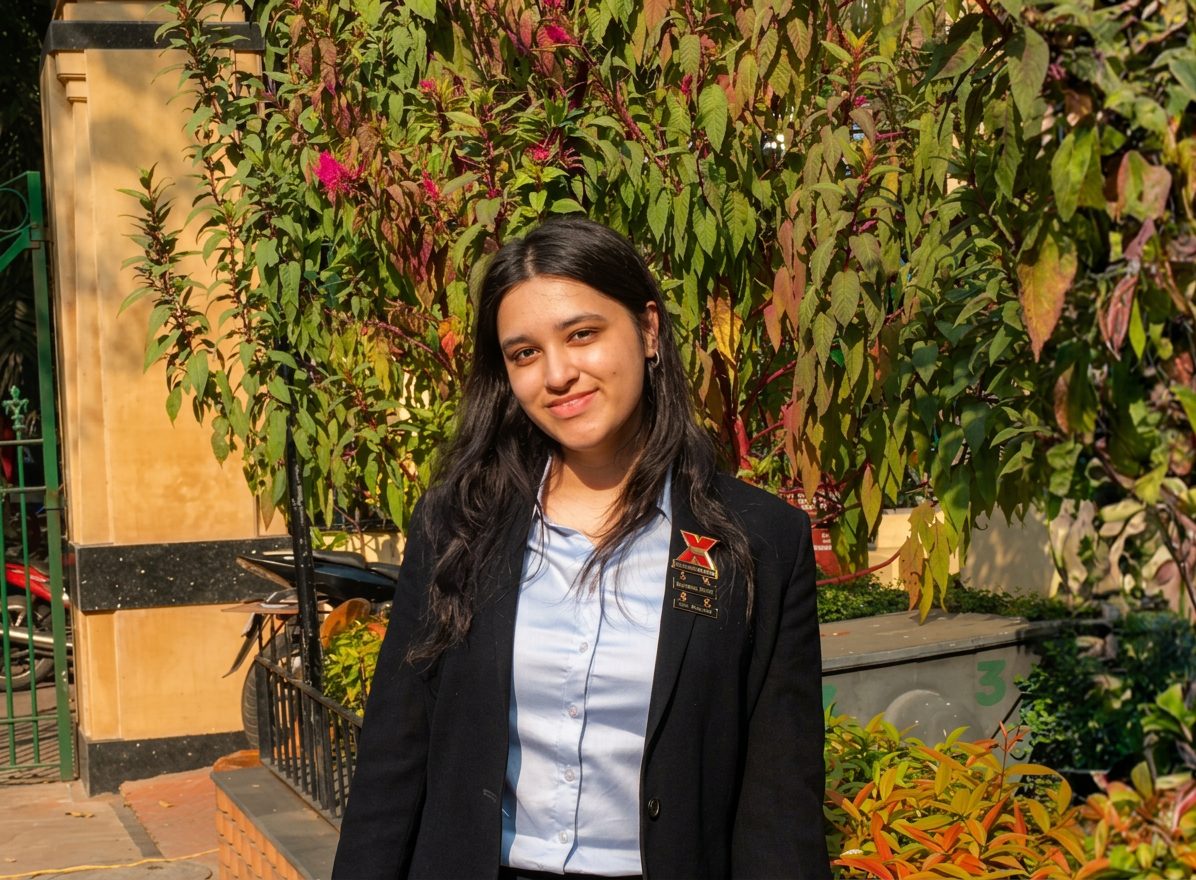
INTERVIEW SERIES: Voices of the Global Generation INTERVIEWER: Gokhan Colak | INTERVIEWEE: Arya Rajhans

Young people are becoming increasingly visible actors in global policymaking and decision-making processes. However, there remains an important distinction between the visibility of youth and their meaningful political and institutional participation. Based on your experience as a World Bank Group Youth Delegate, how would you define the position of young people within global governance mechanisms? Do you see youth participation primarily as a symbolic form of representation incorporated into existing institutional structures, or as an independent form of agency capable of transforming the ways in which these institutions formulate policies and make decisions?
From my own experience, I have observed that the position of young people in global governance is trapped within the aesthetics of inclusion. Youth are consulted; there is a seat at the table, but the seat has immutably been placed in the wings. The insights that emerge from these consultations are rarely implemented.
The issue is not just structural but extends to paternalistic safeguarding and cultural biases. Very often, the data that drives forums to include youth itself does not take into account the actual lived realities of people. This highly reductive information leads to illusory progress.
A democratic state is fundamentally answerable to its people, and the most vital demographic of any nation is its youth. Consequently, young people must be directly involved in both policy formulation and its active implementation. Today’s world, especially South Asia, has a demographic advantage, with a large population of educated youth. In the absence of clear policies, the resources of the state are at risk of not being directed productively to the most precious human resource we have, the youth that is going to power and sustain the world economy in the coming decades.
Young generations are often labelled as “tomorrow’s leaders”. Tomorrow is here; tomorrow arrived decades ago. It is high time that youth participation within the global architecture evolves from being a cosmetic accessory to a vital element in governance. True integration requires moving on from optics and mere proximity to power, to being given real authority in configuring our global order. Mere lip service is of no use. The youth need to be heavily involved in the betterment of their societies. We cannot inherit a world not designed for us.
Classical theories of international relations have largely regarded states as the primary actors of the international system. Today, however, international organizations, civil society, media networks, academic communities, and youth movements increasingly influence the formation of global relations. In light of this transformation, how do you conceptualize the agency of young people within international relations? Should youth be understood as a distinct political and intellectual actor within the international system?
Classical realism regarded states as the primary units in international affairs. This view has been challenged repeatedly through different perspectives. Transnationalism and globalisation have altered the landscape multitudinously. There are now a number of significant non-state actors that influence global relations, with the youth emerging as one of them.
The world is a palimpsest, and the youth are constantly reimagining, renegotiating, rewriting, and thus, reshaping conditions. Although their ideas often remain stranded in rigid institutional structures, due to reasons I described previously, the youth must be understood as indispensable intellectual and political actors.

Young people from countries such as India, as part of the Global South, often encounter Western-centered narratives within international policymaking and knowledge production. How do you assess the issues of epistemic inequality, representation, and discursive power in the production of global knowledge? What mechanisms are necessary for young people from the Global South to become not merely objects of international discourse, but active subjects in the production of knowledge and policy?
With knowledge as the site of power, power dynamics change when one grants themselves epistemic responsibilities. The self-proclaimed intellectual hegemony results in Global South countries being surreptitiously reduced to mere case studies of instability, underdevelopment, conflict zones, or exoticism. The Eurocentric lens heavily distorts and misrepresents. In development theory, the modernisation thesis posits that all societies, irrespective of cultural and historical context, must pass through a singular, linear process of development, ultimately morphing into the epitome of the Western ideal. This narrative ignores all experiences other than those of the makers of this theory.
The Western perception views their own paradigms as the universal gold standard; the rest are still anomalies. Rejection of this linear script is crucial, firstly. Different countries, different cultures have gone through unique experiences that shape their development trajectories, and inflicting a monochromatic structure robs the world of its plurality and thus, distinctive metamorphic processes.
The transition from being portrayed as objects of international discourse to active subjects begins first with decolonisation of the mind, and knowing that we must not remain passive policy recipients. Building independent networks across the Global South countries that bypass Eurocentric priorities is also an important mechanism. The institutionalisation of local knowledge through parallel policy think tanks as well as altering the metrics of development to different needs and preferences is non-negotiable.

The concept of the “youth voice” is increasingly employed by international organizations, governments, universities, and media platforms. Yet the extent to which young people are genuinely represented remains an important area of debate. Under what conditions can youth representation become meaningful democratic participation? How would you distinguish between institutions that merely include young people as advisors or representatives and those that enable them to become genuine political subjects within decision-making processes?
The distinction simply lies in the actual transfer of structural power and systemic responsibility to the youth. If youth voice is blocked from converting to any impact, it remains a buzzword. True political agency begins when young people are acknowledged as important and autonomous stakeholders.
This acknowledgement cannot be a passive nod. It must translate into several gradual changes: beginning with youth involvement in policy-making and then in its implementation, moving on to budget control of youth-centric policies. At its zenith, it must congeal the idea of “of the youth, by the youth, for the youth.”
Your curatorial work at TEDxSXC suggests that selecting, organizing, and presenting ideas to the public is not merely a cultural activity, but can also be understood as a form of public discourse production. How do you define the role of the curator in this context? When a curator decides which ideas become visible, does the curator also contribute to shaping the boundaries and intellectual agenda of the public sphere?
Curation of any kind is never neutral. As a curator, one has the power to drive psyches. Choosing what experiences and whose stories are given space and an audience comes with immense responsibility to discern between spectacle and substance. The process of steering idea dispersion has large, important implications: the curator must pick carefully a mixture of polyphonic voices. The dictation of this mix includes ensuring echo chamber disruption, bias elimination, introduction of unconventional and inspiring stories, and to equip a maybe ossified population with a creative and diverse imagination.
The curator decides what and who is heard, seen, understood and welcomed, empathised with, and given the space to impel public consciousness.

Editorial work extends beyond the linguistic and formal organization of texts; it also involves decisions about which subjects enter public discourse, which perspectives receive visibility, and which narratives circulate. Based on your experience as Head Editor, how do you understand the role of editorial practice in knowledge production, agenda- setting, and intellectual authority? Where, in your view, does the ethical responsibility of an editor begin?
Linguistic and layout revision is only the tip of the editing iceberg. Editing involves creative intervention, and a tacit commitment to being conscientious in that intervention. All editors are essentially gatekeepers, deciding what is published and what is rejected. The responsibility lies in knowing that we are not here to annex thoughts and ideas, or to homogenise the authors’ authenticity into fitting inside a framework. Our duty is to enable their arguments and analysis and foreground them in empiricism. Of course, if a text deliberately spreads misinformation or fails to align with some ethical guidelines, we reject it.
There is a thin line between filtering hateful content and Orwellianism. What can pose as harmful to one may not be harmful for others. Grasping this relativity is imperative, and then, while maintaining careful equilibrium between vigilance and writers’ sovereignty, we go ahead and publish. Within this balance lies the intellectual authority of editorial practice; knowledge- production and agenda setting are ineluctable outcomes. It is our responsibility to fill pages with societal realities, avant-gardism, dissension, and intellectual provocation.

Digital platforms have fundamentally transformed the ways in which young people engage with global issues. While they have created new opportunities for access to information and freedom of expression, they have also generated challenges such as algorithmic visibility, disinformation, echo chambers, and the attention economy. How do you evaluate the influence of digital platforms on young people’s political consciousness and their understanding of international affairs? Do you believe the digital public sphere is strengthening democratic participation, or is it creating a new form of algorithmic power relations?
Algorithmic bias has become the contemporary tool of cultural hegemony as social media directs the boundaries of our socio-political consciousness. We are constantly fed narratives. What we don’t realise is that while it feels we are making a free choice and thinking our own thoughts and forming opinions on important issues, our choices are being constrained by the consumption of limited information and information that serves our pre-existing biases. Digital content capitalises on the abbreviated attention spans of users. Social media platforms reduce and oversimplify issues through hyper- personalised echo chambers. Then, what we think is our own original thought is actually heavily manufactured consent under the garb of independent preference. By filtering diverse and opposing views and exploiting confirmation biases, a false sense of consensus is created. The scope of nuance is dwindled, and a person is made to believe that they are freely picking a stance, except that this is not volition, but thought-engineering.
Social media has, undoubtedly, democratised discourse to a large extent, but the two truths must be held together at once: while the digital sphere democratises, it simultaneously employs algorithmic suppression and shadow- banning of content that is unfavourable to the mainstream narrative. Thinking critically by not adopting the first comfortable stance that reaches us and considering different arguments before forming an opinion is crucial in this digital age.

As a writer, how do you negotiate the relationship between individual thought and social responsibility? Particularly when writing about international relations, politics, and social issues, can a writer be understood not merely as someone who communicates information, but also as an actor who contributes to the formation of public perception? What do you consider to be the fundamental ethical responsibility of the contemporary writer?
Writing about anything is never just communication of facts. It carries influence, and as writers, we have the power to construct reality. We must constantly remind ourselves to use this privilege in a manner that brings goodness to the world, in a way that uplifts, informs, connects, and most importantly, honours truth.
I believe that there is no separation between a writer’s individual thoughts and the kind of person they are. Writing and publishing one’s own convictions are a conscious choice, and reveal the values one prioritises. The physical act of bringing the pen to paper, or pressing our fingertips to the keyboard and articulating, is almost sacred: we are letting the world inside our mind and letting them know what we care about deeply, what we love, what we fear, things that bring us joy and things that don’t. Every time we string together words and form a sentence, it conveys, “I am here, this is what I support, and this is what supports me.” This reflection gives us several chances to expand our conscience and stray away from the perils of selfish or divisive ideas.
The socio-psychological ‘Looking Glass’ theory suggests that we form our self-image based on how we believe others perceive us. I feel this is also quite applicable in the literary context. When I write on any topic, I am putting out my perception, and when people read my words, they may, even if subconsciously, measure themselves against my judgements and beliefs. This is also an important angle to consider: that the act of reading words and processing them makes one vulnerable, and so, it is my responsibility that I am ethical in my being and in my writing.

International relations, media, culture, youth studies, writing, and curation are often treated as separate academic and professional disciplines. Yet many of today’s global challenges require us to think beyond these boundaries. Your work is situated at the intersection of several of these fields. Do you therefore understand interdisciplinarity merely as the convergence of different fields, or as a methodology for producing new forms of knowledge? Can the intersection of different disciplines generate genuinely new intellectual perspectives?
Definitely. Interdisciplinarity does not imply passively combining different fields. The amalgamation that forms when ideas, situations, problems, processes come together is transcendental, in a way that it disrupts the artificial boundaries and monopolies a particular discipline may have been dominated by.
No discipline can exist in isolation and truly succeed in its explanation of any condition, phenomenon, situation, or behavior. When one attempts to view things through an isolated lens, they risk neglecting several other factors. Absolutely everything exists in connection to something else. Just the combining of data from different fields or their fragmented reading done all at once is not enough. The intersection does, and must, generate new knowledge and different, holistic ways of perception.

The climate crisis, artificial intelligence, digital transformation, geopolitical tensions, economic inequality, and the transformation of information ecosystems are reshaping the international system. In this context, should young people be understood not simply as the leaders of the future, but as political, cultural, and intellectual actors of the present? Looking toward the next decade, in which areas do you believe young people have the greatest potential to transform the future of global governance and international relations?
Yes, young people are the leaders of today and have all the potential to bring about change. The entire idea of ‘tomorrow’ and ‘future’ must be dismantled. The youth are actors of the present. We must be careful so as not to create a world replete with unpassed batons: a situation where we simply replace the leaders of today, and in continuation of this vicious gatekeeping cycle, we tell the future generations, the leaders of the actual future, that it is not their time to lead yet.
Young people have the power to work and create incredible impact in all areas. But if I have to name a few, I would say the digital space, climate action, and inclusive representation, among many others, specifically because we have grown up in a world defined by these crises. Lived experiences with systemic failure in these regards equip our generation to empathise more with those affected by these problems and so, be better solvers of them.
Leave a Reply