
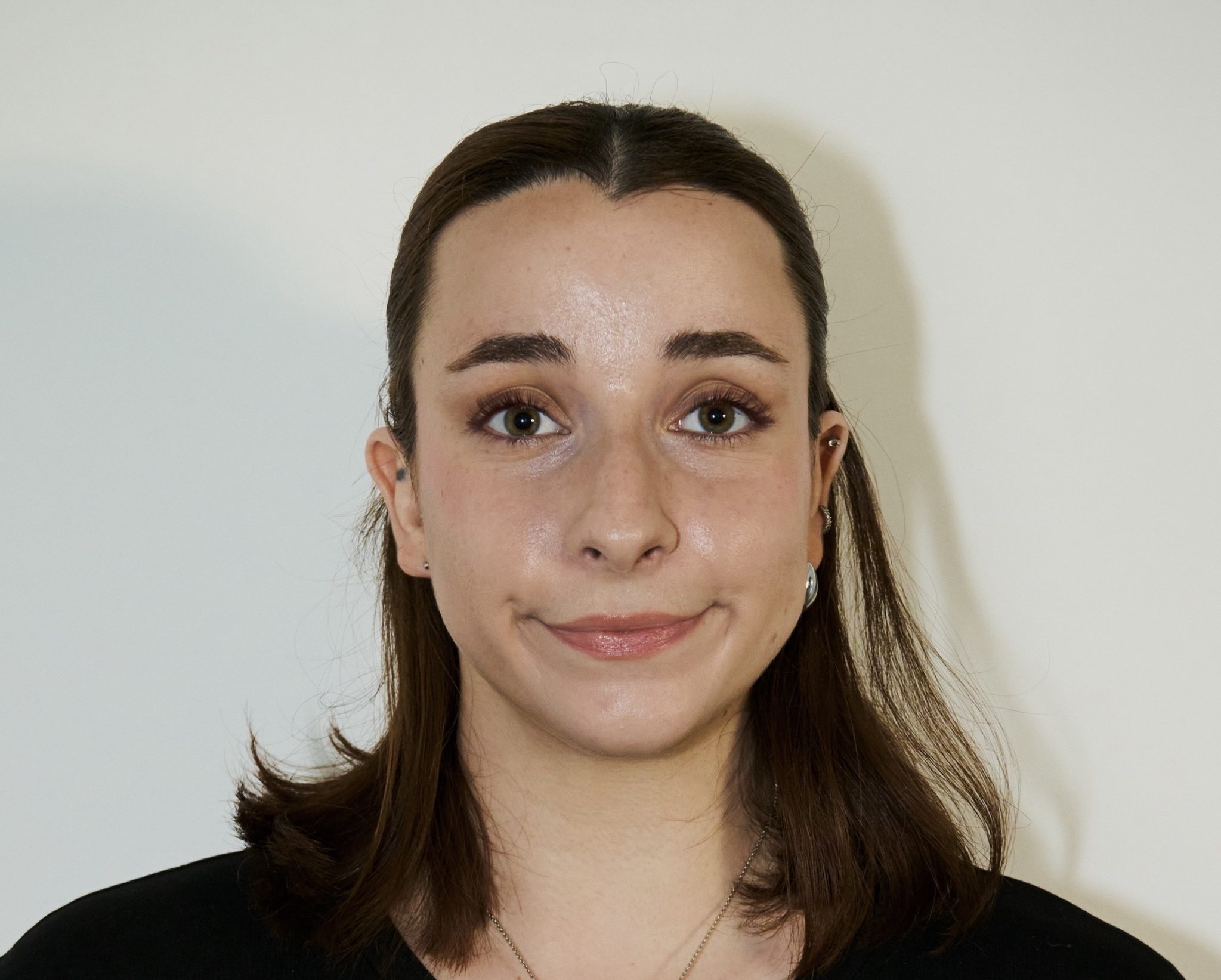
INTERVIEW SERIES: Culture in Code: Conversations on Technology, Aesthetics, Identity and Society INTERVIEWER: Gokhan Colak INTERVIEWEE: Roberta Maria Saraniti

When Culture Becomes Digital
You describe your research interests around the ways digital technologies shape culture, communication and contemporary identities. How has the digitisation of everyday life changed the way we understand culture itself? Have digital technologies simply given culture new forms of expression, or are they fundamentally changing how culture is produced, circulated and experienced?
I don’t think digitisation has simply given culture new forms of expression. It has changed some of the fundamental conditions through which culture is produced, circulated and experienced. Culture has always been shaped by the technologies through which it travels. What feels different about digital culture is the speed, scale and degree of participation involved. A cultural object is no longer necessarily encountered in a fixed place or through a single institution. It can move between platforms, be remixed by audiences, transformed by algorithms and acquire new meanings through circulation.
This also changes our understanding of visibility. In a digital environment, producing culture and being seen are increasingly two different things. A photograph, fashion collection, piece of music or idea can exist without necessarily becoming culturally visible. Platforms and recommendation systems participate in determining what reaches us, how often we encounter it and in what context. This is why I suppose it is useful to think of digitalisation not simply as a technological transformation, but as a cultural one. Technology increasingly participates in deciding the conditions under which culture becomes discoverable, desirable and valuable. At the same time, I don’t think we should describe people as passive victims of technology. Users continuously reinterpret, remix and repurpose what platforms provide them with. Digital culture is therefore shaped by a constant negotiation between human creativity, technological systems and commercial infrastructures. For me, the most interesting question is consequently not whether technology is changing culture. It clearly is. The more important question is: who, or what, gets to participate in deciding what culture becomes visible in the first place?
AI and the New Cultural Imagination
Your work explores the intersection of artificial intelligence, fashion and digital culture. What happens to cultural imagination when AI becomes capable of generating images, narratives, styles and visual identities? Could generative AI eventually become not merely a tool for representing culture, but an active force in determining what kinds of culture become imaginable?
Generative AI introduces a fascinating paradox into cultural imagination. On one hand, it can dramatically expand our ability to experiment with images, narratives, styles and visual worlds. On the other, the systems themselves are trained on enormous archives of existing cultural production. This makes me question what we mean when we describe AI as “creative” AI can generate combinations that a human might not have imagined independently, but those combinations emerge from patterns within existing cultural material. In that sense, AI can expand the field of what seems imaginable while simultaneously reproducing the visual and cultural languages that already exist.
I find this particularly interesting in fashion. Generative systems can produce garments, campaigns and entire visual identities that do not yet exist materially. This allows designers and communicators to experiment before production, but it also creates a new kind of relationship between imagination and materiality. An image can circulate culturally before the object it represents has ever existed. The important issue, therefore, may not be whether AI replaces human imagination, but how the relationship between human imagination and machine-generated possibilities develops. There is also a question of cultural memory. If AI systems increasingly mediate the production of new images, then the archives on which they are trained become extremely important. What has been represented historically, whose aesthetics have been preserved, and whose perspectives have been underrepresented can all influence what the system makes easier to generate. So, I see generative AI less as an autonomous cultural author and more as a new participant in cultural production. It can enlarge the imaginative field, but it does not exist outside culture. It inherits culture, recombines it and potentially feeds those recombination’s back into culture. That is why I think we should ask not only what AI can generate, but what kinds of cultural imagination we are teaching AI to reproduce.

Fashion After the Algorithm
Fashion has always been closely connected to identity, aspiration, status and visual culture. Today, algorithms increasingly influence what people see, what trends become visible and what styles circulate. How is algorithmic culture changing fashion’s role as a system of cultural expression? Are we moving from fashion as a form of individual self-expression toward fashion as something increasingly shaped by computational prediction?
I would challenge the idea that fashion is moving from individual self-expression toward computational prediction as though these were two completely separate systems. Fashion has always involved both individuality and collective influence. Trends, magazines, celebrities, subcultures, designers and commercial institutions have always shaped what becomes desirable. What algorithms change is the speed, scale and precision with which these processes operate.
Today, an aesthetic can emerge on a platform, become visible to millions of people, be replicated, commercialised and transformed within an extremely short period of time. Algorithms can amplify certain visual languages because they perform well in terms of engagement, creating feedback loops between visibility, imitation and popularity. This doesn’t necessarily eliminate individual expression. Instead, it changes the conditions under which individual expression becomes visible. Someone may choose an outfit because it genuinely reflects their personality, but the way they photograph it, caption it and present it online can also be influenced by an awareness of what is likely to be recognised or rewarded by a platform.
This is particularly relevant to fashion because fashion is already a language of visibility. We use clothing to communicate identity, belonging, aspiration and distinction. Social platforms add another layer to that process: the outfit is no longer only something we wear; it becomes an image that enters a computational environment.
So, I don’t think algorithms are replacing fashion as a form of self-expression. Rather, they are increasingly mediating the relationship between expression and visibility. The challenge is that prediction can encourage repetition. If systems learn from what has already performed well, they may continually reinforce familiar aesthetics. The risk is not that everyone will necessarily dress identically, but that cultural visibility becomes increasingly concentrated around recognisable and easily reproducible visual codes. For me, the interesting future of fashion lies precisely in negotiating that tension between algorithmic visibility and individual or collective difference.
The New Meaning of Authenticity
Generative AI can create images of people who do not exist, clothing that has never been manufactured and visual worlds that have no physical equivalent. At the same time, audiences increasingly encounter digitally manipulated and synthetic imagery. What does authenticity mean in this environment? Could the distinction between “real” and “artificial” become less culturally important than the question of whether an image has symbolic or emotional meaning?
I don’t think authenticity will disappear in an environment of synthetic imagery, but I do think we need to become more precise about what we mean by it. For a long time, we have often associated authenticity with the physical origin of an image: a photograph was considered authentic because something actually existed in front of the camera. Generative AI complicates this relationship because an image can look photographic without documenting anything that happened in the physical world. But I don’t think this means that the distinction between real and artificial becomes irrelevant.
An AI-generated image of a fictional person can have genuine emotional or symbolic meaning, for example, while still not being documentary evidence of a real person. Those two things can coexist. This suggests that authenticity may have different dimensions. Something can be emotionally authentic without being materially authentic, or culturally meaningful without being documentary evidence. What becomes increasingly important, therefore, is context. We need to know what an image is claiming to be. I think this is especially important in fashion and advertising. An entirely synthetic image can be an interesting creative object, but there is a difference between presenting it as an imagined visual concept and presenting it as evidence of a garment, person or event that never existed. So rather than asking whether an image is simply “real” or “fake” I think we increasingly need to ask: What is this image claiming? Who created it? Why was it created? And what kind of relationship does it ask us to establish with reality? In that sense, authenticity may become less about proving that something has not been mediated and more about being transparent about the nature of that mediation.

Visual Culture and the Algorithmic Gaze
Your background in visual storytelling and digital communication places you at an interesting intersection between aesthetics and technology. How do algorithms influence what becomes visually desirable, fashionable or culturally relevant? Are we beginning to develop an “algorithmic gaze” in which platforms do not simply show us images but actively participate in defining what we consider beautiful, desirable and worth seeing?
I find the idea of an “algorithmic gaze” particularly useful because algorithms do not need to explicitly tell us what is beautiful in order to influence our perception of beauty. They can simply determine what we encounter repeatedly. If certain bodies, faces, fashion silhouettes, colour palettes, lifestyles or photographic compositions consistently receive visibility, we become increasingly familiar with them. And familiarity can gradually become associated with desirability or normality. This means that platforms do more than distribute visual culture. They participate in its organisation.
Traditionally, visual culture was shaped by institutions such as magazines, galleries, television, advertising and the fashion industry. These institutions still matter, but platforms have introduced another layer of cultural mediation in which engagement data can influence what becomes more visible. The algorithmic gaze is therefore not necessarily a single aesthetic imposed from above. It is more subtle. It emerges through continuous feedback between users, platforms, advertisers and cultural producers.
We also have to remember that algorithms are not neutral observers. They are designed within particular commercial and technological systems, and they operate through categories, datasets and optimisation objectives. This matters because what is repeatedly shown to us can influence what we eventually learn to look for. At the same time, I don’t think audiences simply absorb these aesthetics. People reinterpret trends, create alternatives and deliberately subvert dominant visual languages. Digital culture is full of examples of users taking a format designed by a platform and turning it into something the platform could not have predicted.
So, I would describe the algorithmic gaze as a new layer of visual mediation rather than a total replacement of human taste. The challenge is becoming conscious of that mediation instead of assuming that what appears in front of us is simply a neutral reflection of what culture naturally values.
Digital Identity and Self-Presentation
Social media has transformed identity into something that can be continuously designed, edited and performed. With AI-generated avatars, filters, synthetic photography and increasingly sophisticated digital identities, this process is becoming even more complex. Are digital identities becoming extensions of ourselves, cultural performances, or products designed for algorithmic visibility? And what happens to our sense of self when the image we construct online can be more carefully controlled than our physical appearance?
I think it is tempting to describe digital identity as somehow less authentic than physical identity, but I don’t completely agree with that distinction. Identity has always involved forms of performance and self-presentation. Clothing, language, gestures and social environments all influence how we present ourselves to others. What social media changes is the degree to which this process becomes continuous, visible and measurable.
Online, we can select images, edit them, delete them, rewrite captions and construct an archive of ourselves. We can also observe how other people respond to that construction through likes, comments, views and other forms of engagement. This introduces an interesting tension. Digital identity can be an extension of the self, but it can also become a performance designed for visibility.
The arrival of AI intensifies this because the boundary between representation and fabrication becomes increasingly flexible. We can alter not only the photograph but potentially the circumstances represented within it. I don’t think the result is necessarily that digital identities become “fake.” Instead, they become increasingly constructed.
The more interesting question is what happens when we begin designing ourselves according to the expectations of computational systems. If we know that certain images receive more attention, we may gradually learn to present ourselves in ways that are more compatible with those systems. At that point, self-presentation becomes partly a form of optimisation. This is where fashion, identity and algorithms intersect particularly strongly. What we wear, how we photograph ourselves and how we construct our digital presence can all become part of the same visual language. The danger is that we begin confusing visibility with identity: assuming that the version of ourselves that performs best online is necessarily the most meaningful version of ourselves. I think maintaining a distinction between being visible and being understood will become increasingly important.

From Audience to Participant
Your professional experience includes social media strategy, content creation, cultural communication and audience engagement. How has the role of the audience changed in contemporary digital culture? Are audiences still primarily consumers of cultural content, or have platforms transformed them into participants, producers and distributors of culture?
Digital platforms have fundamentally complicated the distinction between producer and audience. A person can encounter a piece of content, comment on it, remix it, create a response, distribute it to another audience and potentially transform it into something entirely different. In that sense, audiences have become active participants in cultural circulation.
My experience with social media and digital communication has made me particularly aware of this. Engagement is not simply a numerical measurement that comes after content has been produced. Audience responses can influence what gets created next, how a narrative develops and which cultural ideas gain momentum. However, I would be careful about describing this as a complete liberation of the audience. Users have more tools for participation, but those tools exist within platforms that have their own commercial interests, rules and algorithms. We participate within environments that are structured.
So the contemporary audience is both more powerful and more conditioned than the traditional audience. A user can make a trend emerge, but the platform determines part of the infrastructure through which that trend travels. A community can create a cultural language, but its visibility may still depend on recommendation systems and platform dynamics. I therefore think the most useful distinction is no longer simply between producer and consumer. We should think about people as participants in systems of cultural circulation. This also changes the role of communication professionals. Creating content is no longer enough. We need to understand how people interpret, transform and redistribute that content.
For me, successful digital communication is therefore less about controlling a message and more about creating the conditions for a message to become meaningful within a community.
The Politics of Digital Aesthetics
Digital aesthetics are often presented as playful, fashionable and technologically innovative. But aesthetic choices can also reflect deeper social and economic structures. How do questions of gender, class, race, cultural capital and commercial power become embedded in contemporary digital aesthetics? Can something as apparently superficial as an Instagram visual style or an AI-generated fashion image carry political meaning?
I don’t think aesthetics are ever completely superficial. Images communicate ideas about what is desirable, valuable, modern, successful or socially legitimate, even when they appear to be simply decorative. Consider the popularity of aesthetics such as “quiet luxury” “clean girl” or “old money.” These visual languages do more than provide people with styling references. They communicate ideas about class, femininity, status, taste and belonging. What is particularly interesting is that digital platforms can make these cultural codes appear both highly accessible and highly exclusive at the same time. An aesthetic can be reproduced by millions of people, but the cultural capital associated with it may still depend on access to particular products, lifestyles or forms of knowledge. AI introduces another layer to this process. When we generate images of idealised bodies, homes, lifestyles or fashion worlds, we are also generating representations of what we imagine desirable life to look like.
This means that questions of representation matter enormously. Which bodies are considered beautiful? Which cultural references are treated as sophisticated? Which forms of femininity or masculinity are repeatedly represented? Which histories are visible, and which disappear? I don’t think every Instagram aesthetic needs to be interpreted as a political statement. But aesthetics become political when they participate in broader structures of visibility, exclusion and value. This is particularly important in fashion because fashion has always operated through symbols. A luxury object is not valuable only because of its material properties; it also carries cultural meanings.
Digital aesthetics can therefore be understood as a kind of social language. They tell us not only what something looks like, but often what kind of person, lifestyle or social position that image invites us to desire.

What Happens to Creativity When AI Enters the Creative Industries?
As AI becomes increasingly integrated into advertising, fashion communication, branding, visual design and media production, creative professionals are being asked to work alongside computational systems. Do you see AI primarily as a threat to creative labor, a new creative instrument, or a force that will fundamentally redefine what “creative work” means? What skills will become more valuable as AI takes over increasingly sophisticated forms of content production?
I don’t see AI simply as either a threat or a tool. I think it is going to force us to reconsider what we mean by creative work in the first place. There are certainly legitimate concerns around creative labour. If organisations can automate certain forms of image production, copywriting, editing or design, some tasks that previously required human labour may become less valuable or disappear.
But I don’t think creativity can be reduced to the production of an output. As AI becomes increasingly capable of producing technically sophisticated material, I think skills such as cultural interpretation, conceptual thinking, taste, editing, research and judgment may become even more important.
The question may shift from “Can you produce an image?” to “Do you know which image should exist, why it should exist and what it means?”. This is particularly relevant to fashion and communication. A generative system can produce hundreds of campaign concepts very quickly, but that does not mean all of those concepts are culturally meaningful. Someone still has to determine which idea is appropriate for a particular brand, audience and cultural moment.
There is also an important human dimension to creativity. Creative work is not only about generating novelty. It involves making connections between experiences, histories, emotions and cultural contexts. So, I see AI as potentially redistributing creative labour. Some forms of execution may become easier, while the importance of direction and judgment may increase.
For emerging creative professionals, I therefore think the goal should not be to compete with AI at everything AI can do. It should be to develop the skills that allow us to question, contextualise, edit and give meaning to what AI produces. The future creative professional may be less defined by their ability to produce endlessly and more by their ability to decide what is worth producing.
Designing the Culture of Tomorrow
Your work brings together digital media, fashion, communication, emerging technologies and cultural analysis. If you could imagine the cultural environment of the next decade, what would you hope technology contributes to it—and what would you want us to resist? More fundamentally, should we be asking what technology can create for culture, or what kind of culture we want technology to help us create?
If I imagine the cultural environment of the next decade, I don’t hope for a future in which technology simply produces more content, faster. We already have an extraordinary amount of content. What I would hope for is, technology that allows us to produce more meaningful forms of cultural participation. Technology can expand access to creative tools, allow people to experiment with forms that were previously inaccessible and create new ways of telling stories and communicating cultural experiences. Those possibilities are genuinely exciting. But I think we need to resist the assumption that technological possibility automatically equals cultural progress.
We should be cautious about a culture in which visibility becomes the primary measure of value, where algorithms increasingly determine what deserves attention, or where efficiency becomes more important than originality, context and human judgment. I would also resist the idea that technological development is inevitable, and culture simply has to adapt to it. Culture is not merely something technology acts upon. People collectively decide how technologies are adopted, regulated, interpreted and incorporated into everyday life. That is why I think the question at the heart of these transformations is not simply what technology can create for culture. It is what kind of culture we want technology to help us create.
For me, that means a culture that remains curious about technological possibilities without becoming dependent on them; that embraces experimentation without abandoning critical judgment; and that values participation without reducing cultural value to engagement metrics. Ultimately, I don’t think the future should be about choosing between humans and technology. It should be about deciding what we want to preserve as distinctly human (judgment, context, emotion, curiosity, disagreement, interpretation) while using technology to expand what culture can do.
The most interesting future, to me, is therefore not one in which technology becomes the author of culture. It is one in which we become more conscious authors of the relationship between technology and culture.
Leave a Reply