
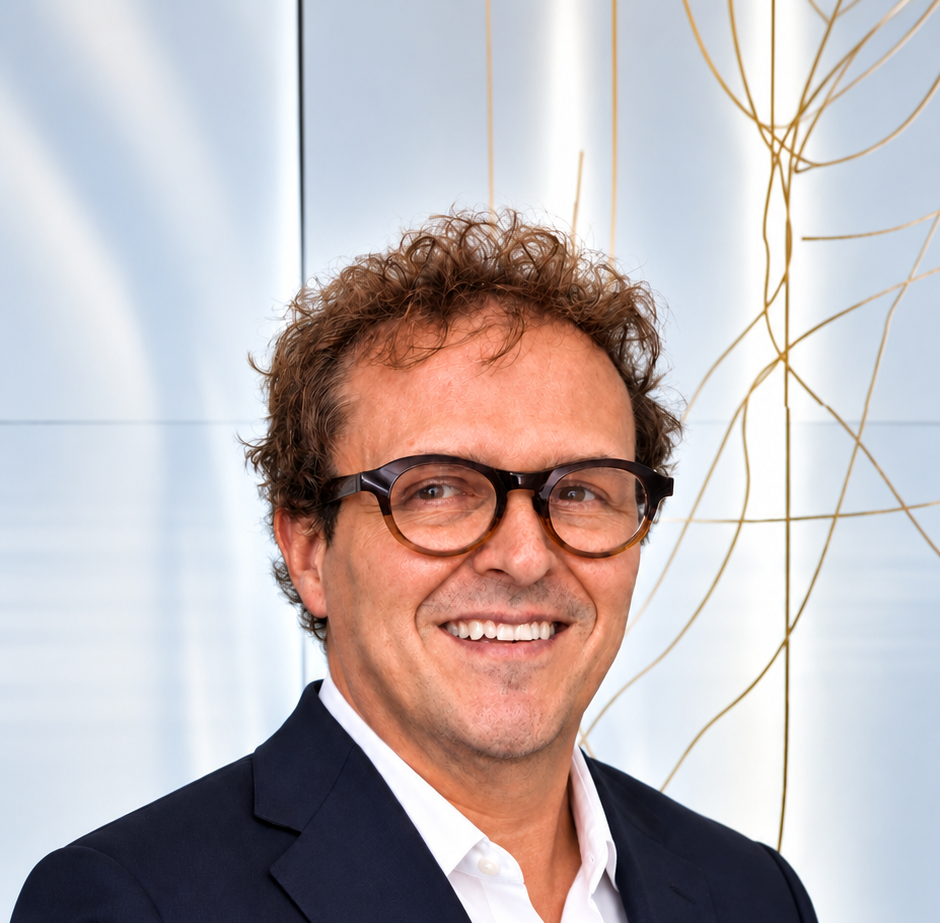
INTERVIEW SERIES: Curatorial Dialogues 03: Art and Artificial Intelligence INTERVIEWERS: Gokhan Colak & Ipek Yeginsu INTERVIEWEE: Patrick Lichty

Your artistic practice has developed across new media art, conceptual art, and performance, often resisting a single medium or disciplinary category. How would you define your artistic position today? Are there particular intellectual or artistic traditions that you consider fundamental to how you understand yourself as an artist? And has that position changed significantly over time?
I am returning a bit to my early absurdist and cybernetic roots, as I was influenced by the “First Wave Avant Garde” of the fin de siècle, and have direct ties to cybernetics, Dadaist-> Gutai-> Fluxus, net.art, and Performance Art/Critical Media. I generally come from the Continental and Postmodernist intellectual traditions, though I have moved into Speculative Reality and Metamodernism as loose frameworks.
Considering this background, I am someone who went from these earlier traditions into New Media niches, and going forward, I’m invested in an ongoing interest in the mediation of reality by technology. I do this as I have some vision impairment I have dealt with all my life, and perhaps also an atypical perspective on reality, and perhaps an interest in Poststructuralism plays a part in that.
Has my position as an artist changed? If nothing else the way I write has changed . Reading Vilém Flusser’s “Essays” both broke and revolutionized my thinking, in that it permitted the weaving of the subjective and anecdotal into my academic writing, but albeit not wholesale. Over time, I’ve become more comfortable in my research-based exploratory methods, while adding a little cheek to interpreting the mediation of reality.
The one thing that is definitely shifting is that there is a slowing of new work and digging out the terabytes of old work that was never shared, like the calligraphy incorporated into the Personal Taxonomy GAN AI explorations of the late 2010’s/early 2020’s and the historical VR work. I also want to engage in media archaeology, like my interest in Slow Scan TV as a performance medium, which I experimented with during 2016-18.
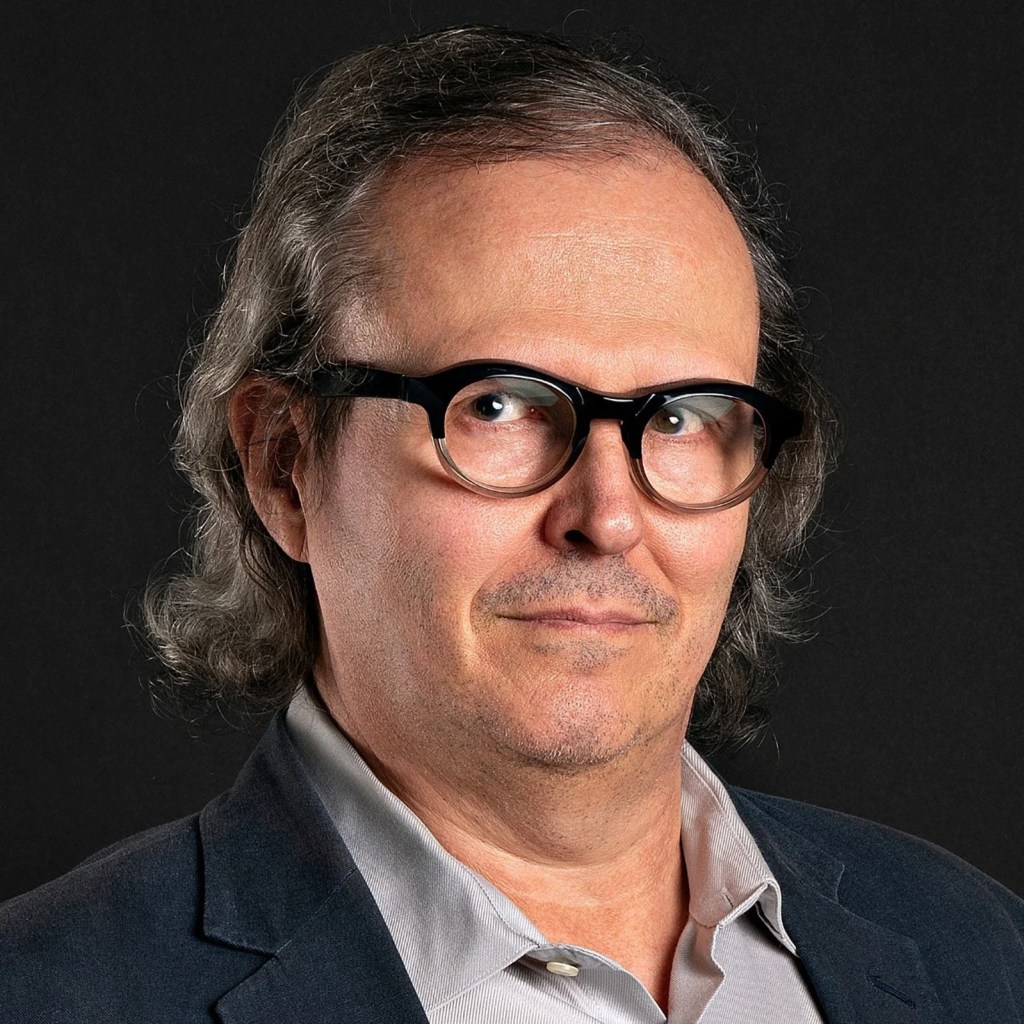
You were deeply involved in virtual worlds and networked environments such as Second Life long before today’s renewed interest in immersive and virtual spaces. Looking back at those early experiments, what do you think virtual worlds let artists investigate that physical spaces couldn’t?
Consider that I met Jaron Lanier and Char Davies in the 1990s, and Superscape was my first working virtual environment in 1998, and building my own VR room in 06 during graduate school, then going into virtual worlds, and secondly for performance, made perfect sense. And I still spend a little time in SL, although not as much as I did.
As far as potential goes, this is pretty straightforward. An SL maven named “Bettina Tizzy” said that Second Life allowed that which was “Not Possible in Real Life,” which is what Second Front did. We abandoned our bodies to explore avatar affect by pulling pizza-delivery pranks, Iron Lung races, and walking around with 10-meter concrete walls on our heads, creating havoc while slinging other avatars around when one of those walls hit an avatar. During a Berlin media festival, we even set Stelarc’s brain on fire! These sorts of interventions were very appealing.
In addition, performing Virtual Fluxus works with Bibbe Hansen, and even Larry Miller was very important. It took the sort of ephemeral work so connected to networked media art and grounded it historically. Not in the same Second Life vein, I even wonder about Fluxus NFTs…Probably NFTs worth nothing except in resale and saying that is a bit of a jest.

Alongside your artistic practice, you have occupied the roles of curator, writer, theorist, researcher, and educator rather than remaining within a single position in the art world. How have these different roles influenced one another in your practice? Have curating, teaching, or writing about other artists, for example, fundamentally changed how you approach your own artistic production?
Being a curator, writer, theorist, researcher, and teacher approached culture from different angles. In the 90s, akin to Mark Rothko’s classic reflections in his Yale address, there were no curators, collectors, or writers, so we did it ourselves. I edited the New Media journal Intelligent Agent, published by Christiane Paul the Whitney Museum of American Art, and people like Lev Manovich and Oliver Grou wrote classics like The Language of New Media and Virtual Art. I curated some of the early non-institutional shows, like projects exploring handheld devices, computer icons, and virtual worlds. This is how the genre got built.
Two points come from this – in order to build a genre, the practitioners usually have to build their own foundations and then get attention. And more personally, I have always said that my works are merely material symptoms of my thought, so there is no separation by genre, only discursive mode. No matter what I make, write, or curate, these are articulationsof a discourse through different channels. So, no–it was never separate; my practice has always been a syncretic whole.
Having witnessed technological transformations ranging from the internet and virtual worlds to VR/AR and generative art, what do you consider the fundamental characteristic that distinguishes AI from previous technological ruptures? Is AI simply a new production tool, or does it represent a paradigm shift in how art is produced, perceived, and circulated?
Every new genre announces itself as the next revolutionary form, from net.art to postinternet, to Second Life, to Web 3. Part of it is just wanting to clear the playing field for the new conversation, as the Futurists did, or part of it is pure promotion, as the art world and its ecology are part of the conversation.
I am trying to think of the distinctive qualities of AI; it makes novel but not original work, as by definition it is based on as much extant knowledge as possible and is somehow derivative or heavily reliant on the “shoulders of giants”. and it’s very difficult to invent new words and concepts with AI. It’s a dim mirror of the Internet, It reminds me of a remix in which one discerns an idea from all the predefined solutions, however many there are. In a Jungian sense, it is a medium that reminds us of things we already know, and reflective and critical work is the only interesting AI, as Paul has suggested, with artists like Herndon and Dryhurst, Meier, Eldagsen, Paglen, Stiles, and Abosch among my favorites.
As a curator, evaluating AI art requires looking beyond the final visual output and considering the production process, the conceptual framework, and the artist’s relationship with AI. What, in your view, makes an AI artwork genuinely significant and artistically compelling? How do you distinguish an aesthetically impressive AI-generated image from a meaningful work of art, and which criteria do you find most relevant in curating AI art today?
Most of the time, the visual output or aesthetics have little to do with my evaluation of AI art, and, to paraphrase Paul, I agree that AI art that treats AI as an end in itself is particularly uninteresting. As with all work I look at, it needs a strong concept, and the use of AI has to fit the idea. To answer the next question, I often find aesthetically impressive images relatively easy to make with AI, which means that the most compelling AI work often has little to do with aesthetics. The strongest criteria for me, as hinted at before, are whether AI was used with expertise for an appropriate concept or an interesting experiment; good questions and solid, challenging propositions drive the best conversations.

In your project Studio Visits: In the Posthuman Atelier, you raise a particularly provocative question through AI-generated artists, studios, and artist narratives: What makes an artist “real” and legitimate within the art world? How do the artist’s identity and biography, curatorial interventions, and the involvement of certain institutions contribute to the production of meaning and value around an artwork? As AI begins to simulate these systems, what does it reveal about the art world’s mechanisms of legitimization and reality construction?
To which I answer: Which art world? There have been several texts on this multiplicity, like “My Artworld is Bigger than Your Art World” Cailin Jones, 2010) and Lev Manovich’s 2026 “Seven Worlds of Digital Art: A Visitor’s Guide.“ That leads me to ask the nature of the question–who is real and legitimate to whom, for what purpose, and who benefits? If we approach this through the sociological frame of Social Interactionism, we see that these are created through social consensus, given the sociocultural frame in which we discuss these ideas. This leads us back to my previous set of questions…
Legitimacy has always interested me. One particularly fascinating scenario is the legitimacy of Web3 art–it began with a different audience than the traditional art world, as Second Life and net.art did (altnough net.art generally came out of art countercultures). Still, I feel that monetization through NFTs and provenance via the blockchain spoke strongly to the traditional art world (“tradart”) and its ecosystem of museums, collectors, galleries, biennials, and critics, many of which are not congruent with many of Manovich’s digital art worlds, FYI (festivals like ISEA and SIGGRAPH are largely unmonetized).
But here, I am being reductive, limiting the legitimacy of art to value propositions in the tradart ecosystem, but these are powerful institutions of power and legitimacy.
One story of legitimacy is art in Second Life, with a “local” artist feeling Second Life should be the next legitimized art space; conversely, when building RMB City, Chinese artist Cao Fei seemed somewhat puzzled that few SL artists took her up on participating in the Yokohama Triennial (a prominent tradart space). Legitimacy comes with community and audience, and I
believe RMB City didn’t take off in SL until she inserted herself into that culture and community. So, even though RMB City was at the Serpentine Gallery, at the time this was not on the radar of Second Life artists, and at first the Web3 community had this sort of alignment challenge until museums connected with NFT as a Certificate of Authenticity (provenance), which translated that art into their terms, allowing for people in the space and the objkt team to create bridges.
As an end note to this question, I do not believe AI is emulating or simulating institutions at this point. It is certainly creating a frame for cultural creation. Still, the cultural institutions pre-AI are surely in place (like Art Basel, which generated Zero10 as a space for digital art to reside…)

The notion of “authorship” has become increasingly complex within the context of AI- generated art. The artist, the AI model, datasets, software developers, prompts, curators, and even audiences can all play different roles in creating a work. Who, then, is the author of an AI artwork? Do you think it is still possible to talk about the singular artist, or do we need a more distributed and posthuman understanding of authorship?
Asking this is like asking whether Adobe is a co-author of your Photoshop work, or, more closely, whether the model/latent space is. For me, AI is another form of remixing based on extremely large bodies of cultural data, and it’s unrecognizable because the diffusion model atomizes content. It’s almost like creating a statistical collage with individual pixels. As shown under American Copyright Law, AI images can’t be copyrighted, so is authorship of the concept, like Yves Klein selling the provenance to an idea? Or is it a massively distributed Duchampian Readymade? This gives the platform too much credit, since creating meaningful work comes from a concept supported by the media. Therefore, maybe AI art authorship is still rather porous.

As an educator with a long-standing teaching practice in interactive media and media art history, you interact with younger generations regularly. You can observe how they perceive technological developments and incorporate them into their own practices. Do you notice a particular difference in how Generation Z and other generations respond to AI in art? How would you compare their usage habits, perceptions, and expectations? Most importantly, has generative AI changed what you think an art student needs to learn?
The issue I have with teaching is that I got into it as an artist relatively late, as in my mid-40s. Therefore, while I see colleagues who have been in academia for four decades plus, I spent half of my career strictly in the studio, and this is an important distinction. In addition, motivations were largely in having conversations beyond myself and creating knowledge, which seems to be a challenging subject in contemporary higher education, especially in light of AI.
That said, the backlash against AI among Generation Z and my perception of the subsequent rise in painting enrollment in art schools is significant. A return to artisanship could be very interesting, but it creates possible pitfalls for a digital artist; per my ending statement that takes technology and the traditional arts and weaves them.
Privileging any tool too much is always a mistake, as it elides the artist’s vision. Art is art, whether it is an AI image or a painting of an installation of 10,000 glazed donuts in the middle of the MCA Chicago (nothing real, just a dream in the vein of Gonzalez-Torres).

AI art is expected to transform the art market, museums, galleries, biennials, and academia in the coming years. At the same time, it raises significant questions concerning copyright, training data, labor, ecological costs, algorithmic bias, and the value of human creativity. Looking ahead to the next 10 to 20 years, what transformations do you anticipate in the art world? For emerging artists and curators in particular, why is it important to engage with AI not merely as a production technology, but also as a cultural, political, and philosophical phenomenon?
It is essential to address AI in the cultural, political, and philosophical sense, as this is where its meaning arises. In 2004, I created a series of Breugel-like Flemish AI “paintings” of medieval Dutch towns being terrorized by giant six-fingered, five-pawed cats I call “The Catastrophes.” These played on the errors and anxieties of early AI image generation as a desired part of the images. They also addressed the politics of representation and the mediation of reality by satirizing the “hallucinatory.”
AI will still likely be far less transformative to the art market than the question suggests; much of the change in the digital art world comes from moves that adapt to integration with the traditional, object-oriented art world. That is a big part of what postinternet art set in motion. After Claire Bishop denounced ephemeral digital art in her “Digital Divide” essay, so digital artists started making objects the traditional art world could consume with postinternet art. However, NFTs also turn a digital object into something with provenance and value; if you think about it, this is the most conservative strategy imaginable. How can we make ephemeral digital art integrate with the traditional, material-based world? At best, this is innovative or evolutionary.
Massive change is coming for what we call AI. If nothing else, Intel just announced a chip with a 22x performance boost over Nvidia hardware. That alone would change the technical side, but the coming issues of AI scale and the possibility of AGI could create profound changes in global society. But for the moment, let us assume politics and hype cycles continue, and remember that the AI economic bubble could always collapse, or the authoritarian turn in global politics could continue. That would change many things.
And that is only AI. One fascinating genre coming to the art world is the immersive space, like TeamLabs’ spaces, Anadol’s DataLand, which echoes an article I wrote proposing that museums could begin to look like entertainment spaces or amusement parks. I expect these to last for ten years, and another genre could be AR glasses art, if Meta has anything to do with it. I can’t tell with clarity, but my track record has been good.
In general, I don’t believe traditional genres like painting and sculpture are going anywhere, as I will be giving a talk at an international sculpture conference about AR as extended sculpture, where some of my colleagues haven’t even heard of Augmented Reality 35 years after its emergence. I believe that Blockchain and NFT-based art will be important to the digital art world, but it will be interesting to see what happens as chains age. Technologies will change how the fringes of art are made, but I still believe the foundations of fine art will stay in place, as I would not imagine the 500-year-plus genre of oil painting suddenly evaporating.
In some ways, this is why I have created a genre called postalgorism (.art) , a conversational extension of code-based art, pen plot, textile or embedded electronics. Doing so grounds the work in a legacy, engages with techniques like vibe-coding, and creates tangible objects that the gallery and museum system can appreciate. In addition to having all the ephemeral forms inherent in digital art, as I am a digital artist for the most part, a material practice is essential.
For, in terms of conservation, I say that ‘Atoms trump bits, every time This is something every artist needs to consider. But lastly, emerging (contemporary) curators must engage art of its time on its own terms, and that is by definition. AI is part of that landscape, but my main proviso is that technological art really requires some technical understanding to grasp the formal qualities of the form. This is probably my most critical point at this time; art historians often trip themselves up on the tech and its histories when beginning to work in this genre–it’s important, and although technological art is currently a glamorous niche, it has its requests.

Criticality has been an important dimension of your artistic and theoretical practice. What role do you think art can still play as a form of cultural or political critique today? In a media environment where critique itself can be rapidly absorbed, circulated, and even commodified by the systems it seeks to question, how can artists maintain a genuinely critical position?
Critique never lives outside its system. When RTMark exhibited in the 2001 Whitney Biennial, a group built on sabotaging corporate culture suddenly wound up inside one of the most prestigious cultural institutions in American art. The Yes Men was the same project in a different mode: put on the costume of power, speak the language slightly wrong, and see if anyone notices. Of course, they generally don’t.
But, absorption and appropriation aren’t new; it’s only accelerated. Debord called it recuperation. Critical tactics would take years before becoming a trope. Sometimes it only takes the algorithm a few hours to digest it, and it only cares if it drives engagement.
So, criticality is a matter of timing and placement, not a fixed stance, really. It’s much more hit- and-run than it used to be, but De Certeau’s tactics still help here. Institutions own territory and can wait. Artists move through territory they don’t own, find the niches, and are gone before the institution really understands what just happened.
A few tactics I use still don’t fit this model. Slowness is a good tactic to combat the machinic: a Jacquard tapestry or a Slow Scan transmission doesn’t scroll, and that is a potent irritant. An image that takes 7 seconds to transmit can’t scroll and turns time into material. Steryl’s poor image as in my low-res photos and glitch, is another, because showing the grain and the glitch reminds people of the machinery behind the work, which is good as it cracks AI’s opacity. Working inside the system is a third, the way Second Front used Second Life’s own physics against its assumptions. Refusing scale is useful: small rooms and real communities are hard to commodify. I’ll leave it at that.
The critical artist now is more a hacker than a prophet, still firmly within Wark’s hacker class. They find exploits, knowing they’ll be patched, and move on; maybe rogue AIs mimic this motion; the critique still lives in that gesture.

Leave a Reply