
INTERVIEW SERIES: The Politics of Images INTERVIEWEE: Boris Eldagsen INTERVIEWERS: Gokhan Colak & Ipek Yeginsu
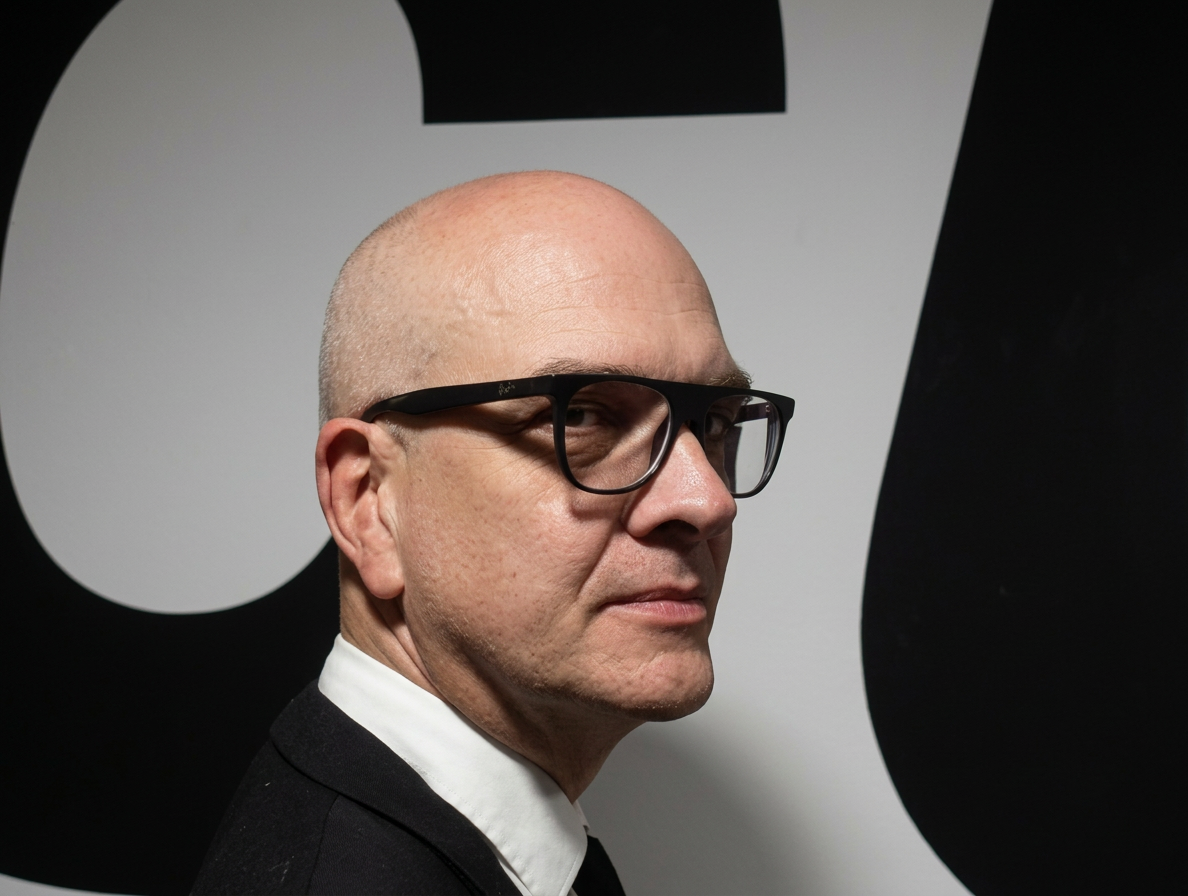
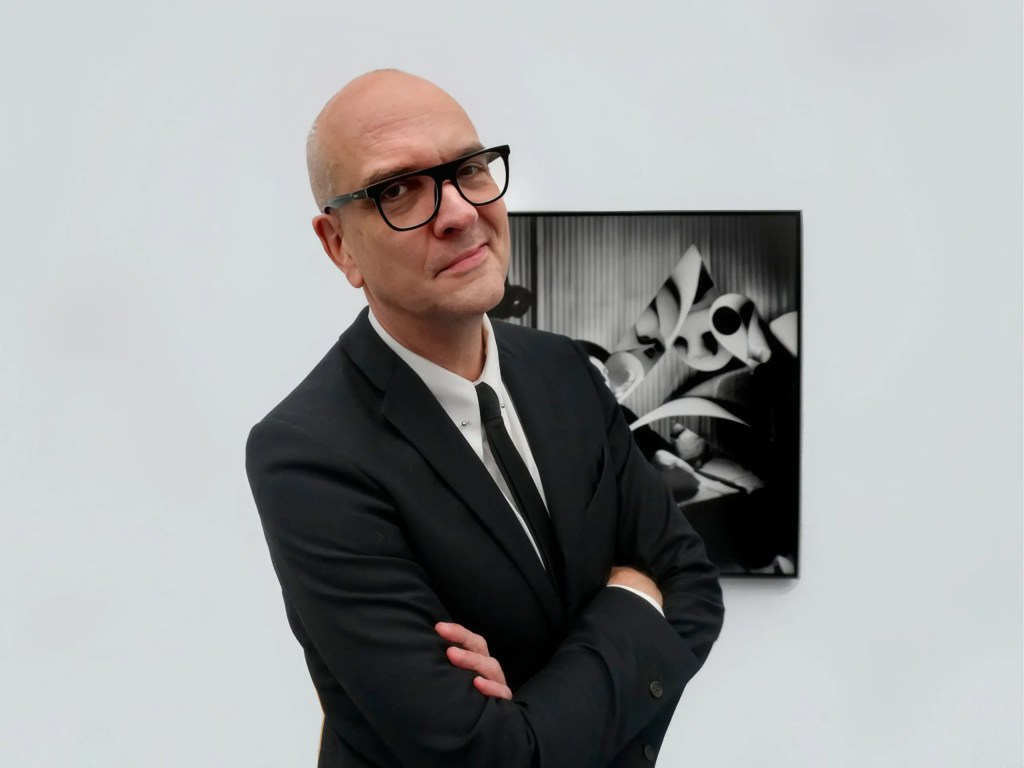
| Boris Eldagsen
Photography, Memory, and the Ontology of the Image
Photography’s authority has long been tied to its perceived ability to document reality and bear witness to actual events. As AI-generated images become increasingly indistinguishable from photographs, how is the relationship between visual representation and reality being transformed? What implications does this have for photography’s traditional status as a form of evidence?
We have to separate an image’s appearance from its origin. Photography begins with a physical encounter: light reaches a recording surface. A generated image is a hallucination created from probability. The results may look identical, but their relationships to the world are fundamentally different. This is why I distinguish photography from promptography. Wearing photography’s clothes does not give an image photography’s history.
Of course, photography has never been innocent. A photograph can be staged, selectively framed, manipulated or given a dishonest caption. You can even photograph a fabricated image and produce a perfectly authentic photograph of a fabrication. The camera records what is in front of it and does not investigate its credentials.
What AI removes is our ability to treat photographic appearance as sufficient evidence of photographic origin. That is a substantial and maybe long overdue change, but it does not make actual documentation worthless. It makes the circumstances of its production more important.
For journalism, history and public debate, trust must rest on identifiable sources, a traceable process, context and independent corroboration. We need to know who made an image, where it came from and what happened to it before it reached us. Evidence has to survive questions. The camera was never a notary. We simply enjoyed treating it as one.
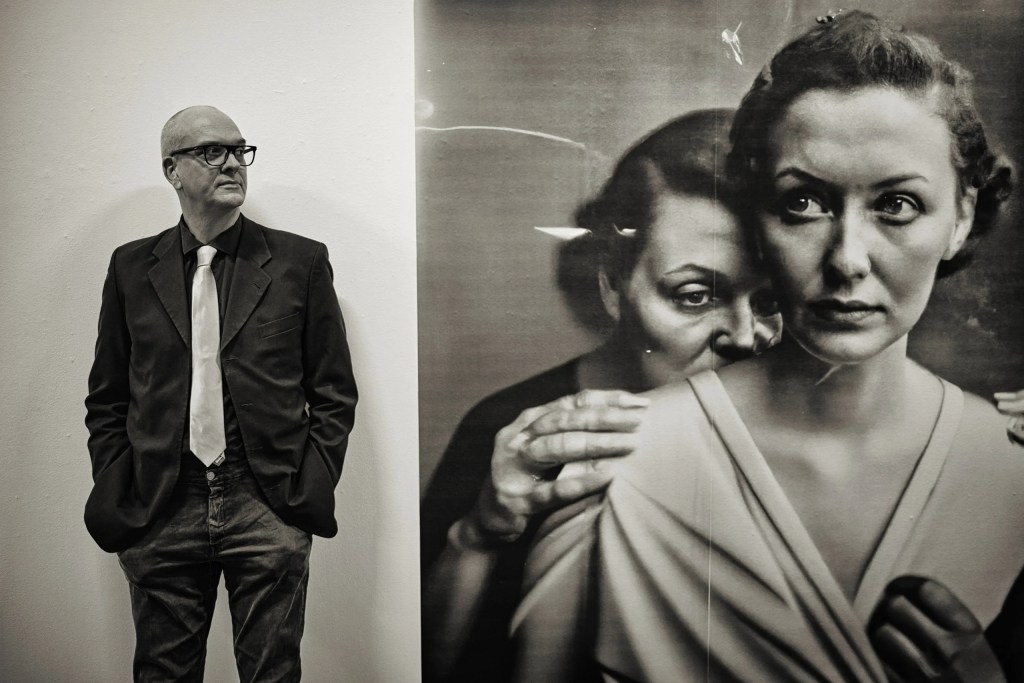
Your ongoing series PSEUDOMNESIA: Fake Memories presents images that appear to document historical moments that never actually occurred. What initially drew you to explore the relationship between artificial intelligence, fabricated memories, and the visual aesthetics of historical photography?
There was a personal starting point. After my father’s death, I found photographs from and before WW2 that my mother and I had never seen. I also began collecting photographs from that period. Later all of this became the work TRAUMAPORN. PSEUDOMNESIA is an early spinoff and as such it is deeply rooted in the 1940s.
PSEUDOMNESIA uses the visual language of historical photography to construct a past nobody photographed because it never happened. Grain, faded tones and unfamiliar faces can make an image feel inherited. We approach it with expectations already installed: family, loss, survival, secrets. The image provides a familiar form; the viewer supplies a history.
Discovering the fabrication does not necessarily cancel the emotional response. You can know perfectly well that these people never stood together and still feel something painfully familiar between them. That is where the work becomes interesting to me: an invented past can touch a real memory. Our emotions do not wait for an authenticity certificate.

Before turning to AI-generated imagery, your artistic practice was deeply concerned with the unconscious, archetypes, dreams, and the uncanny. How has working with generative AI reshaped your understanding of the unconscious as a source of artistic creation? Do you think AI can be employed as a tool for giving visual form to the collective unconscious?
The obsession was already there. It did not arrive with AI.. My work has long explored what we cannot fully articulate: attraction, fear, shame, desire, the strange familiarity of something we would rather not recognise. AI has expanded the ways I can approach these things.
Working with it involves a revealing exchange. I begin with words, receive an image, and notice that something affects me before I understand why. That response changes what I ask for next. Sometimes the most useful result is an unexpected detail that disturbs my original intention. Following that disturbance can take the work somewhere I would not have reached through planning alone.
I find the collective unconscious a productive framework for this, provided we are precise about what we mean. A model is not literally a human psyche. Its training material contains cultural expressions of fantasies, fears, myths and stereotypes. Those expressions can be recombined in ways that expose connections we have stopped noticing.
But the material is selective. It reflects what was recorded, circulated and included, alongside the exclusions and power structures involved. We should be suspicious of any machine presented as an unfiltered portrait of humanity.
For me, the artistic event happens between those cultural patterns, my own responses and the viewer’s projections. I want the image to activate something that exceeds my explanation of it. The machine does not need to possess an unconscious to put mine to work.

Artistic Authorship, Creative Agency, and Institutional Ethics
You have described AI image-making as a process of co-creation rather than simply pressing a button to generate an image. Where do you locate artistic authorship in this process? When an artist develops prompts, selects and modifies outputs, and constructs a visual narrative, how should we understand the distribution of creative agency and authorship between the human artist and the AI system?
I locate authorship in the decisions through which something becomes a particular work: what I pursue, what I recognise, what I reject, what I transform and what I finally put into the world. My role often resembles a director’s. Prompting, generation and evaluation form a repeating process. The result changes my thinking; my thinking changes the next result. My knowledge, experience and visual judgement enter at every stage. That is what makes co-creation a useful description of the working relationship. The AI contributes possibilities I could not produce in the same way on my own. It can surprise me and redirect the work. Calling it a neutral instrument would underestimate that influence. Its training, design and restrictions also shape what becomes possible. However, influence and authorship are not interchangeable. We can acknowledge the system’s contribution without imagining a second person sitting at the desk. I bring a biography, an artistic concern and responsibility for the choices I make with its output.

Generative AI systems are trained on enormous collections of existing images, many of which originate from the work of photographers and artists. This raises fundamental questions about copyright, consent, appropriation, and the rights of creative workers. What kind of ethical and legal framework do you believe should govern the relationship between AI developers, artists, and the data used to train these systems?
My enthusiasm for the artistic possibilities does not oblige me to applaud every business model behind them. I have argued from the beginning that creators need a meaningful say in whether their work is used for training.
I would start with transparency, meaningful consent, workable licensing and fair compensation. Creators should be able to understand how their work is being used and have enforceable choices. Being available to look at online should not amount to permission for every conceivable commercial use. Transparency must also be useful. A reassuring statement about “responsible AI” is worth very little if nobody outside the company can examine the practice behind it.
I would judge copyright in the resulting work through the human creative contribution involved, rather than treating the mere presence of AI as the end of the discussion. The economic imbalance matters throughout this debate. An individual photographer negotiating with a technology company is not automatically participating in a meeting of equals. Collective representation and accessible remedies should be part of the conversation.
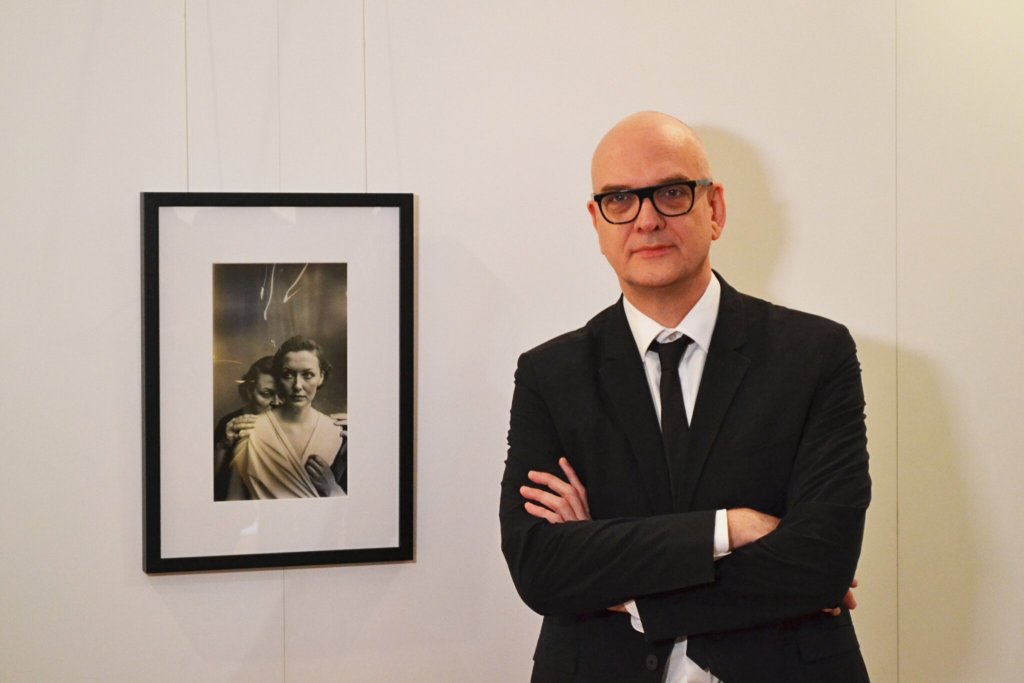
Your decision to decline the prize at the 2023 Sony World Photography Awards after revealing that PSEUDOMNESIA: The Electrician was AI-generated sparked widespread debate. Looking back, what do you consider the most significant outcome of this intervention? Do you believe cultural institutions have sufficiently adapted their evaluation and classification systems to the emergence of generative AI?
For me, the most significant outcome was that a seemingly specialist question became a public argument: what exactly are we recognising when we call an image a photograph? The popular story often reduces the intervention to winning a prize and then confessing. The chronology was more complicated: I had already communicated the use of AI to the organisers before the public announcement. I declined the award to push that discussion into the open.
What interested me was the gap between aesthetic judgement and classification. An image can be compelling, emotionally powerful and artistically successful while still requiring a different account of how it came into existence. Its quality does not settle its medium.
There has been concrete progress. World Press Photo, for example, explicitly excludes synthetic images and generative fill, while distinguishing them from limited forms of processing that preserve captured information.
Across the broader cultural field, I would still ask for more clarity. Institutions need a vocabulary that describes what happened to an image: capture, adjustment, generation or a combination. They also need people capable of understanding those processes. A museum can bring photography and promptography into a fascinating conversation. A competition needs to explain what its categories promise to participants and audiences. Those are different responsibilities. I would like the discussion to move beyond deciding whether AI is welcome at the party. It has already arrived. The institution now has to explain what the party is for.
Visual Culture, Public Trust, and the Future of Photography
As AI-generated images become increasingly convincing, synthetic imagery can circulate as seemingly authentic visual evidence. In an environment shaped by misinformation and deepfakes, how can we cultivate visual literacy without undermining trust in photographic documentation altogether? What responsibilities should artists, journalists, technology companies, and cultural institutions assume in navigating this changing visual landscape?
If the lesson we teach is “you cannot believe anything anymore,” misinformation has won without needing to generate another image. Visual literacy should give people methods for investigating images. Who published this? Where did it
originate? What is it supposed to show? Can the place, date and circumstances be checked? What independent evidence supports the claim attached to it?
I would not build that education around counting fingers. Temporary glitches are a poor foundation for lasting literacy. We need to understand how images acquire authority through captions, publication contexts, repetition and the reputation of whoever distributes them. The responsibilities are quite concrete. Artists should make the fictional status of their work accessible, especially when borrowing the appearance of documentary evidence. Journalists need to verify sources and circumstances, clearly identify reconstructions and protect the distinction between documenting an event and illustrating an idea. That work requires money and trained people.
Technology companies should make origins and alterations easier to trace and preserve that information through distribution. Cultural institutions should teach these distinctions and explain their own presentation choices. A trustworthy record of how a file was made would help, but it would not prove that a scene was unstaged or its caption truthful. The danger runs in both directions: invented events can be believed, and documented events can be dismissed as AI. We must defend the possibility of establishing what happened.
Looking ahead, how do you imagine the future of photography, contemporary art, and visual culture in an era increasingly shaped by generative AI? Could the growing capabilities of these systems encourage artists to reconsider what makes human creativity, perception, and artistic experience distinctive? What should the next generation of photographers and visual artists be prepared for?
I expect photography’s different functions to pull further apart. Commercial work built around interchangeable, predictable imagery will face strong pressure from AI. Photography grounded in actual encounter with people, places and events has a different proposition. Someone went there. Something happened. That relationship can carry meaning no visual resemblance supplies by itself.
In contemporary art, I see enormous possibilities. AI allows us to explore images and combinations that would otherwise demand resources we do not possess. It can also expose the limits of our imagination by delivering exactly the cliché we thought was a brilliant idea. That is an educational service, although a slightly rude one.
The human distinction interests me most where creativity connects to a life. We have bodies, relationships, memories and consequences. We make decisions with limited time, and some of them cannot be undone. A system can simulate a biography; we have to live ours. That difference can matter profoundly to how a work is made and experienced. But being human does not automatically make an image interesting. I am interested in friction: encounters that resist our wishes, materials that behave unexpectedly, experiences that force us to revise what we thought we knew. Artists can seek that friction through photography, AI, performance or a combination.
For the next generation, I would emphasise visual judgement, conceptual depth, an understanding of image history and practical knowledge of the tools. Learn the economics and rights involved, too. Keep working with bodies, spaces and people. Develop an artistic concern that can survive the disappearance of your favourite platform. Use AI to support critical thinking and artistic autonomy, it’s possible.
Leave a Reply