People of the 21st century, where the digital world has changed the way of life, are expected to have knowledge about the developing information and internet technologies and to master the relevant technological equipment. It is obvious that today’s mass media are decisive in social and global relations. Therefore, it is essential to adapt to rapidly changing and developing living standards. From this point of view, the need for traditional media tools, which is decreasing day by day, has long been on the agenda to be replaced by digital media.
The process, which has caused radical changes in the schemata of education, health, economy, politics and culture, points to differences between people born in this process and those who started to live before the digital world. In this table, which seems to be divided into two, it is actually possible to evaluate the period covering the audience before digital media in different categories within itself. In this context, it is possible to categorise those born in 1970 and before, those born between 1970-1999 and those born after 2000.
However, while it was easier to make this distinction before the Internet, today it is not enough to be literate to make this distinction. In addition, it is necessary to know and make sense of computer technologies and coding languages, software programmes, data, algorithms and many similar technology terms.
From this point of view, the 2000s, especially the WEB 1.0 process, which is considered as social media, are decisive dates. People who were born before this date are different with their skills and mental attitudes before the internet (Tonta, 2019:755-757).
With its multifaceted structure, the Internet has changed and transformed not only skills but also ways of thinking. In this sense, efforts are being made to digitally educate the mass, which is defined as digital migrants, who communicate only with traditional media tools, and to ensure their mastery of the field, and trainings in this direction continue in the context of advancing technologies.
However, even though the theoretical infrastructure is provided with manual skills or training, it has not been easy to change the mindset. According to Prensky, the generation born before 1970 has problems in adapting to digital environments and continues to need printed sources to access information (Çetin & Özgiden, 2013: 174-175). In this sense, the traditional weight of people who were born long before the Internet, from family life to education life, from business life to the political party they belong to, is obvious. Such habits are unlikely to change radically. Therefore, the living standards and social structures of those born in 1970 and before are not coincidental in terms of resistance to today’s digital opportunities.
Prensky (2003) categorises those who are familiar with digital media tools and those who are not as “digital natives and digital immigrants”. Digital natives consist of the generation born in 1980 and after and are also referred to as Millennials, Digital Natives, Net Generation, The Gamer Generation, Next Generation, N-generation, Cyber Kids, Homo Zappiens, Grasshopper Mind.
Digital immigrants are the generation born before 1980. Digital immigrants are not familiar with virtual reality like digital natives born in the digital world, but a generation that tries to adapt later (Eşgi, 2013:181).
Digital immigrants represent the group who encounter technology in their twenties, who are more conservative in mastering technological tools and may experience adaptation problems, and whose new media literacy is at a lower level than digital hybrids and natives. However, the concepts of digital migrant and digital hybrid give an interrelated picture, which may contain inaccuracies for the information related to the mentioned understanding of digital orientation.
It can be seen that individuals in their fifties and sixties, who are defined as digital migrants as of the current process, also utilise technological opportunities and even use new media platforms appropriately in their working life with the training they have received in technology. This is actually an important evidence to determine the radical changes created by internet technologies in human life.
DIGITAL HYBRIDS
Rapidly developing information and internet technologies have led to social and cultural changes. In the information world where geographical limitations are no longer important, while the age factor is important in internet usage, especially the age range of the people who shape today’s world is remarkable.
This age range shows that an intermediate age range is needed on the scale of immigrant and native, which Prensky categorises in the context of digital media. This generation, which both benefits from the blessings of the technology it is in and does not completely lose its traditional loyalty, is defined as “Digital Hybrids”.
It is important that this user profile, about which not much information can be accessed in the relevant literature, covers the people who are determinants of education, health, economy and politics of the time we are in. While globalisation has become widespread to the extent that it supports the local, digital hybrids have become the cornerstone of the structuring that serves this expansion. In this context, the use of media by digital hybrids is of great importance (Kakırman Yıldız, 2012:820).
This group, which consists of people born between 1970 and 1999, before the millennium, does not show as much resistance as immigrants, but leads a lifestyle that depends on printed sources in parallel with the use of the internet. This group, defined as digital hybrids, uses technology at least as efficiently as natives.
The most important point where digital hybrids differ from digital migrants is that digital migrants first prefer printed sources and then use the internet to access information, while digital hybrids first search the internet and then look at printed sources. In this sense, it is possible to say that digital hybrids adapt quickly to new situations and draw a profile that is open to change. However, it is seen that they do not leave their old habits while experiencing change (Kakırman Yıldız, 2012:821-822).
DIGITAL NATIVES
It is possible to say that digital migrants are compulsorily involved in the technological world due to their nature, and that they use new media against an obligation. Likewise, while digital hybrids prioritise traditional media opportunities, they benefit from new media environments as a second source. The adaptation and use of these immigrants and hybrids to information integration is mostly shaped by need. However, it would be appropriate to say that digital natives, who are born into technology and who show serious differences with both digital generations, point to a very different lifestyle in this context.
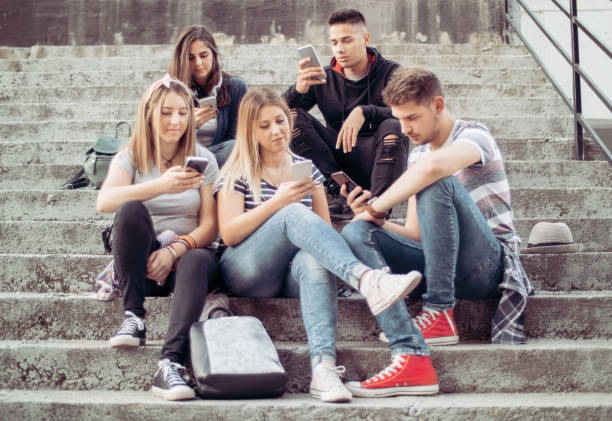
Digital natives are people born in 2000 and later years, for whom digital communication tools, which are called new media, constitute an important part of their daily life practices. Especially considering the sophistication of the 2000s in terms of information and internet technologies, the age factor, which indicates an understanding of culture independent from the society they live in, plays a major role in the use of new media by digital natives (Bilgiç et al., 2011:3-5).
“Digital natives use technology in five different contexts: personal interest or entertainment, social communication, daily use (such as information storage or access to information, looking at train tickets…), professional work and university/course work” (Eşgi, 2013:183).
In the context of these features, digital natives want to socialise quickly unlike real life. Digital natives are open to making new friendships. It is important for them to access information and news instantly. In this sense, they prefer to read information not only as text but also as infographics designed in the form of expression with graphics. Again, they have a working style that is not holistic but fragmented. In this sense, they prefer to read information not only as text but also as infographics designed in the form of expression with graphics. Again, they have a working style that is not holistic but fragmented.
IN THE FINAL ANALYSIS
It is possible to say that gaining a more objective perspective in accessing accurate and real information and news and in the decisions taken is parallel to the age and generation accessing new media applications. In this direction, with the existence of a user profile that has mastered the developing technologies, it will be ensured that all the blessings of technology will be carried out in a position to work for the benefit of humanity.




 prcarnetworld.com