
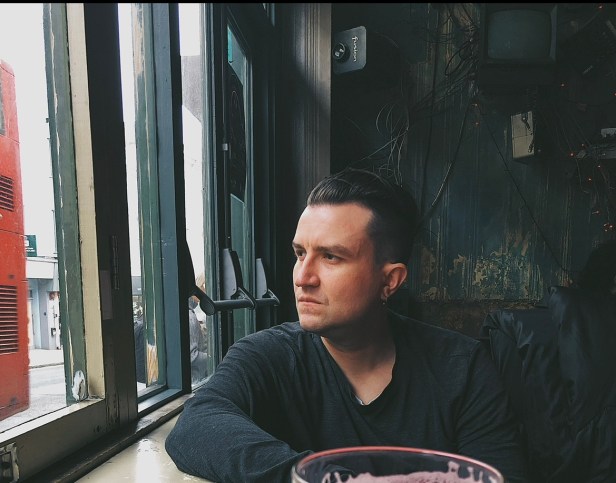
Who is Joel Matthews? Could you tell us a little about yourself?
Sure! I am a writer on progressive social movements from the perspective of their historical and philosophical foundations. I have always been outspoken about human oppressions like racism, sexism and homophobia because their clear and obvious cruelty was very apparent to me. At a relatively early age I became aware of close friends and family who suffered with anxiety and depression. I think this may be the origin of my focus on the suffering of others as a priority in my own life and life in general.
At university I worked with a theologian, contributing to his third book. I studied aspects of cosmology (the scientific study of the origin and evolution of the universe as a whole) from a philosophical, empirical perspective. The research investigated the ways in which our ideas about the world are justified and accepted into the collective human domain involving both ancient Greek and more contemporary European approaches. Coming from a secular household with secular parents this was a unique and expansive experience, encouraging me to seriously consider perspectives outside of prevailing popular thinking.

What precisely compelled you to start writing this book, why did this discussion need to take place, and why now?
After becoming aware of the unnecessary, and therefore unethical treatment of animals for food, I began to review my experience and study of philosophy and self-defined compassionate theology and theologians in particular. They troubled me because, not only was support for moral consideration of nonhuman animals absent, but there was an active participation in their abuse. For the sake of unnecessary suffering in the world, which incidentally causes the climate crises, this must be urgently discussed, challenged and corrected.
How does your book expand on and take inspiration from existing authors and discussions of animal oppression, and what new angles do you present on the subject of human supremacy?
My work begins with Dr Kim Socha’s research on this relationship (or lack thereof) between people who defend animals from cruelty and people of faith. From here I refer to Dr Melanie Joys’ vital redefinition of animal eating behaviour as ‘a choice’, with a corresponding belief system just as arbitrary and ‘choose-able’ as ‘veganism’. Dr Joy brilliantly names this belief system ‘Carnism’.
I cannot stress enough how important Dr Joy’s naming and addressing of this (until her work) invisible belief system is. I believe recognition of her contribution to collective human knowledge will grow with time and only truly be acknowledged by generations to come. There have clearly been many extraordinary people throughout history that have been able to contribute to profound advances in our development. Whether they are of a technological or ethical nature, everything is interconnected and in some way is part of our survival.
The current general public may never be aware, but one of these people is among us in Dr Melanie Joy. Carnism will join, now familiar words like racism, sexism and patriarchy, and be part of common parlance in the future. And Dr Melanie Joy will join the likes of Martin Luther King or Emmeline Pankhurst only fully celebrated by future generations. Dr Joy explains that Carnism is supported in the modern world by arbitrary justifications. It is these justifications that are remarkably similar to those of white supremacy, patriarchy, cis and het normativity. I apply these to the essential work of Professor Khyati Y. Joshi and her study of Christian influence in society. With this taken together I take direction from Dr Corey Lee Wrenn’ encouragement to apply a rational approach in radically shifting the general public’s default choice of food from one of cruelty and exploitation to one without.
I am inspired by the optimistic and hopeful appraisal of Steven Pinker. His extensive work, indicating violence amongst the human species in a variety of categories (domestic violence, capital punishment, international war, likelihood of being killed by war) is going down. Pinker points to humanity’s awareness of others’ suffering, historically transmitted via reading, as a motivator of empathy and compassion amongst the general public.
I adopt this perspective and appraise aspects of philosophy, making a clear demarcation between what contributes to compassion and our species survival, and what does not. I aim to do to western philosophy in the 21st century, what St Thomas Aquinas did to Christian theology in the 13th.
Unlike other writers in this discussion, I bring a passionate participation in street activism as well as an education in philosophy, theology and cosmology. Inspired by the old adage ‘born liberal, die conservative’ (backed up by research) I propose framing non-human animal liberation within existing liberation movements. To really drive this home and call this behaviour for what it is, in language that young people clearly understand – that choosing the “meat” option is not a negligible, un-noteworthy choice that can pass without comment. It is active participation in violence. It is barbaric human supremacy. If there is one thing I want people to take from this book is its title.

What do you think is the power of framing animal oppression in relation to modes of human oppression more broadly recognised as intolerable and inhumane?
This framing capitalises on existing awareness of human oppression. Thankfully young people are now primed and alert to these human social ‘evils’. For example, Romesh Ranganathan recently referenced his engagement with the Twitter campaign ‘Say “Mate” to a mate’, which calls upon all young men to call out their male friends who show sexist behaviour or language. This education and awareness makes for a fertile environment for our expanding moral circle. My approach ignites this existing support. I want to light a fire amongst young people, causing a compassionate and rational revolution.
In light of this framing, do you feel as though most humans only take animal oppression seriously when it is compared to oppression against humans? Is this a discouraging revelation, or a finding to be capitalised upon in onboarding more people to the anti-anthropocentric cause?
No. This framing, and my approach, is just a helpful tool in undoing the theological and secular postmodern distortions of the natural world that young generations are subjected to. Depending on your birthplace you will be assigned particular species to name, care for and love, and other species that you will, through social conformity, be compelled to withdraw all your innate compassion for, at best ignore and at worst inflict, with your wallet, industrialised violence. All of this is perpetually reinforced by the pillars of your society; education, healthcare, the justice system, and the media. This assumes your natural compassion is allowed to flourish and be applied to nonhuman animals in the first place. Depending on your culture, whether religious or secular, your moral consideration will be sharply cut off from all other species.

It is a common anti-vegan talking point to claim that considering animal oppression as serious and deserving of recognition as human oppression dismisses the severity of human oppression, and undermines the experiences of human victims. What would you say to those who find the drawing of comparisons to instances of human oppression (racism, transphobia, homophobia, etc..) to animal oppression offensive, and how does your book work to justify these comparisons?
Great question! However, the question itself is based upon an anthropocentric premise. The first thing to say is all oppressions don’t have to be equal to be considered. All systemic oppression is deserving of consideration and challenge and do not detract from human oppressions. We can refrain from perpetuating harming animals three times a day and continue with our anti sexism work, for example, the rest of the day.
This line of questioning is comparable to “All Lives Matter”. With centuries of systemic exclusion and oppression of people of colour in general, I am not sure, amongst this conversation we should be comparing the treatment of all people – who in this context are their oppressors with the oppressed. It is also part of the anthropocentric thinking that I am trying to dismantle. Homo sapiens, biologically, do not occupy a special place in the universe.
Life is life and should not be adjudicated on our cognitive abilities, but instead our ability to suffer. Ignoring others because we do not necessarily understand them or do not behave in ways we understand leads us down a dangerous path to some ugly conclusions, as we have seen history.

You make it abundantly clear that young people are significant to the struggle against human supremacy and toward animal liberation, what exactly is it about the youth that make them so integral to the transition to a kinder world?
We are “born liberal, and die conservative”, the saying goes. There is a lot of evidence to support this. This is more of a political statement but is close to my position. I strongly suggest young people are born with a default ‘natural attitude’. This is an honest, unbiased engagement with the world and others within it, devoid of projected pre-existing beliefs and judgements. The trick is to nurture this natural attitude, allow it to flourish and applied to all sentient others in the world. Not to curtail it. We wonder ‘Why we all can’t just get along?’ It’s probably because the first thing parents feed their children are the products of exclusion and oppression. We literally serve it to them three times a day.
Into the 21st century we still wonder why people supported the Third Reich’s industrial killing of Jewish people as a subset of the human race. People, homo sapiens, are just another species, that have emerged and evolved on this planet. Humans are animals, and species’ is fluid. Be under no illusion, if you lived in 1920’s Nazi Germany, subjected to the same supporting pillars of society propagating the same distorting “natural”, “necessary”, “normal” justifications, there is no reason to believe you would do anything other than support and defend the gassing of the Jews because, we are doing it right now. When Jews arrived at Auschwitz they were greeting by calm music. The same calming music is sometimes played at slaughterhouses.
The moral and philosophical framework of ‘sentientism’ is discussed rather heavily in your book’ – how would you sum up this framework to readers who are unaware of this term and are perhaps not as well versed in animal rights discourse and ideas? Does having a cohesive label for one’s moral beliefs (i.e., ‘sentientism’) make it more palatable to comprehend and implement?
Sentientism simply acknowledges anyone that is sentient as deserving of moral consideration. Sentience simply means embodying an interior subjectivity. In other words, able to think, feel and experience happiness or sadness to varying degrees. What is critical and most important to me is the capacity to suffer. In order to establish this ability we take guidance from a naturalistic (empirical, sense data) approach the world and others. Do they have a brain? Do they have nerve endings? A nervous system? If so, the chances are they are sentient. Plants are not sentient because they don’t have a nervous system, brain or interior subjective experience. They respond to external stimuli in a mechanistic fashion similarly to police speedometers.
In order to protect and alleviate others from unnecessary suffering we must first track systemically oppressed others, who have an ability to suffer. What I am going to do with Human Supremacy is reorganise and reorientate the entirety of western thought, placing, what I coin, a ‘sentiological commitment’ at its heart. This reduces, alleviates and abolishes suffering but has the added by-product of positively contributing to the climate crisis, in turn supporting the chances of survival of life on Earth. This cannot be said for any theological commitment. If it wasn’t for the Scientific Revolution, humanity would still believe we are at the centre of the universe, inhabiting a planet which would exist forever.
Eventually the sun will expand and explode, enveloping and killing all life on earth. We would not know this if it wasn’t for our naturalistic outward genuine interest in the world. In the meantime, we would all have a drastically shorter expected lifespans and experience a lower quality of life. The same goes for advocates of more secular metaphysical idealism – the view that reality is ultimately in some way a mental construct. Idealism, at its solipsist extreme, remains stuck debating with itself the facticity of the outer world to begin with, besides the existence of others, and let alone any interest in their suffering! A cursory look at history documents the vulnerability of idealism (and revelation) to bias. Abraham’s revelation from a God is fortuitously interested in protecting him and his tribe. Or St Pauls incidental elevation of his own gender – just below God, and just above women. Or Aristotle’s nascent scientific ‘climate theory’ of race – claiming a lucky, impartial objective superiority of his native olive-skinned people of Greece. As evolved animals I don’t believe we can acquire objective truth to begin with. However, on balance, I strongly recommend a committed naturalistic engagement with a cautious trust of empiricism (most likely to remain immune from individual bias) as our best bet in engaging with the world.
This is because a focus on the ‘outside world’ (beyond our own minds, and ideas about it), with my ‘sentiological commitment’ will alleviate the climate crisis, ultimately improving the chances of survival of life on Earth.
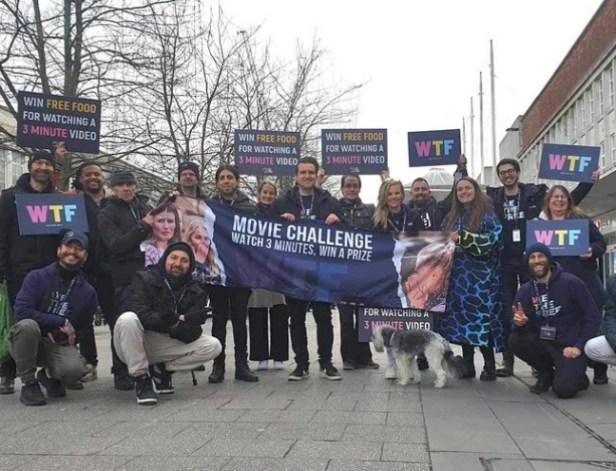
One scroll through your page shows your commendable commitment to street activism, as with animal rights group ‘We The Free’. Do you see your book as a springboard for direct action? How does your work relate to activism at the grassroots level?
Absolutely. I work for the global activist group We The Free. On one hand, I am very much embodying the spirit and language of We The Free by using dramatic, engaging and shocking language (We The Free – WTF). In other words, look at the shocking reality! Look at it! I am going to get your attention and tell you what’s going on. Which, incidentally, is identical to the mother of Emmett Till unbelievably brave decision to keep her dead sons casket open for the world to see. She, in that moment as a voice for the African American community, showed the world the product of American white supremacy protected by its own slaver owner-come- police force. However, to some degree I am stepping outside of their commendable all-inclusive approach to the general public – treating all members of society equally as potential defenders of animals.
Instead, I explicitly target young people, pitching them against parents and older generations. My particular ‘pose’ or angle to animal rights is somewhat of a sardonic threat .in that I intend to influence your children and tell them to hold you to my standards, and so you’d better keep up! What can parents do? What are they left with? Sulk in their ignorance? Maintain their unthinking status quo? At some point they are going to question themselves and this will be a wonderful by-product of my target audience.
Has the process of writing this book made you feel more or less optimistic for the future of the status of animals?
Dramatically more optimistic. The pillars of society already educate our young people on human oppression. I metaphorically stand on these pillars with my book and a megaphone and tell our young people to make one further step to capture all suffering. A mistake often made is equating both positive and negative aspects to human nature. This is a mistake because the universe itself is essentially an inhospitable, non-existential, hellish environment for life. The trick is to focus and celebrate the hopeful, compassionate, communal aspects of our species alone. Planets, stars and galaxies will come and go. It is the large-scale cooperation of sentient beings which is the radical metaphysical fact existing in spite of this reality, not because of it. We all have a choice – do we meet the world and others with compassion and an open hand, or not. It doesn’t matter if I’m unsuccessful in changing someone’s mind because they will continue regardless. Life is a fragile gift and one worth fighting for. It is a privilege to contribute to this fight.
This book has the potential to radicalise the incoming next generation of animal rights activists, what advice or words of motivation would you give them in their activist journey?
We probably only have one life. I urge all of you to use some of your time to grab the world by the horns, so to speak, and make your mark. Step out of the social norm and push the world in a more progressive direction. Abstaining from participation in oppression is wonderful and important however, spread awareness of suffering compels others to become active. So i congratulate you in being active. Shaking people out of the default status quo, is what causes compassionate revolutions.
Ignore indifference, disinterest and distracting debates on the practicalities of how a vegan world will be constructed and realised. Leave that for people to Google in their own time. Focus on motiving people to understand the ‘why’ because once the ‘why’ is established the ‘how’ follows easily.
Engage with people who are the most interested and embody the best chance of reconsidering our current ways of doing things. Tell them to make a stand and a statement. Tell them to go home and throw out everything their parents call food. Then go to Tesco’s, Walmart whatever you can afford and restock your fridge with delicious and nutritious food that does not involve unnecessary violence. Do it right now, today. this afternoon, this evening. Parents are largely stuck in traditional, conservative status quos. Unthinking and following convention and conventional wisdom originating in ‘carnistic’ thought. And for students at Cambridge, question your well-read, educated lecturers. Ask them why they engage in unnecessary violence. I want you to remind them all of their original innate compassion.

If you could compel those who read your book to alter one aspect of their lives to aid in the dismantling of ‘human supremacy’, what would you propose they change?
Don’t use the word ‘vegan’!
The word ‘vegan’ is based upon the premise that harming animals is normal and not harming animals warrants labelling. It plays into the default language of ‘carnism’. By describing ourselves as ‘vegan’, we are voluntarily climbing into a semantic box, prepared for us by people who pay for animals to be killed. I urge you to climb out this box, placed for us on the periphery, walk to the rational, normal middle ground and visibly occupy it. We don’t describe ourselves as anything other than the compassionate, rational norm, in any other contexts. We don’t have a word for ‘not racist’. Alternatively, we don’t introduce our friends as “not sexist” or “not homophobic”.
For this reason, I rarely, if ever, refer to myself or use the word ‘vegan’. I am not a “vegan” who eats “vegan food”. I eat food. It is you who needs to be described, because you think it’s acceptable to unnecessarily kill animals and then eat pieces of their bodies. Take full advantage of language because it shapes how we think, and so victims of violence deserve every opportunity in reinforcing our values and their protection. Every use of the word ‘vegan’ shifts attention away from the violence inflicted upon animals and its enablers.
 prcarnetworld.com