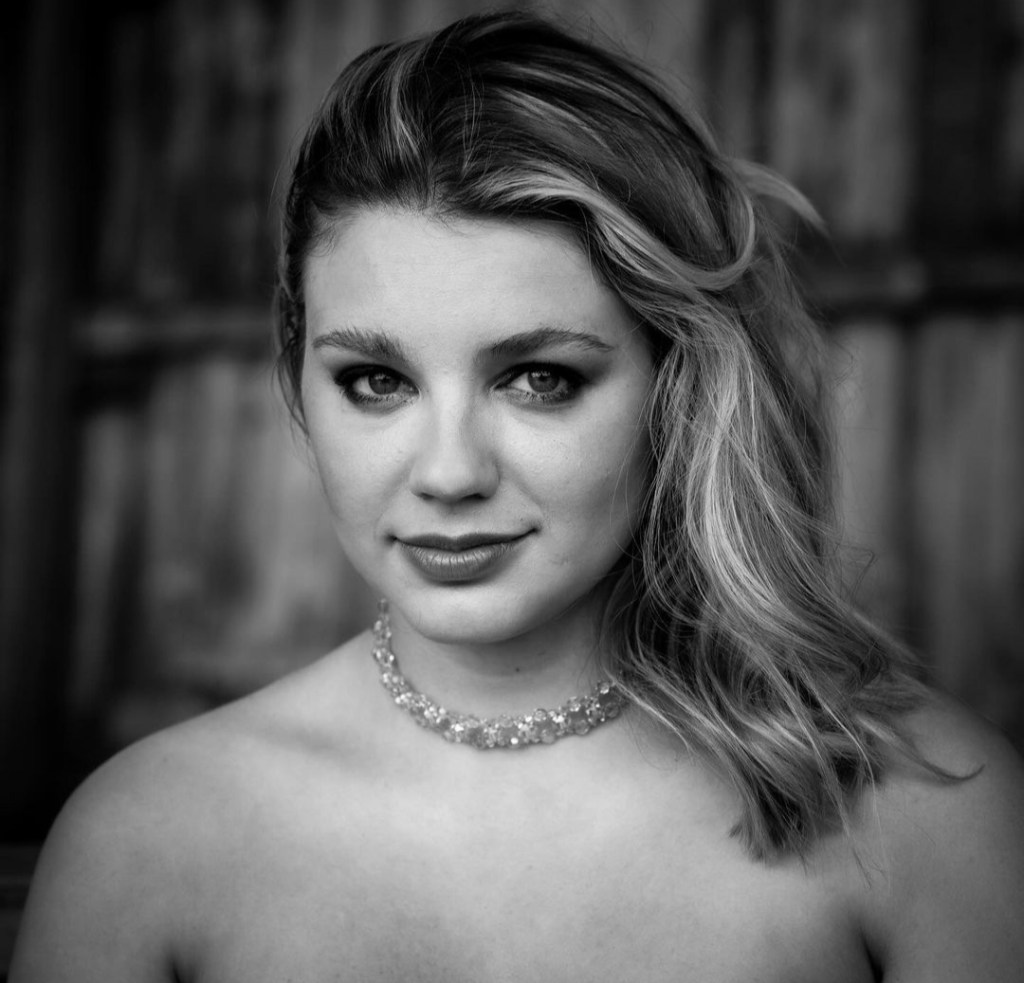
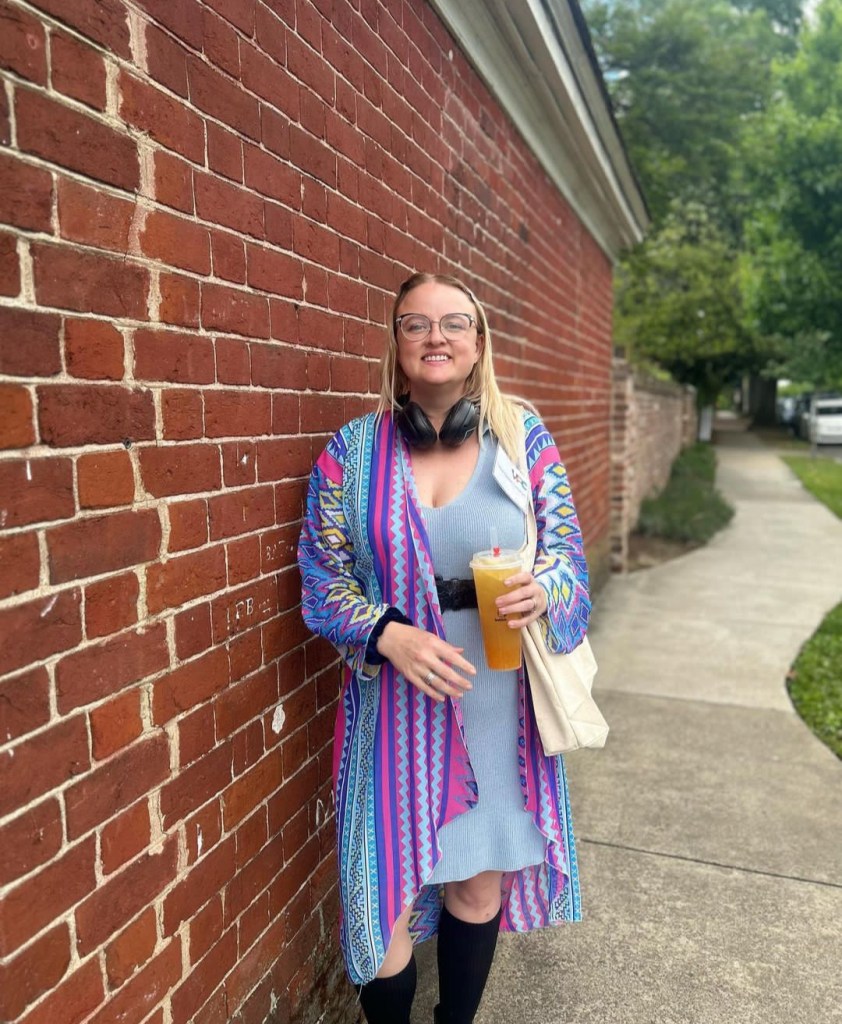
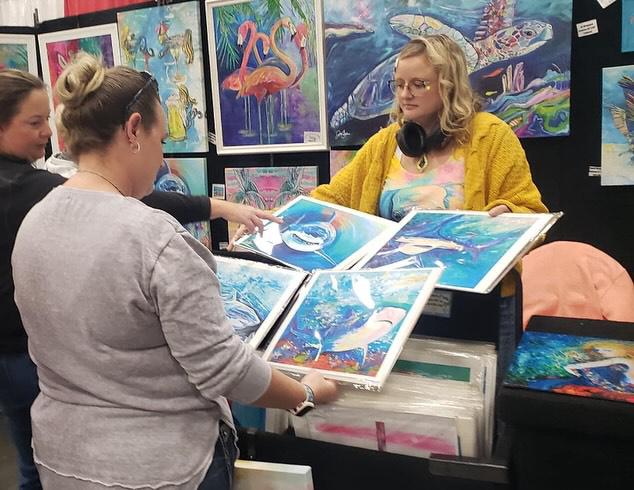
Who is Lily Catherine Gayle? Can we get to know you?
Lily Gayle is a driven, hard-working, firecracker of a person. I love learning new things, cooking, I am a dog mom to a furbaby named Theodore and he is the love of my live. I am a daughter of a former missionary. I lived in Peru for about ten years of my life and am biligual (spanish). I am the oldest of four children and am the first college graduate of my family.
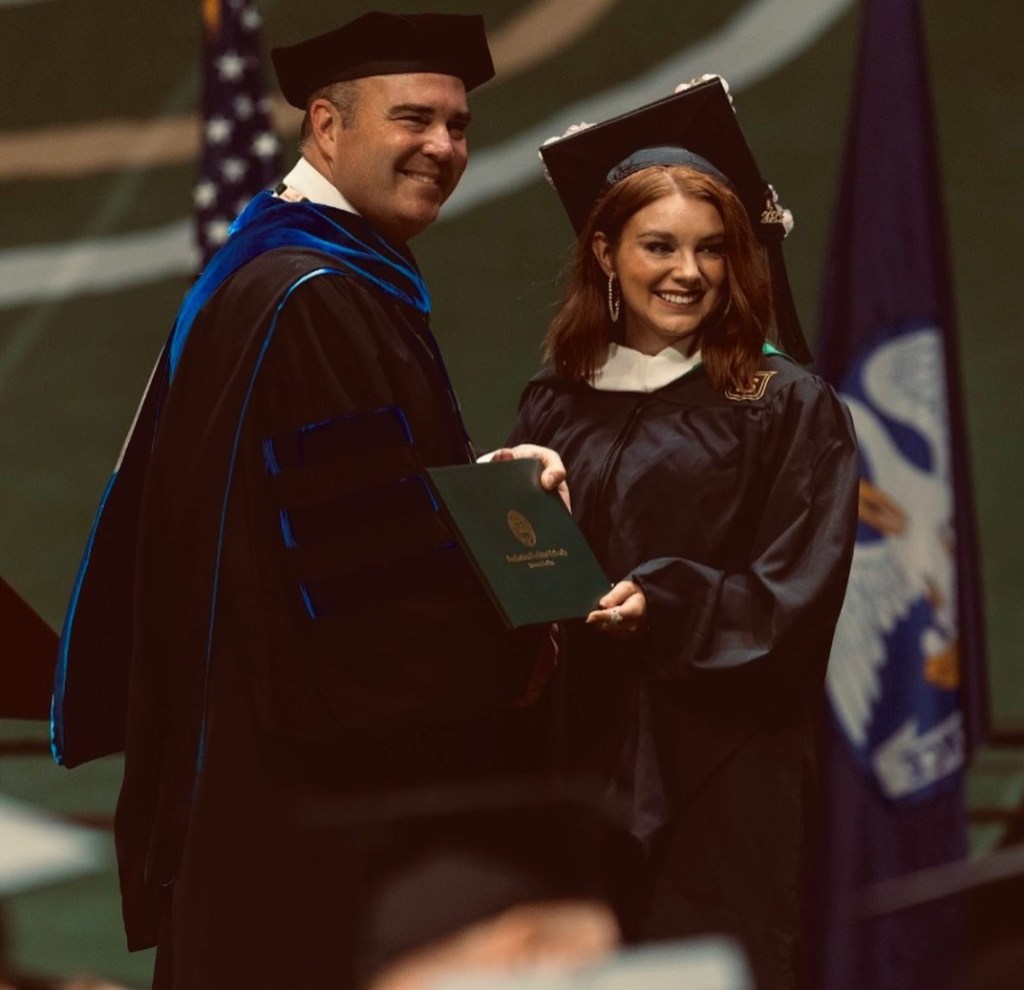
I gratuated from Southeastern Louisiana University with a bachelors in sports broadcast and a minor in business in December of 2021 and am graduating with my masters in public relations tomorrow! (12/02/2023). So, the requirements for reporting are minimal, just the passion to report the truth with an unbiased opinion. I always have loved sports- so much so that I wanted to play American football, but obviously I never was able to but I told myself that I would be on a field someday, somewhere, somehow.
Could you tell us a little about your profession? What are the requirements to become a reporter?
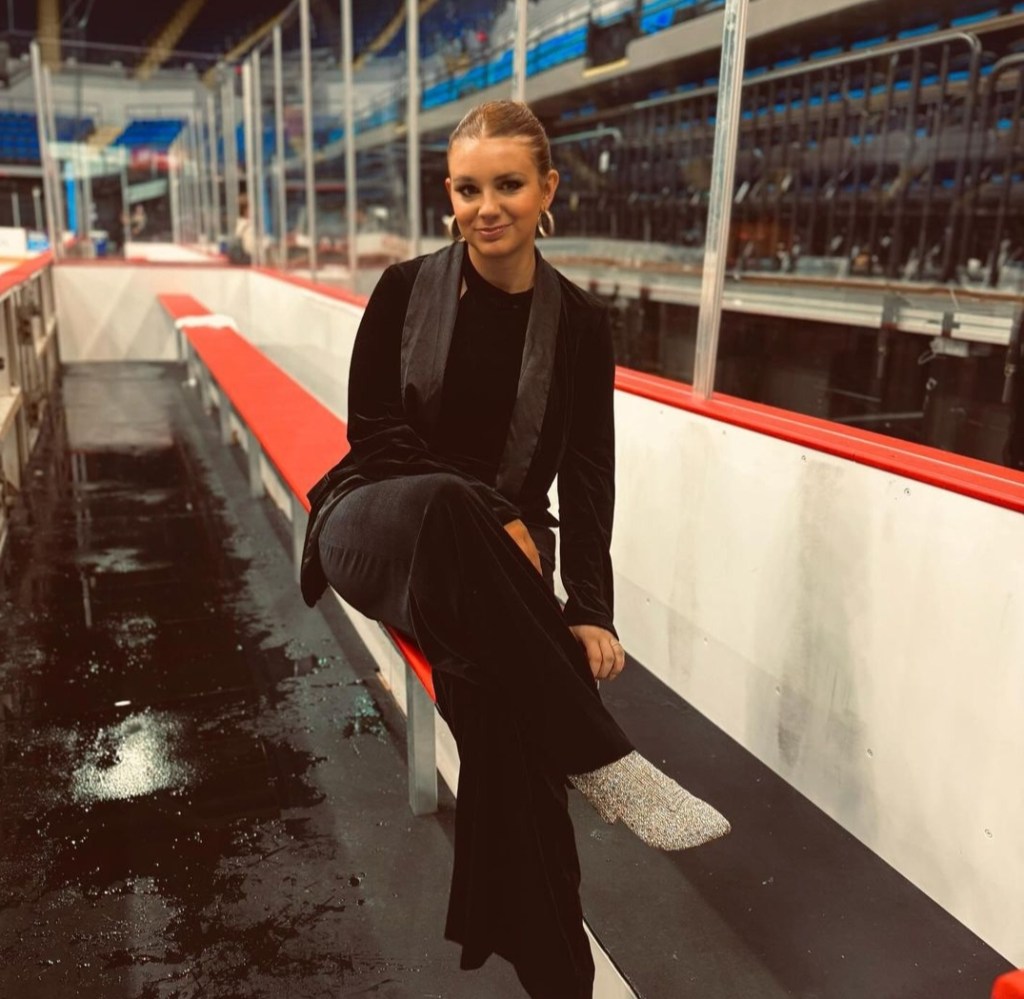
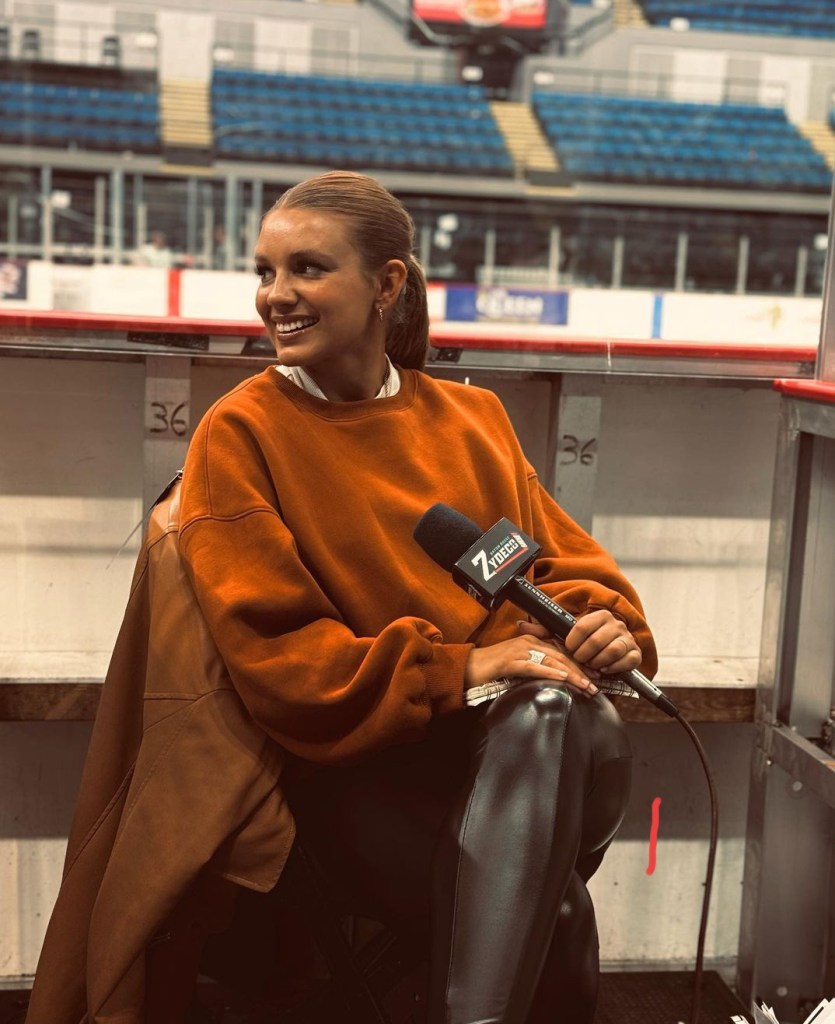
And now, here I am, reporting on professional sports as a rink side reporter. It hasn’t been easy, and I have gotten a lot more no’s than I have gotten yes as an answer, but once I got that yes, I was able to fly.
What training should those who what to become a reporter, presenter or anchor take?
Go to a great broadcast program, create a podcast, research good role models and someone you want to mirror. If you have an accent, learn how to quell it. If you want to report on sports, learn every sport that you can, even if it’s pickle ball, LEARN IT. If you want to be a political anchor, learn every side of the aisle, make it your second language. Tiktok is a great resource, many reporters use that to give news to their followers and make the reporters more human.
Can you tell us about the beauty contest you participated in? Is this a passion for you?
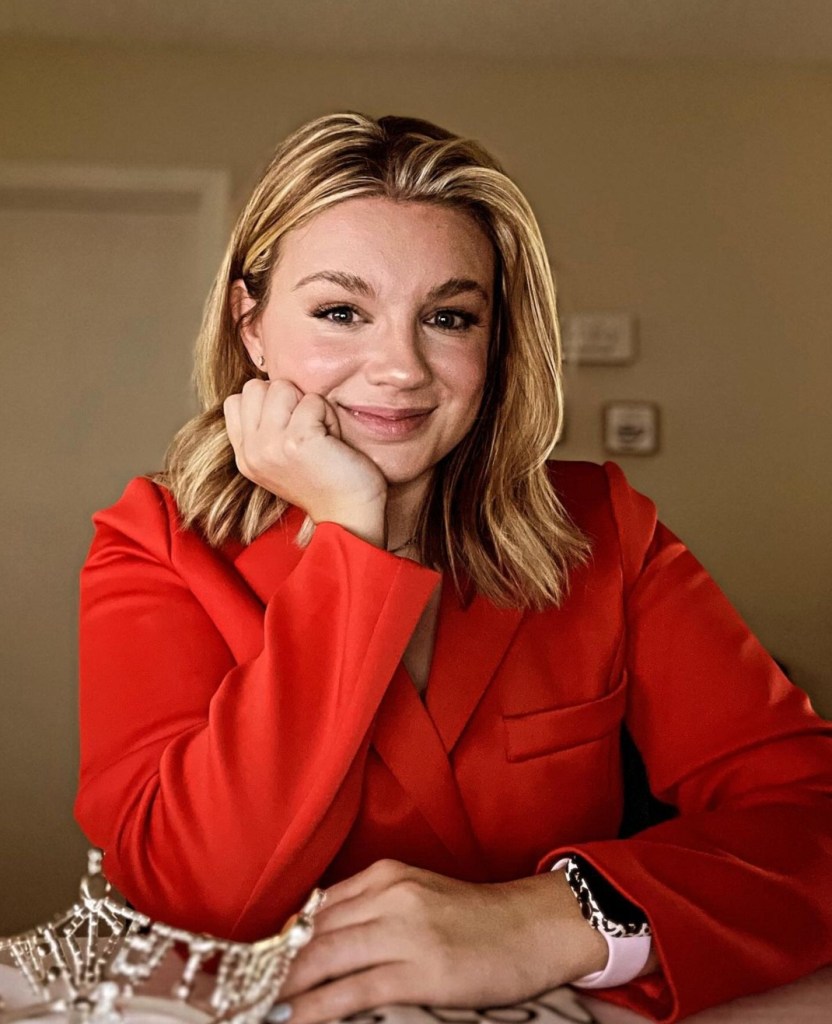
I started in the Miss America Org back in 2019, competing for my university title which I ended up winning in 2021. Once I realized that I could use this platform for suicide prevention and education, I ran with it. Fast forward a few years later, here I am as a 3x top ten finalist with over 37,500 dollars awarded in scholarships and 3,000 readers and supporters. I am going back to state as Miss Louisiana Port City 2023. My community service initiative is the Lifter’s Project:
Worth Your Heartbeat a suicide prevention and education program that I created as a mental health awareness program. With my organization there is also talent involved and I play piano!
What is the importance of public relations education in journalism?
Public Relations is so important! So important in fact I got a whole other degree in it. Being a reporter and pageant titleholder, you are most likely to be your own publicist, branding agent, and spokesperson so learning all about PR is crucial to having a great public presence.
What characteristics should a good reporter have? What is the importance of ethical principles?
Someone who is personable, easy to listen to, a go getter and proactive attitude and who is constantly curious. You will be a part of a team so being a team player is also very important.
What advice would you give to your younger colleagues?
Don’t be afraid to stand up for yourself. Especially as a woman in sports, you get pushed around. Demand and command respect. You were hired for a reason. Act like it. You have the same degree as many of the people you will be working with, you deserve to be treated equally. Don’t be afraid to fight for what is yours. You are qualified. You deserve this. Also, don’t sleep with players, don’t flirt, they are your co-workers. You can be friends, and you will have relationship with them, but nothing more than that.
Do you have any projects you are considering related to your profession?
Yes! So I am currently working with Zydeco Hockey in Baton Rouge. But my passion project at the moment is my mental health curriculum for grades 9-12. I was able to complete half of it for my masters dissertation and will be graduating cum laude because of this dissertation. I would love to see my curriculum in school systems in all 64 parishes by 2025- 2026.
Many of us in this modern age have watched a movie, TV show, or even a play and likely thought to ourselves, “Hey! I think I could do that.” After all, how hard can it be? Well sit down dear reader, and I will give you a series of tips and methods to use to make this dream a reality. Hopefully after this, you will have the confidence to craft your very own tale to share with the world. Keep in mind this is only what I have learned through my mentors, peers, and through my own personal experience and research. If you find something doesn’t work for you, or you have a more comfortable process that’s fine! Those differences are what make your script have a unique voice, a way for people, and potential fans, to know this is your work. Before we can get started, we first need to figure out what to even write. This is the fun part of script writing as you brainstorm your characters and setting for the story. In this beginning section, it is important to write everything down, both good and bad. Even should something look like a silly idea at first, it might turn out to be a good one later on as your story develops and things change. I often keep a notebook on me to copy down all my ideas as I go through my day.
Starting with characters, it pays off to learn everything you can about their personalities and desires going into their journey. Say you like this Max character, how will they face the challenges you present them. Some popular ways to flush this character out is to craft a series of questions. Don’t feel obligated to keep it tied to your story, right now we are learning who Max is. How would they react if someone close to them left? Would they directly intervene if someone is treated unjustly, or do they lack confidence in themselves? These questions can serve you later as you figure out how Max will deal with the different trials ahead.
Another popular way is to keep a diary for that character. This will help you start thinking in Max’s voice. How would they describe a trip to the grocery store? A drive to work? A rude date? The important thing is what would they notice while they’re on these trips.
My personal process however, is to find their nature and their nurture. Who was Max at birth? Do they have a temper? Are they clever? Are they tall and strong? Then taking these traits and throwing them into a childhood. How would someone with a temper handle bullies at school? Did that turn Max into a fighter, or did they grow insecure as they would lose those fights? Then I ask would ask how being a fighter or being insecure affected Max’s temper. Did becoming a fighter calm Max down, or did insecurity feed that anger. I find this method to be the most time consuming, as you need to establish the same character twice. Once for who they were, and another for who they became. However, it front loads much of the backstory work that you might have to do. Just remember, even if it’s not in the story, it’s good for the writer to know these things as it will add consistency to a character’s behavior.
The other thing to establish would be the setting. This can be trickier than a character depending on where you want to set your story. If the story is set in your personal neighborhood, it might not be too hard to know what the environment is like. Yet if the story takes place on a boat, you might need to do some homework on what boat life is like. Sometimes though, if it is a fantastical setting, it all falls to you to establish the rules and culture of the land. Unless you found a secret passage to the Fae lands and ask them yourself, in which case I’m incredibly envious. For the rest of us though, in a similar vein to how I establish characters, I like to build my worlds through consequences. I try to find the moment that made my world special, or different, then play it out from there. Maybe after a terrible crisis, the government took control and made a police state. How would this police state keep control of its citizens? Is it through brute force or manipulation? If it is through manipulation, how effective is it? Are certain topics of discussion illegal? Depending on what that crisis was can determine how effective the leadership was as containing the situation. This is where you would begin setting up your conflict in the story. Maybe Max was going against the grain and that is why they were bullied. You then should compile all this information on the characters and setting in one location, this will be your story’s bible.
Now that the characters and setting are prepared, the honeymoon phase of writing ends, and the work begins. What even happens in this story? You will likely have at the minimum, something you want to see happen in the story. Maybe you want Max to find true love in this dystopia, and tell this globe-trotting tale of pain, hope, and the indomitable human spirit. Don’t be afraid to keep it small though, as this could just be a simple tale of Max learning self-love after being bullied in their life.
I have heard from different peers and mentors that this step should be done first, as the themes and the messages are the most important. This is a valid option. I however feel it can be an incredibly high level approach, as it can be very easy to get wrapped up in the plot and you start telling the audience what to think, leaving your characters and setting as shallow vessels who only serve as a mouthpiece for this story’s point. If you stay focused though, it can be effective. This is when your story bible comes into play.
Your story bible is where you will keep all your notes about your world and the people in it. Think of it as your history book that you’re writing alongside the script. Use it to keep things consistent in your world. Also, if the plot needs something to happen, but Max would do something else, confront your bible and explore that angle. Don’t be afraid to let your characters exist in their world. If Max was insecure after losing those fights, they might not boldly stand at the steps of the capital building. Maybe instead they rally their community under the radar. If the moment where they stand on the steps is a necessary beat though, set it up earlier in the story. It is said that “problems in the third act are really problems in the first act” and this is true. If you did not set up that Max is the character with the confidence to challenge the government to their face, your audience will notice that. They are smarter than you think, but they can’t read your mind about changes you never brought up before. This is when you need to properly set up your story beats. Let’s take our insecure Max that needs to challenge the government in this climactic finale. Maybe in the beginning they have a scene where they practice a speech in the mirror all morning for a meeting, and it goes horrible. Max just can’t get their nerves under control. Though through the events of the story, that confidence grows to a point that making such a stand makes sense. Only after they learn their lesson, can they confront the climax.
A great template for crafting these moments of growth would be Joseph Campbell’s The Hero’s Journey. There you will see early steps such as refusal of the call, where our protagonist hesitates to go on the adventure. All the way down to their darkest hour where it all goes wrong, and back up to the return home as a changed person. Allowing your characters to follow this arc can help keep your story dynamic, and your characters engaging.The story should have now have a strong foundation and you have a soft outline on what happens. This is when all that pre-work pays off as you finally get started on the script.
When you craft each scene, think of it as its own three-act-structure. That it should have a set-up, confrontation, and resolution. Even when a story is told out of chronological order, each moment plays out like a short story. Say we are putting Max against those bullies. Set up why Max gets bullied. Is Max whispering to a friend about that government that is oppressing them and is then overheard? Maybe the bullies approach first and start challenging Max on their views, only to be dissatisfied with the answers. The conflict would be how the bullies would treat Max, do they mock those views verbally, or do they get physical. Ending with the resolution, is Max crying in the bathroom privately after escaping, or are they crying on the floor because they were beaten.
You can also take these moments to add nuggets of information about your world. Is this a place where the bullies can get away with violence, and if so, how much violence? Maybe you want to establish how much group think has infected the society by having others join in the bullying. Try to give each moment two purposes, there is the actual beat moving the plot forward, and exposition about the world around the characters.
Many of you aspiring writers have heard “show, don’t tell” so many times you might be sick of it, but it has a role to play. To show and don’t tell is to trust the audience to extrapolate information from the situation. Don’t have your bullies proclaim, “nobody cares about you Max! you’re at the bottom, and you belong there.” Instead let the observers not intervene to show nobody cares, have them cheer the bullies on to show support of the violence. If you ever fear that your audience didn’t get it, don’t default to explaining the point if it wouldn’t fit naturally into anyone’s dialog. Instead reinforce what has been shown. Maybe the audience didn’t get the full picture, and only believes the bullies exist at Max’s school. Show another similar moment where in town Max gets bullied again because they have a reputation for thinking differently. Have the audience say to themselves “oh, this is happening everywhere.” Instead of “ok, we get it, Max is bullied.”
As each of these little pieces are put together, they will start to form a story, bit by bit. There is only one bit of work from you left to do, and it is arguably the hardest part. Write it! All great books on writing will tell you the secret to finishing a script is to write every day. Write in the morning while your mind is fresh from the dreamscape. Write every day to build the routine of writing. Write every night to cultivate that passion for your project. The more you do, the easier it will become, and before you know it, Max is overthrowing the government. In Stephen King’s, On Writing, he suggest you even save all your editing until the end to save momentum. As someone who has started editing one sentence and ended up spending two hours editing a paragraph only to notice I never progressed the story, I can vouch for this. Saving the editing until the end is also good to help you read the story with fresh eyes away from the context swirling through your head from when you wrote it. Does the story play out on paper the same way it did in your mind?
With your work complete, the script is almost ready All that’s left is to format it into something the industry leaders like to see. This part is a lot less work though, as most of it can be done with a Script Writing Software. This software will change things around like fonts and spacing in order to make your script more professional, which is important if you ever want to convince Johnny Hollywood that the world needs to see Max find true love and save the world on the big screen. There are many options out there both, free and paid, that offer different levels of assistance. All you need to do is find the one that suits you. Just keep in mind my aspiring writers that these are at best recommendations, and that whatever you think works for you, works for you. J.R.R. Tolkien and C.S. Lewis disagreed on the right way to write a novel and they both created Lord of the Rings and The Chronicles of Narnia respectively. There are famous static characters out there who don’t go through the Hero’s Journey, like Superman. The entire first hour of Inception by Christopher Nolan is one big tell, not shown, exposition dump, and everyone including me loved it. Don’t put yourself in a box, and tell a story that matters to you. I promise you it is worth it.
People of the 21st century, where the digital world has changed the way of life, are expected to have knowledge about the developing information and internet technologies and to master the relevant technological equipment. It is obvious that today’s mass media are decisive in social and global relations. Therefore, it is essential to adapt to rapidly changing and developing living standards. From this point of view, the need for traditional media tools, which is decreasing day by day, has long been on the agenda to be replaced by digital media.
The process, which has caused radical changes in the schemata of education, health, economy, politics and culture, points to differences between people born in this process and those who started to live before the digital world. In this table, which seems to be divided into two, it is actually possible to evaluate the period covering the audience before digital media in different categories within itself. In this context, it is possible to categorise those born in 1970 and before, those born between 1970-1999 and those born after 2000.
However, while it was easier to make this distinction before the Internet, today it is not enough to be literate to make this distinction. In addition, it is necessary to know and make sense of computer technologies and coding languages, software programmes, data, algorithms and many similar technology terms.
From this point of view, the 2000s, especially the WEB 1.0 process, which is considered as social media, are decisive dates. People who were born before this date are different with their skills and mental attitudes before the internet (Tonta, 2019:755-757).
With its multifaceted structure, the Internet has changed and transformed not only skills but also ways of thinking. In this sense, efforts are being made to digitally educate the mass, which is defined as digital migrants, who communicate only with traditional media tools, and to ensure their mastery of the field, and trainings in this direction continue in the context of advancing technologies.
However, even though the theoretical infrastructure is provided with manual skills or training, it has not been easy to change the mindset. According to Prensky, the generation born before 1970 has problems in adapting to digital environments and continues to need printed sources to access information (Çetin & Özgiden, 2013: 174-175). In this sense, the traditional weight of people who were born long before the Internet, from family life to education life, from business life to the political party they belong to, is obvious. Such habits are unlikely to change radically. Therefore, the living standards and social structures of those born in 1970 and before are not coincidental in terms of resistance to today’s digital opportunities.
Prensky (2003) categorises those who are familiar with digital media tools and those who are not as “digital natives and digital immigrants”. Digital natives consist of the generation born in 1980 and after and are also referred to as Millennials, Digital Natives, Net Generation, The Gamer Generation, Next Generation, N-generation, Cyber Kids, Homo Zappiens, Grasshopper Mind.
Digital immigrants are the generation born before 1980. Digital immigrants are not familiar with virtual reality like digital natives born in the digital world, but a generation that tries to adapt later (Eşgi, 2013:181).
Digital immigrants represent the group who encounter technology in their twenties, who are more conservative in mastering technological tools and may experience adaptation problems, and whose new media literacy is at a lower level than digital hybrids and natives. However, the concepts of digital migrant and digital hybrid give an interrelated picture, which may contain inaccuracies for the information related to the mentioned understanding of digital orientation.
It can be seen that individuals in their fifties and sixties, who are defined as digital migrants as of the current process, also utilise technological opportunities and even use new media platforms appropriately in their working life with the training they have received in technology. This is actually an important evidence to determine the radical changes created by internet technologies in human life.
DIGITAL HYBRIDS
Rapidly developing information and internet technologies have led to social and cultural changes. In the information world where geographical limitations are no longer important, while the age factor is important in internet usage, especially the age range of the people who shape today’s world is remarkable.
This age range shows that an intermediate age range is needed on the scale of immigrant and native, which Prensky categorises in the context of digital media. This generation, which both benefits from the blessings of the technology it is in and does not completely lose its traditional loyalty, is defined as “Digital Hybrids”.
It is important that this user profile, about which not much information can be accessed in the relevant literature, covers the people who are determinants of education, health, economy and politics of the time we are in. While globalisation has become widespread to the extent that it supports the local, digital hybrids have become the cornerstone of the structuring that serves this expansion. In this context, the use of media by digital hybrids is of great importance (Kakırman Yıldız, 2012:820).
This group, which consists of people born between 1970 and 1999, before the millennium, does not show as much resistance as immigrants, but leads a lifestyle that depends on printed sources in parallel with the use of the internet. This group, defined as digital hybrids, uses technology at least as efficiently as natives.
The most important point where digital hybrids differ from digital migrants is that digital migrants first prefer printed sources and then use the internet to access information, while digital hybrids first search the internet and then look at printed sources. In this sense, it is possible to say that digital hybrids adapt quickly to new situations and draw a profile that is open to change. However, it is seen that they do not leave their old habits while experiencing change (Kakırman Yıldız, 2012:821-822).
DIGITAL NATIVES
It is possible to say that digital migrants are compulsorily involved in the technological world due to their nature, and that they use new media against an obligation. Likewise, while digital hybrids prioritise traditional media opportunities, they benefit from new media environments as a second source. The adaptation and use of these immigrants and hybrids to information integration is mostly shaped by need. However, it would be appropriate to say that digital natives, who are born into technology and who show serious differences with both digital generations, point to a very different lifestyle in this context.
Digital natives are people born in 2000 and later years, for whom digital communication tools, which are called new media, constitute an important part of their daily life practices. Especially considering the sophistication of the 2000s in terms of information and internet technologies, the age factor, which indicates an understanding of culture independent from the society they live in, plays a major role in the use of new media by digital natives (Bilgiç et al., 2011:3-5).
“Digital natives use technology in five different contexts: personal interest or entertainment, social communication, daily use (such as information storage or access to information, looking at train tickets…), professional work and university/course work” (Eşgi, 2013:183).
In the context of these features, digital natives want to socialise quickly unlike real life. Digital natives are open to making new friendships. It is important for them to access information and news instantly. In this sense, they prefer to read information not only as text but also as infographics designed in the form of expression with graphics. Again, they have a working style that is not holistic but fragmented. In this sense, they prefer to read information not only as text but also as infographics designed in the form of expression with graphics. Again, they have a working style that is not holistic but fragmented.
IN THE FINAL ANALYSIS
It is possible to say that gaining a more objective perspective in accessing accurate and real information and news and in the decisions taken is parallel to the age and generation accessing new media applications. In this direction, with the existence of a user profile that has mastered the developing technologies, it will be ensured that all the blessings of technology will be carried out in a position to work for the benefit of humanity.
Who is Tricia Cherie? Could you tell us a little about yourself?
As a human, I am a creative who finds solace in many types of expression, from sketching and playing instruments to writing poetry. When it comes down to it, I am just a big kid who has never stopped asking questions. As a professional, I extend my curiosity for expression into the pieces I write as a music and culture journalist. I founded No Apologies Magazine during my undergraduate studies at the University of Mary Washington.
I was driven to create a space for unapologetic writing that challenges the status quo for myself and anyone who has writen for me along the way. My overarching goal is to blend pop culture with meaningful commentary, always aiming to engage readers with a bold, relatable voice. As a graduate student at NYU, I continue exploring stories that matter and am beyond excited for what’s yet to come!
What are social media platforms positive and negative impacts on journalism?
Social media platforms are both a blessing and a curse for journalism. On the one hand, they offer incredible ways to share your work and reach large audiences in record time. On the other hand, they give the same opportunities to people who don’t adhere to the ethical standards journalists are taught to follow. This become particularly alarming when someone can knowingly spread misinformation daily with a well-crafted me that others, possibly well-meaning folks, take at face take at face value and share with their friends and family.
Suddenly, you have a whole community confused about what’s actually going on, leading to the generalization that it’s all “fake news,” which isn’t the case. As news and journalism have evolved, social media has adapted, providing a perfect vehicle for informing audiences by making sharing easier than ever. In the right hands, this is fantastic, but in the hands of the ill-informed or malicious, it’s detrimental and can have real-life consequences. In short, what’s great about these platforms is also what’s terrible about them.
Is the number of journalists working in the mainstream media decreasing today?
It truly depends on how you define mainstream media. For some, mainstream press refers to broadcast journalists on major networks like CNN, MSNBC, and FOX. For others, it may be The New York Times or The Wall Street Journal. One thing is clear: we are well past the point of debating whether traditional print publications are understaffed —they statistically are. Optimistically, I would note that the journalism industry has become much more diversified, and journalists have met the times and adapted, channeling their skills in various ways to continue imparting the news. This might be through pieces published online as freelancers or more in-depth features in niche magazines.
By traditional standards, the industry has decreased significantly and will continue to do so until the definition of a journalist is redefined for proper polling. In a recent article in The Washington Post titled “Wait, Does America Really Still Employ a Ton of News Reporters?” reporter Andrew Van Dam says it best, “We’re all still… working the same long hours for the same unimpressive pay, feeding fact-checked information to a doubt-racked nation.”
Is YouTube a new alternative to mainstream media?
Yes and no. I use YouTube to watch essential and well-vetted news programs like PBS NewsHour and various clips from major networks. That said, YouTube is a mix of professionals, podcasters, and video essayists. I also enjoy watching comedy programs like John Oliver’s Last Week Tonight and The Daily Show, both hosted by well-known personalities and supported by a team of researchers, writers, comedians, and, dare I say, journalists.
Do journalists have editorial independence on the YouTube Platform?
This varies on a case-by-case basis and depends on the publication and the type of news being covered. It’s difficult to give a definitive answer except for knowingly soliciting false or misleading information. In that sense, you could argue that many FOX reporters aren’t journalists, as they knowingly spread misinformation, and the FOX network itself claimed in court that their programming isn’t real news but entertainment.
What do you think about the development of artificial intelligence? Will it have an impact on the journalism profession?
I recently finished reading Co-Intelligence: Living and Working with AI by Ethan Hollick, which I highly recommend for anyone interested in learning more about AI from an educator’s perspective. On a macro scale, artificial intelligence will impact almost every aspect of the workforce in the years to come. That said, AI and ChatGPT have already begun to affect journalism, and when applied appropriately, they are incredible tools for writers of all kinds. ChatGPT can serve as an editor, research assistant, or critic and help you expand your ideas. Instead of feverishly scanning your AP Stylebook or sifting through Google search results, you can ask your ChatGPT bot specific questions and get a direct answer in seconds. I tend to have a more optimistic view of AI, believing it will help journalism far more than hinder it.
Who is Grace Boyle? Could you tell us a little about yourself?
My name is Grace and I am a writer based in Newcastle-upon-Tyne. I am a student at Newcastle University and alongside I work as a freelance writer and content creator.
Can you tell us about your unıversıty career?
My university career so far has been pretty busy, I was the co-founder and secretary of the media and journalism society aswell as working as a section editor for the award-winning university newspaper, The Courier. I have worked for the university creating multimedia content for their social media platforms and running the student blog and newsletter that offers opportunities for students hoping to break into the creative industries.
How was the Courier Online founded?
This academic year, I will be the Head of Current Affairs for The Courier and CourierOnline in which I will oversee six section editors and will be responsible for covering the headline news of the North-East.
Would you like to about the founding of the Courier Online? What are you doing here?
The Courier was founded as King’s Courier in 1948 and has seen many major transformation and development in its 76 years of its publication. We have reached many milestones over the last 5 years with celebrating our 75th birthday, covering breaking news on campus which made national headlines and winning awards at SPANC24.
What is the contribution of The Courier Online to educators and students?
I am very honoured to be part of such an incredible team of writers and editors who are all so passionate and enthusiastic about their work. The creativity and ethic of the writers is inspiring and it’s so motivating to be a part of the community. The Courier is run by the university student’s union which is separate from the university and has a team of over 20 volunteer editors. All students are able to write and pitch articles for The Courier, whether they are in their first year or are doing a PhD.
Do you old help students from abroad?
I have always loved writing as it has helped me navigate my thoughts and express myself in a creative outlet. I am a yapper and love discussing things with friends from the news, to pop culture and our controversial opinions. It is another medium I use to write about things I’m passionate and hopefully share with people.
What would you lıke to say to students who are plannıng a career?
For students wishing to pursue a career in the media or creative industries I do urge you to look for experience and extra curricular activities alongside your studies or current work. Not only to help develop your skills and gain experience but also for networking which is very helpful.
Who is Martina Pelone? Could you tell us a little about yourself? How did you discover your acting talent?
I am a young actress. I discovered my love for this profession one evening while taking part in a beauty contest. We were asked to do a talent test and so I recited a monologue and I knew in that moment that this is what I wanted to do in life.
What is the importance of philosophical thought and imagination in acting? Can those who dont have philosophical thinking and creativity become actress?
Having philosophical thought, imagination and creativity is important in this profession because it is what helps us discover ourselves and when this happens we are able to bring both our internal and external world to the surface in the characters we play.
In your opinion what are the essential criteria for beıng a good actress?
I dont think there are specific criteria but certainly talent, determination, dedication and passion for this profession but above all you need a lot of luck.
Is it necessary to open acting faculties in universities? What studies can be done in this regard?
It would be very nice to have acting as a university subject. However, it must be said that there are faculties specialized in the theoretical study of the subject. For example, I study at the faculty of theater, cinema and media at Sapienza and the subjects I do help me to understand my profession from 360 degrees.
What are your thoughts about Italian Cinema? Will it surpass Hollywood Cinema in the future?
I really liked the Italian cinema of the past. or the cinema of Federico Fellini by Gino Pontecorvo. today Italian cinema I must say that there are moments in which I love it and others in which I dont like it very much, but I think that it is trying to go back up a lot, especially thanks also to directors of the caliber of Matteo Garrone and Paolo Sorrentino but it is not yet able to surpass Hollywood perhaps in the future but not yet.
Do you see any shortcomings in Italian Cinema in terms of acting and technique? How can these deficiencies be remedied?
I’ d be lying if I said no. Yes, I see that there are a few shortcomings in the Italian audiovisual context in various sectors and I’’’ m sorry about this because I think that Italian talents are actually second to none except that today a lot is reasoned from the point of view that a project must be based on views and earnings and in this way the talent and creativity part is put into the background and this does not give a way to truly show the true value that is part of this profession.
How are female actors represented in Italian Cinema? Do you have any criticism about this?
They are not badly represented, in fact from this point of view things are improving a little. also thanks to the fact that there is starting to be greater respect due also to the fact that abroad is increasingly interested in focusing on Italian actresses.
Do you fellOw cinemas in different countries around the world? Which country’s cinema interests you the most?
I really like French cinema and lately I've become very passionate about oriental cinema. I really like that oriental actors are able to act a lot with their eyes and this really makes you understand how the gaze and the imagination behind them do at least 90% of the work.
Netflix, Amazon and Disney movie platforms, what are their positive and negative effects on actors and the movie industry? Do you thınk these platforms bring Hollywood movies to the forefront?
The platforms have been an excellent help. because they have entered a moment of strong cinematographic crisis. but all this has a negative side, namely that there is a risk of replacement, let me explain, the platforms are overtaking the cinema, almost taking its place and this is very wrong.
What advice would you like to give to young people who want to become actors? How should they improve themselves?
Good question. I recommend studying, believing and not giving up even if the path seems impossible.
Who is Mattia Tassi? Could you tell us a little about yourself? *What would you like to say about acting? What are the positive and negative aspects of being an actor today?
I am a young aspiring Roman actor. I got “the calling” when I was 12 and have never thought about quitting since. acting is putting yourself out there by choosing to give yourself to people, whether those people are the characters or just the spectators. I don’t think there are objectively negative or positive aspects, it all depends on how the individual person experiences things.
One aspect that I would say is negative is the fact that the 25-35 age group is not talked about much. the age when you are both young and adult is bisfracted when in my opinion it is the most interesting for an actor finding a good agency is 80% of the job. then I also think that agents are like trousers, the same model can fit you well while it doesn’t fit me. At the moment I consider myself very lucky with @verastar.agency
What does being in an acting agency contribute to an actor’s success?
I am not a successful actor at the moment so I don’t think I can answer you but I promise that as soon as I become one I will come and answer you.
What advice do you have for those who want to become actors?
Resilience beats talent. this doesn’t mean that you shouldn’t have it, just as it doesn’t mean that talent shouldn’t be cultivated with study, but resilience is fundamental. If you want to undertake this journey you must be aware that it is a journey made up of ups and downs and you never see the light at the end of the tunnel so develop the ability to get up despite everything and everyone.
What is the importance of acting agencies for an actor?
An agency is the one who proposes you for casting lists for films but joining a large agency is not synonymous with a lot of work or guaranteed success. There is no recipe for this job so every thought must always be clarified and very personal.
Who is Emily Garside, could you tell us a little bit about yourself?
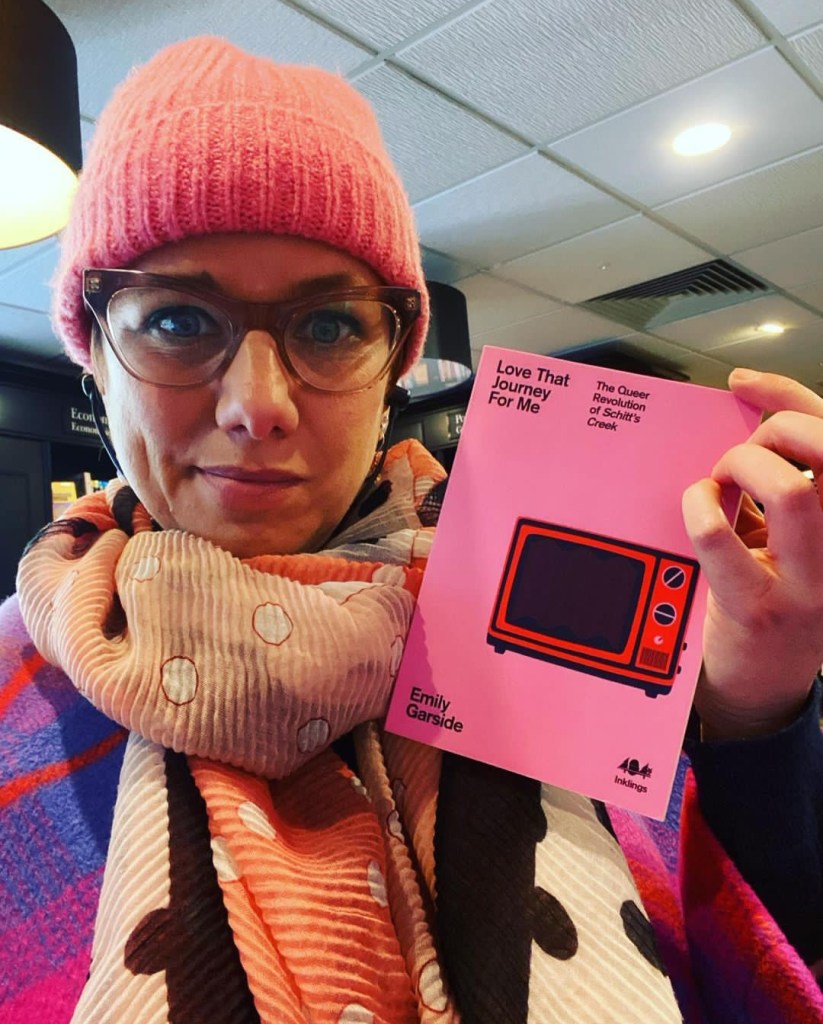
I am a a nerd for all things Queer History and Culture. Beginning with a PhD on theatrical responses of the AIDS pandemic, I got distracted by TV and accidentally wrote a book on Schitt’s Creek. I then turned a lifelong love of Doctor Who and watching Queer as folk too young into a book on Russell T Davies. I write on all things Queer theatre, with a speciality in musicals of course, TV and cultural history. And my mantra is ‘know your history’ and I seeks to educate Queer folks and allies alike on the hidden history of the LGBTQ+ community they might have missed.
Which work of yours are you most proud of, and what impact do you hope it will have on those who read it?
I’m proud of all the work in different ways. My book on Angels in America and my book on Rent represent the hard work of my PhD and two important pieces of theatre that mean a lot to me. My books on Schitt’s Creek represent both something that gave me a lot of hope and community at some difficult times (and something joyously Queer) and my work on Russell T Davies feels like a culmination of growing up a Queer nerd in Wales.
There are still many gatekeepers out there who limit the number of voices we have in writing. Even those who are attempting to ‘champion’ marginalised voices sometimes have a view of what that means and who can be ‘allowed’ a voice.
In your view, what are the biggest barriers to becoming a writer, and what needs to be worked on to break these barriers down?
It’s also a question of time and resources for many- not everyone has the time to dedicate not just to the writing but all the energy and resources it takes to do all the other things. Finally often LGBTQ+ writers are still treated as a ‘tick box’…often if somewhere has one ‘gay book’ or one ‘Queer woman writer’ they think that’s all they need. But obviously there are a lot of us with varied and valuable contributions to make.
What is the biggest challenged you’ve faced thus far in your writing journey, and how did you overcome it?
I think for me the transition from being an academic to whatever I’d call myself now. I still don’t feel at home in the academic space, and I feel like I left that behind a long time ago… yet its what people associate me with outside of academia. So for me a big challenge has been navigating what that means for my writing. And as with everyone finding the time to dedicate to writing while still earning a living. I think its easy to forget that writers rarely earn enough to get by on what they do, and so we’re all out here juggling a million jobs.
What does the process of ‘queering’ media look like to you, and why is it important?
For me it’s understanding what is already there and what is missing. I always say ‘know your history’ because there’s so much of Queer history that has been hidden from us, and that we should be striving to find out about, to know how to move forward. Equally, we should be listening to the community and remembering to elevate the voices who still lack representation- Trans voices, especially those from BIPOC, but also lesser-known identities like Asexuality all deserve representation as much as Gay and Lesbian characters and stories.
For me Queering media too is about breaking down the heteronormative and patriarchal norms that we all exist in- instead of embracing other ways to be in relationships, to have families and to exist. In my mind, we can only truly start to embrace that when we see it represented.
Do you have any concerns surrounding the tokenisation of queer themes and queer characters in media?
It’s definatly a danger- the idea that we have one gay, lesbian or trans character and representation is ‘done’ feels sometimes like the approach TV films or publishers take. However, i would never want to push back too hard on it because some representation still feels better than none. But we should keep pushing to diversify the people we see on our screens and whose work we are reading.
What key texts would you recommend to someone newly interested in queer culture and queer history?
For fiction you can’t go wrong with Tales of the City Armisted Maupin’s classic accounts of Queer community in San Francisco across the decades offer lots of history even though they’re fiction. For other history Queer City by Peter Ackroyd and Queer London by Alim Kheraj as well as Homo History by Aaron Twichen.
Are you optimistic about the future of asexual representation within popular culture? Why do you think it has taken so long for asexuality to be taken as ‘seriously’ as other sexualities in gaining media representation?
I think we are heading in the right direction. But obviously, there’s more work to be done. All round we need varied representation to understand that all Queer people aren’t the same. For Asexual represention things are better than they were even 2-3 years ago, but equally with more visbality comes sometimes misunderstanding and hostility. So we need to keep working to combat that.

















 prcarnetworld.com