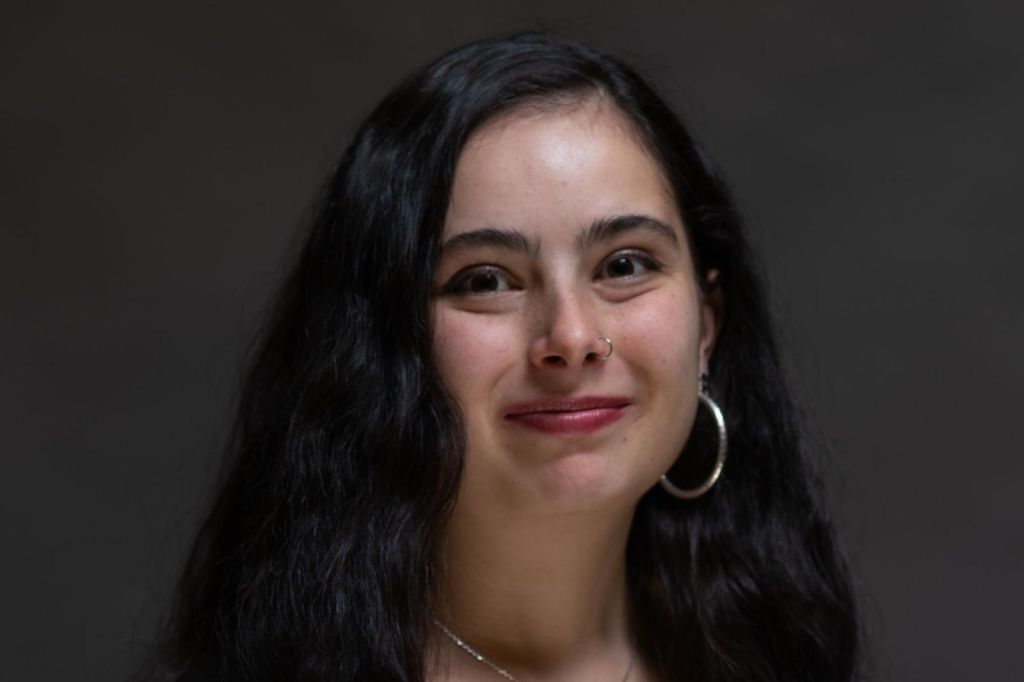
Starting Your Journalism Career and Sources of Inspiration
What experiences or events in your life had the greatest impact on your decision to start a career in journalism? What motivated you the most when you decided to pursue this field?
I loved writing and I wanted to have a job that allowed me to write as much as I could. But also at that time I was in high school and my History professor asked us to start being aware of the news because Colombia was living a historic moment: the State was going to sign the peace agreement with one of the oldest guerrillas of our country.
I wanted to be a reporter of peace and that somehow encouraged me to pursue my career in journalism.
During your time at Javeriana University studying Social Communication and Literature, what were the most important academic or personal lessons that shaped your journalism career?
Well in the university I started to actually feel disappointed about journalism. I felt journalism in Colombia was struggling, most outlets were financed by large corporations with a lot of political interests. And I saw little to no space to do journalism in a creative way.
So I started to see myself writing fiction and poetry. But I knew I wouldn’t make a living with just my creative writing because I wasn’t still prepared to publish my literary work. However, literature for sure opened my horizons and made me ask myself questions about the form and how the aesthetic part of writing can also be challenged in journalism.
Work on Social Issues and Its Impact
How did your personal passion for critical societal issues such as climate change, health, and gender inequality develop? How did working on these issues affect your career as a journalist?
I think it developed at a very early stage and it was because of two things: my older sister and my high school. My sister was studying Environmental Engineering and wanted to focus her studies in the social part of the environment. She planted a seed of multiple questions in my brain and since that moment I started to care a lot about climate change and the environment. It is also because I come from a country that is mega-biodiverse and I have always loved the nature that surrounded me.
My high school had a class of gender and literature where I started to be more aware about gender inequality and social justice. So when I started my studies in the university, I already had in me an objective of contributing to social justice in whatever I chose to work on in my life. Then, I guess that my studies also guided me through that path, I read a lot of gender, reception, literary and communications theory, as well as philosophy.
What methods have you used to make an impact with your stories on these topics? Particularly in gender equality, what were the biggest challenges you faced when covering such sensitive issues?
I started covering gender as a freelance in a small digital outlet and I tried to talk about topics that I did not see anywhere else at the moment: life feminist motherhood or menstrual disorders. But later, when I worked at Mutante I learn about the power of engagement journalism and how this method can actually amplify the impact of journalistic stories, because they are being useful and interpellating a particular type of person who was seeking for that information.
Now, if we talk about challenges, I would say that finding sources and accessing information. A lot of people experienced the topics I was covering, but they did not want to talk and it is because of social stigmas. Then large corporations, like fertility clinics, like to stay on the safe side, so they rather answer in a polite but incomplete way than respond to your questions.
International Experience and Your Journalism Perspective
How did your experience with the United Nations Environment Programme and the Colombian Consulate in New York transform your approach to journalism? What kind of global perspective did these international platforms offer you?
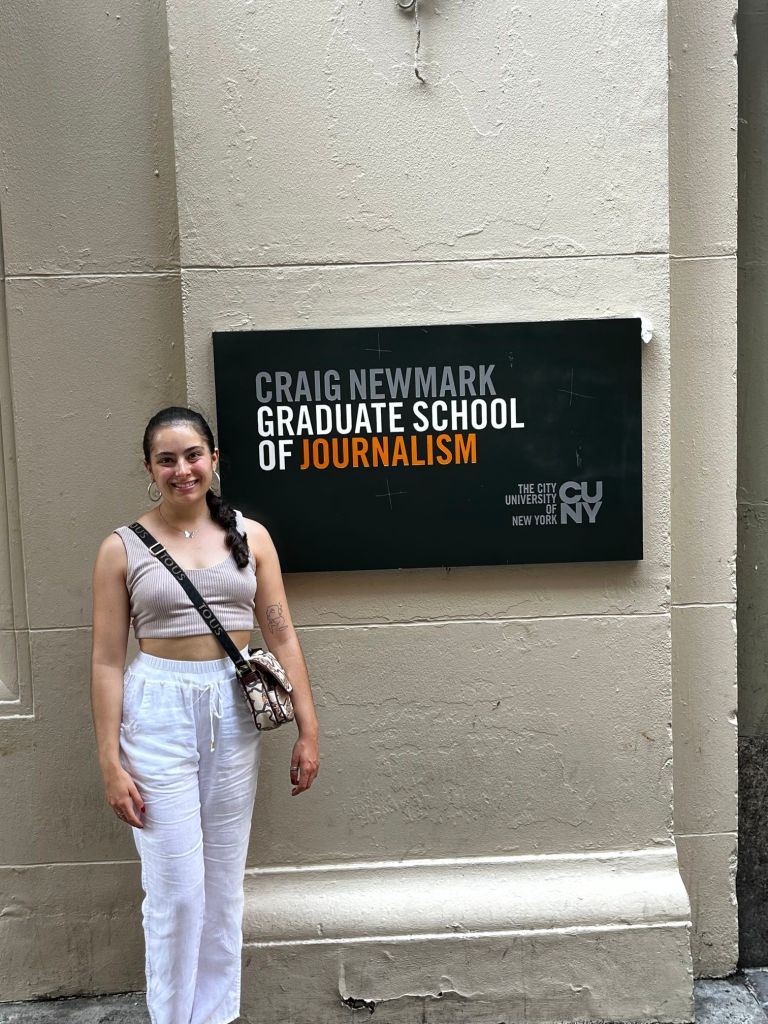
These experiences changed my approach in journalism significantly. The Consulate helped me connect with the Colombian immigrant community and the needs they had. I was not very aware of the way the community is living and the geopolitical relations behind massive immigration.
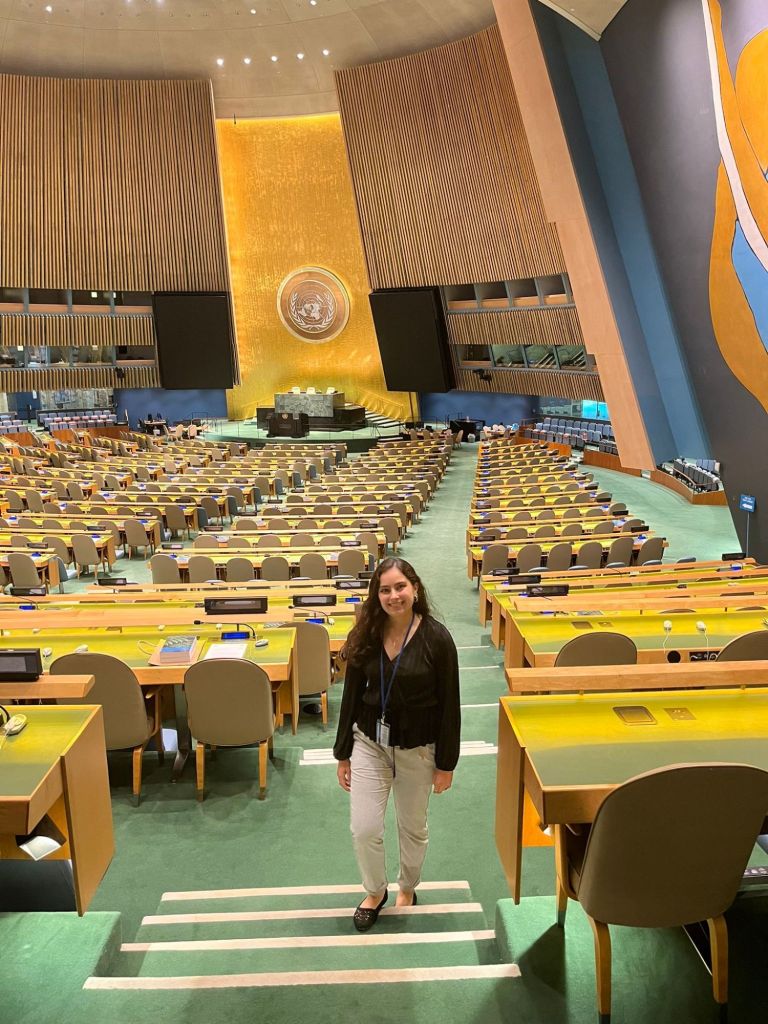
Then, UNEP was a place to understand international treaties, public hearings and the international environmental agenda. It helped me to see climate change in a global way, meaning that it showed me the relations of power behind greenhouse gas emissions, food waste and renewable energies. It wasn’t only UNEP as an institution, but the people who were there. Most people were from the Global North and had that kind of approach to the climate emergency, but the Global South has a knowledge that has not been appreciated but is essential for the survival of humanity.
While studying in New York, how did interacting with different cultures shape your understanding of journalism? How do you compare your experiences with the media landscape in Colombia to the global perspective you gained?
In NYC I’ve been covering particularly Latinx communities, and that means I am very exposed to multiple cultures, because Latinxs are not a monolith. So I’ve connected with Peruvians, Mexicans, Hondurans, Venezuelans, Ecuadorians, and of course Colombians. This has showed me that we are very similar, but our national histories are different and that crafts our paths heterogeneously. I see how Latinx people are all classified in the same box, but our culture and life experiences are utterly different. However, there is for sure something that unites us: our region has suffered oppression and colonialism even later than we started being “free nations”.
This approach contrasted with the media landscape in Colombia because in Colombia we mostly cover the national context, and when we cover the international it usually is from the same few countries that call our attention.
Cortazar once said that for him, living in France wasn’t a way to be apart from Argentina, it was actually a tool allowing him to see his country as a whole with perspective and distance. And I feel very much like that.
Digital Media and the Future of Journalism
How do the innovative approaches brought by working in digital media shape the evolution of journalism? What do you think about the impact of digital transformation on media content and audience engagement?
The innovative approaches brought by digital media have fundamentally reshaped journalism, not just in how stories are told, but in how communities are included in the storytelling process. Jeff Jarvis, in A Journalism of Belief and Belonging, argues that journalism’s role isn’t just to inform, but to “build bridges among communities” and “make strangers less strange.” That belief has been central to my work as a journalist who constantly thinks in engagement as an essential part of this craft.
Digital transformation has also allowed journalism to build trust in new ways. When we treat engagement not as a strategy to reach more people, but as a practice to foster community, we deepen the public’s relationship with journalism.
Did your experience at Mutante contribute to establishing your expertise in digital media? What are your thoughts on the impact of digital platforms on the future of journalism?
Digital transformation has opened up new ways to move beyond one-way communication and instead create dynamic, participatory spaces for dialogue. At Mutante I experienced firsthand how digital tools can be used not only to distribute content, but to actively listen to communities and co-create journalism with them. We built our editorial agenda around the real informational needs of our audience, using digital platforms to host conversation communities—safe spaces where people affected by issues like fatphobia or gender inequality could connect, share experiences, and help shape coverage.
This shift has had a profound impact on media content and audience engagement. Stories are no longer just produced for people—they’re created with them. Content becomes more relevant, empathetic, and actionable when it emerges from the lived experiences of the communities it aims to serve. For example, through engagement strategies like newsletters with high open rates, explainer content, and social media conversations, we were able to make complex topics like climate displacement or mental health more accessible and urgent.
Challenges and Opportunities as a Female Journalist
What have been the biggest challenges you’ve faced as a female journalist? How have you overcome these challenges, and how have they influenced your journalism practice?
One of the biggest challenges I’ve faced as a female journalist is navigating the intersection of economic precarity, immigration status, and gendered expectations—especially as a Latina, immigrant woman working in the U.S.
Feminist journalism isn’t just about telling stories—it’s about interrogating the systems that shape people’s lives. At La Papaya, a feminist publication I co-founded, and later at Mutante, I embraced a kind of reporting rooted in radical care, tenderness, and community.
These challenges didn’t just shape what I report on—they shaped how I report. I learned to approach journalism as a tool for both inquiry and empowerment, one that must offer not only critique but pathways for action. At Mutante, this meant pairing investigative stories with community dialogues and support networks. In New York, it’s meant spotlighting immigrant communities through stories that resist reduction to labor or struggle—showing instead how they build joy, resilience, and systems of mutual support.
Ultimately, the challenges I’ve faced have taught me that journalism must make space for both vulnerability and resistance. They’ve pushed me to tell stories that go beyond exposing injustice to also enable hope, healing, and transformation.
What are your thoughts on how women are represented in the media? What steps should be taken within the industry to make more women visible in journalism?
Women are often represented in the media through narrow, stereotypical lenses—either as victims or as exceptional figures who’ve “overcome” adversity, rarely with the full complexity of their identities, contributions, and struggles. This lack of nuance not only flattens our stories, but reinforces systems that make women—especially immigrants, and working-class women—invisible unless their pain is deemed newsworthy.
As a feminist journalist, I believe the problem isn’t just who tells the story, but who gets to be seen as a source of knowledge and power. At outlets like La Papaya and Mutante, I worked to challenge those dynamics by co-creating journalism with women who are usually excluded from traditional narratives—whether they were survivors of obstetric violence, informal workers, or community leaders.
To make more women visible in journalism, the industry needs to go beyond diversifying newsrooms. It needs to value and invest in alternative storytelling methods that center care, collaboration, and community engagement. That includes hiring more women—especially women from marginalized backgrounds—not just as reporters, but as editors, decision-makers, and strategists. It also means rethinking what we consider “newsworthy,” and creating space for stories rooted in lived experience, emotion, and collective knowledge.

Vision for the Future and Career Goals
How do you plan to shape your journalism career in the future? Are there specific projects you’d like to be involved in, and what kind of societal changes do you hope to contribute to through these projects?
I plan to shape my journalism career around the core belief that information is a tool for dignity and transformation—especially for those who have historically been excluded from mainstream narratives. My goal is to create journalism that starts by asking communities what they need, and that turns information into a pathway toward action and justice.
One project I hope to develop is a bilingual, hyperlocal resource hub for Latinx and immigrant communities in New York. Resources exist in the U.S.—like free clinics, subsidized food markets, and language classes— but information about them is fragmented, inaccessible, or simply not reaching the people who need it most.
More broadly, I want to be part of initiatives that challenge dominant narratives about Latinx and immigrant communities—stories that move beyond deficit framing and instead highlight resilience, contributions, and systems of mutual aid. Through community engagement, investigative reporting, and narrative storytelling, I hope to contribute to a media landscape that empowers rather than marginalizes, and that pushes for policies rooted in equity and care.
How do you think the experiences you’ve gained in journalism have transformed into a service to society? What is your personal mission in journalism in both the short and long term?
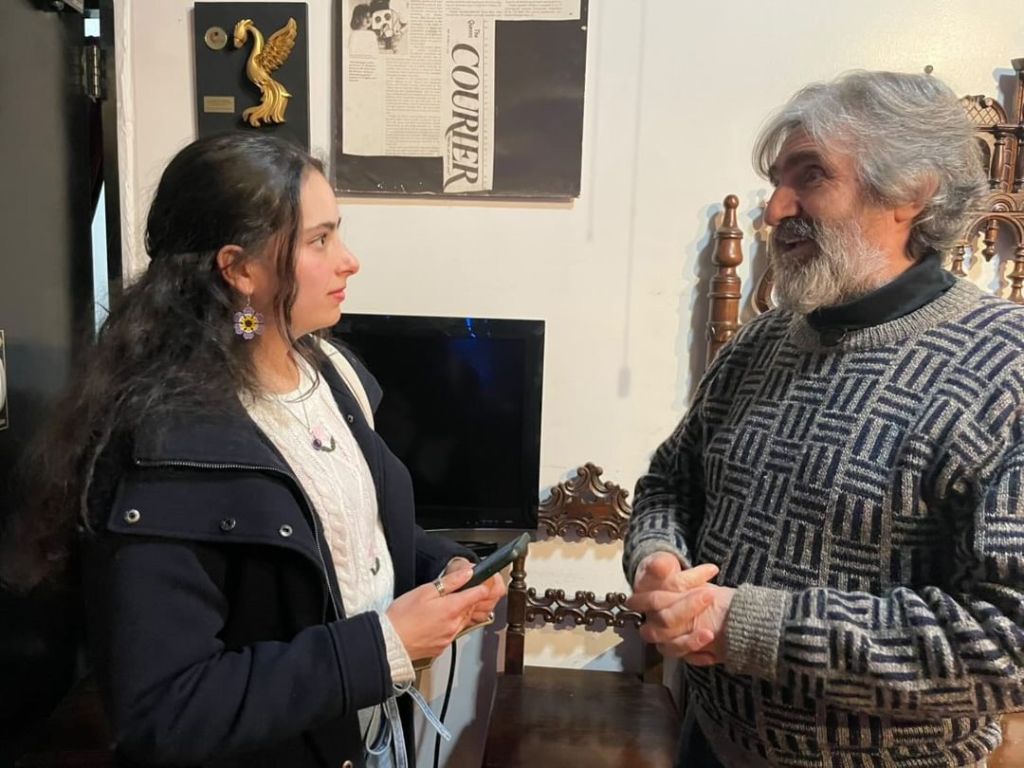
My experiences in journalism have taught me that storytelling is not just a profession—it’s a public service. From reporting on reproductive justice in Colombia to covering immigrant canners and nostalgia-driven plays in Queens, my work has always aimed to dignify lives often ignored by mainstream media. These stories are not just content—they are windows into systems, tools for empowerment, and sometimes, lifelines.
Living in New York as a Latina immigrant radically reshaped my understanding of identity, visibility, and structural inequality. For the first time, I saw myself racialized—as just another “Hispanic” or “Latina”—in a system that often treats our communities as statistics rather than individuals. This shift fueled a deeper commitment to what Eduardo Galeano called los nadie—the nobodies who don’t appear in history books, who are denied voice, name, and presence. My journalism now strives to rewrite that narrative.
In the short term, my mission is to continue building journalism that centers community needs, provides practical resources, and opens space for dialogue and participation. In the long term, I want to contribute to transforming newsrooms—structurally and culturally—so that they truly reflect the diversity of the people they serve. That includes advocating for more Latinx journalists in leadership roles, creating mentorship pipelines, and championing forms of storytelling that embrace care, complexity, and co-creation.


 prcarnetworld.com