What does interior design mean to you? What led you to choose this field? Has your professional identity evolved into a form of self-expression over time?
I’ve always felt that my mind sits at the intersection of the scientific and the creative, and I was searching for a field that could connect both. It led me to architecture. I started observing buildings more, sketching them, and it became a source of inspiration. This field requires a deep respect for knowledge and structure: you need to understand the rules in order to break them with intention. For me, this is what distinguishes architectural design from other forms of art. When designing a space, I try to weave self-expression with functionality – something I see myself getting better at with experience. I enjoy the process of letting each project become an evolving conversation between these two forces.
How have the cultural landscapes of London, Warsaw, and Palermo influenced your aesthetic approach? In what ways have the textures and architecture of these cities left traces in your spatial compositions?
These cities have significantly shaped my sense of aesthetics. Each of them speaks a different language – through culture, materials, textures, and lifestyles. Together they have broadened my approach to design. After experiencing them, and observing how they each carry this dialogue between self-expression and functionality, I’m taking what inspired me into my own practice.
In London, I worked on high-end renovations of Victorian houses in a conservation area. That experience was about designing contemporary interiors and structures with respect for heritage, and rules, while also engaging with the city’s modern, multicultural identity. I love how each neighbourhood there is unique, letting you get a variety of experiences depending on where you go. Through both my work and my studies at UAL, I learned to approach design in a multidisciplinary way. London sharpened my awareness of sustainability and encouraged me to think beyond conventional solutions, which continues to influence how I shape spaces today.
Warsaw, by contrast, feels more urgent, driven by speed and ambition. My work there was fast-paced, I often created practical yet elevated interiors for new developments or the renovation of post-Soviet buildings. The city’s landscape reflects this duality. It has also transformed in recent years into a place of growing international appeal. It was surprising but now I find this ongoing change very inspiring.
Palermo offered me a completely different perspective. At first, its apparent chaos felt like the opposite of Warsaw’s order, but over time I learned to embrace its rhythms. I love its nature and vibrant streets. What stands out to me is the strong sense of community and the openness of the people. The architecture here is a unique mix of different styles, particularly Arab and Norman influences. In interior design, I notice an appreciation for vintage pieces, art, and natural materials, often nicely incorporated into contemporary spaces. I find this, along with the city’s ability to slow down and remain present, deeply inspiring.
I’m excited to continue bringing these influences into my future projects.
Which emotion or conceptual theme influences your design process the most? How do concepts like melancholy, belonging, memory, or calmness manifest in your interior projects?
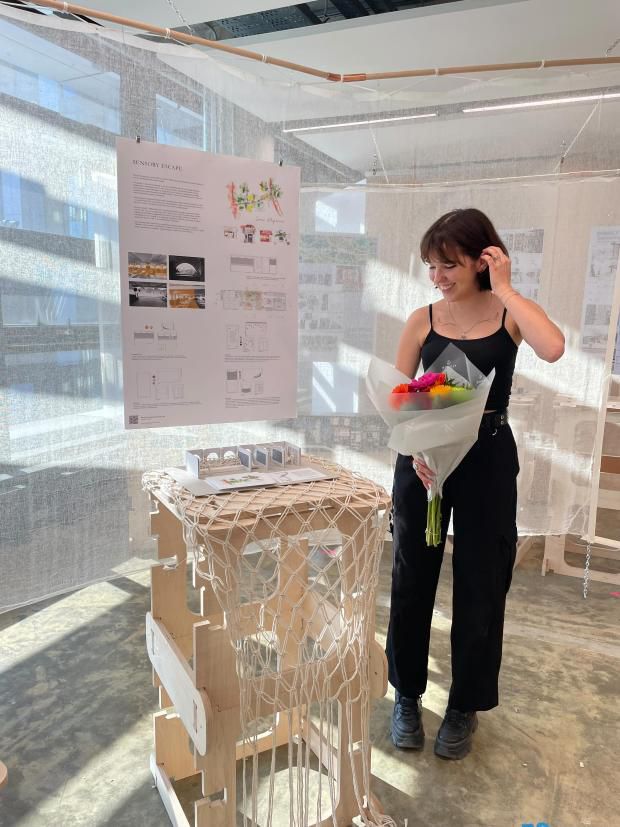
It’s a beautiful, and also difficult question. In my final project at university, I explored the idea of designing experiences rather than just spaces through sensory pods – each designed with a focus on one sense, to bring calmness as a response to a problem of overstimulation in public spaces. That research showed me how much design can go beyond appearance: it can become a multisensory experience that shapes memory, emotion, and well-being.
I carry this thinking into my work, where I try to design not just spaces that function well or look beautiful, but spaces that people can truly dwell in, places that resonate with intimacy, belonging, calmness. Gaston Bachelard in his book “The poetics of space” describes a home as a shelter for the most intimate parts of our identity. It’s important to have that in mind when designing interiors people will live in but also very exciting to take part in creating this unique atmosphere.
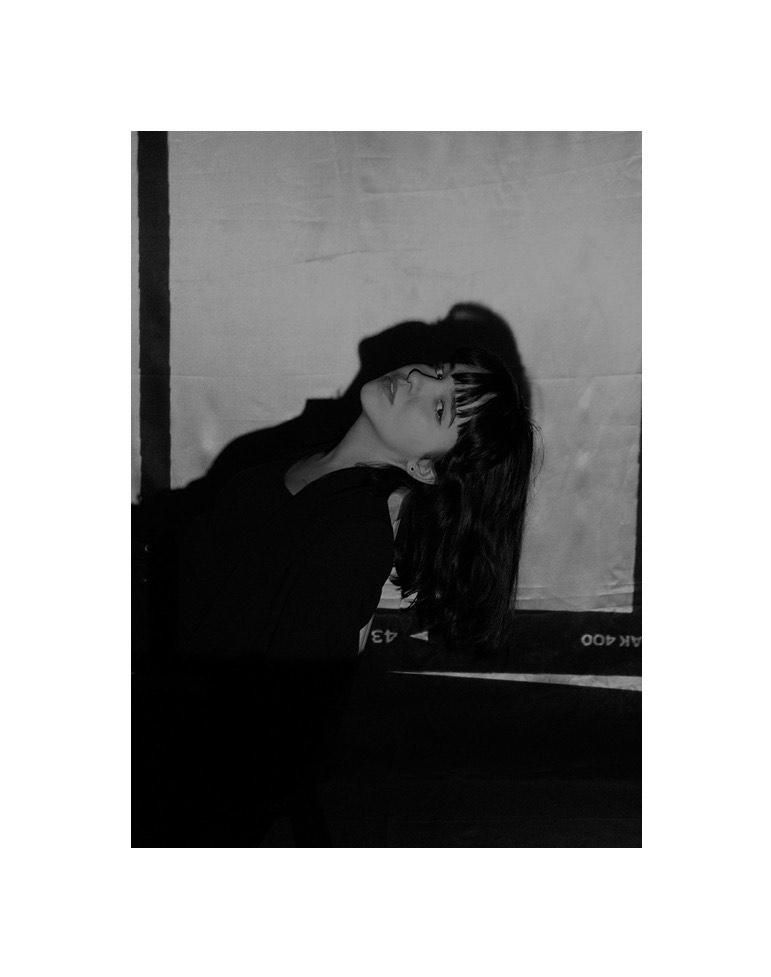
How do you connect photography, portraiture, and visual storytelling with your practice in interior design? Are there moments when a frame, a body, or a certain light gives you an idea for a new spatial arrangement?
I believe exploring various media of art helps in finding your personal voice. It shapes creativity, stimulates the senses to form new concepts, and pushes boundaries. In my practice, I always think about the user’s experience. I love lighting design, as it has a huge influence on the final atmosphere of a space. I observe my surroundings and get inspired by reflections of light, shifting shadows, colours, and the movement of sunlight. Working with photography and portraiture also taught me about framing and perspective, how even small shifts can completely change a composition. It showed me the importance of moving between attention to detail and the ability to step back and see the whole picture.
How do digitalization, social media, and algorithmic visibility affect your creative process? Do you find this transformation exciting and full of potential, or do you see it as limiting in certain ways?
It’s an interesting phenomenon. On one hand, it can be limiting as certain styles go viral and quickly become trends, which makes it feel safer to follow rather than question them. However, I’ve noticed that what resonates with me more and what gains more meaningful recognition, is staying true to your own voice. Not being afraid to stand out creates a stronger connection with your audience – that’s what I’m currently working on. By embracing individuality, it becomes easier to attract clients who are drawn to your unique perception of space. For me, the dream is to be recognised for my own design style, and to work with clients who choose me precisely for that reason.
Do you have a dream project you’d like to realize in the future? Are you excited by the idea of creating not just interiors, but immersive spaces that speak to emotions and memory?
I’m at a stage now where, after gathering many different experiences, I always carry new ideas in my head. While I don’t have a single defined concept yet, I’ve long dreamed of creating a space where people can connect, build community, and support local artists – while also making a positive impact on people and the planet. At different times this vision has taken the form of a café, a speakeasy with an art gallery, or something in between. Although it’s not my main focus right now, it’s always there in the background as an open possibility. So yes, I’m definitely excited by the idea and maybe one day you can all step into that space and experience it with me 🙂
Interview Series: “Memory, Representation and Resistance: Thinking Alternative Media Cinematically through Academic Perspectives.”
I. Feminist Art History and Representation
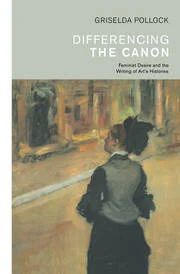
In Differencing the Canon, you propose a feminist re-reading of Western art history. How does this approach challenge traditional ideas about “greatness” and the exclusion of women artists? > [Reference: Differencing the Canon (1999)]
This is a slight misreading of the purpose of my book Differencing the Canon. A canon is the official version of knowledge, and it is official story of Western art that I am challenging Not only does this official story exclude almost all women artists, but it does also so because the issue is structural. The canon is formed to achieve a particular purpose: to establish a mythology of masculine creativity, that is further shaped by racial and geopolitical hierarchies, sexual normativity, and a hierarchy of materials and processes favouring the chosen media used in Western art ( painting and sculpture versus ceramics and cloth).
Firstly, I had to establish what a canon is: a body of accepted knowledge and method for making this knowledge appear to be an unquestioned truth. So, we have to show how the official story of art is constructed both by what it excludes and makes unthinkable and by what it presents as being transparently the sole truth. The title of the book identifies such selectivity, suppression and exclusion as an active ideological process.
Feminist deconstruction of the canon is neither offering an alternative nor trying to include what was systematically excluded. It has to reveal the power systems and their ideologies which naturalize a version one version of knowledge making invisible the ‘politics’ that produce these systematic exclusions and hierarchies of value. Another version of this idea is from British literary critic Raymond Williams who proposed an idea of a ‘selective tradition’ created by scholars that favours the dominant class, and I add, gender and socio-geo-political nations. dominant religions and normative sexualities.
Differencing is a grammatical form— a gerund—of a verb that does not exist in English. To differ is to disagree. To be different is the condition of variety. To difference is my invention of a word that enables me to create a feminist concept. It is drawn from the work of French philosopher Jacques Derrida and his theory of deconstruction, and also indirectly from Michel Foucault. Derrida’s deconstruction is a process that reveals how the ‘the selective tradition’ is created and suppresses certain knowledge and produces a smooth surface that makes any alternative unimaginable. Foucault , writing about the formation of the archive, taught us, however, that what has been made to become invisible has not disappeared. Rather it is folded out of sight. We can open the fold and find that history that was suppressed. So, we are not adding women back into art history. My book exposed how actual history is suppressed through folding some knowledge out of sight or by suppressing historical and social conditions of production or denying the role of ideology: systems of belief and ideas that favour the dominant social groups.
Knowledge of women as artists was folded out of sight, given the massive documentation in history of their constant presence, for the purpose of creating a mythology about the individualism of each artist ( personality, intellect, interests, desires expressed in art: the expressionist thesis of art) in a society in which individualism was granted only to men of certain privileged classes. To exclude artists as women can only happen in societies in which their social and ideological systems have already created a hierarchy amongst human beings on the basis of gender. Gender divisions are no more natural than class divisions or religious divisions.
These are created divisions, and the word woman signifies not a just a person of one type or another. Woman means not-man and the term functions as a negative through which Man comes to signify the only pure type of the human. The canonical denial of artistic and intellectual creativity to women is necessary for men to claim that they alone are the pure human with intellect and creativity. We have to deconstruct the process by which man and woman are not two equal forms of humanity but are an opposition of plus and minus. This is why however many times we put on exhibitions or write books about women artists, we make almost no change, no progress. For 50 years I have watched this happen over and over again and every new exhibition gathers women artists together as ‘rediscoveries’. Differencing the Canon was an analysis of the ideological structure that has in effect defeated our feminist attempts to normalize the creativity of both women and men. Greatness like genius has also been stolen by men for men alone. From a feminist deconstructionist perspective, we are not wanting to select some women for ‘greatness’. We have to develop as curators and art historians and critics ways of seeing their art, ways of interpreting what women in all their diversity and singularity are creating, not because women all share some essential femininity. Each artist-woman is unique as an artist but also is living in a patriarchal, racist, often religiously fundamentalist, capitalist and sexist and heteronormative world. Artists challenge us to see the world differently and from many perspectives. The issue is what art does, what it reveals, what we learn. The art market is not interested in art. It buys and sells brands. Contemporary art world is based on names of artists that become brands for a massive speculative investment market.
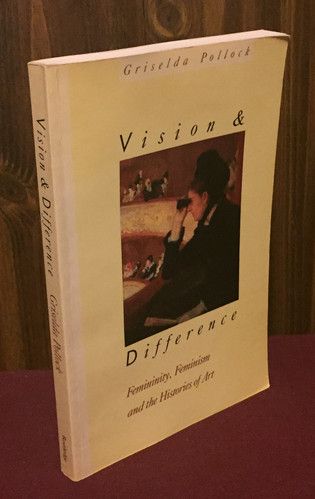
Your early work in Vision and Difference critiques how women have historically been portrayed in art. In what ways do these gendered visual patterns continue to influence today’s cultural and visual practices? > [Reference: Vision and Difference (1988)]
Let me make another small correction. Vision & Difference is a collection of ‘essays’ addressed to Art History, the academic discipline that studies art while the essays challenge the story that Art History has made canonical: the only authorized version of art and its histories. The essays are also about studying art as representation: that means not as the individual expression of one artist’s imagination. Representation means that all artists participate in a cultural activity in which there are traditions of visual representation and also patterns of ideological meanings that these representations have affirmed or sometimes contested and even changed.
Whose interests have the visual arts served? What visions of the world and how it is ordered have the visual arts produced by means of signs, materials, media, scales, locations. Whose vision of world has dominated, become normal? We know in the past the powerful rulers, religious leaders, ruling classes commissioned artists to make works for the purposes of confirming the vision of the world of the powerful. This is why the central essay in this book is ‘Modernity and the Spaces of Femininity’ which was my feminist conversation with and challenge to the social historian of art, T J Clark, who had transformed my understanding of 19th century French art by focusing on the significance the new metropolis and its new urban culture.
My question was: what does the modern city mean for women of different classes. The bourgeois women do not work but can go to the park, go shopping, drive around in carriages, or go to the theatre. Working class women are exposed in their often-visible work to predatory sexual exploitation by the men of the leisured classes. So, I analysed which spaces of the city the men and women involved in creating Impressionism, an egalitarian independent art society with both women and men artists involved in its creation, chose to paint and how.
I then asked myself if I can discern a difference in the space they chose and the way they represented women in these spaces. Thus, I introduced the idea of the gaze, developed in film theory. Who is looking at whom? Who is being subjected to a sexualizing gaze? How did Mary Cassatt and Berthe Morisot not only reveal the pressure of the masculine heterosexual gaze in public places but also represent the mutual gazing between women, or between adults and children? This is another earlier example of differencing the canon of Impressionist painting and revealing that the division between what artist-men and artist-women represented was not public space versus private space, but between those parts of the city where men and women of all classes moved about and those spaces where bourgeois men looked at or purchased working class women for sexual reasons.
Does this still happen? In the West, the sexualization of women is even more rampant and normalized in certain cultures overtly or secretly. Why do we think we have made any progress at all when we look at the major platforms of representation today: social media. It reflects back to us a picture of the dominant imagination. People believe that progress will happen. Being a structuralist feminist, I do not hope. I analyse the systems of representation and the social systems and their ideologies. We appear to have forgotten these terms and these modes of deconstructive analysis. Representation of women has deteriorated and with social media, and beyond on the dark web, the brutalization and dehumanizing sexual abuse of women is beyond horror. Given that one woman is killed every 40 minutes world-wide by a partner or family member, we must stop believing childishly in automatic progress and start naming patriarchal and phallocentric systems that produce ‘men’ as beings who believe they have rights—including to life—over women and ‘women’ who accept that this is normal. I see very little evidence of any real or systematic change in the representation of women because we have made so little progress to changing this system.
II. Trauma, Memory, and Feminist Aesthetics
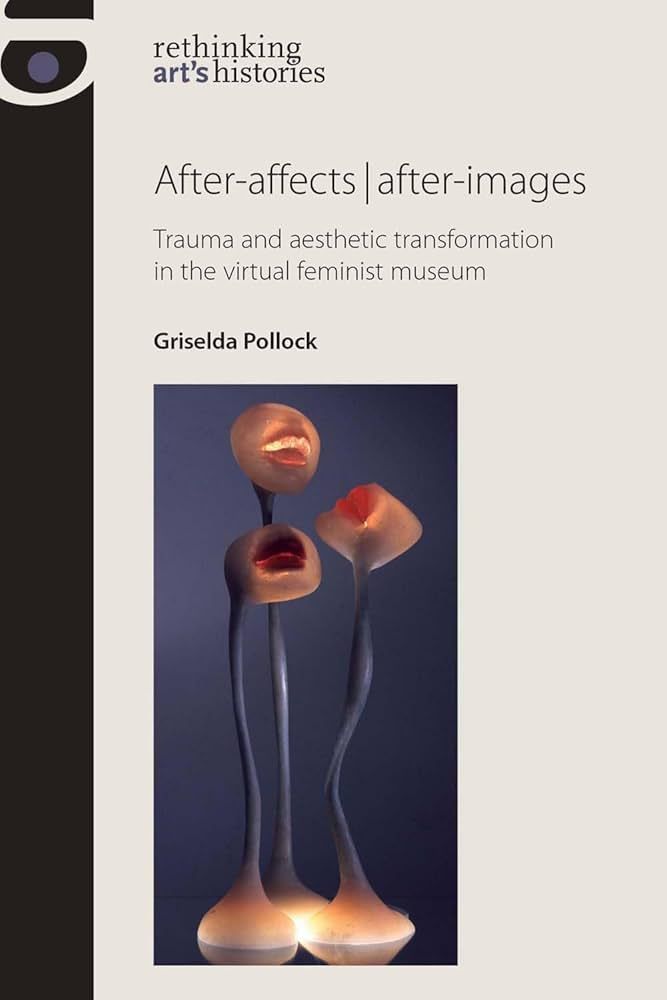
In After-affects / After-images, you explore how trauma shapes the experience of art. How can visual art provide a space for processing or representing traumatic experiences? [Reference: After-affects / After-images (2013)]
My argument in this book is not that traumatic experiences are processed or represented. Neither is possible. The core conclusion of that book is that artists, who have endured horrendous experiences such as famine, near death in genocide, sexual abuse, bereavement, exile and survival of extreme suffering may spend a lifetime of making art to create a formal framework for a possible ‘encounter’ with the trauma which is then transformed aesthetically. This is not about cure or relief. It is about the relations between forms, colours, processes, time, spaces and the potential for this encounter with trauma that was a missed encounter: an event that overwhelmed the psyche’s capacity to process it and left the artist possessed or haunted by a shapeless pressure of an unknown ‘thing’ that occupies her or his psyche without she or he being able to grasp it .
In all the case-studies in the book, I noted that the processing of this shapeless, unknowable pressure of the trauma was not a cathartic event but a matter of a lifetime of creating an aesthetic procedure or structure for a transformation through aesthesis: colour, mark, form, process: some painting, some film making, some sculpture, some video and installation. Each case study needed the most rigorous formal, material, structural analysis of how each artwork did its work. Work in German is Arbeit and Freud chose that word for what the psyche does in processing life events: in his terms the work of mourning, Trauerarbeit, working through: Durcharbeiten. I want to stress the importance of psychoanalytical theory rather than everyday psychology. You will know that I have drawn in this book on the theories proposed by artist and psychoanalytical theorist Bracha L Ettinger who created the term artworking, Kunstarbeit as it were, to propose a specific mechanism for understanding what I was naming aesthetic transformation in which aesthetic is not about the beautiful but about how we, the viewers, are affected by colour, touch, movement, duration, sound: the senses when we experience artworks.
Trauma cannot be a topic or subject matter for art: that would merely represent something as an event. Particularly in the wake of modernist acknowledgement of the autonomous affects of colour, field, medium, temporality, etc. art can be a site for this managed ‘encounter’ with residues of trauma that can also touch and move a spectator not with a topic or sense of specific event, but to compassion and hospitality to suffering.
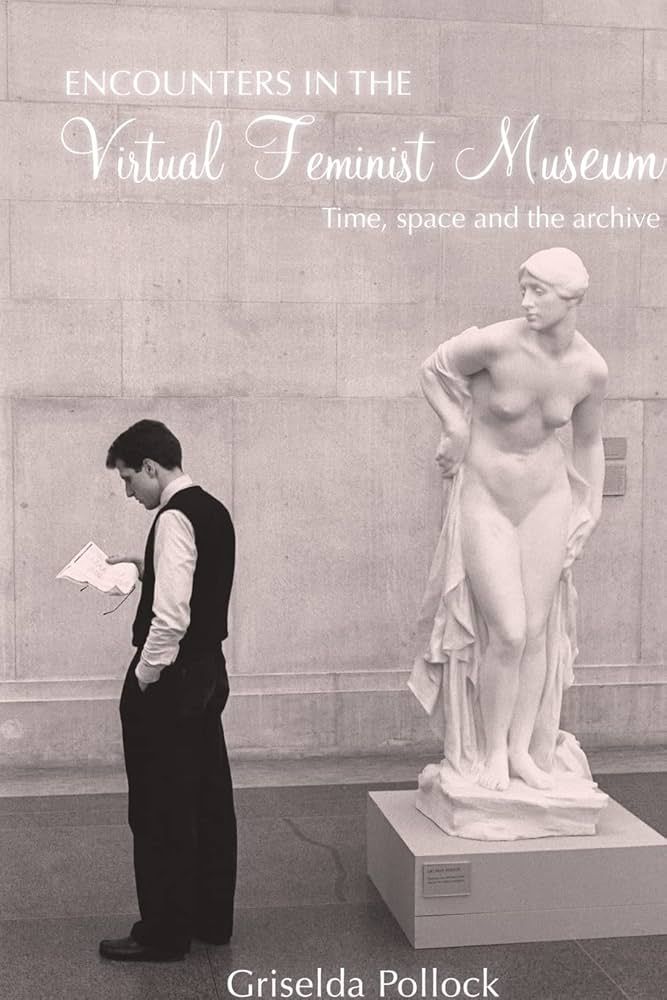
In Encounters in the Virtual Feminist Museum, you argue that memory is not only personal but also political. How does feminist aesthetics reshape our ways of remembering? [Reference: Encounters in the Virtual Feminist Museum (2007)]
It is not feminist aesthetics that reshapes our way of remembering, it is that aesthetic practices may facilitate new ways of our responding to the encounter with art, as I suggested in the last question. Are there feminist aesthetics? Certainly, there are philosophers who ask questions about the aesthetic experience from feminist perspectives: that is to challenge the masculine as the sole position of such experience or analysis.
Feminist is not an entity but a position of questioning, that is constantly questioning itself. Since women are the majority of the population and the only group who is systematically killed just for being women on a mass scale (femicide is the term for this), attention to the life and dying of women is a preoccupation of feminist thought. This means defining patriarchy as a form of socio-political-economic domination and phallocentrism as the psychological, linguistic and ideological justification of a system of male domination and privilege. Feminist means analysis, deconstruction, contestation of how phallocentric patriarchies intersect with and are integrated with various economic systems such as capitalism or feudalism and with religious-theological-political systems. Feminist is a mode of enquiry and research, not a women’s alternative. Feminist means caring for all oppressed, disadvantaged and suffering minorities including the world’s majority, women and girls. If art and its histories form cultural memory, the canons of art preserve and that justify male domination and hence the violation of the human rights of women and girls whose humanity is diminished and whose lives are put at risk.
My virtual feminist museum is a concept and a device for asking: what would the world be like and what would we as people be like if we encountered in museums those forms and works of art that were oriented to and celebrated life: the preservation of life? Without idealizing women, who are as deformed as men are in their mentalities and ideologies by the phallocentric and patriarchal systems of power, feminist thought and analysis functions as a critical space of resistance and transformation that has to question and challenge itself, to learn from its own blind spots and negotiate its internal differences and potential hierarchies of privilege.
I do not work with feminist aesthetics but what I termed feminist desire: desire for the end of oppressive dehumanizing systems of power, of the kind of greed that is destroying our planet and rendering millions of lives almost unliveable and dehumanized. Rather than worrying about keeping women in their places, we all need to ally to keep the planet alive, and to do so we need feminist thought that names and challenges the basis of inhumanity: which is that one group of humans treat their fellow humans as instruments not people.
In 1972, a French writer, Françoise D’Eaubonne, an art historian, wrote a book titled Feminism or Death. It was the first feminist eco-critical texts linking the fate of nature and the planet to the fate of women… feminism is thus not a specialty for feminists. It is a condition of future existence for the planet and humanity. Can art do some work in this direction? Yes. Must we all deconstruct and denounce patriarchy and phallocentric thinking. Indeed.
III. Visibility, Institutions, and Feminist Curating
What curatorial practices or institutional strategies have you seen succeed in making space for women and other marginalized artists within mainstream art institutions?
Very few, for the reason that the issue is structural and cannot be mended by gestures of mere correction. But we can and must study strategies that propose different models and address the key elements of curation. These are not packaging ‘art’ as an experience for visitors to gain pleasure or acquire cultural capital. Currently museums and galleries, shaped above all by a rampant art market and art fairs where vast amounts of money are being made and from whom they get their funding to make exhibitions and purchase artwork, are not examining alternative models. They are about entertainment, cultural capital and further securing financial investment in objects branded by artist names by giving collectors and foundations that now own lots of works of art the seal of high cultural value.
I used to teach courses on exhibition histories and focused on a history of five DOCUMENTA exhibitions since 1989, a key moment in European history with the fall of the Soviet Union and the Berlin Wall. This was a study of curatorial strategies in this major exhibition of contemporary every five years and its was fascinating since these platforms of the biennials are now the major exhibition form.
In the few exhibitions I have curated, the framework has been conceptual: not just a theme, a period, an artist, a topic. My aim has been to encourage visitors to grasp the relations between the works they encounter and the histories, concerns, traumas, and indeed aesthetic transformations that are being tipped into visibility and aesthetic encounter by artworking. It is not that the art is made a woman, a category, already defined by the hierarchy of value of men versus women. It is the position from which she intervenes into a field of meanings, a pattern of discourses, a conversation about practices and modes of art making. How do these works of art do their work to transform my understanding of the world, my sense even of self, of others, of changing perspectives. My recent exhibition was titled Medium & Memory, and I selected eight artists all of whom have different practices, different concerns, yet all were brilliant transformers of their chose media: painting, video, drawing, collage, photography. All were deep thinkers about their practices. All were very engaged with different kinds of memory: memory of a book that has been read, memory contained in images that we collect and encounter that shape patterns of thought, memories that are missing because political trauma made them beyond imagining and remembering. I try to bridge the worlds of critical social historical feminist art historical writing and the intense issues of the present world through artworks that provoke responses and indeed incite words as we describe what the artwork is doing and how they lead us to discuss issues and concepts.
Medium refers to the great lesson of modernism. Memory addresses the burden we carry from our consciousness of the modern world that we inherit and this fearful, endangered and violent world in which we are now living, with uncertainty and dread. Can we, will we ever create a humanity shared by all and with the living planet on which we depen? Can we come together in thoughtful, ethically sensitive and life-oriented artmaking that is not about speculative profiteering of the very few who having made billions and get richer and richer while people starve, are washed away in floods caused by climate change caused by fossil fuel use, die from heat, or are murdered, as women are with relentless regularity.
Art has been a rich and brilliant site of creative thought in aesthetic languages. I still believe in its criticality. But as you ask me questions about my project over 50 years as a feminist art historian, I am hoping that some memory of what feminism has tried to achieve over 200 years worldwide will survive or even now challenge our complacency as disaster looms even as it has already has destroyed life worlds of many vulnerable peoples.
Feminist is one form of attention to women, certainly, but also to life, a life that is human for all and in being human, knows that we are the ones who must care for this planet or die. Art is not about entertainment, prices, fashion, celebrity or an even earning a living writing about it. It is a uniquely human activity that is called to account for the same responsibility. Often it is already performing that, if only we knew better how to read what it is doing and can do to affect us and change our understanding.
You often reflect on “absence” in dominant art histories. Can absence itself become a meaningful feminist strategy of presence or resistance?
Not at all! Resistance comes through being present, writing, creating, arguing, surviving, persisting. I do not have confidence that the feminist revolution of which I was a part since 1968 is being preserved, fully studied and remembered, understood in all its complexity and intellectual and artistic brilliance. It can become a category, an investment potential. For me it has always been a politics of practice and of knowledge. It is continuing and self-challenging and adapting and learning. The artists are always one-step ahead.
Feminism is now a memory, sometimes presented in distorted and reductive fashion. It has a very long history and dispersed geography. It was never one thing. It is a partner in continuously imagining how we might all live together, all living forms, in dignity and safety from violence and impoverishment of spirit and bodily life. This is very urgent. Those called men and those prepared to be the women that patriarchal cultures design and the violently police must be challenged to realize that this a moment of choice for humanity and life on this planet itself. Capitalism is still a force that has not been tamed for life, and we see this is an obscenity of the divisions of wealth and poverty , greed and indifference on this planet. Feminism, art and thought are partners in this continuing struggle.
In your opinion, what is one of the biggest transformations of the journalism profession in the digital age?
I’m still relatively new to the business of news, but I would say the expectation of coming right out of school and landing up immediately on a masthead. Freelance reporting has become such a large part of getting your foot in the door at certain publications It also allows you a freedom to go after stories you might not always get to at a large news organization. It makes a career trajectory sometimes feel less certain, but also allows for more independence in the media landscape.
How do you evaluate the impact of social media on news consumption? What are its advantages and disadvantages compared to traditional journalism?
I used to be more cynical about the fact that a large portion of people get their news from social media. However, after seeing the work of people like Bisan Owda and Motaz Azaiza and their on the ground and award winning reporting from Gaza, I’ve realized how much citizen journalism can not only inform but also tap into communities in a way that traditional media may not always be able to. Even if their coverage is not in traditional news media outlets, they show a tenacity and kindness to the communities they report on that inspires me as an early career journalist.
Readers’ trust in news sources has been shaken. How can we rebuild the credibility of journalism in the digital age?
I think so much of the reason reader’s trust in news sources has been shaken is because there is still a lot of mystery to the business of journalism and how we actually do our jobs. I’ve learned so much about investigative journalism through reading She Said by Meghan Twohey and Jodi Kantor on how they broke the Harvey Weinstein story at The New York Times and really getting a look into their reporting process. I think transparency into our journeys with certain stories can really help build trust and relatability with the public.
Also, so many people feel that journalism and journalists only exist in cities, and really only in the biggest cities at that. So many incredible leaders are working to bring quality journalism to rural and local areas where reporters are going out of their way to reach forgotten communities. I think these publications and initiatives in news deserts can help demystify the work of journalists, and maybe even bring more people with different perspectives to the profession!
What do you think about the impact of algorithms and personalized news feeds on journalism?
I mainly think that algorithmic bias is just something that more people need to be aware of and how it’s affecting the ways we communicate with one another. The amount of times I hear someone give a hot take they think no one has heard before, meanwhile it’s verbatim from something that was in the latest episode of Subway Takes! These algorithms really can make you feel like we’re all living the same existence, being fed the same content. I think encouraging a healthy dose of skepticism about why you are being shown a certain video is something we should be teaching more of.
Journalism, Writing and Artificial Intelligence
How do you interpret the impact of artificial intelligence on the news production and content creation process in journalism?
I feel like most journalists I speak to are still relatively skeptical about relying too heavily on AI – not only for its intelligence impact, but also of that on the environment. That being said, it is being more heavily integrated into all aspects of our business, from hiring to even processing data for stories. Everyone is able to draw their own line, but for me, I always want my creativity to lead the way in my writing process.
What do you think about the use of artificial intelligence-supported tools (ChatGPT, automatic news writing software, etc.) in journalism?
I try to look at AI as a tool that you learn how to use in order to not get left behind. What that often looks like for me is using Otter or Descript to transcribe interviews, or sometimes entering a story I wrote into Chat GPT to help with making a concise pitch to a publication by pulling out the main ideas. Still, I don’t think it has the capability to truly replace journalists, as so much of our work is connecting with people on a human level.
What do you think about the ethical dimensions of AI-supported content? How should the boundary between artificial intelligence writing and human journalism be protected?
While I think that AI can be a tool that we use to make some of the organization process of writing easier, I am wary about ever letting it actually write stories or content for us. It may be able to imitate styles of famous writers or publications, but I don’t think it can ever substitute for intellectual curiosity that is required in human journalism. In my masters program, we’ve learned about AI and how to use it for certain projects, but we still have strict rules about using it to write entire stories. I think news organizations ought to have similar guidelines, and many already do.
Do you think artificial intelligence is a tool that makes journalists’ jobs easier, or is it a threat that changes the nature of the profession?
I think we as journalists need to learn how to use it as a tool so that it doesn’t change the nature of our profession. Sorry if that’s a cop out 🙂 In one of our classes, a friend and I drafted an AI tool called ManiFFFest (the three f’s are For the Freelance Frontier) that would help freelancers figure out where to pitch a story they were working on. The idea was to have the app do the work of pitching, emailing follow ups, etc while you get back to focusing on writing and reporting. Obviously it’s a big dream, but I think AI tools for journalists need to have the real people in mind from their inception.
The Future of Journalism and Writing
What are the biggest challenges for young people who want to be journalists and writers today?
I think one of the layover effects of algorithms and the isolation forced by the Covid-19 pandemic is that it can be harder to develop a unique voice. Weirdly, I think you learn more about what you actually think and your own opinions when you’re in a group with others, discussing ideas and how your opinions may differ. Developing a real sense of community with other writers or creatives is one of the best ways to find your own perspective, which is so critical to stand out in a crowded field.
How will journalism develop in the future? What skills should the new generation of journalists have?
I think in order to survive, journalism needs to embrace diversity in its hiring and perspectives that it promotes. We are in a political climate where tools that fueled segregation are being implemented disturbingly fast. As an industry we need to be prepared to protect the many gains that we have made in being more inclusive of different voices. As a member of the new generation of journalists, I’m trying to develop my skills in adapting to periods of crisis and uncertainty. To me, this means building up your own skills outside of a traditional job and potentially creating your own avenues to success.
How do you evaluate the rise of independent journalism and alternative media platforms?
I’m really curious to see how Substacks from established journalists may totally shift the media landscape in the next five to ten years. What may have started as ways for writers to express their own opinions have become some of the leaders on breaking details from stories that news organizations may not be reporting. Will these Substacks become mini news rooms of their own, breaking news before others can get to it?
I’m also interested to see what happens in the podcast space next. Audio journalism is one of my major interests as I think it can tell stories and engage more listeners in editorial content than ever before. After their crucial influence on the 2024 Presidential election, I’m curious to see if podcasts become even more prominent in delivering news or potentially dwindle from over exposure.
In your opinion, what will be the most important technological developments that shape the future of journalism and writing?
If there is anything that AI could do to really be a net positive in the future, it would be some kind of tool to assist with media literacy, especially for young people. The cutting of funds to the arts and humanities really worries me in terms of the long term effects it will have on dissemination of information and encouragement of creativity. If we teach skills to people at a young age on how to think more critically not just about what they see on the news, but also asking them what they thought of the movie they watched or the song they just listened to, already we are developing smarter individuals who might go on to give new perspectives to the media landscape.


 prcarnetworld.com