The Anatomy of Sound and  Image in Contemporary Media: A Conceptual Journey with Arzu Karaduman in the Footsteps of Chion

Interview Series: Beyond Synchrony: Dialogues on New Media and Sensory Aesthetics
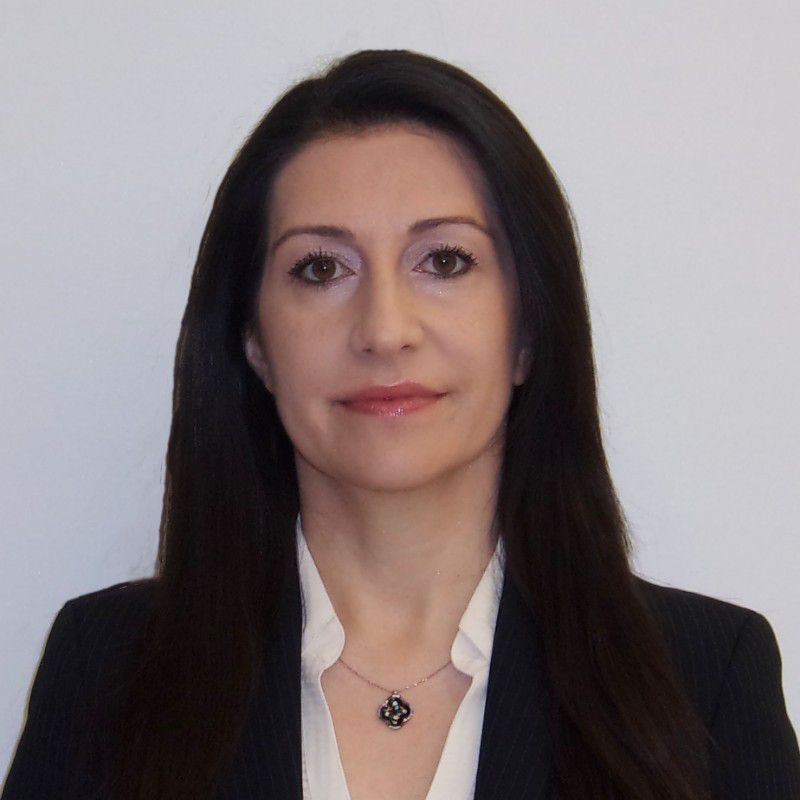
1. Within the framework of your academic trajectory and theoretical orientation, what were the main intellectual or aesthetic motivations that led you to focus on moments in which synchronization breaks down? Could you explain how this interest emerged and what kind of shift it created in your research path?

My focus on asynchrony emerged from a moment of analytical failure. One evening at Georgia Tech, I was watching Nuri Bilge Ceylan’s Once Upon a Time in Anatolia with friends from the Turkish Student Organization who organized the screening. Midway through a dialogue scene, something happened that stopped me cold: the characters’ voices continued, but their lips no longer moved. I remember physically turning to scan the faces of my friends sitting next to me, curious to see whether anyone else was as startled as I was. The shock of the moment of my realization that I witnessed a genuinely new technique of cinematic audiovisual asynchrony compelled me to consult with my cohort as well as my professors in the Moving Image Studies program at Georgia State University. I knew this new technique was not an instance of internal monologue, not acousmatic voice, not a voice-over, not an ellipsis; none of the established categories in film sound theory applied. Out of my fascination with this technique emerged the concept of the “cryptic voice,” a voice that is simultaneously present and absent, uttered and withheld, audible yet refusing to align with the moving lips of its speaker. One of my most exciting publications is the forthcoming chapter in the Oxford Handbook of Media and Vocality, because it will introduce this foundational term more fully with an extended analysis of the dialogue scene in Once Upon a Time in Anatolia as well as another scene in Ceylan’s Three Monkeys.

The cryptic voice became the conceptual spark that redirected my research toward identifying and naming the new sound-image relations as they emerge in contemporary cinema. This shift eventually led to my broader methodological framework, anasonicity, which examines what I describe as spectral, barely audible, or structurally “unsyncable” sounds in contemporary global cinemas. My project “Sounding Anew: Anasonicity in Contemporary Global Cinemas” revisits existing film sound terminology and proposes “anasonicity” as a new methodological approach designed to address emerging sound techniques that transform conditions of audibility and inaudibility in contemporary cinematic experiences. Taken together, these sounds radically disrupt synchronization and require new modes of listening, while the films that deploy them unsettle linear temporality by rendering the sounds of past, present, and future indistinguishable within their narrative worlds.

I call “Sounding Anew” the sonic counterpart of Akira Lippit’s Atomic Light (Shadow Optics). The conceptual seed for anasonicity –or asonority, as I use the terms interchangeably– was planted in Lippit’s formulation of avisuality, his term for the paradox of what is visual yet invisible, an impossible type of visuality that emerges with the birth of cinema, the X-ray, and psychoanalysis in 1895. Lippit’s insight is that by the late twentieth century, the image itself had begun to exceed the limits of visibility. Anasonicity takes up that provocation on the terrain of sound. If avisuality charts the limits of seeing, anasonicity attends to a parallel shift in our experience of hearing that happens a hundred years later: sounds that slip between the audible and the inaudible, voices that fall out of synchronization in completely new ways, sounds that refuse to anchor themselves in time. Attending to the contemporary anasonic nature of cinema then, I name the emerging sonic techniques that trouble what we think sound is supposed to do in cinema, and, by doing so, ask us to critically attend to such moments that demand a new ear and a new thinking.
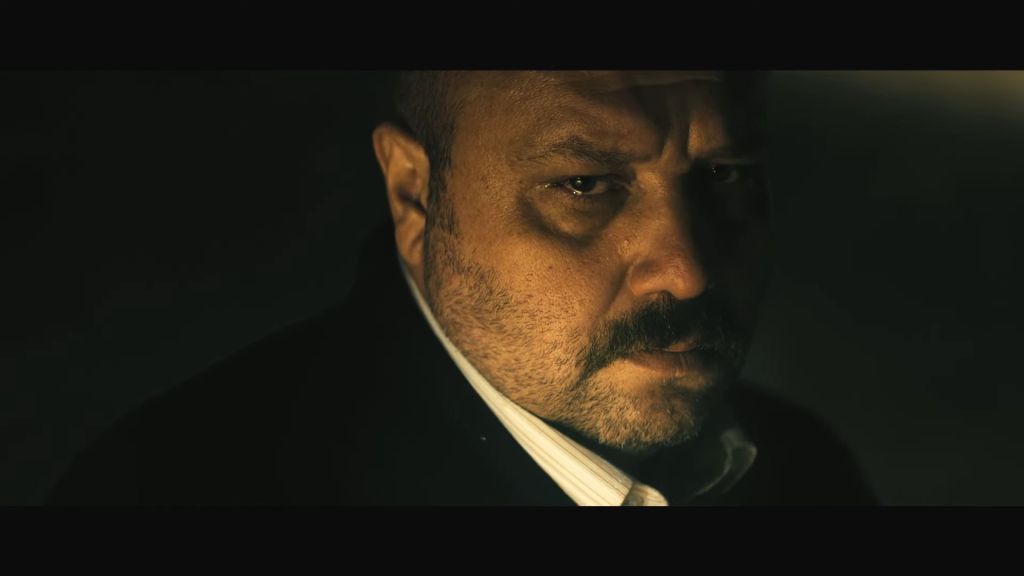
2. Your work appears to resonate with Michel Chion’s approach to the sound–image relationship. How has Chion’s theoretical framework shaped your scholarly orientation, and in what ways do you expand, reinterpret, or challenge the conceptual space he opened?

Michel Chion remains foundational for thinking about cinematic sound: his attention to the phenomenology of listening created the conceptual template many of us have inherited. While serious scholarly engagement with sound and sound–image relations began in earnest with the 1980 Cinema/Sound special issue of Yale French Studies under Rick Altman’s editorship, it was Chion’s Audio-Vision that became truly indispensable to the evolution of film sound studies. Since the 1980s, the field has expanded and transformed, but Chion’s framework endures as one of its most generative intellectual anchors.

I was particularly impressed by Chion’s capacity to generate incisive terminology in Audio-Vision, especially his formulation of the acousmêtre, which offered a model for how conceptual precision can illuminate phenomena that had long remained elusive. Among all the formal elements of cinema, sound is notoriously difficult to analyze, and Chion’s work demonstrates a rare patience, rigor, and passion for close listening.

Chion visited Atlanta to give a talk at Emory in 2017. Having encountered the cryptic voice in Once Upon a Time in Anatolia, I carried my bewilderment directly to him. After his lecture, I approached him to recount the dialogue scene and to ask what he made of the voice emerging from unmoving lips. He knew the film well and immediately remembered the scene, and yet his response, “It’s just the ambience!” sounded unexpectedly dismissive and was invaluable precisely because it exposed the limits of our established vocabulary. My aim is not to overturn Chion’s legacy but to expand and complexify the conceptual field by naming new audiovisual phenomena that contemporary cinema is producing. In this sense, I see terms such as anasonicity, cryptic voice, echoing sonic flashback, and muted image as the next theoretical steps after Chion: concepts that build on his groundwork but are calibrated for an emerging audiovisual landscape and explained through deep philosophical engagements.

3. The original English terms you have developed to describe moments in which synchronization slips, breaks, or is intentionally disrupted offer a significant contribution to the literature. How does your process of conceptual creation unfold? What theoretical, aesthetic, or phenomenological criteria guide the emergence of a new term?

A new term never precedes the phenomenon; it arises only when a film insists on it. My process is grounded in close listening —what I call a gesture of “listening through,” borrowing from Derrida’s method of “reading through” texts against themselves— and in allowing films to challenge the limits of the theoretical lexicon we already possess. This careful act of listening through these films involves returning to a scene again and again, hearing it anew each time, in repetitions that arrive with difference and produce something new each time. After all, many of the sounds I study are barely audible, and some of the techniques I name appear only fleetingly in most films rather than in extended sequences like the example in Once Upon a Time in Anatolia. So an attentive ear is the key to the process.

Sometimes colleagues and friends help direct my attention to certain films. After my first presentation on the “echoing sonic flashback” in The Revenant (Alejandro González Iñárritu, 2015) at the Sinefilozofi Symposium in 2022, Dr. Serdar Öztürk mentioned a brief but striking use of the cryptic voice in Pelin Esmer’s Something Useful (2017), which I am presenting on at this year’s symposium. I am equally grateful to Jordan Chrietzberg, who recommended The Zone of Interest (Jonathan Glazer, 2023); to Jazmine Hudson, who pointed me toward Sinners (Ryan Coogler, 2025); and to Cameron Kunzelman, who suggested Memoria (Apichatpong Weerasethakul, 2021). These recommendations become invitations to texts that demand to be listened to with care. I am currently extending my research on what I term The Anasonic Zone of Interest, have begun developing a piece on Sinners, and still await the opportunity to encounter Memoria, whose limited circulation has made it particularly difficult to find.
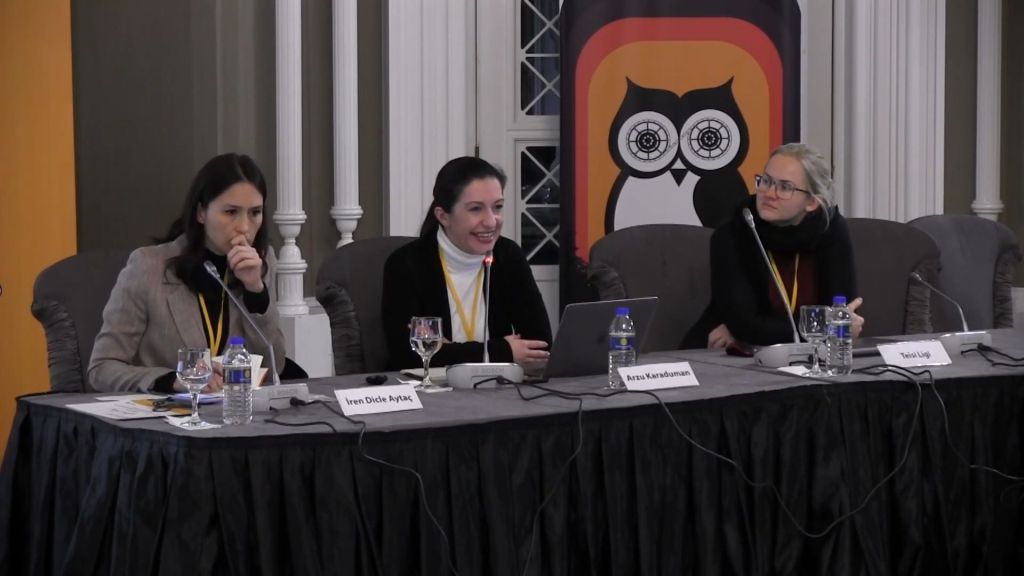
To clarify the process of conceptual creation, I could list three simultaneous criteria that guide the emergence of terminology:
• Phenomenological precision: What exactly is being heard? At what level of perception: audible, barely audible, spectral, remembered, virtual?
• Narrative function: How does the sound alter temporality, embodiment, relations to memory, or the ethical space between characters?
• Theoretical necessity: Can existing terminology account for the phenomenon? If not, what new concept is required, and what conceptual gap does it fill?

I call these subcategories of anasonic sounds “impossible,” because their functions stretch the boundaries of audiovisual asynchrony as defined in established film sound scholarship. Cryptic voice, for instance, emerged from recognizing a voice that is spoken, heard by other characters, and fully audible—yet unaccompanied by lip movement. Echoing sonic flashback, which I explore through Park Chan-wook’s Lady Vengeance in my recent chapter for Derrida and Film Studies, names a distinctive form of aural flashback that operates like an echo, where past sounds reverberate closely following the present sounds like an echo. The muted image (bridge), which I introduce in a forthcoming 2027 article for a Derrida Today special issue on Anatomy of a Fall (Justine Triet, 2023), describes an impossible form of synchronization between images and sounds across two scenes, creating an impossible match that dislocates spatial or temporal continuity.

In each case, I am identifying an impossible doubleness: sounds that are both present and absent, synchronous and asynchronous, grounded or embodied and spectral. I guess my genuine curiosity drives the will to coin new terms each time I notice a mismatch between sound and image in contemporary films. Ultimately, conceptual creation begins with listening to what cinema is doing—and inventing terminology only when existing language can no longer describe its operations.

4. In contemporary cinema and television, the sound–image relationship is increasingly heterogeneous, fragmented, and often deliberately detached. How do you interpret this trend in relation to the broader transformation of contemporary narrative structures? What does this growing separation reveal about the perceptual habits of today’s audiences?

Contemporary audiovisual storytelling has moved further from classical notions of linearity, audiovisual unity, and strict synchronization, even in realist films or TV dramas. Rather than treating the soundtrack as a stable accompaniment to the image, or simply as its subordinate, many contemporary films mobilize sound as an autonomous and sometimes unpredictable force, which I find exhilarating. This fragmentation or destabilization reflects a broader transformation in contemporary narrative structures; stories increasingly unfold not as single temporal continuums but as intertwined temporal planes: memory, anticipation, dream, trauma, regret, and potentiality. For instance, my work on “crystal sounds” in contemporary global cinema and television traces multiple instances of these destabilizing sonic formations, even in otherwise completely disparate texts such as Barry Jenkins’s Moonlight and HBO’s Westworld. And I am certain there are further cases that similarly stray from conventional sound–image coherences. 

New forms of asynchrony, in this context, become a perceptual challenge even in the already fragmented and contemporary narratives. These texts ask audiences to feel before they identify, to listen before they decode, and, to borrow from my own method, to “listen through,” again and attentively. Their refusal of easy comprehension is not unwarranted; I think they resist disposability. These works gain their ontological power from their radical sonic, audiovisual, and narrative experimentations. They force us to return to certain scenes repeatedly, to be able to engage with them at the philosophical level they operate.

Contemporary viewers are accustomed to media environments where multiple temporalities and sources coexist; streaming interfaces, multi-screen displays, algorithmic feeds inundate our everyday realities. Their perceptual habits have become layered, fragmented, and non-linear. Cinema is responding in kind, producing radical forms of asynchrony that not only resonate with these habits but also challenge the audiences further by demanding deep philosophical engagements.

Many of the films I study enact what Derrida calls différance, a temporal and spatial deferral, or what Deleuze theorizes as the “crystal,” an indiscernibility between the actual and the virtual. In this sense, the separation of sound from image is not fragmentation for its own sake. It is a mode of attunement to contemporary subjectivity, a way of making perceptible the disjunctions, overlays, and spectral echoes that define our media-saturated lives. And it is often precisely this radical rethinking of audiovisual relations that allows these films to do philosophy.

The digital media ecosystem—including streaming platforms, social media videos, and multi-screen environments—introduces new technical and aesthetic challenges to sound–image synchronization. How do you think these environments reshape the audiovisual relationship? Do you see these synchronization shifts evolving from technical glitches into deliberate aesthetic strategies?

Yes, what once appeared as “errors” or “glitches” are now being absorbed as expressive strategies. Digital media environments including streaming platforms, TikTok videos, algorithmically compressed sound files, autoplay transitions, and skip functions normalize the experience of rupture, elision, and discontinuity. Cinema has responded by formalizing these experiences: asynchronous editing, displaced soundtracks, spectral voices, or echoes of the past that intrude on present time. For example, the echoing sonic flashback or the cryptic voice are not accidents of mishandling but deliberate manipulations that express heterogeneity of time through memory, trauma, displacement, or temporal paralysis.

Of course, tight synchronization between image and sound and the accompanying expectations of temporal continuity and linear narrative progression remain the norm if we consider the thousands of films produced globally each year. However, the shift from analog to digital has introduced new aesthetic sensibilities and technical possibilities that continue to reshape what filmmakers can do with the soundtrack. For example, Mark Kerins was one of the first scholars to trace a level of sonic complexity to the creative potential of surround-sound multichannel formats. Others have similarly noted the increasing indistinction between sound effects and music in contemporary digital sound design, where layers of sonic material can be manipulated with extraordinary precision.

Digital tools have made it possible to craft soundtracks that are denser, richer, and more structurally complex. As a result, synchronicity is no longer the default formal expectation but merely one option among many. Digital media and digital culture defined by compression artifacts, algorithmic modulation, nonlinear temporality, and platform-specific listening habits have fundamentally transformed the conditions of auditory perception. In my scholarship, I see that cinema has responded the transformed conditions of audibility by experimenting with the dramatic and philosophical possibilities of what I call “unsyncability”. Conversely, and perhaps more intriguingly, we can argue that cinema has anticipated and even instructed the audiovisual logics of emerging technologies and those who design them. For instance, I claim that the technique of the muted image that foregrounds voice as media in the impossible synchronization between the voice and a pair of foreign lips reappears today in the artificial synthesis of prosthetic voices and faces in deepfakes and AI-generated content of our current media ecology.
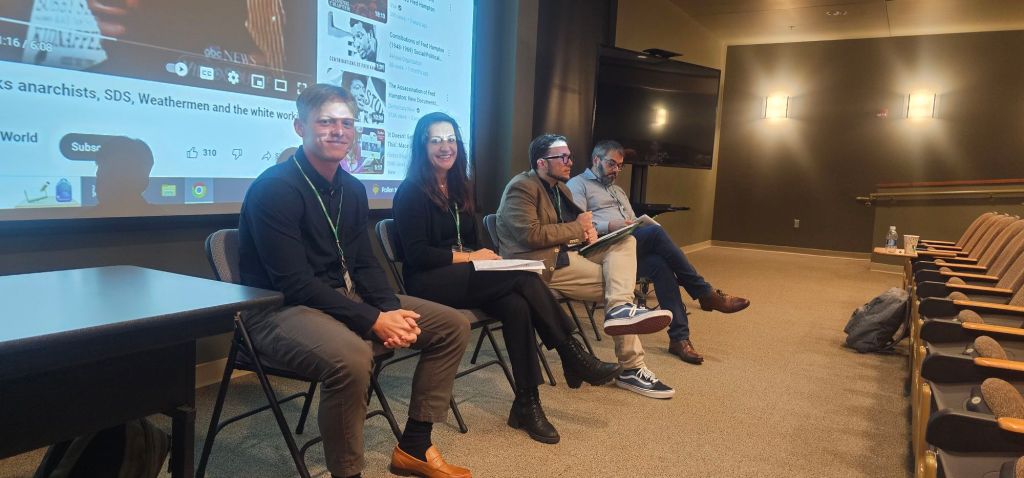
Publishing all your work and terminology in English makes your concepts more visible in international scholarship. How does this linguistic choice influence your theoretical framework? In what ways does producing terminology in English shape the nature or boundaries of your conceptual work?

To be completely honest with you, I have never pursued scholarly work in any language other than English. I attended Zonguldak Atatürk Anatolian High School, where nearly all courses were taught in English. My B.A. in American Culture and Literature and my M.A. in Media and Visual Studies at Bilkent University continued this trajectory, as English was the institutional language of instruction. As a result, my intellectual formation, reading habits, writing practices, and theoretical vocabulary have all been shaped entirely in English.

At the same time, English is the primary language of global academic discourse in Film and Sound Studies, and developing my terminology in English ensures that the concepts circulate widely beyond national contexts. I see scholars writing in languages other than English like German, Portuguese, or Finnish citing my published works. I am not sure that publishing these concepts first in Turkish would have enabled that kind of international reach.

English also imposes a productive rigor. It demands conceptual precision: a new term must justify itself etymologically, analytically, and philosophically. This pressure toward clarity ultimately strengthens the concepts. For example, asonority could not have existed merely as a convenient linguistic parallel to Lippit’s avisuality, that is an elegant analogy invented in the final sentences of a 16-hour comprehensive exam. That day at GSU, I simply coined it without knowing what it meant or how to fully theorize it, and I finished my exam with a long list of questions in the space allocated for answers. Asonority/anasonicity had to accrue methodological and analytical clarity, enough to withstand the scrutiny of my dissertation committee: Angelo Restivo, Alessandra Raengo, Calvin H. Thomas, and especially Akira Lippit as my outside reader. I am deeply grateful for their patience, which allowed the concept to mature into the methodological framework it finally evolved into. In short, English, despite being my second language, has been a conceptual and philosophical playground for me throughout my entire academic life. 

Looking toward the future of your research, what new theoretical questions are you pursuing within the study of sound–image relations? Are there particular themes or conceptual directions you plan to deepen in your upcoming work?

My current trajectory continues to expand the conceptual umbrella of anasonicity. At present, I am in conversation with Palgrave regarding my first book project, which will likely take the form of a short pivot, given that I have already published several peer-reviewed articles and chapters that have divided the larger project into smaller, thematically coherent components. I am also working on an article titled “Au revoir to voix: Muted Images in Anatomy of a Fall,” which introduces the term muted image as a technique that produces an impossible synchronization by pairing the visuals of one scene with the soundtrack of another. To my knowledge, the first use of this technique appears in Park Chan-wook’s Lady Vengeance (2005) and later at the climax of Justine Triet’s Anatomy of a Fall (2023).

A second term I am developing is the “meta-burden of representation,” which I use to analyze the self-reflexive structure of Cord Jefferson’s American Fiction. Here, Jefferson responds to the long-discussed “burden of representation” placed on artists from marginalized communities, yet does so within a work that becomes, through its very critique, burdened by the same representational expectations. This concept expands existing theories of race and representation by foregrounding the recursive, self-conscious pressures placed on creative labor itself.
Concurrently, I am pursuing a chapter for Bloomsbury’s The Music Video Industry: Interviews, Close Looks, and Takes, in which I examine the expanded terrain of the music video through an interview-based study of The Seasons, a large-scale audiovisual collaboration between composer Sebastian Currier and filmmaker Paweł Wojtasik. Among the questions I will bring to the artists first and then elaborate upon analytically in the second part are: How might we understand the lineage between expanded cinema as presented in concert halls (where films are screened with live accompaniment) and in museums (as installation-based, multi-format objects) and the contemporary music video? And, conversely, do music videos or experimental films with a music-video logic—Álvarez’s Now!, Conner’s Cosmic Ray and A Movie, Anger’s Scorpio Rising, Workman’s Precious Images, Devo’s Mongoloid—inform The Seasons’ approach to structure, rhythm, and montage?
Finally, although my published scholarship has thus far been exclusively in English, I intend to return to Turkish cinema with sustained attention. I have long been drawn to the sonic textures of New Turkish Cinema (mid-1990s to the present). Therefore, my next major project will be a second monograph on the sounds of this cinematic movement, exploring how the oeuvres of Reha Erdem, Pelin Esmer, Nuri Bilge Ceylan, Emin Alper, and Tayfun Pirselimoğlu respond sonically—as much as thematically—to the country’s evolving political landscape. This project will allow me to bring my conceptual framework into dialogue with the cinematic traditions that shaped my sensibilities, potentially in a bilingual format.

Across these endeavors, the guiding question remains constant:
What new forms of listening does contemporary media demand, and what new vocabulary must we devise to account for them?
CINEMA AESTHETICS IN THE ANTHROPOCENE: AN INTERVIEW WITH JENNIFER FAY

Interview Series: Climate Crisis in Cinema: Rewriting the Planet’s Story Through Visual Narratives

Gertrude Conaway Vanderbilt Professor of Cinema & Media Arts Professor of English | German, Russian, and East European Studies Vanderbilt University

Cinema and the Anthropocene

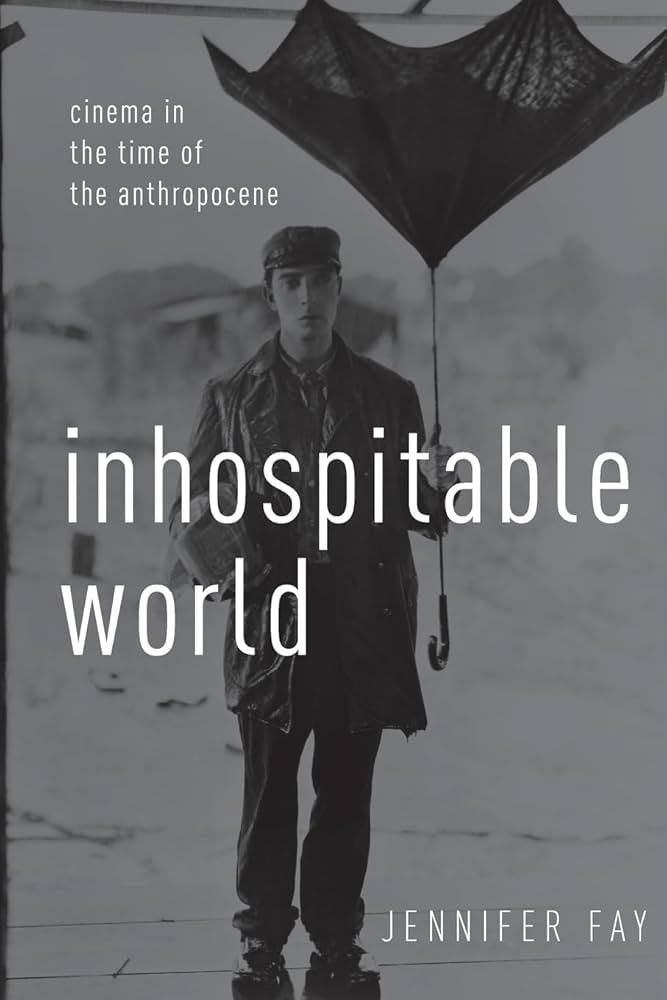
In Inhospitable World, you explore how cinema functions not only as a medium of representation but also as a site of environmental struggle and aesthetic refusal. How do you think cinema—especially narrative cinema—responds to the epistemological and material challenges of the Anthropocene?

Narrative cinema, as opposed to documentary, responds to the Anthropocene in a few different ways. And, of course, much depends on how the Anthropocene is defined as a political and environmental crises, historical phenomenon, and/ or cultural logic. I’ve been interested in narrative films that thematize anthropogenic weather and pointedly artificial environments, on one hand, and others that bring to the fore, as a matter of design, massive infrastructure projects such as mega-dams, highways, big agriculture (to name a few) that have altered, profoundly and at a planetary level, the surface of the earth and the movement of water, animals, and people. There are contemporary narrative films that respond to the Anthropocene thematically by taking up plots about climate change. But there are others that can be more interesting to study that set fictional stories against backdrops in which the forces of the Anthropocene are on display, but not at the forefront of the story.

And we can also study fiction films made in studios, long before the Anthropocene was discovered, that thematize weather and atmosphere as designed or artificially produced rather than naturally given. Sometimes this is obvious in the plotting or a matter of knowing production history. This idea of artificial or anthropogenic weather, “nature,” and world have always been at the center of narrative films where the need to control and reproduce environmental conditions is paramount to efficient production, perhaps especially when, in the film, the effect is supposed to look contingent and natural. In this way, we can see designed environments (including calamitous weather) as an aesthetic practice of cinema that is connected to the cultural forces and impacts that give rise to Anthropocene conditions.

The term “inhospitability” that you foreground resonates with the unlivable conditions of both planetary ecosystems and cinematic spaces. How does this notion help us understand the aesthetic or ethical function of discomfort in environmental film?

Inhospitality is meant to describe a few things. First, it refers to the world of the Anthropocene that is increasingly unlivable to most Holocene life. I focus on the 20 th century and period of the Great Acceleration in which the explosive rise of consumer capitalism and visions of a “good life” in the mostly white western world destroy the environmental conditions on which all life on the planet are predicated. Cinema is complicit with this culture of accumulation.

Historically Hollywood films have advertised images of “the good life” to spectators all over the world to imitate, and cinema is, for the most part, a resource-intensive entertainment in all phases of production, distribution, and exhibition, whether as celluloid projected in the theater or as streaming content. But this also an artform that sheds light on the climate catastrophe. The world we see projected on screen represents and may mirror the one we inhabit. Thus, cinema offers a way of viewing our world at a remove from which we may contemplate the relationship between a pattern of life and the natural resources or petrochemicals that give rise to it.

Second, hospitality speaks to the ethical relationship between guests and hosts, of who welcomes whom. Inhospitality gestures to a refusal of these terms, and not only between people. Hospitality between people presumes that the earth is a home to the lifeforms that have evolved here. The earth’s hospitality is no longer assured. Finally, I am interested in the world of the film and the image. What does it mean to take up residence in an image? Are there forms of environmentally-minded cinema that refuse that invitation? Other films may welcome us to an image where we may not find a place for living in the world.

How might film’s aesthetic choices—such as composition, sound, duration—contribute to either revealing or concealing ecological fragility?

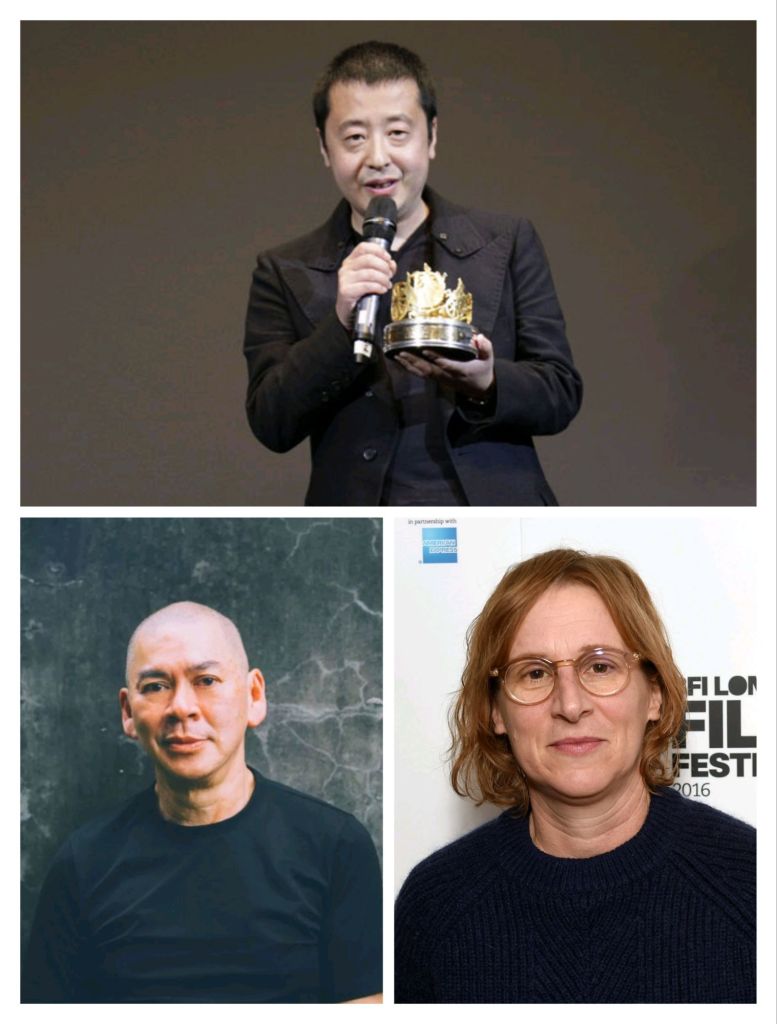
Cinema is an aesthetic arrangement of material that viewers may not otherwise perceive or take the time to notice in the real world, and this goes for a range of phenomena people, animals, places, and environments. Cinema allows us to take another look and have a second or third thought about the things we see and hear; a film may give us a view on the world that exceeds or defamiliarizes human perception and attention. I am among scholars interested in so-called slow cinema, Tsai Ming-liang, Jia Zhang-ke, Kelly Reichart, to name just three directors with environmental attunements and a penchant for long takes that give us time to become absorbed in an image and its sounds and also to become curious about what is beyond the frame. At the same time, cinema may also keep the world and its crises from view. It all depends on who is conceiving of the film, controlling the camera, and making decisions about what film-goers get to see.

Genres and Forms

There is often a tension between mainstream cinema’s spectacular tendencies and its capacity to provoke ecological awareness. Do you believe that popular genres (sci-fi, disaster, thriller) are capable of engaging critically with the Anthropocene—or does this role fall more effectively to experimental or documentary forms?

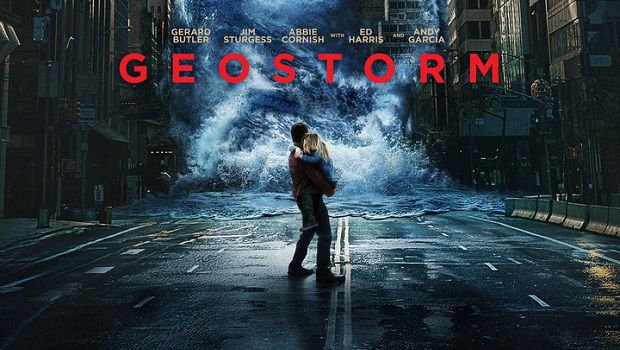
Big-budget mainstream films may not take the political risks of documentary and experimental films, and so it makes sense to look beyond the cineplex for meaningful work about our climate crisis. But this is also where film criticism intervenes to consider how even seemingly apolitical or banal genre films are saying something worthy of attention. For example, I find the totally banal Geostorm to be kind of interesting as a post-apocalyptic film. The scenario is that the planet’s entire climate system has collapsed and is now regulated through satellites. When we encounter this post- apocalyptic world, however, it is exactly like the pre-apocalyptic world that brought about the catastrophe in the first place; i.e. the current world. Nothing has changed (not that any character remarks on this fact). And, thus, this silly genre film says something about climate catastrophe, a fantasy of geo-engineering, and a desire to maintain the unsustainable the status quo.

Are there particular films, auteurs, or cinematic practices that you believe manage to narrate environmental precarity without reducing it to cliché or moralism?

There are genres that I think of as having an environmental sensitivity if not sensibility. For example, film noir and its attraction to built environments, bad air, and desiccated urban spaces has deep connections to naturalism and pessimism in ways that show how urban worlds built for human life become unlivable for these characters who rarely survive the film. These are low-budget movies, often shot on location, and feature characters who want but who cannot achieve the “good life” of consumer capitalism that is underwriting the Great Acceleration.

How do genre conventions affect how we conceptualize ecological time, space, and agency?

The film historian and theorist Karl Schoonover is currently writing about auteurs like Max Ophüls and Douglas Sirk in terms of their attention to soot and waste (Ophüls) and the byproducts of petroleum—from plastic to make-up—that are everywhere in the mise- en-scene (Sirk). Another film scholar, Nadine Chan, researches the history of colonial cinema in Malayasia. Chan focuses on the relationship between colonial extraction and the educational films made for colonial subjects whose labor is being extracted along with the colony’s raw materials. Cinema both archives this process and participates in the colonial economy. Finally Brian Jacobson’s recent book The Cinema of Extractions considers how the form of early cinema, especially, is parallel to the raw materials and infrastructures on which cinema relies. If there are many early films about trains, to take just one example, it is because trains carry the materials needed for cinema.

Temporality, Scale, and Representation

The Anthropocene demands that we think across scales—geological, planetary, human. What role can cinema play in making “deep time” and slow violence perceptible to audiences who are accustomed to fast-paced storytelling?

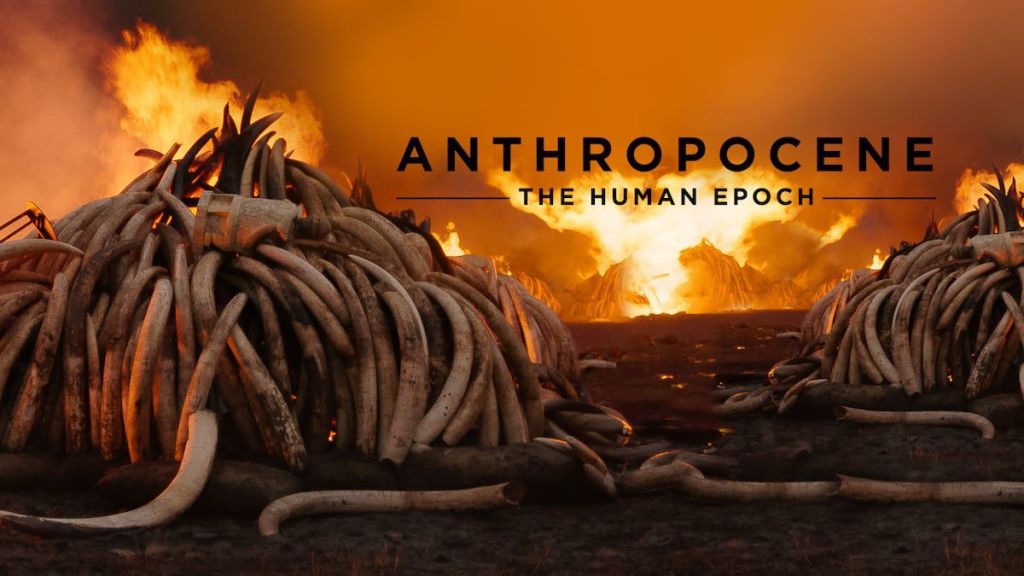
No one film or even group of films alone can tackle a crisis that is so totalizing, planetary, and yet uneven in its signs and stresses. One challenge of representing the Anthropocene is that it is not reducible to a singular event so much as a “step change” in socio-economic activity that accumulates in impact and changes quickly in geological- scale time, but slowly in terms of human perception. Films that have attempted explicitly to illustrate the Anthropocene concept or thesis – such as The Anthropocene: The Human Epoch (2018) or Erde (2019)—can be a bit mystifying to viewers not already familiar with the nomenclature. The visual evidence is not always clear in its illustration. But these films do provide a kind of snapshot of resource extraction and resource depletion, the kinds of human labor and modes of living occurring all over the world that have reshaped the planet and changed its chemistry, with attention to those who suffer most to sustain a way of life in the wealthy global North. The films show us the uneven distribution of wealth and risk, and they move between the scales of satellite images of earth down to the microscopic. The scales of space find a rejoinder in strategies of representing deep time through stratigraphic layers of rock or ice. But the data that geologists use to make the case for a new epoch are not always the most compelling material for films (even if the evidence they produce can be breathtaking). There is also the threat of producing a generalized humanity as opposed to a particularized history of exploitation, racialized capitalism, and the uneven impacts of global warming. As numerous historians and anthropologist tell us, there is nothing inevitable about the way our climate culture has developed, and this is also a danger.

In what ways might film temporality challenge anthropocentric or progress-based narrative structures?

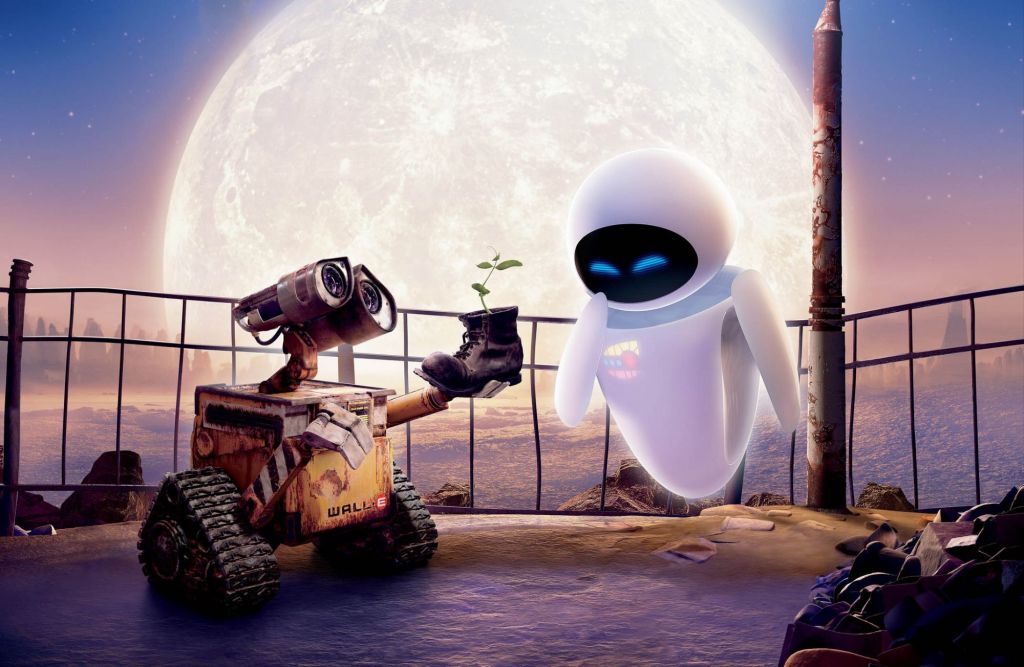
As a geological term, the Anthropocene is also a projection into a deep future. It is a concept that concerns not only the place of human history in the context of Earth’s 4.5 billion-year existence; it is also about the trace that human culture will have left on the planet millions and billions of years from now. The very question should have us consider the long legacy of modern industrial culture. What will be nested in the geological strata to announce that people once roamed this earth? Likely not the meaningful archives of literatures, laws, art, film, and history, but plastics, nuclear materials, and so-called “techno-fossils” discarded by wealthy nations in pursuit of an unsustainable, resource intensive, quality of life and an equally destructive and toxic property of war. A few geologists have proposed that the fallout from nuclear testing has already left a distinct mark all over the planet that could be the most distinct trace of the Anthropocene, since many of the radioactive materials are not “naturally” of this Earth. What is likely to remain in the geological record are not the artifacts we hold dear, but the refuse that capitalist culture discards along with the weapons that destroy us all. In its arresting opening scenes, Wall-E (2008) gives us one version of this future: a planet with abundant trash minus humans and all signs of natural life. How does a robot sort the significance of these remains? This will be the task of alien archeologists who visit our planet the deep future.

What dangers exist in making climate stories overly personal (e.g., through individual heroes or family dramas) or too abstract (e.g., anonymous data, satellite imagery)? Can cinema cultivate a collective emotional register—one that resists neoliberal optimism but still affirms the urgency of ecological care?

There are genres that I think of as having an environmental sensitivity if not sensibility. For example, film noir and its attraction to built environments, bad air, and desiccated urban spaces has deep connections to naturalism and pessimism in ways that show how urban worlds built for human life become unlivable for these characters who rarely survive the film.

What ethical obligations arise when filmmakers attempt to visualize planetary scale processes or speculative environmental futures?

It is a challenge to keep all of these data points in mind and hard not to feel utterly full of despair. So, it is important to find important stories of resistance and scenarios of world repair. We learn that our current state of disastrous ecology is not a natural progression of human life on earth, but a consequence of colonial land-grabs and the capitalist bid to turn the earth and many of its people into raw material and profitable commercial resources.
Darwin’s Nightmare (2004) explores the ecology of Lake Victoria and the disastrous commercial cultivation of invasive species of Nile Perch in its waters. The trade in perch has led to a neo-colonial economy and massive extinction events in the world’s second largest fresh-water lake. Bacurau (2019) turns the table on who or what counts as an invasive species.
Still Life (2006) and This is Not a Burial, It’s a Resurrection (2019) are movies of quiet but powerful protest against state-sponsored mega-dam constructions that force the relocation of everyone in the floodplain and submerge entire cultures under the devastating waters of “development.”
There is no way to completely reverse the course of modern industry and rapacious capitalism, but we may glimpse visions of repair. Honeyland (2019) is one such vision where taking only what you need in moderation is the difference between life and death, not only of bee colonies, but of all life on the planet. If Hollywood once projected an image of the good life based on American style consumer capitalism, cinema can now show us a different way of living, a new version of “the good” in light of our entangled and differently endangered lives.

Narrative Language and Ethics

Do you think cinema must cultivate a new narrative grammar in the Anthropocene—one that goes beyond individual agency or resolution?

Cinema, like the Anthropocene by some accounts, is a product of the industrial revolution. The medium’s radical possibilities with regard to space and time are already attuned to the epochal rupture of the Anthropocene. Indeed, I think cinema is one of the best archives of the Anthropocene because it is so fully implicated in the industrial, cultural, racial, and colonial practices that have laid waste to the planet. It is also a medium that can, as I write above, shows us a vision and version of the world without us.
How might cinematic ethics be redefined to account for nonhuman entanglements, multispecies justice, or posthuman subjectivity?
While much of narrative cinema revolves around people and their psychology, cinema has long been celebrated as an optical medium that, like photography, flattens the ontology between humans, animals, and things, and that may allow us to see a world outside of our ideas and feelings for it. This is a theme in much classical film theory that cinema is a non-human if not post-human artform. By this I do not mean that the cinematic image is neutral. But this possibility for cinema means that it is possible to decenter or even eliminate altogether the human in the frame. There are few films—outside of nature documentaries and experimental films-that do this. But one way to think of film’s role with regard to multi-species justice is to simple look at other creatures, take in their mysteries, their separateness from us, on one hand, and our entanglement with them, on the other.

What risks do filmmakers face when trying to “represent” ecological devastation? Is there a line between visualizing collapse and aestheticizing it?

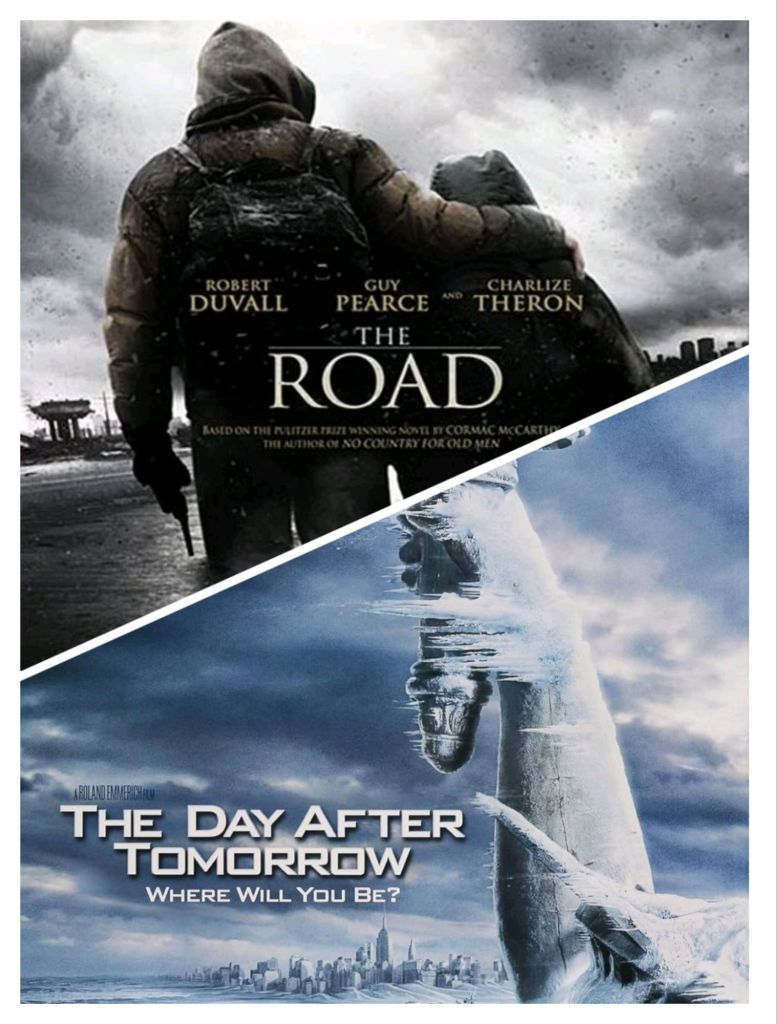
There is a risk in representing climate change that we see in more mainstream climate fiction and eco-disaster movies, such as The Day after Tomorrow (2004, dir. Roland Emmerich), The Road (2009, dir. John Hillcoat), and the Mad Max franchise. These are movies that frighten or distress us with the future loss of a familiar world and homey habitat: a projected future without nature. Rather than push us to reorder the status quo, they threaten with scenarios of its withdrawal. Rather than opening a portal to a new, and hopefully more just world, such dystopic projections want us to want things as they are, to prevent the current world from changing or disappearing. These films make us worry more about the big storm or unnamed event that wipes out the contemporary world. Some eco-disaster movies may even prevent us from seeing that the current state of the world – our giant coastal cities, monocrop agriculture, fossil-fueled mobility – is itself the environmental catastrophe.

Emotions and Audiences

Climate narratives often rely on affect—fear, hope, grief—to mobilize audiences. In your view, what role should emotion play in ecological cinema?

E. Anne Kaplan has written about how climate disaster movies can prompt a form of pre- traumatic stress. These are symptoms viewers suffer not from the violent past, but, proleptically, from the future as it is envisioned on film. In immersive and alarming detail, these eco-disaster movies confront us with a version of a future human subject in motivate viewers to prevent that future ecological collapse, they also keep the emergency in the present from view. As I write above, the petro-cultures and habits of global North consumerism (these are shorthand terms for larger and historically longer phenomena) are the catastrophes.
An alternative to this narrative tendency may be found (to provide just one example) in the films of Tsai Ming-liang, a master auteur for the Anthropocene, and not only because he features inclement weather, failing infrastructure, and epidemiological emergencies in his films (I have written about Tsai’s work in the edited collection What is Film Good For?). Tsai’s queer narrative arcs and long-take slow cinema reveal characters living in a post-apocalyptic world of the present. The catastrophe has arrived, and its effects are already felt, especially by those living on the economic and social margins of Taipei and Kuala Lumpur. Lingering with these people who hardly speak—they convey themselves by the way they walk, gesture, cough, eat—we come to care for them and the conditions that render their world unlivable. Rather that mourn the loss of the world to come, his films may bid us to pause and to consider leaving behind all that was already unwelcoming to these characters, a world we should not want to preserve or carry with us beyond the catastrophes of our current moment.

What dangers exist in making climate stories overly personal (e.g., through individual heroes or family dramas) or too abstract (e.g., anonymous data, satellite imagery)? Can cinema cultivate a collective emotional register—one that resists neoliberal optimism but still affirms the urgency of ecological care?

I think long form documentary, for those with the patience to watch it, can be such a powerful re-set. One film I especially admire is Frederick Wiseman’s Zoo (1993). Today we are in the midst of what several researchers label the Sixth Mass Extinction. Half of the species on Earth are experiencing rapid population declines as a result of human activities, or what one 2023 study in Biological Reviews calls “Anthropocene defaunation.” Zoos and national parks are the few places designated for animal welfare and species management. Wiseman’s observational documentary takes place in the Miami Zoo, celebrated for its new, more natural habitats and limited use of cages. We learn about complex care for animals, the artifice of their surroundings, and the curious ways that wild, domestic, and feral animals are labeled and handled. As an enclosure separated from the rest of the city or the natural world, the zoo resembles a theme park and a film studio. It is as if each species of animal has its own fake backdrop. Wiseman takes us behind the scenes of this institution, which is the last refuge for many species. I find this film deeply sad and, at the same time, so frank about the conditions of animals and humans living in a second nature. It made me curious about scenarios of re-wilding, on one hand, and the ways that nature, animals, and people are partitioned and, in many ways, lonely.

Interview with Writer, Director and Editor Olivia Dance on “Short Film and Editing Direction”

Would you like to talk about the short films you shot while you were a cinema
student?

All my short films so far have featured elements of magical realism or fantasy—whether it’s TV characters confronting you from the screen, catching lice in your girlfriend’s hair, or women laying eggs. I tend to dive into my most bizarre ideas, and I’m grateful to have an outlet for them, as well as the support of those around me on this unconventional storytelling journey. Writing, directing, and editing my films have been invaluable experiences, not only for honing my craft but also for the meaningful human connections I’ve made along the way.

What kind of experience did the films you shot give you in terms of directing?

Directing actors was initially the most intimidating part for me. Having experience as an actor on other projects helped me realize that actors seek trust from their directors, which is built through communication. Instead of feeling like I needed to have all the answers—like in an exam—I learned to approach directing as a collaboration. A particularly positive experience was working on my final university film, “The Egg”, where I had the chance to rehearse with actors on location before shooting. This made the process less stressful and allowed us to be more open. Before film school, I hadn’t fully grasped that directing extends beyond working with actors. It involves making decisions across every department and ensuring the entire team is aligned with the creative vision. I’m so excited to explore this even further in my upcoming projects.

In your opinion, what are the most important features that make a short film
successful?

I can’t yet speak to the commercial success of short films from personal experience (though one of mine has been selected for three festivals so far, which I’m very happy about). One thing I can say is that the audience’s response was incredibly positive. It’s always a pleasure to hear people share their interpretations and explore what the film meant to them.

One particularly encouraging piece of advice came from a workshop I attended with Argentine director Marco Berger. He said, “Make the films you want to see, because people are similar. If you like something, chances are others will too.”

How to edit a good movie? What is done before editing?

It’s no secret to filmmakers that editing begins before shooting. Understanding editing helps immensely with blocking and shot choices, but doesn’t fully protect you from post-production challenges. For example, in my short film “Lice”, a lack of coverage forced me to find a creative solution. I used fades to black between shots, which not only smoothed the edit but also reinforced the film’s dark, cave-like setting.

What would you like to say about the cinema industry when you evaluate it in
terms of popular culture today? Is the most popular the best movie?

As a film graduate, I’ve been exposed to a wide range of non-mainstream films. Being from Europe and having international friends also influences my viewing habits, so I don’t always focus on the most popular films. That said, I find incredible films in both mainstream and indie cinema, just as I sometimes come across films—popular or obscure—that don’t resonate with me.

What are the shortcomings you see in the cinema industry and movies today?
Do you think cinema has become monopolized?

Like many, I value creative freedom in storytelling. However, I’ve noticed that many mainstream films follow a checklist of politically correct themes and characters. While these topics are important, they should feel organic to the story rather than forced and I believe that a genuine, natural approach leads to meaningful art. That said, I understand that funding often dictates creative choices. One movement I’m especially excited about is the push for greener filmmaking practices. As a nature lover, I was disheartened to learn about the film industry’s environmental impact. While the industry still has a long way to go, it’s encouraging to see more productions adopting sustainable practices. I fully support this movement and strive to make every project I work on as eco-friendly as possible. I believe embracing green filmmaking is becoming essential for staying relevant in the industry. I’m also very excited about the emerging green storytelling movement and eager to see what stories grow from it.

Interview with Documentary Filmmaker and Journalist Alisa Gorokhova on Documentary Filmmaking and Journalism

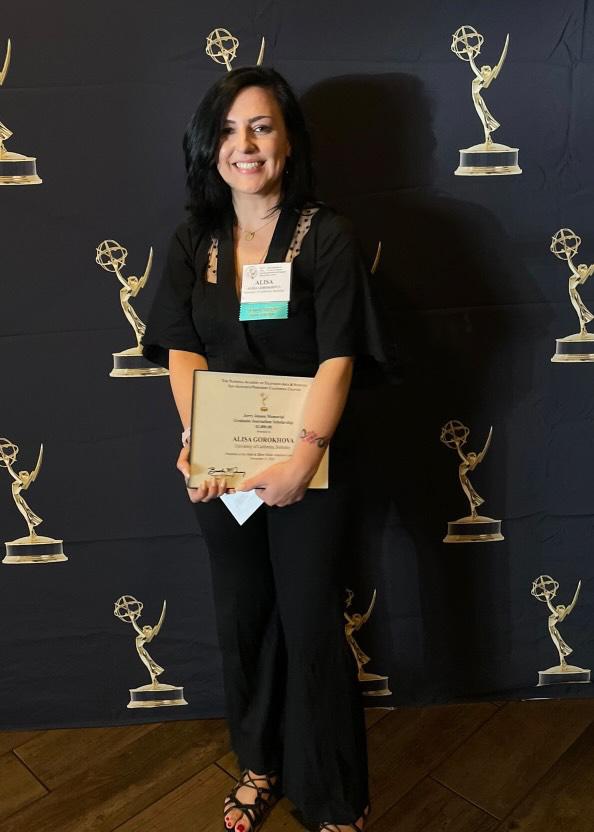
Who is Alisa Gorokhova? Can you tell us a little about yourself?

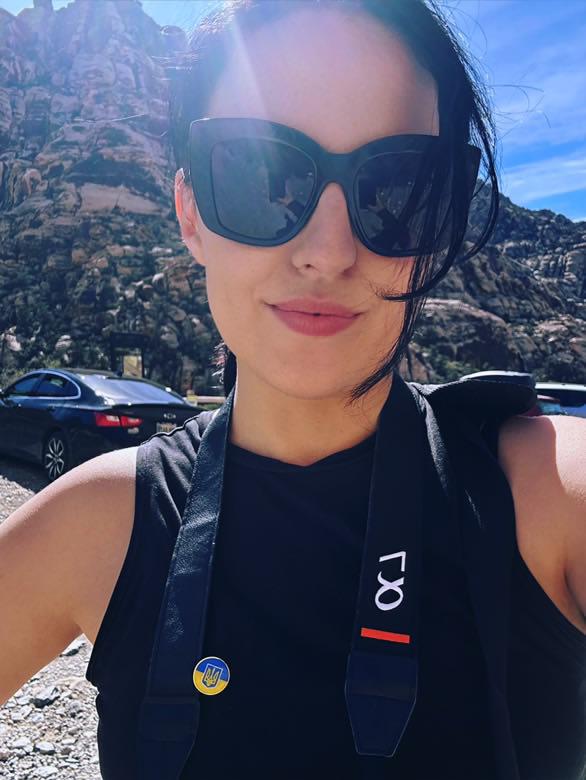
I am a Ukrainian-Canadian documentary filmmaker, writer, and journalist – in no particular order. I spent the first 10 years of my career in commercial copywriting. Unlike most people, I actually enjoyed the peace and quiet the pandemic brought because it gave me time to re-evaluate my life thus far and priorities going forward. I was in my early 30s, a perpetual expat living in a foreign country, with a handful of close friends, no family nearby, and a career I wasn’t in love with. After months of deliberation during lockdown, I decided to change everything about my life until it had not only more meaning, but love and joy within it.

I decided to move back to North America from Europe after 10 years, and to begin investing in building a network and support system that would be with me for the rest of my life. I also applied to the University of California, Berkeley Graduate School of Journalism to study documentary filmmaking. I had always considered documentaries to be the highest art form. Most importantly, I decided to wholeheartedly embrace the creativity within me that I had been running away from my entire life. I graduated with a Master of Journalism degree from Berkeley in May 2024. What’s next? I wish I knew. What I do know is that I am finally fulfilling my full potential and that alone is a priceless investment.

Could you tell us about your work as a Documentary Filmmaker?

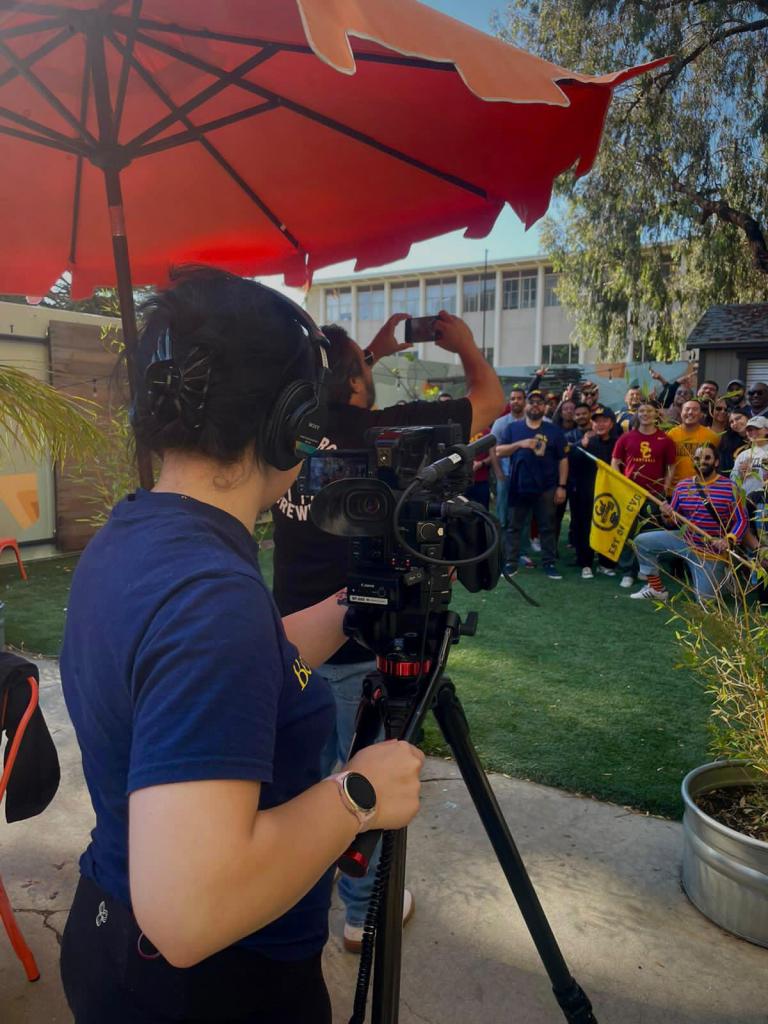
I started filmmaking relatively late in life – in my mid 30’s. But I do sincerely believe that my life experiences thus far saturate my work on every level. Berkeley encouraged us to make films that were important to us, and that permitted us to explore topics that were important to us. And when what was close to my heart was too painful to address, I learned to shift focus to a similar issue but within a different community. For instance, I have family that, due to the war in Ukraine, were forced to flee to Germany as refugees. Emotionally, I felt unable to produce a narrative about Ukrainian refugees as it was too painful. Instead, I made a short film about an Iranian refugee to the US and his experiences entering a new country with nothing except the clothes on his back in 1979. With that piece, it was important to me to show that refugees, regardless of their point of origin, are unique, complex individuals, and that more often than not, they would prefer to live in peace in their homeland given the opportunity.

Creatively speaking, I love films that explore different styles, themes and formats of storytelling. I try to bring that into everything I do. Rather than adapt something that has already been made to my taste, I try to push myself into a storytelling style that is unexplored. In that regard, Stanley Kubrick is a hero of mine, as he is to so many filmmakers, from Denis Villeneuve to George Lucas. Obviously, I have a long way to go until I’m in the same dimension as those three, but one can dream. 🙂

What would you like to say about Documentary Films made today? What deficiencies do you see in terms of content and technique? What do you think about the future of Documentary Filmmaking?

Documentaries today are bigger than they have ever been. In fact, I don’t understand how people can say that they don’t like documentaries in this day and age – docs come in every genre, on every topic matter, in every language. How can one dislike them all? That said, there are documentaries made today that should never have been made, let alone screened before a global audience. A recent example, I’m sad to say, is “Russians at War” which does not shy away from acknowledging that it is Russian propaganda about the war they themselves started, made by a journalist who worked for the main propaganda channel in Russia – RT. And yet it was screened at the Toronto International Film Festival. As a Canadian, and as a Ukrainian, it was a slap in the face to the entire Ukrainian diaspora in Canada. Documentaries, unlike fiction films, have to be held to a higher standard of reporting and storytelling overall.

As journalists, we must fight disinformation and propaganda head on, especially when it is produced and funded by a country that uses propaganda as a weapon of war. In spite of the financial struggles rocking the filmmaking industry overall today, I believe that the future of documentary filmmaking is bright. The more people there are that watch docs today, the more future generations of journalists and filmmakers will want to make them. People tend to forget content and filmmaking technique, but they will not forget how a film made them feel. A documentary can make you feel smart, it can make you weep, it can make you feel involved in an important cause, it can make you feel educated, and, most importantly, it can make you fall in love with a topic. As long as documentaries like that continue to be made, the future of doc filmmaking is limitless.

What is the importance of documentary films in raising awareness about social problems?

People are visual beings. It is one thing to learn about a social issue by reading about it, it is another thing to witness it with your own eyes, even if it is on a screen. To see the pain on the face of someone, anyone, suffering massive injustice – that sticks with you. Anyone with an ounce of empathy can find a documentary they relate to emotionally that spurs them on to make a change in their life, to fight for a social cause. That is why, stylistically, we as filmmakers must continue to explore themes and genres. Society evolves, and so must we with it.

Are films festivals effective in promoting documentary films? Do you think that cinema students can promote their films at festivals and famous film studios? Should universities collaborate with film festivals, film studios and famous producers?

Yes and no. I have seen films made by classmates get the attention they deserve at film festivals, and I have witnessed films that I felt absolutely deserved attention be passed over by film festivals. Realistically speaking, film festivals have agendas and they have themes. A film can be excellent, but if its topic is not in tune with the mood of the festival that year, it will not be picked.

I don’t think festivals are very invested in collaborating with universities and film students, and that is their prerogative. Festivals are a for profit business, after all. Universities are there to instill a higher level of knowledge than what is in the mainstream and on the festival circuit. If film students stick to what film festivals want, we will never push the industry forward, expand its boundaries creatively, and it will never grow as a result. And creative sgrowth and exploration is ultimately what keeps us all employed.

But, of course, all students would love to promote their films at festivals. I just don’t think that should be our key goal as student filmmakers. Good films, student or otherwise, will live on regardless, and we have our entire lives left to create. University is the time to learn and better yourself – not necessarily the time to succeed.

Are you considering shooting a documentary film in Türkiye? What topics would you choose for a documentary film shoot in Türkiye?

I would love to shoot a documentary in Türkiye! And not just because of the food, the culture, and the cats 🙂 I have a personal connection to the country that I have never been able to explore. Just last week, I got DNA confirmation (to my utmost surprise) that my ancestors were Pontic Greeks who immigrated from Anatolia in northeastern Türkiye to Crimea, a peninsula in southern Ukraine, in the early 20th century.

They spoke a dialect which is now all but extinct in Crimea because of Stalin’s purges of ethnic minorities in the 1930’s, but is still found in Anatolia. The collapse of the Ottoman Empire is abundant with stories, and this is mine. It would be an honor to go to Anatolia, explore the region, learn about the language and maybe even my family history. My family was forced to hide their Greek ancestry during the years of the Soviet Union – my great-grandmother even had to change her Greek name to a Russian one to avoid deportation of the entire family to a Gulag.

I owe my existence to them and so many others like them who had to abandon their ethnic roots in order to survive Soviet fascism. Especially since Russia once more is targeting ethnic minorities in Ukraine en masse.

Most people outside of Ukraine don’t know, but Mariupol is a city populated by Greek-Ukrainians that originally immigrated to Ukraine from Türkiye centuries ago. Mariupol has been all but destroyed by Russia, its ethnic Greek culture decimated. A genocide within a genocide. It is a story that must be told, whether by me or not, or it will keep happening again and again. I would love to work with Turkish filmmakers, historians, linguists and journalists to discover the stories of Anatolia and its significance on global history and culture in Eastern Europe.

What is the importance of documentary filmmaking for the journalism profession? Do you think documentary journalism is given importance today?

We live in a visual world. Without expanding into video in some capacity, whether feature docs or even social media content, I’m fearful for the future of journalism in general. Gen Z doesn’t read newspapers, all their information is obtained digitally. Instead of blaming young people for the natural progression of technology, or clinging on to a past that simply isn’t there anymore, we should be leaning into the new forms of media. Documentaries are a huge aspect of that. Whereas 20 years ago people might have read an investigative piece 20 pages in length several times per week, people don’t have the attention span for that nowadays. Documentaries can bridge that gap by still telling complex investigative narratives in a way that is visual and works with a contemporary attention span. In this way, narrative journalists can work with visual journalists to create masterpieces in storytelling.

Of course, I am hugely biased 🙂 I am truly obsessed with documentaries. A writer will have their own opinion on the matter and that’s as it should be.

Are woman journalists limited to storytelling in war journalism? Does this traumatise women journalists?

The war in Ukraine has proved beyond a reasonable doubt that female journalists – war correspondents – are capable of anything men are and then some. Not only are we capable of reporting on the most horrific aspects of war, I believe we also bring an empathy that encourages vulnerability in our sources that male journalists have a harder time achieving.

People like to say that war is a man’s game, but that has never been the case. My grandmother was a nurse in World War II. She was also a sergeant in the army. Women are often forced into supporting their families when men leave to fight, and they are often left trying to rebuild families after their warriors return home wounded in ever sense of the word. Not to mention the horrors women go through under occupation. The pure savagery Ukrainian women go through under Russian occupation to this day could and will fill hundreds of war crime tribunals in The Hague one day soon.

Women journalists are well acquainted with all of this, both professionally, and often from their own personal family stories. What we bring to the table is storytelling, yes, but also visions of war that men perhaps don’t often see. As important as it is to see the pure violent destruction war causes, something male journalists tackle beautifully, it is also important to bear witness to the emotions of the soldiers put into inhumane conditions where they have to watch their friends’ bodies rot around them while they lie injured and helpless. Or dig up mass graves of women and children with hands tied behind their backs. Or listen to the stories of psychologists working with women who manage to escape occupation which, when it comes to Russia and Russian soldiers, is akin to sexual slavery.

I have personally interviewed veterans from the wars in Iraq, Afghanistan, and now Ukraine. Things have been shared with me that have been shared with no one else, thing they would never have shared with other men or even their families. There are things that I have not been able to put in my films because they are too traumatic for audiences to watch. And all I do is listen to these stories – there are female journalists out there actually living them.

A Ukrainian female journalist and prisoner of war actually died in Russian captivity only a week ago. In terms of trauma, I don’t believe women and men put through the same circumstances get different levels of trauma because of it. There are men that are more sensitive to trauma than I am, and women that are less so. It comes down to the uniqueness of the individual. I will say this, though. Women are much more likely to seek professional help for their trauma than men are. If anything makes us better war journalists, it’s that.

What do you think of YouTube? What are the effects of YouTube on the journalism profession? Has YouTube become an alternative media space against the male-dominated mainstream media?

I love YouTube! And Instagram and even TikTok. I’ve also fallen in love with podcasts lately, and am planning on starting my own soon which would explore the world of media today. There is a place for all social media and other forms of media in journalistic storytelling. TikTok and Instagram in particular have really democratized the spread of news media. And I’m not just talking about influencers, although we should not ignore their importance in the grand scheme of modern day media.

Journalistic content created for modern media forms is a new industry and as such there is no prejudice as to who may or may not participate in it. For instance, opinion pieces in the New York Times are more often than not penned by a certain class of men because that is the legacy of the NYT. This is not the case for new media. Anyone can become influential based on a confluence of factors. And not just in terms of gender, but also age, race, nationality, geography… you name it. Anything that functions as a democratizer is a good thing in my book.

One thing that I feel I must add though, as a journalist. Misinformation is much easier to spread across new media because new media doesn’t hold itself to the same standards as traditional media. Traditional media requires two independent sources for verification of a fact. Obviously, this is not a requirement for new media. Which is why one of the most important things we learn as student journalists is trust but verify, always.

Do you think that the media and the journalism profession are dominated by men? What kind of psychological trauma are women journalists exposed to in a male-dominated media?

You would be hard-pressed to find a profession that is not dominated by men to some extent. So, yes, of course it is. If you hear the word “journalist” you don’t visualize someone like me. You think of someone like Bob Woodward. I have personally encountered tremendous misogyny in all aspects of journalism and media overall. A sports editor assuring me that women are simply not smart enough to edit sports, which… no. Or renowned Pulitzer winning investigative reporters hobnobbing with male journalists who have been outed as sexual predators, even going so far as introducing them to young female journalists. And then of course the endless complaining among men about hiring quotas, as well as their inability to even recognize their innate privilege in an industry built by them and for them. All of that is traumatic to women, whether in journalism or another industry, undoubtedly. But I will tell you a secret. Something I have personally witnessed among millennial and Gen Z women specifically is that we will go to the ends of the Earth to support each other, both emotionally and professionally.

Traditionally, men like to think that most women are competitive with each other, but that is almost never the case in my experience. There are so few of us in journalism and filmmaking that we will support each other just so that, eventually, there will be more of us. The reason for this evolution is that women can no longer stomach tokenism – the idea that one token woman per team is enough. Instead, if there is one woman on a team, more often than not she will work to bring other women on board. THAT is the future of women in journalism. Girlhood. Girl’s girls. Girl code. Whatever you want to call it. We are here to stay and we are here to slay.