Interviewer: Gokhan Colak

What were the key turning points that led you into journalism? How do you personally define the relationship between storytelling and journalism?
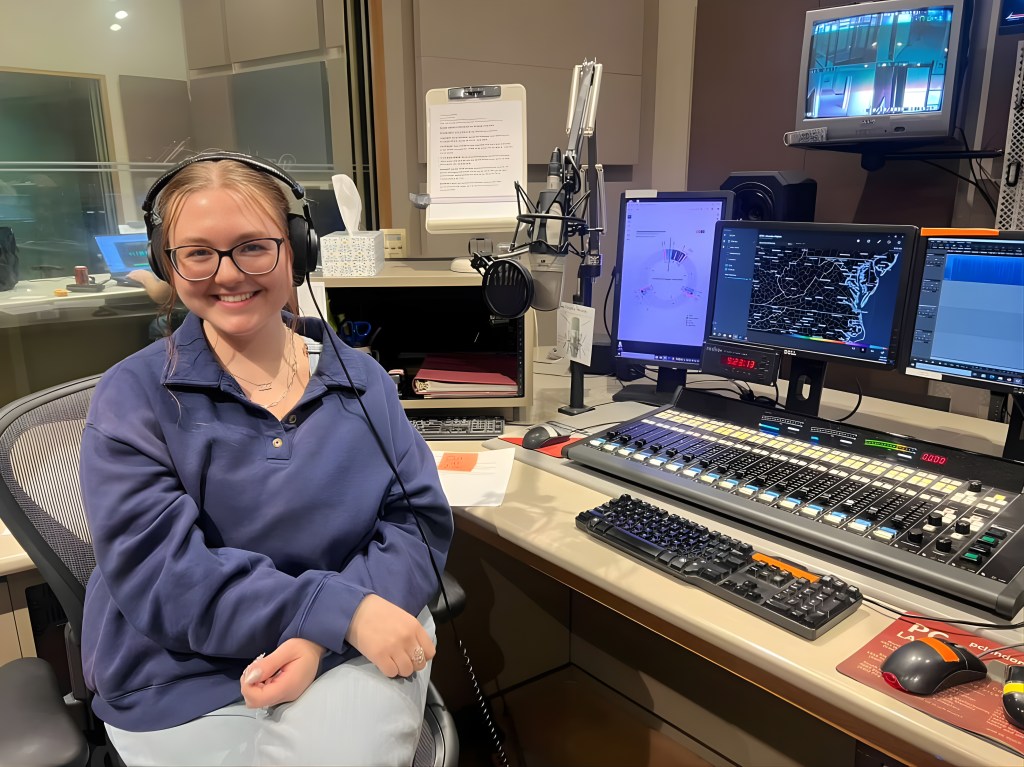
I’ve wanted to be a storyteller since I was little. Before I could even read and write, I was always making up little stories and telling them to my parents and friends. But journalism came into my life when I was in college. At the time, I had really just been looking for a job, and I saw that my college radio station was hiring, so I applied. Initially I thought I was just going to be a secretary for the station, not actually behind a microphone, but one thing led to another, and two years later I was hosting my own music show, anchoring the news program and contributing stories to it weekly.
Those stories were what really made me fall in love with journalism, because I got to talk to so many interesting people, whether over the phone or in-person, and I learned that storytelling doesn’t have to be limited to fiction. There are so many amazing stories out there, closer than you would ever think they are, and so many amazing people who are so excited to tell them. To me, that’s what makes journalism so special.
In your work at The Click, you write at the intersection of culture, politics, and society. How do you see the relationship between these fields, and what role should journalism play within this intersection?
Culture, politics, and society are all things that are constantly changing, and being a journalist covering those topics means you have to keep up with how those things impact each other. Personally, I think a lot of media is connected to the political climate during the time which it was produced. You can see that when you follow trends of certain themes gaining popularity and then fading away in the pop culture world. Whether it’s a positive or a negative reflection of policy and society, I think to be a journalist covering these things, you have to be able to pick up on patterns like that.

Today, journalism is increasingly practiced through digital platforms. Do you see digital journalism primarily as a space of opportunity, or as a source of concern?
I think digital platforms are majorly spaces for opportunity. Nowadays, there are so many digital outlets for different beats and niche interests, which I absolutely consider an opportunity for journalists, especially for freelancers and new journalists who are trying to find their footing in the field. In my opinion, the more options for places to pitch, the better!
Based on your experience in local journalism, how do you evaluate the differences between local media and national/international media in terms of news production and responsibility?
I think it’s both a responsibility and a privilege to be a local journalist, because you have access not only to the people and the places on which you’re reporting, but also access to knowing what kinds of stories are important to the people in those areas. On some level, the stories that they care about, you probably also care about because you live there. But it’s also important to always keep your ears open, always be listening for the local stories that other people aren’t finding. Those are the ones that aren’t going to make it to national news, but they might be the ones that are most important to the community being impacted. Those are usually the stories the end up being my favorites.

How has your background in radio broadcasting influenced your approach to journalism? What perspectives has it given you in terms of voice, rhythm, and narrative style?
Part of why I love working in multiple mediums as a journalist is because broadcast and radio journalism often operate on different narrative structures than written journalism. I often find myself considering how I might produce a written story differently if it were on the radio and vice versa. I think practicing both, and being able to experiment with different angles and structures has definitely made me a better storyteller.
In your work on popular culture, how do you observe its intersections with political, economic, and social processes? In your view, how does popular culture function as a key to understanding contemporary society?
I touched on this earlier, but I definitely find it beneficial to trace patterns in media as they relate to the time they were produced. One of the ways I’ve looked into the most is music. If you trace music through the decades, you find so much that is an overt response to political climates, societal and beauty standards, and really any issue the artists saw in the world around them, whether it’s 1920s jazz, 1970s rock, or 2000s hip-hop. I think the same can be said when you look at what tropes are popular in movies and books across the decades. If you know to look for the places where art imitates life, you’ll really start seeing how all of these topics are connected.

One of the biggest challenges journalists face today is combating disinformation and manipulation. How do you position journalistic ethics within this context?
As the presenter of information, you have to be extremely meticulous with word choice, especially when you’re reporting on something as polarized as politics. When you use words that carry strong positive or negative connotations, you have to make sure you’re using it in a way that is presenting information rather than implicitly telling the audience how to feel. That’s why I find it super important to have a network of other journalists that you can share your work with, who will check you on little things like that that might seem unimportant or tedious. It always helps to have a second set of eyes that can catch the things you might miss yourself.
What place do “human stories” hold in your approach to news? What elements make a subject worth turning into a story?
This sounds cliche, but a subject becomes a story when it has a beginning, middle, and end. It needs to have a person, place, thing, or idea to follow, because that’s what keeps the reader or listener or viewer interested. There needs to be stakes— if X happens or doesn’t happen, it will impact the subject in Y way. As I mentioned, human interest stories are some of my favorites, because they really have the power to transform a subject that someone might not think they’re interested in, to something they just can’t put down. They just have to have something that hooks them in and keeps them invested.

How do you think the rapid development of artificial intelligence technologies will affect journalists and the journalism profession? How might this transformation reshape news production, the role of the journalist, and the trust relationship with audiences?
Journalism is a field that truly has an unknown future. Artificial intelligence definitely contributes to its unpredictability, so I think it’s something to be cautious of, but I also think that a lot of people, by nature, really value human-produced work. One of the things I love about radio, for example, is that it’s so much more special when there’s a person live in the studio. It feels more personal, as do stories that are written by real people. Humans can capture emotions in a way that AI can’t, and I don’t think we should downplay that fact. If anything, I think we should count on those human connections and continue to consume human-made media even more with the rise of AI.
You are continuing your journalism education while actively working in the field. How does the relationship between academia and practice operate for you?
I hold my education and my professional work with the same weight, especially since journalism is a field where you really learn through practicing. So much of studying journalism is hands-on work that allows you to actually produce stories and receive professional feedback on them, while also learning about ethics and being able to make really amazing connections. Whether you’re studying, practicing professionally, or both, every piece you produce makes you a better journalist, so I try to treat every story as a learning experience, whether it’s for my degree or my career.

Finally, what advice would you give to the new generation of journalists? What does it mean to be a journalist in the digital age?
Consume the media you want to produce. Find journalists to look up to. Make connections. Don’t be embarrassed to reach out first. Take advantage of your locality, especially if you don’t see it represented in media and journalism a lot. As a journalist, I’ve been so lucky to be coming into this field in the digital age, because I’ve made so many connections and met so many great people through social media and going to school online. Many of them I’ve never met in-person, but they’ve been vital in my career. I would definitely advise new journalists to take as much advantage of that as they can.