Is bilingual journalism for you merely a method of communication, or is it also a matter of identity and representation?
Bilingual journalism is deeply tied to my identity. As an Ecuadorian video journalist living in New York, being bilingual allows me to tell stories that often go unheard—stories of people who navigate two languages and two cultures. It’s not just about translating words; it’s about representing lived experiences and ensuring that our communities are accurately portrayed, while also highlighting narratives that are often overlooked.
What role does language play in visual storytelling? How do you develop methods to transcend linguistic boundaries?
Language is essential when connecting with the people you’re interviewing—it helps you understand them better and even relate to their story. But visual storytelling allows us to go beyond words; it becomes a universal language. The power of video lies in showing a story in a way that allows viewers to connect with characters, even if they don’t speak the same language.
What kind of connection do you draw between bilingual journalism and documentary filmmaking?
For me, the two are inseparable and work hand in hand. Documentary gives me the space to explore stories in depth, while bilingual journalism lets me represent my community. Both require trust, empathy, and immersion in the context of the story, as well as connecting with the people involved.
Creating multilingual content requires more than just a technical skill. What kind of ethical or cultural responsibility do you believe it entails?
Regardless of language, I believe it’s essential to stay true to what your sources are saying and to their lived realities. When translating, writing, or editing, I always ask myself: Am I keeping the context intact? Could this harm the person or community involved? Am I portraying them fairly? That ethical responsibility is always present.
When telling stories in different languages, is it more important to remain faithful to the spirit of the language or to universal narrative structures?
I don’t believe there’s a single universal narrative structure. There are many ways to tell a story, and as a storyteller, you need to understand your subject to determine how best to tell it. Every story, character, and context is different. So rather than forcing a formula, I prioritize preserving the spirit and authenticity of the story.
How do you manage the processes of translation and subtitling in your multilingual projects?
If the project is in Spanish, I usually do the translation and subtitling myself. I try to maintain the richness of the language, knowing that some expressions may not directly translate. When working in other languages, it’s important to collaborate with someone who understands the language and can provide an accurate, culturally aware translation.
How does this linguistic diversity affect the global circulation of your stories?
Being bilingual is definitely an advantage—it allows me to collaborate with a wider range of publications and outlets and to shape stories for different audiences. It’s also helped me understand how to tailor storytelling styles based on whom the viewer is.
For you, is documentary filmmaking a transmission of reality or a form of creative reconstruction?
I think it’s both. It’s a transmission of reality, but with your vision as the filmmaker. Documentaries allow for creativity and deeper emotional connection while staying rooted in truth. As long as you’re honest with the facts and the people involved, you can bring in creative elements to strengthen the story—otherwise, it becomes fiction.
When choosing your subjects, do you look for a personal connection, or are you more guided by societal needs?
You need to feel connected to a story to tell it well—not necessarily on a personal level, but emotionally and intellectually. That connection helps you invest the time and care the story deserves. At the same time, I also ask myself: Why this story? Why now? What impact can it have? That’s where societal relevance comes in.
What are some of the most difficult ethical dilemmas you’ve faced during fieldwork?
One challenge is deciding whether to include moments of vulnerability—moments that might make a story more powerful but could leave someone feeling exposed. I ask myself: Is this adding something meaningful, or is it just emotional drama? Another dilemma is knowing when to protect someone’s identity and making sure they understand what it means to be on camera or have their name shared.
Compared to classical cinematic language, how would you define the unique expressive power of documentary?
Documentary is cinema—there’s no doubt about it. It might be less polished sometimes, but the goal is the same: to tell a compelling story that connects with audiences. The difference is that documentary is grounded in real life. There’s room for imperfection, but that doesn’t make it any less powerful or cinematic.
Among your projects so far, which story has impacted you the most, and why?
Two projects stand out. One is a short documentary I made about migrant families from Ecuador who journeyed to New York. It opened my eyes to the reality so many face—not just the struggle to arrive, but the continuous challenges they face even after getting here.
The second is a school documentary I did about a local drag artist in Astoria. It explored themes of family, grief, and chosen community. It helped me discover a world full of resilience and passion, and I learned so much from this artist and their journey.
What themes tend to stand out in your documentaries—such as migration, identity, or social struggles?
I’m drawn to stories about identity, gender, and migration—especially within the Latin community. I find power in stories of people who are finding or rebuilding themselves. Those narratives are deeply human and universally resonant.
What is your process of developing a project—from the moment you first conceive the idea to the final edit?
It varies depending on the project. For short stories, I usually start with a question or something I’m curious about. I research, identify potential sources, and start interviewing. After filming, editing is my favorite part—it’s where everything comes together, like solving a puzzle. For me, it’s the moment where the heart of the story really takes shape.
How has your experience at CNN en Español contributed to your independent projects?
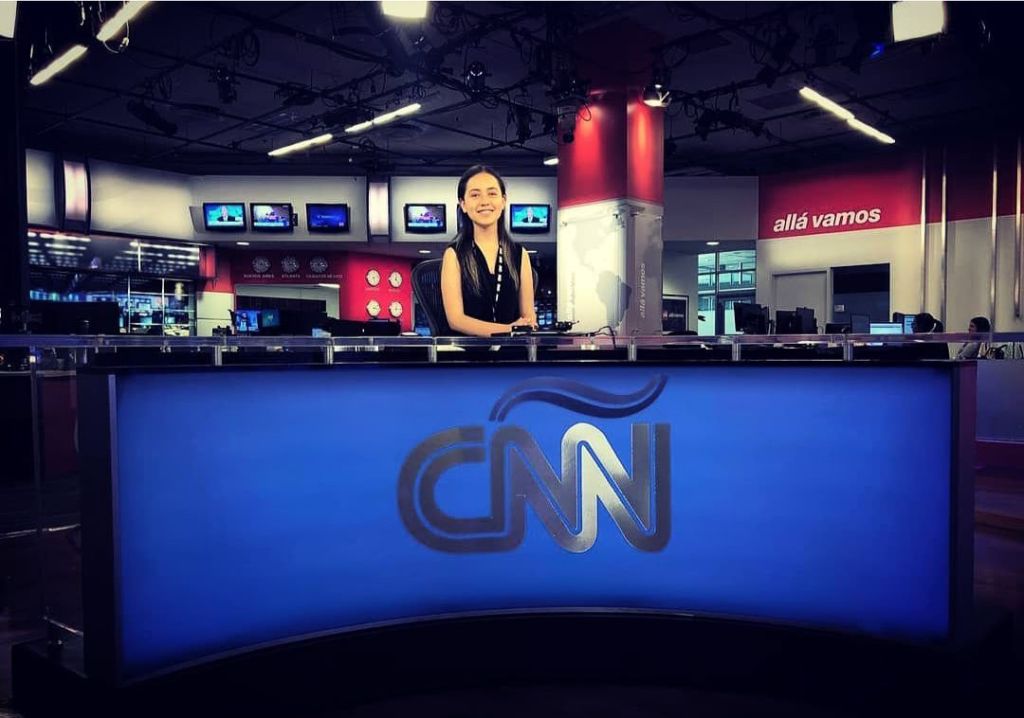
It was my first real experience in journalism, and I see it as my school. It taught me how to structure a story, how to shape it in a way that connects with people. I covered stories from many different communities, which made me even more passionate about storytelling. That experience definitely pushed me toward pursuing documentary filmmaking more seriously.
Would you like to talk about the short films you shot while you were a cinema student?
All my short films so far have featured elements of magical realism or fantasy—whether it’s TV characters confronting you from the screen, catching lice in your girlfriend’s hair, or women laying eggs. I tend to dive into my most bizarre ideas, and I’m grateful to have an outlet for them, as well as the support of those around me on this unconventional storytelling journey. Writing, directing, and editing my films have been invaluable experiences, not only for honing my craft but also for the meaningful human connections I’ve made along the way.
What kind of experience did the films you shot give you in terms of directing?
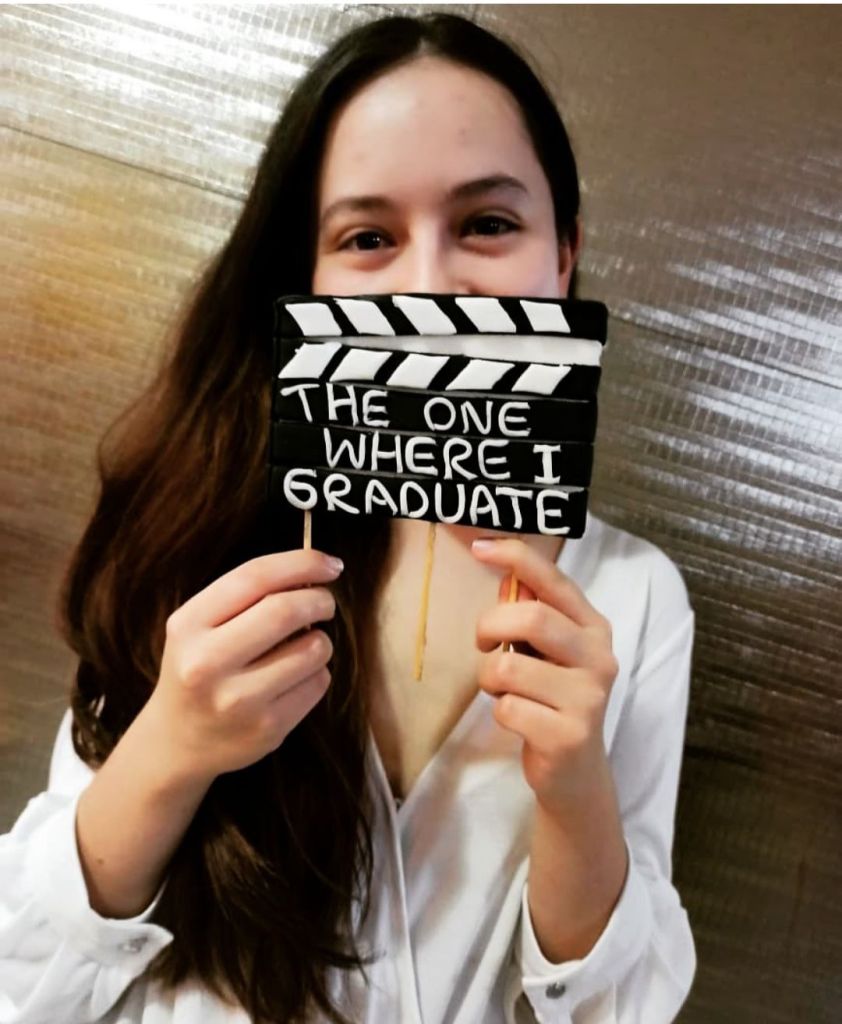
Directing actors was initially the most intimidating part for me. Having experience as an actor on other projects helped me realize that actors seek trust from their directors, which is built through communication. Instead of feeling like I needed to have all the answers—like in an exam—I learned to approach directing as a collaboration. A particularly positive experience was working on my final university film, “The Egg”, where I had the chance to rehearse with actors on location before shooting. This made the process less stressful and allowed us to be more open. Before film school, I hadn’t fully grasped that directing extends beyond working with actors. It involves making decisions across every department and ensuring the entire team is aligned with the creative vision. I’m so excited to explore this even further in my upcoming projects.
In your opinion, what are the most important features that make a short film successful?
I can’t yet speak to the commercial success of short films from personal experience (though one of mine has been selected for three festivals so far, which I’m very happy about). One thing I can say is that the audience’s response was incredibly positive. It’s always a pleasure to hear people share their interpretations and explore what the film meant to them.
One particularly encouraging piece of advice came from a workshop I attended with Argentine director Marco Berger. He said, “Make the films you want to see, because people are similar. If you like something, chances are others will too.”
How to edit a good movie? What is done before editing?
It’s no secret to filmmakers that editing begins before shooting. Understanding editing helps immensely with blocking and shot choices, but doesn’t fully protect you from post-production challenges. For example, in my short film “Lice”, a lack of coverage forced me to find a creative solution. I used fades to black between shots, which not only smoothed the edit but also reinforced the film’s dark, cave-like setting.
What would you like to say about the cinema industry when you evaluate it in terms of popular culture today? Is the most popular the best movie?
As a film graduate, I’ve been exposed to a wide range of non-mainstream films. Being from Europe and having international friends also influences my viewing habits, so I don’t always focus on the most popular films. That said, I find incredible films in both mainstream and indie cinema, just as I sometimes come across films—popular or obscure—that don’t resonate with me.
What are the shortcomings you see in the cinema industry and movies today? Do you think cinema has become monopolized?
Like many, I value creative freedom in storytelling. However, I’ve noticed that many mainstream films follow a checklist of politically correct themes and characters. While these topics are important, they should feel organic to the story rather than forced and I believe that a genuine, natural approach leads to meaningful art. That said, I understand that funding often dictates creative choices. One movement I’m especially excited about is the push for greener filmmaking practices. As a nature lover, I was disheartened to learn about the film industry’s environmental impact. While the industry still has a long way to go, it’s encouraging to see more productions adopting sustainable practices. I fully support this movement and strive to make every project I work on as eco-friendly as possible. I believe embracing green filmmaking is becoming essential for staying relevant in the industry. I’m also very excited about the emerging green storytelling movement and eager to see what stories grow from it.
Who is Alisa Gorokhova? Can you tell us a little about yourself?
I am a Ukrainian-Canadian documentary filmmaker, writer, and journalist – in no particular order. I spent the first 10 years of my career in commercial copywriting. Unlike most people, I actually enjoyed the peace and quiet the pandemic brought because it gave me time to re-evaluate my life thus far and priorities going forward. I was in my early 30s, a perpetual expat living in a foreign country, with a handful of close friends, no family nearby, and a career I wasn’t in love with. After months of deliberation during lockdown, I decided to change everything about my life until it had not only more meaning, but love and joy within it.
I decided to move back to North America from Europe after 10 years, and to begin investing in building a network and support system that would be with me for the rest of my life. I also applied to the University of California, Berkeley Graduate School of Journalism to study documentary filmmaking. I had always considered documentaries to be the highest art form. Most importantly, I decided to wholeheartedly embrace the creativity within me that I had been running away from my entire life. I graduated with a Master of Journalism degree from Berkeley in May 2024. What’s next? I wish I knew. What I do know is that I am finally fulfilling my full potential and that alone is a priceless investment.
Could you tell us about your work as a Documentary Filmmaker?
I started filmmaking relatively late in life – in my mid 30’s. But I do sincerely believe that my life experiences thus far saturate my work on every level. Berkeley encouraged us to make films that were important to us, and that permitted us to explore topics that were important to us. And when what was close to my heart was too painful to address, I learned to shift focus to a similar issue but within a different community. For instance, I have family that, due to the war in Ukraine, were forced to flee to Germany as refugees. Emotionally, I felt unable to produce a narrative about Ukrainian refugees as it was too painful. Instead, I made a short film about an Iranian refugee to the US and his experiences entering a new country with nothing except the clothes on his back in 1979. With that piece, it was important to me to show that refugees, regardless of their point of origin, are unique, complex individuals, and that more often than not, they would prefer to live in peace in their homeland given the opportunity.
Creatively speaking, I love films that explore different styles, themes and formats of storytelling. I try to bring that into everything I do. Rather than adapt something that has already been made to my taste, I try to push myself into a storytelling style that is unexplored. In that regard, Stanley Kubrick is a hero of mine, as he is to so many filmmakers, from Denis Villeneuve to George Lucas. Obviously, I have a long way to go until I’m in the same dimension as those three, but one can dream. 🙂
What would you like to say about Documentary Films made today? What deficiencies do you see in terms of content and technique? What do you think about the future of Documentary Filmmaking?
Documentaries today are bigger than they have ever been. In fact, I don’t understand how people can say that they don’t like documentaries in this day and age – docs come in every genre, on every topic matter, in every language. How can one dislike them all? That said, there are documentaries made today that should never have been made, let alone screened before a global audience. A recent example, I’m sad to say, is “Russians at War” which does not shy away from acknowledging that it is Russian propaganda about the war they themselves started, made by a journalist who worked for the main propaganda channel in Russia – RT. And yet it was screened at the Toronto International Film Festival. As a Canadian, and as a Ukrainian, it was a slap in the face to the entire Ukrainian diaspora in Canada. Documentaries, unlike fiction films, have to be held to a higher standard of reporting and storytelling overall.
As journalists, we must fight disinformation and propaganda head on, especially when it is produced and funded by a country that uses propaganda as a weapon of war. In spite of the financial struggles rocking the filmmaking industry overall today, I believe that the future of documentary filmmaking is bright. The more people there are that watch docs today, the more future generations of journalists and filmmakers will want to make them. People tend to forget content and filmmaking technique, but they will not forget how a film made them feel. A documentary can make you feel smart, it can make you weep, it can make you feel involved in an important cause, it can make you feel educated, and, most importantly, it can make you fall in love with a topic. As long as documentaries like that continue to be made, the future of doc filmmaking is limitless.
What is the importance of documentary films in raising awareness about social problems?
People are visual beings. It is one thing to learn about a social issue by reading about it, it is another thing to witness it with your own eyes, even if it is on a screen. To see the pain on the face of someone, anyone, suffering massive injustice – that sticks with you. Anyone with an ounce of empathy can find a documentary they relate to emotionally that spurs them on to make a change in their life, to fight for a social cause. That is why, stylistically, we as filmmakers must continue to explore themes and genres. Society evolves, and so must we with it.
Are films festivals effective in promoting documentary films? Do you think that cinema students can promote their films at festivals and famous film studios? Should universities collaborate with film festivals, film studios and famous producers?
Yes and no. I have seen films made by classmates get the attention they deserve at film festivals, and I have witnessed films that I felt absolutely deserved attention be passed over by film festivals. Realistically speaking, film festivals have agendas and they have themes. A film can be excellent, but if its topic is not in tune with the mood of the festival that year, it will not be picked.
I don’t think festivals are very invested in collaborating with universities and film students, and that is their prerogative. Festivals are a for profit business, after all. Universities are there to instill a higher level of knowledge than what is in the mainstream and on the festival circuit. If film students stick to what film festivals want, we will never push the industry forward, expand its boundaries creatively, and it will never grow as a result. And creative sgrowth and exploration is ultimately what keeps us all employed.
But, of course, all students would love to promote their films at festivals. I just don’t think that should be our key goal as student filmmakers. Good films, student or otherwise, will live on regardless, and we have our entire lives left to create. University is the time to learn and better yourself – not necessarily the time to succeed.
Are you considering shooting a documentary film in Türkiye? What topics would you choose for a documentary film shoot in Türkiye?
I would love to shoot a documentary in Türkiye! And not just because of the food, the culture, and the cats 🙂 I have a personal connection to the country that I have never been able to explore. Just last week, I got DNA confirmation (to my utmost surprise) that my ancestors were Pontic Greeks who immigrated from Anatolia in northeastern Türkiye to Crimea, a peninsula in southern Ukraine, in the early 20th century.
They spoke a dialect which is now all but extinct in Crimea because of Stalin’s purges of ethnic minorities in the 1930’s, but is still found in Anatolia. The collapse of the Ottoman Empire is abundant with stories, and this is mine. It would be an honor to go to Anatolia, explore the region, learn about the language and maybe even my family history. My family was forced to hide their Greek ancestry during the years of the Soviet Union – my great-grandmother even had to change her Greek name to a Russian one to avoid deportation of the entire family to a Gulag.
I owe my existence to them and so many others like them who had to abandon their ethnic roots in order to survive Soviet fascism. Especially since Russia once more is targeting ethnic minorities in Ukraine en masse.
Most people outside of Ukraine don’t know, but Mariupol is a city populated by Greek-Ukrainians that originally immigrated to Ukraine from Türkiye centuries ago. Mariupol has been all but destroyed by Russia, its ethnic Greek culture decimated. A genocide within a genocide. It is a story that must be told, whether by me or not, or it will keep happening again and again. I would love to work with Turkish filmmakers, historians, linguists and journalists to discover the stories of Anatolia and its significance on global history and culture in Eastern Europe.
What is the importance of documentary filmmaking for the journalism profession? Do you think documentary journalism is given importance today?
We live in a visual world. Without expanding into video in some capacity, whether feature docs or even social media content, I’m fearful for the future of journalism in general. Gen Z doesn’t read newspapers, all their information is obtained digitally. Instead of blaming young people for the natural progression of technology, or clinging on to a past that simply isn’t there anymore, we should be leaning into the new forms of media. Documentaries are a huge aspect of that. Whereas 20 years ago people might have read an investigative piece 20 pages in length several times per week, people don’t have the attention span for that nowadays. Documentaries can bridge that gap by still telling complex investigative narratives in a way that is visual and works with a contemporary attention span. In this way, narrative journalists can work with visual journalists to create masterpieces in storytelling.
Of course, I am hugely biased 🙂 I am truly obsessed with documentaries. A writer will have their own opinion on the matter and that’s as it should be.
Are woman journalists limited to storytelling in war journalism? Does this traumatise women journalists?
The war in Ukraine has proved beyond a reasonable doubt that female journalists – war correspondents – are capable of anything men are and then some. Not only are we capable of reporting on the most horrific aspects of war, I believe we also bring an empathy that encourages vulnerability in our sources that male journalists have a harder time achieving.
People like to say that war is a man’s game, but that has never been the case. My grandmother was a nurse in World War II. She was also a sergeant in the army. Women are often forced into supporting their families when men leave to fight, and they are often left trying to rebuild families after their warriors return home wounded in ever sense of the word. Not to mention the horrors women go through under occupation. The pure savagery Ukrainian women go through under Russian occupation to this day could and will fill hundreds of war crime tribunals in The Hague one day soon.
Women journalists are well acquainted with all of this, both professionally, and often from their own personal family stories. What we bring to the table is storytelling, yes, but also visions of war that men perhaps don’t often see. As important as it is to see the pure violent destruction war causes, something male journalists tackle beautifully, it is also important to bear witness to the emotions of the soldiers put into inhumane conditions where they have to watch their friends’ bodies rot around them while they lie injured and helpless. Or dig up mass graves of women and children with hands tied behind their backs. Or listen to the stories of psychologists working with women who manage to escape occupation which, when it comes to Russia and Russian soldiers, is akin to sexual slavery.
I have personally interviewed veterans from the wars in Iraq, Afghanistan, and now Ukraine. Things have been shared with me that have been shared with no one else, thing they would never have shared with other men or even their families. There are things that I have not been able to put in my films because they are too traumatic for audiences to watch. And all I do is listen to these stories – there are female journalists out there actually living them.
A Ukrainian female journalist and prisoner of war actually died in Russian captivity only a week ago. In terms of trauma, I don’t believe women and men put through the same circumstances get different levels of trauma because of it. There are men that are more sensitive to trauma than I am, and women that are less so. It comes down to the uniqueness of the individual. I will say this, though. Women are much more likely to seek professional help for their trauma than men are. If anything makes us better war journalists, it’s that.
What do you think of YouTube? What are the effects of YouTube on the journalism profession? Has YouTube become an alternative media space against the male-dominated mainstream media?
I love YouTube! And Instagram and even TikTok. I’ve also fallen in love with podcasts lately, and am planning on starting my own soon which would explore the world of media today. There is a place for all social media and other forms of media in journalistic storytelling. TikTok and Instagram in particular have really democratized the spread of news media. And I’m not just talking about influencers, although we should not ignore their importance in the grand scheme of modern day media.
Journalistic content created for modern media forms is a new industry and as such there is no prejudice as to who may or may not participate in it. For instance, opinion pieces in the New York Times are more often than not penned by a certain class of men because that is the legacy of the NYT. This is not the case for new media. Anyone can become influential based on a confluence of factors. And not just in terms of gender, but also age, race, nationality, geography… you name it. Anything that functions as a democratizer is a good thing in my book.
One thing that I feel I must add though, as a journalist. Misinformation is much easier to spread across new media because new media doesn’t hold itself to the same standards as traditional media. Traditional media requires two independent sources for verification of a fact. Obviously, this is not a requirement for new media. Which is why one of the most important things we learn as student journalists is trust but verify, always.
Do you think that the media and the journalism profession are dominated by men? What kind of psychological trauma are women journalists exposed to in a male-dominated media?
You would be hard-pressed to find a profession that is not dominated by men to some extent. So, yes, of course it is. If you hear the word “journalist” you don’t visualize someone like me. You think of someone like Bob Woodward. I have personally encountered tremendous misogyny in all aspects of journalism and media overall. A sports editor assuring me that women are simply not smart enough to edit sports, which… no. Or renowned Pulitzer winning investigative reporters hobnobbing with male journalists who have been outed as sexual predators, even going so far as introducing them to young female journalists. And then of course the endless complaining among men about hiring quotas, as well as their inability to even recognize their innate privilege in an industry built by them and for them. All of that is traumatic to women, whether in journalism or another industry, undoubtedly. But I will tell you a secret. Something I have personally witnessed among millennial and Gen Z women specifically is that we will go to the ends of the Earth to support each other, both emotionally and professionally.
Traditionally, men like to think that most women are competitive with each other, but that is almost never the case in my experience. There are so few of us in journalism and filmmaking that we will support each other just so that, eventually, there will be more of us. The reason for this evolution is that women can no longer stomach tokenism – the idea that one token woman per team is enough. Instead, if there is one woman on a team, more often than not she will work to bring other women on board. THAT is the future of women in journalism. Girlhood. Girl’s girls. Girl code. Whatever you want to call it. We are here to stay and we are here to slay.








 prcarnetworld.com