
Interview Series: Interdisciplinary Film Studies: Documentary Cinema | Interviewer: Tuğba Bahar
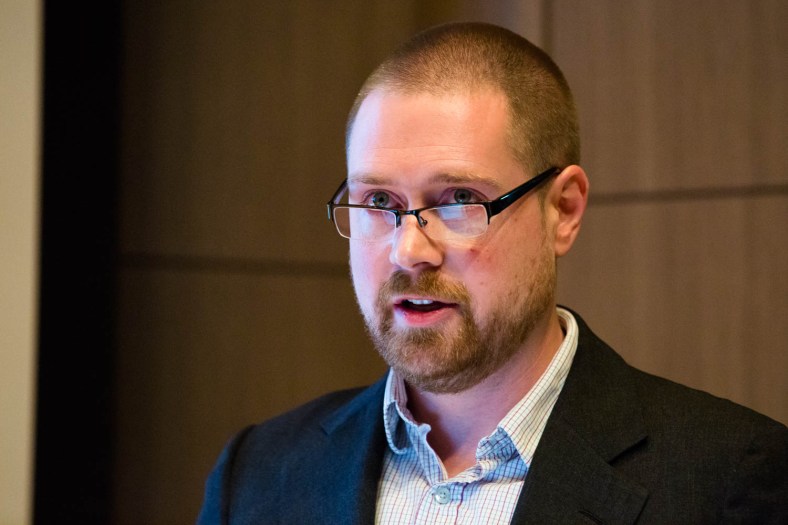
We are in pursuit of a lens that stretches from the world’s most high-risk crisis regions and dusty archaeological sites to the corridors of maximum-security prisons. Award-winning director and Northwestern University Medill School of Journalism Professor Brent Huffman is more than just a “documentarian”; he is an ethical advocate for the truth. From Mes Aynak, Afghanistan’s 5,000-year-old heritage on the brink of erasure, to the war-torn streets of Yemen, Huffman’s camera always seeks that rendered-invisible conscience. In this interview, we spoke with Huffman about the aesthetic boundaries of documentary cinema, the intimacy afforded by being a “one-man crew,” and how independent storytelling can survive in an era dominated by algorithms.
When we look at your films, we see a powerful emotional foundation where personal loss, social injustice, and a heavy sense of witnessing are intertwined. What is the fundamental motivation that pushes you out of your comfort zone and into the world’s most high-risk crisis regions? Is it more of an “intellectual rage,” or a reckoning of conscience?
The passion that drives me has always been social justice and human rights. As a child I grew up with an angry and abusive father, so my earliest memories are feelings of being trapped and oppressed. When I see someone’s rights being infringed upon or taken away, I feel immediate empathy because I relate to this feeling on this level. I feel a personal connection to these people who are oppressed, and I feel a personal obligation to do everything I can to help them.
In telling human rights and social justice stories, I am also drawn to stories that are difficult to tell. If someone tells me, “that story is impossible to tell” due to the region being dangerous and the threat level high for the subjects, I feel drawn to these stories. As a documentary filmmaker and journalist, we cannot be told “don’t tell this story because it is high risk or even impossible to tell”. In many ways, I feel these are the most important stories to tell and the individuals in the greatest need of my help. It is my personal duty to tell these stories to the world. There is a wonderful quote that my role model Academy Award winning filmmaker
Julia Reichert used to always say, “Be ashamed to die unless you have won some victory for humanity,” by Horace Mann. I feel it is my role as a filmmaker to use the medium to help humanity.
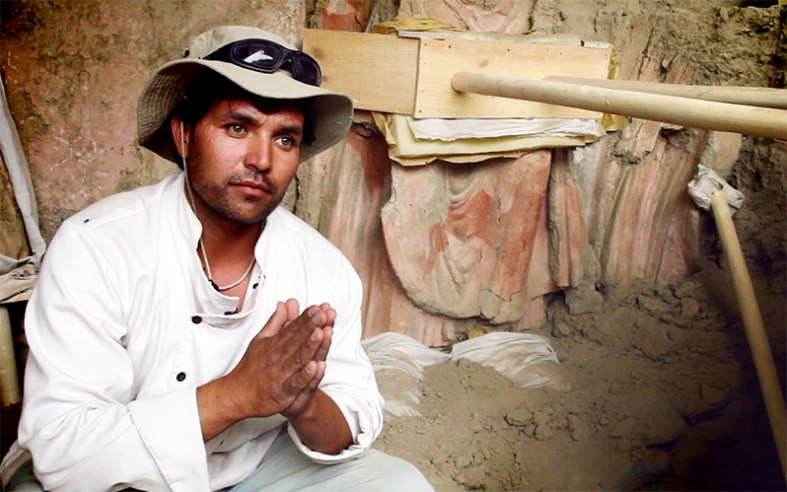
In Saving Mes Aynak, the camera was not merely a passive observer recording events; it transformed into a tool for cultural activism. While documenting that 5,000-year-old heritage that archaeologists were trying to protect at the cost of their lives, when did you become convinced that cinema should be an active “protective shield” rather than just an archive?
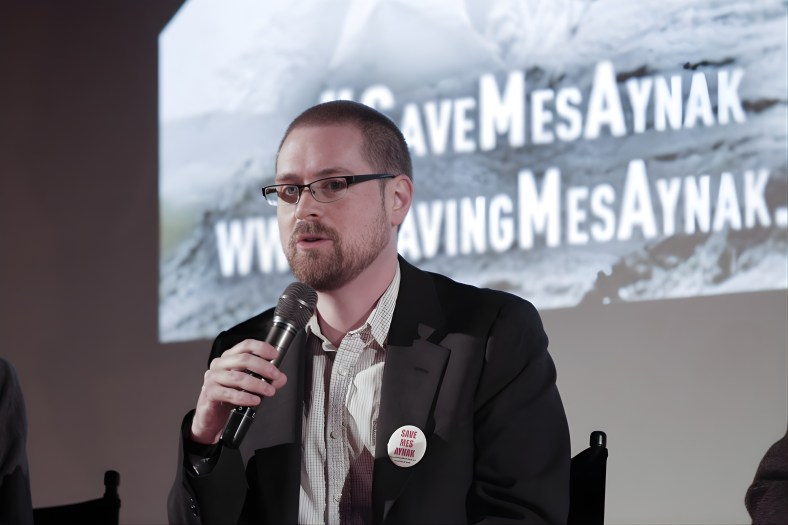
I do try and separate my activism from my documentary films, though you are right, Saving Mes Aynak is a call to action to save Afghanistan’s threatened heritage and the human rights of the Afghan people. I also try to use my own voice separate from the film to advocate for these rights appearing on CNN, Al Jazeera, PBS, etc. to warn the world of this impending tragedy. So I try to separate the two. For example, I don’t appear in the film SMA and let the subjects of the documentary speak for themselves about what is happening. But outside of the film I donated money to their cause buying them computers and digital cameras, created
online petitions, screenings and awareness campaigns, etc., to help save the ancient Buddhist city of Mes Aynak and to support the human rights of Afghans. But in the documentary SMA, it is Qadir, the Afghan archaeologist who is the central subject of the film, who is the real hero risking his life to save the threatened heritage of Afghanistan. I am using the film to amplify his voice.
Finding Yingying, which you produced, is a deeply sensitive narrative that avoids the often pain-exploiting traps of the “true crime” genre. In such traumatic stories, is stopping the recording at a family’s most vulnerable moment—or choosing not to use those scenes—a professional loss for a director, or an ethical imperative? Where do you draw that line?
Good question. These vulnerable moments, as long as the subjects are OK with them being filmed as they were in FY, are so important for audiences to see. In FY the family will never recover from the loss of their daughter. The family members are forever broken by her tragic murder. And I feel it is so important that audiences see and feel that love and loss, even when it is painful to view. I wanted audiences to feel empathy for Yingying’s family and to imagine how they would feel if this loss happened to them. And you are correct, we tried very hard to not fall into the dehumanizing and sensationalizing traps of the true crime genre.
We wanted FY to be a celebration of Yingying, her life, her passions, and the many people who loved her, not a story of her killer and tragic murder. FY also began as a class project in my documentary class. I am so proud of that project and its evolution from student film to award winning documentary seen around the world.
In war zones or hard-to-reach areas, you often take on the roles of director, cinematographer, and sound operator all by yourself—essentially acting as a “one-man crew.” How does this state of solitude break down the hierarchical “cold” distance between you and the people whose stories you tell? Do those small cameras offer you a kind of “invisibility” and a gateway to “intimacy”?
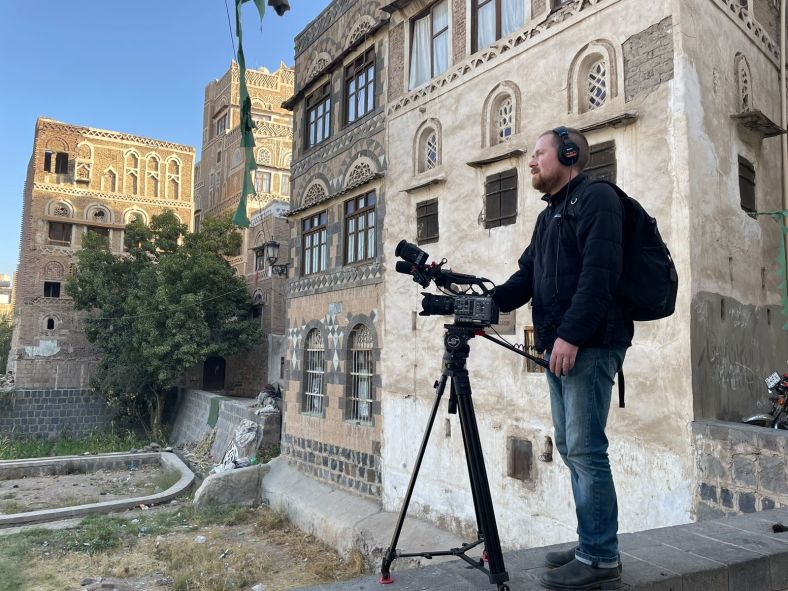
Yes, I also work in the cinema verite tradition where I try to become like a fly on the wall and capture life as if I am invisible. I want the subjects to tell their stories themselves and to do that you need to develop a deep trust and rapport with your subjects. And this trust takes time especially in the kinds of places I work in where I am seen initially as an outsider. I do also work with local producers and translators and I do interact with the subjects, so it is not so much solitude as it is a kind of deep immersion into the lives of others.
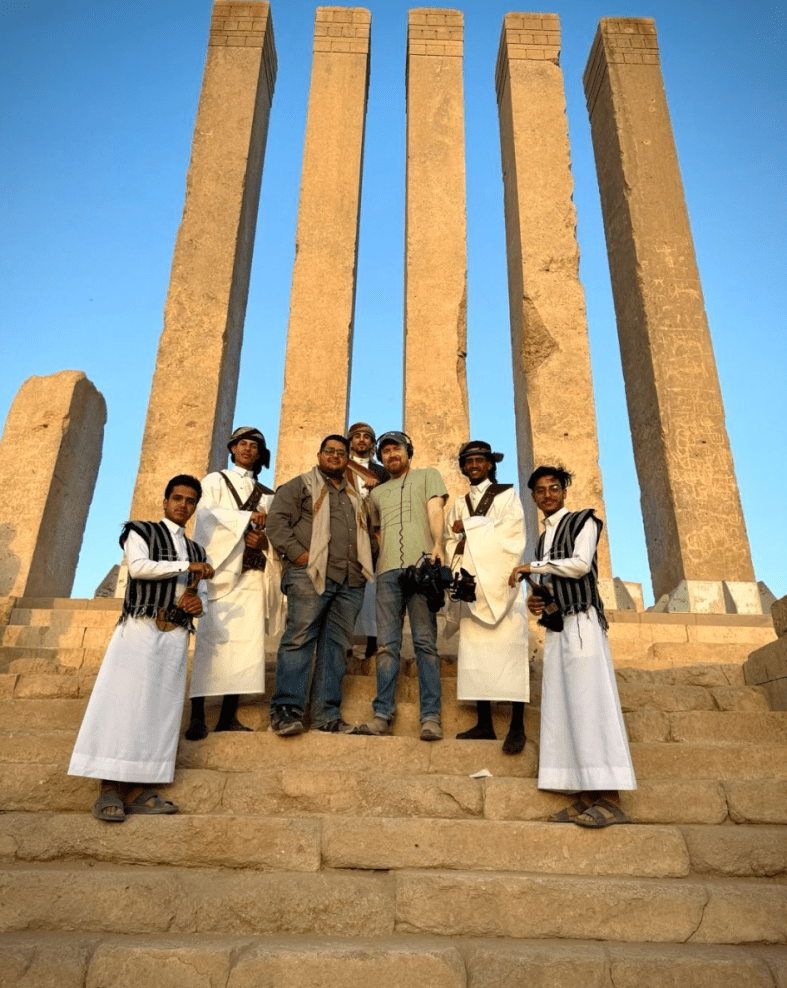
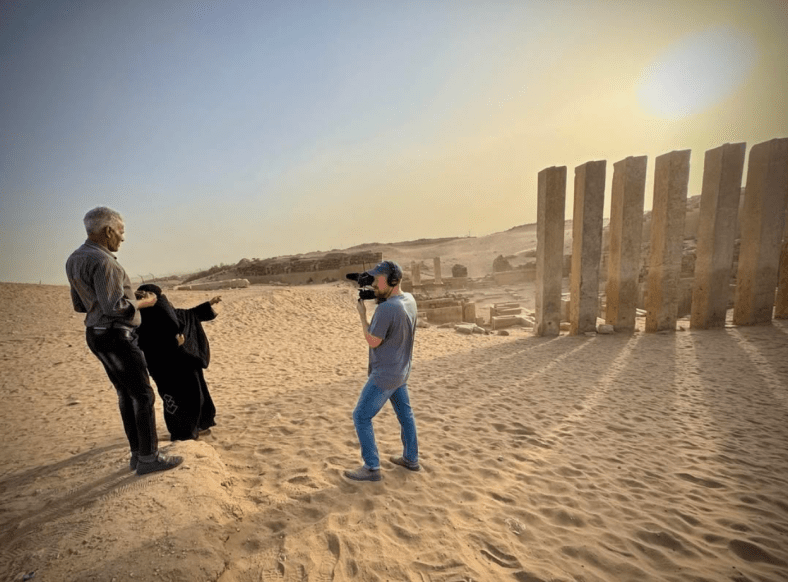
In your current project, Yemen Mosaic, you are shifting your focus to Yemeni women working to save their cultural heritage. While recording this massive legacy that war and time are trying to destroy, how has the resilience of these women transformed your cinematography and your worldview?
I am immensely inspired by my subjects, and I am deeply honored that they allow me to be a witness to their lives. Their passion to save heritage, even when it might risk their life, deeply inspires and moves me. Keep in mind also that these women are working in a patriarchal society that sometimes makes their work very difficult. The resilience of these women, their love of heritage, and their hope for the future is infectious and is a central theme I want audiences to feel when viewing the film.
At the Medill School, you produce projects by taking your students to “rendered invisible” spaces like prisons, such as in Documenting Carceral Injustice. How do you instill the concept of “ethical witnessing” in a new generation of documentarians, rather than a sterile concept like “objectivity”? What is the biggest misconception you see in their first encounters within a prison?
This is a great question. There is a terrible history of human rights abuses around prisons in the U.S. that I won’t get into here, but the point is that incarcerated people have had their rights and their story taken from them by the carceral system. My students need to be taught about this history and about how vulnerable and oppressed incarcerated people are.
In my documenting carceral injustice program, we collaborate with incarcerated people in the entire filmmaking process, in order to tell the incarcerated person’s story in their own words, again a story that the carceral system has taken from them.
Negative stereotypes also portray incarcerated people in a extremely negative light. So we strive in the class to also humanize incarcerated people and break these harmful stereotypes. The first misconception from students comes from these stereotypes often portrayed in Hollywood fiction films and TV shows – that portray incarcerated people are “dangerous and scary.” My students, after starting to work with incarcerated people, come to find that incarcerated people are some of the warmest, kindest, and most open individuals and this class collaboration becomes an incredible life changing experience for all involved.
Today, the merger processes of giants like Netflix and Warner Bros. point toward a massive monopoly in content production. As an academic and documentarian, I wonder: in this “content factory” system where profound stories are often sacrificed to algorithms, will there be a crack left for independent documentary filmmaking to breathe?
Yes, this is a terrible development for all media makers, not just documentary filmmakers. We have just come out of a real Golden Age of documentaries where doc films could be seen on all major streamers and in many venues online. This environment still exists, but there has been a restriction coming from these kinds of mergers and from some outlets like VICE News ending entirely and PBS losing nearly all its government funding, for example.
There still is room for doc filmmakers to breathe but the merger and political situation is currently very bad for all media in the United States. It may be some years before the situation improved. But documentaries are still being made and seem on major outlets, on streamers, and on TV and in theaters. There is still incredible work being made and seen by audiences.
We are in an era where hybrid workflows involving AI, Virtual Production (VP), and VFX are being discussed even in documentary cinema. In an age where technology is so dominant, where will be the “final sanctuary” for documentary film to protect those “unrecordable” and “unimitable” aspects of the human spirit?
AI is an enormous threat for documentary film and journalism, as it is for all forms of media. Everything can be faked now, and in the US, there is also a distrust of media especially media coming from journalists. So trust in media and a trust in journalists and documentary filmmakers is extremely important as is an education about AI is crucial starting at a young age. If there is a “final
sanctuary” for documentary film it must exist in this trusted space by filmmakers with strong ethics who are not using AI, VP, or VFX.
How do you perceive the language of documentary filmmaking in Turkey? Are there names you follow or a “Turkish story” that makes you say, “I wish I had been the one to tell this”?
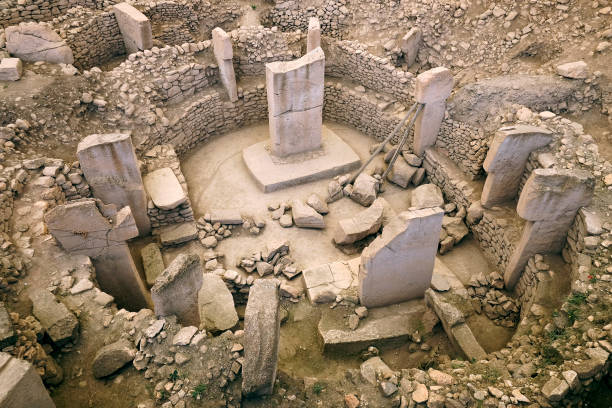
I’ve only visited Turkey a few times usually enroute to Afghanistan, but I think the country is an incredible fascinating place with a rich cultural heritage that rivals Egypt. I would love to tell the stories of these wonderful sites like the ancient site Neolithic GöbekliTepe that are much less known than the pyramids. I think there could be an incredible documentary about the work being done in Turkey by Turkish archaeologists to save and preserve these ancient sites.
Over the years, you have witnessed many things—from the dusty archaeological sites of Afghanistan to the war-weary streets of Yemen, and from the cold walls of American prisons to the heart of geopolitical crises. At the end of this journey, does Brent Huffman still look at the world through the eyes of a director, or is he now primarily a human rights advocate?
Another great question! As an artist, I also paint – I have to say I view the world through both lenses – as a human rights and social justice advocate but also as a creative director/artist. Ultimately, I achieve both things through my filmmaking – I feel you can tell documentary stories in a way that allows audiences to feel what the subjects in the films feel – see themselves in the stories on screen.
Audiences can feel deep empathy for subjects in documentaries that they do not know, that may live thousands of miles away in another part of the world. And by feeling this empathy, they can be motivated to help change a bad situation and help people whose lives are in danger. Audiences can help save ancient cites, as they did in Saving Mes Aynak, advocate for prison reform and for the release of wrongfully convicted people in my prison classes, and help support women risking their lives to save heritage in Yemen. And finally, to see Yingying, from Finding Yingying, as the incredible and brilliant young woman that she was instead of as a murder victim.
 prcarnetworld.com