Interview Series: Narrating for the Public Good: Journalism, Data, and Responsibility
I. From Advertising to Journalism: A Story of Transformation
How do you think your five years as a copywriter in the healthcare sector have shaped your writing style and journalistic language today?
Most of my copywriting job was combing through clinical trial data of new pharmaceutical drugs and turning those facts into something that made sense to doctors and consumers. It was a tricky task to balance the desires of the client, who obviously wanted their drug to sell, and making sure my data visualizations and summaries met all these different regulatory standards. But at the end of the day, once you figure out a way to “tell the story”, you just tell it over and over: copy and paste it into a banner ad, a doctor’s office pamphlet, a video script. That story only changes when you get new clinical trial data or start working on something completely new.
After five years of working on different drugs and with different data, I got better at writing about facts in a compelling and clear way. It helped me learn how to visualize the story that the numbers tell, which I do a lot of in my reporting today. And though working with pharmaceutical clients is different from working with editors, it helped me get used to writing feedback. Those clients didn’t care about ripping apart my copy and hurting my feelings, so I developed a pretty thick skin when it comes to editing.
Working with FDA bureaucracy gave you a behind-the-scenes look at the system. Which aspects of the system did you gain the most insight into, and how do these experiences reflect in your journalism?
I talk about this a lot to anyone who will listen: our for-profit healthcare system is so broken in so many ways. There are so many players in the healthcare world: you’ve got the pharma companies looking to make money and beat out the competitor drug, doctors trying to make the right decision for their patient in a crowded drug landscape, and the patient, but you’ve also got a whole host of other intermediary players all trying to accomplish a slightly different thing. And usually that thing isn’t just trying to keep people healthy at a reasonable cost to the patient.
I think what I took away from “seeing behind the curtain” of American healthcare is that so many parts of the system are needlessly complicated, and most of those complications come from each player trying to get the most money out of a drug sale. The distributors, private insurance companies, pharmacy benefit managers—they all want a little piece of it for themselves. I got fed up with the whole thing, and wanted to use my writing and data analysis skills for something that’s useful to real people. I try to pair the hard facts with real human experiences, because those stories so often get lost along the way in our for-profit healthcare system.

We think you play a kind of “translator” role when presenting scientific data to the public. How would you define this role?
In the advertising world, we were called “creatives”, which I always thought was kind of funny. Because 90% of that job was about being factual and clear and following the rules your client gives you. But journalism lends itself to actual creativity: original concepts and new ways of looking at a problem, critical data analysis, writing and rewriting and rewriting again to create the best version of the story you’re trying to tell. In science and health journalism, that story often starts with jargon-filled research papers or trade publication press releases. It’s more than just finding the right synonym or defining a scientific term (which you actually don’t want to do too much, or you’ll put the reader to sleep), it’s about choosing the information that’s most important.
Authors hire translators to publish their books in other languages, but those translators do so much more than just replacing words with other words. You have to balance meaning, tone, and style, all while preserving the original intent of the writer.
II. Data, Health, and Narrative: Intersections in Journalism
We see you use tools like GitHub and Python and work in data-driven journalism. How do technical tools contribute to your storytelling?
I’m still pretty new to Python and coding languages, but so far I’ve really found these tools help me synthesize and make sense of information, which is always step one. Then I figure out how to present it in a really clear, compelling way to readers.
I recently worked on an investigation of lead in drinking water tap samples across New York City, and I created a website that lets the reader type in their address and see if their apartment has lead pipes or is served by a contaminated water tank. I could have directed them to a complicated map or listed out the locations of all the dirty water tanks in the city, but giving readers a simple interactive to play with is a better way to get people engaged with the story and see why it’s meaningful to them.

What strategies do you use to make complex topics like health and climate more accessible?
I think it’s a combination of things: pulling out the main takeaways that make it relatable and pertinent to the lay-reader, and driving home “the point”, whatever that may be. “Here’s what you need to know, here’s why it matters, and here’s what might happen next.” Writing simply is important for these kinds of stories.
There’s also something to be said for rhythm and pacing in a story, because you’ve got to think about the reader’s experience. When are they going to get bored? How can I cut out the fluff and keep the story moving? Those are all helpful strategies when writing about data and research. A really simple way of doing this is alternating short and long sentences. I think journalists can learn from writers like Shakespeare, Toni Morrison, or Cormac McCarthy, who clearly thought a lot about rhythm and cadence in their work. You might not be writing high literature, but you can still try to make the writing sing.
III. Alternative Narrative Forms and Future Vision
What is the role of alternative media in highlighting critical issues like public health, sustainability, and climate change?
I associate alternative media with original voices and people who refute cultural norms. Right now we’re seeing a lot of corporate influence in newsrooms, which has always been the case to some degree, but in this really polarized political and cultural climate I think more people are aware of it. Independent, alternative outlets can circumvent the status quo and bring attention to stories that big legacy newspapers with corporate interests might not want to.
In this context, how do you define “alternative media,” and where do you place your own work within this framework?
I’m not sure I place myself in the alternative media landscape, because I’m a fairly new journalist and am still learning the basics of the structural craft. I’m not sure I really fit anywhere at the moment.
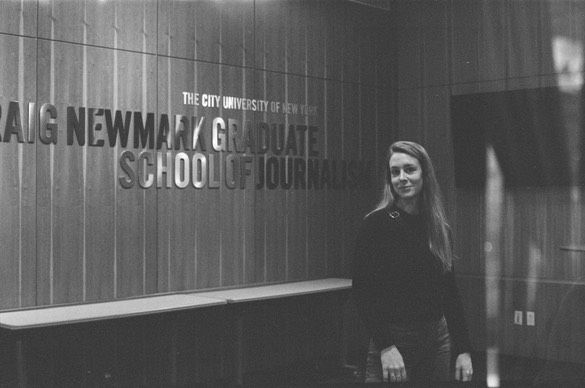
I will say that, as a data fellow and reporting intern at the digital nonprofit newsroom The City, and it’s been really wonderful to see how a smaller newsroom functions. We get to pitch stories that need to be told, research and talk to people, run copy through our editors, and publish the pieces shortly thereafter. I think the small, scrappy, nonprofit outfit is an alternative to the larger, corporate newsrooms, and I think the reporting process at The City prioritizes the reporter and the people the reporter is writing about. The problem is we don’t have as many resources as, say, The New York Times, which I think is probably the case for a lot of alternative or nonprofit media. But having more money doesn’t necessarily mean you’re doing better work. I could go deeper into the ways I’ve seen that reality bear out… but I’d rather not incriminate myself to future employers.
The takeaway? We need more funding for smaller, nonprofit newsrooms, because those are the places doing important work. Local news is so, so important. Maybe that’s an alternative-enough stance. We’ve seen so many local news outlets disappear after losing funding, and it’s really detrimental for the journalism industry and the people it serves.

Is there a publication you dream of working with in the future? For example, would you like to work at Scientific American?
I’d love to work at Scientific American! Their pieces got me hooked on science journalism, so that would definitely be a dream job. I also love the work that STAT and ProPublica do. I have to say, though, working full-time at The City would also be a dream job. I’m just an intern, but my editors are really wonderful, smart people doing really important work.
What are your thoughts on the importance of journalism that carries public responsibility today? In an era where data-driven content production is widespread, how do you think journalism’s role in serving the public good should be redefined?
Data can help cut through the noise. We’re swamped by media in all different forms these days, and it’s hard to know what to pay attention to. Data tells a real story–it’s not just the experience of one person or group, but about what’s been happening to many people over time.
Of course, you need the human element in there, but that’s just data too, if you think about it. News is data. That TikTok video about the new Korean skin serum is data. The trick is making sense of it, and that’s a journalist’s job. We’ve got to make sense of it, question our own sense-making, and when it’s ready, share it with readers who get to make sense of it too.
 prcarnetworld.com