Information Integrity and the Public Sphere: Contemporary Challenges of Journalism in a Post-Truth World

Interview Series: New Media, Digital Culture and Algorithm | Interviewer: Gokhan Colak

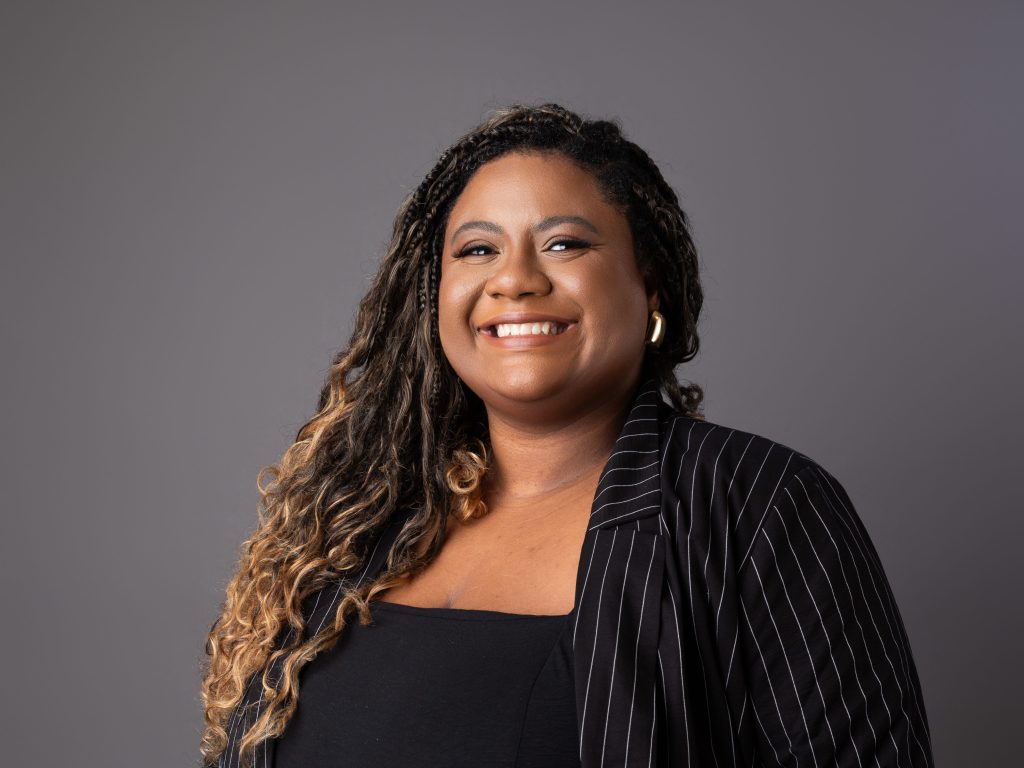
Marcelle Chagas Do Monte | Journalist, founder of Rede JP, and Researcher at the Mozilla Foundation’s Tech and Society Program

Journalistic Trajectory and Professional Positioning

How did your journey into journalism begin? What social or personal motivations were decisive in your choice of this profession?

My journey into journalism began at the intersection of social inequality and informational injustice. Growing up in Brazil, I witnessed how entire communities—Black, peripheral, Indigenous, and favela residents—were systematically misrepresented or simply rendered invisible by mainstream media. At the same time, there was a striking lack of journalists from these groups in the main spaces of news production. This absence was not neutral: it shaped public policies, influenced the allocation of resources, and defined who was considered worthy of attention, credibility, and protection.

Journalism became, for me, a tool to confront these structural silences and to build bridges between lived experience, scientific knowledge, and public debate.

How did your journey into journalism begin? What social or personal motivations were decisive in your choice of this profession?

My professional trajectory has been shaped by work in newsrooms, in science communication, and later in the fields of digital rights and technology policy. These experiences revealed how power operates through information flows and how narratives can both reproduce historical inequalities and challenge them.

Today, I position myself at the intersection of journalism, communication, and digital inclusion, with a focus on rights advocacy. I work on mapping local flows of information and disinformation, especially in vulnerable territories, using participatory methodologies. This path led me to join the Mozilla Foundation as a Fellow, where I investigate not only informational ecosystems in traditional territories but also community perceptions of artificial intelligence. I understand journalism not as a neutral observer, but as a democratic infrastructure with social responsibility, particularly in contexts marked by historical exclusion and algorithmic asymmetries.

Truth, Information Integrity, and Disinformation

How do you define the concept of “information integrity” in the context of journalism? What does this approach seek to achieve beyond traditional fact-checking practices?,

Information integrity concerns the health of the entire informational ecosystem: who produces knowledge, which voices are amplified or silenced, which interests structure the circulation of content, and how technologies shape visibility. There is no information integrity without diversity of voices, protection against manipulation, the مواجهة of hate speech, and accountability for the actors who organize this system.

In this sense, information integrity seeks to ensure transparency, plurality, contextualization, and informational justice throughout the entire information cycle—from production and dissemination to interpretation and social impacts. It is about creating the conditions for society to sustain a public sphere grounded in facts, plural, trustworthy, and free from systemic manipulation.

Based on your field experience, what kinds of impacts have you observed disinformation having on local communities? How do you assess the local manifestations of misinformation produced at a global scale?

In my fieldwork in favelas, quilombola territories, Indigenous communities, and urban peripheries, I have observed how disinformation deepens pre-existing vulnerabilities. False narratives about health, climate change, elections, and public security circulate locally, combining with historical distrust toward institutions. Content produced at a global scale—such as conspiracy theories, scientific denialism, or anti-vaccine campaigns—is reconfigured according to local cultural, linguistic, and affective codes. This process gives rise to what I call “territorialized regimes of disinformation,” in which global narratives are reprogrammed to operate locally, producing deep and long-lasting social effects.

Digitalization, Platforms, and Algorithmic Power

We observe that digital platforms have significantly transformed journalistic practice. Do you consider this transformation primarily a democratizing opportunity, or has it created new forms of dependency and control?

Digital platforms have unprecedentedly expanded possibilities for publication and participation. However, this democratization is structurally ambiguous. While historically marginalized groups have gained new means of expression, they now operate under opaque regimes of algorithmic governance, extractive data economies, and engagement architectures that privilege polarization.

Field research in Indigenous and quilombola territories shows that digital trust still relies primarily on relationships of proximity and affectivity, in contrast to the low levels of trust in formal institutions. Platforms have ceased to be mere technical intermediaries and have become central political actors in defining what is visible, legitimate, and relevant in the public sphere, guided by market logics rather than democratic principles.

What consequences does the algorithmic determination of news visibility have for the structure of the public sphere and the culture of democratic debate?

As the coordinator of a journalistic organization, the Black Journalists Network for Diversity in Communication, I observe that the growing dependence of journalism on these infrastructures also strains the editorial autonomy of news outlets and collectives. The result is not only the proliferation of disinformation, but a structural erosion of the foundations that sustain public dialogue.

Inequalities, Representation, and Media Diversity

How do racial, class-based, and geographical inequalities within the media landscape shape news production processes and forms of representation?

Racial, class, and territorial inequalities are not external to journalism: they are embedded in newsroom composition, agenda-setting, source selection, and narrative framing. When decision-making spaces remain socially homogeneous, entire realities are interpreted through perspectives that fail to recognize their complexity and legitimacy.

In Brazil, research we have conducted—most recently in partnership with Thomson Media on the sustainability of independent journalism—has shown that outlets led by underrepresented populations receive the least funding and face the greatest barriers to inclusion in institutional circuits of knowledge production. Partnerships with the State University of Rio de Janeiro have also highlighted the low presence of Black professionals and women in the country’s major newsrooms.

Do you view diversity and representation in the media more as an ethical responsibility, or as a structural necessity for journalism to sustain its public function?

Thus, diversity is not merely an ethical issue but a structural condition for journalism to fulfill its public function. Without epistemic diversity, it is impossible to fully understand social reality, identify emerging risks, or build trust with populations that are simultaneously the most affected by disinformation and the least represented in media systems. Representation entails redistributing not only visibility, but also authority in the production of meaning.

Ethics, Pressures, and Future Perspectives

In the context of censorship, self-censorship, and economic pressures, what do you see as the most fundamental structural challenge journalists face today?

The most profound structural challenge facing journalism today is the convergence of economic precarity, platform dependency, and political polarization. Professionals operate under financial instability, legal harassment, digital surveillance, and coordinated disinformation campaigns, which foster both explicit censorship and self-censorship. These conditions weaken investigative journalism, long-term reporting, and the capacity to hold power accountable.

In the context of advancing artificial intelligence, automation, and data-driven journalism, the future of the profession will depend on political and ethical choices. These technologies can strengthen investigation, expand multilingual access to information, and support complex analysis, but they can also intensify power concentration, narrative standardization, and large-scale manipulation.

In light of developments such as artificial intelligence, automation, and data-driven journalism, what kind of future do you foresee for journalism over the next decade?

In the coming decades, the role of journalism as a public good will be increasingly contested. I see as central the strengthening of community-rooted media, philanthropic models for the sustainability of the profession, open infrastructures, and AI approaches grounded in human rights and social justice. The future of journalism will depend on its ability to rebuild trust, pluralism, and information integrity as pillars of democratic life.