Interviewer: Academician, Author and Pr Carnet Editor Semay Buket Şahin
Dear Barry, how would you define philosophy? In your opinion, is philosophy a part of science, or is it a discipline that goes hand in hand with science?
Defining philosophy is a philosophical question itself, so any answer presumes something about philosophy, and tends towards circularity. In terms of etymology it means love of wisdom, but one major philosopher, Hegel said that complete philosophy is what becomes wisdom. Despite the etymology, we might also think of philosophy as something different from wisdom, as philosophy is a form of inquiry, while wisdom presumes a state of mind, or a way of being, in which the thinker is identical with wisdom and passes it on rather than engaging in inquiry. If philosophy is related to science, is maybe the science of sciences, then that turns philosophy into essentially epistemology, the philosophy of knowledge, which is a branch of philosophy, so that philosophy is something within philosophy.
If philosophy is not knowledge the obvious alternative is that it is a form of deductive reasoning about abstract principles which tells us something about the structure of reality, which may be a kind of knowledge, but is not the same as the gaining of knowledge in specific science, and is not even the same as the most general form of science. Another possibility is the phenomenological approach in which philosophy reveals some kind of essential reality which is not covered by the scientific pursuit of knowledge or deductive reasoning. Alternatively, returning to Hegel we mighty regard it as the practice of a particular reason which is ‘speculative’ (recognises that identity is also always difference) and dialectical (proceeds through negation of particular universals from an absolute perspective).
This is just a sketch of some of the contours of any debate about what philosophy is. Despite what some philosophers have hoped, philosophy cannot realistically be regarded as just the most general form of scientific method, or the results of a method of abstract reasoning which might be deductive or speculative, or as an access to a kind of pre-theoretical grasp of the cosmos preceding epistemology, metaphysics, logic and speculation. Some have regard philosophy as a form of clarification of problems using the tools of logic or linguistic concepts, but clarification is not the same as resolution. All the approaches mentioned, and others, can be regarded as legitimate parts of philosophy, but if we thinking about what philosophy in its most general sense, I believe it must be something do with the search for universality in explanation and definitions, which always runs into tension between singularity and universality, parts and wholes, particularity and the absolute, subjectivity and objectivity, fragmentary ideas and complete system. This is a list that can be constantly extended. The point is that philosophy is what explores the gaps, inconsistencies, paradoxes and contradictions which emerge in trying to resolve the oppositions just listed. I particularly like Kierkegaard’s suggestion that paradox is the passion of thought, and believe it can be adopted without assuming anything much of what makes up Kierkegaard’s philosophy.
According to your book chapter “Tragedy, Myth, and Liberty in Interstate Theory” in Liberty and Security in an Anarchical World Vol- I how does your polycentric model of sovereignty address the challenges posed by modern globalized conflicts, particularly those involving non-state actors?
A polycentric approach to sovereignty recognises inevitable realities, with regard to the competitive, changeable and localisable nature of institutions designed by humans. While it seems just about possible to have a kind of large centralised imperial nation, these depend on the existence of external threats or anxieties about the external world, which give some basis to a very vigorous exercise of hard power within state boundaries. We might hope for more peace and stronger international institutions, but it seems to be structurally impossible to have a unified global sovereign which either rules in a centralised way or has a coherent structure of devolved sovereignties covering the whole world.
The first option is always going to be disturbed by localised resistance and power competition at the sub-global level. Even if in some way, it is possible to have very integrated uniform sovereignty actglobal level, we are clearly far from such a situation. It could only emerge in a long term way in the far future. This possibility seems to be me to be very abstract, and in reality there could never be a global community possessing a sufficiently dense consensus on interests and principles, to make anything possible more than a very limited form of global sovereignty, which would be in a kind of shifting unstable balance with the sovereignty of nations or the partially shared sovereignty of blocs of nations. Even small nations face periodic challenges to inner sovereignty from the sharper forms of citizen dissent or various kinds of flows of information, population movements economic activity which spill over national boundaries. Completely self-contained sovereignty of nations is impossible as is a completed integrated global sovereignty.
How would rationalistic and homogenizing tendencies of transnational institutions might accommodate the need for global responses to issues like climate change and pandemics? What are your thoughts about that?
Rationalistic and homogenising tendencies in international institutions provide for some basis for international al action on climate change and pandemics. The rationalising and homogenising tendencies also create problems. A single centre trying to impose a unique approach for the whole world will not allow for the benefits of localised experimentation, comparison of solutions, and full debate of polices. Realistically national governments will be a necessary location for information gathering, policy formation and actions.
There may be some grouping of this as in the European Union , but even this is not an exercise of fully integrated sovereignty commanding a cross-European administration. In reality it is based on compromise between elects of European decision making and what nations agree. It is very clear that global co-ordination cannot go any further than this model and is likely to be less. The facts of climate change and the conditions for future pandemics don’t tell us what the best solutions are. These are fields which include unpredictable feedback, at the natural level enhanced by collective human action producing its own feedback. We can’t know in advance what the best possible solution is. We don’t know what the best solution is for different parts of the world given different conditions. There is no perfect solution there is just a variety of trade offs between various actions with various consequences outside the fields of climate and pandemic control. We cannot possibly have perfect knowledge of how to compare the results of a multitude of trade offs in a variety of possible feedback loops. Even if we did have a perfect rational solution based on perfect knowledge of the future, we would still not be able to perfectly control the politics about which kinds of costs populations are likely to tolerate. Some global co-ordination is desirable but we should not deceive us that there can bear perfect global coordination on perfect solutions.
Do you think that if we had adopted the Roman educational system of the Septem Artes Liberales, regardless of race or religion, we could have achieved a more civilized, globalized, and intellectually advanced society today?
The Septem Artes Liberales combine a quadrivium of astronomy, geometry, arithmetic and music with a trivium of rhetoric, grammar and logic. Whatever merits this may have had for the ancient, medieval and early modern worlds, it is not an adequate way of defining basic knowledge for the present. It certainly never produced I can’t right now say how this compares with classical education in southern, central and eastern Asia, which is the obvious point of comparison. It maybe worked in the Roman Empire, then Catholic (later Catholic and Protestant) Europe for providing some common understanding, but it has never been a global model and chant be now.
There is an issue now of global communications, travel and economic flows, which does make the issue of a broad global consensus on the basics of education relevant for present times. That is not the same as arguing that a rigid seven-fold structure can be universally applied. A broad universal education at pre-university level should presumably include mathematics and some high quality of understanding of your own language. This requires some study of literature and history.
The greatest understanding comes from doing something like this one more language, some study of at last one foreign language should be part of any education core, which also serves needs of communication. A well shaped education core should really introduce everyone to the starting elements of all major sciences, natural and social, which means physics chemistry, geography, biology, psychology, sociology and economics. For contemporary life, we should probably add communications studies and information technology. Philosophy provides a way of thinking about foundations and connections between these ares of knowledge. It is rather difficult to study before 16. Before 16, I favour studies of values and critical reasoning. Ideally this should absorb and replace classes specifically devoted to religion, which can be best studied in a critical and comparative environment. Increasing globalization suggests more elements of comparative studies in these areas where applicable. So I don’t have anything as compact as seven areas of study. What I have suggested above covers 14 areas (before getting into foreign languages), so that is a doubling of the old septet. How this is worked out in practice will inevitably vary between global regions, countries and even within countries, allowing for different circumstances along with the benefits of experimentation and comparison.
There is no way of studying all 14 of these things simultaneously throughout the years of compulsory schooling. Schooling should introduced all of them to all students at some point. Constant study is necessary for mathematics and any foreign language (at least one, and in some multi-lingual countries this can be complicate by requirements to study more than one language of that nation). This should be combined with constant study of at least one area of natural science and one area of social science, along with national literature and history (preferably with comparative elements for both). That makes a core sextet, though of a more variable kind than the classical septet. At sixteen this can be joined by philosophy, as once you start to study any field in any real depth, philosophical questions do arise, so that would make a septet, though at this point maybe some choice should be allowed regarding whether to study both social science and natural science.
Six subjects enough for pre-university study and maybe that could drop further in the final year of pre-university study. All countries of the world following something like this patterns probably a prerequisite for properly educated people throughout a global community, equipped to cope with life in any part of the world.
What would you like to say about philosophy education in Turkey? How would you interpret it in terms of language, culture, and history? Do you think Latin and Ancient Greek education should be introduced at earlier stages in Turkey to support the development of free thought?
It is difficult for me to generalize about philosophy education in Turkey. I understand there is less of it at high school level than there used to be which is unfortunate. As with other countries, I favour making classical languages more available as subjects of school study, but it is not possible to make this compulsory. Experimentation in schooling should be allowed in which some schools could specialize in offering classical languages. I certainly think there should be far more departments in this area in Turkish universities, though equally there should be more departments concerned with ancient languages and literatures of the Near East and Asia, as this is the obvious major alternative to the Graeco-Roman-western tradition. None of these traditions should be seen as isolated and self-contained. The complete study of the history of liberty certainly requires some awareness of ancient history and texts, but I don’t think we can make liberty as a way of thinking influencing education too dependent on study of ancient sources. Some element of this is necessary in philosophy and some other humanities, but in general, liberty has to appear through education in emphasis on the development of individuality of a kind which is free thinking, critical and responsible. Some element of classics in the world of education is a significant part of this, but it cannot be the full story. Philosophy has to be understood primarily in terms of a cross-national tradition across centuries in which nations have greatly changed, so it cannot possibly be understood in terms of national tradition or culture or history. Good philosophy in any country depends on having an internationalized and comparative sense of tradition, culture and history.
What types of research can be conducted in the field of philosophy today? What are the studies you have undertaken in relation to philosophy? Do you believe that alternative learning methodologies can be developed in this field?
I don’t have a strong view about new ways of learning philosophy. I teach in fairly old fashioned ways without much resort to tech ology in the class. Philosophy is inevitably affected by new forms of technology and communication, but I can’t see this changing the core. Different instructors can have different views about use of technology. This should be let opt individual choice. In the end all philosophy education has to be directed towards philosophical texts and forms of reasoning which are not obviously greatly changed by technology. I studied most aspects of western philosophical tradition as an undergraduate, making a special effort to study Continental European Philosophy after Kant since this could only be studied as an option (elective), not as part of the core courses. In my postgraduate work, I was very oriented towards Continental Philosophy and its relationship with literary studies.
I also developed interests in political theory, during that time, as an area of academic writing, though I have always read in that area anyway. There are some other things I came across then to do with philosophers who have a very literary aspect to their work, who still interest me, particularly Giambattista Vico and Michel de Montaigne. There was a period in which I was concerned with Wittgenstein, along with connections between Continental and Analytical Philosophy (that is philosophy very oriented towards science, logic, and conceptual analysis). Though that is till of some interest to me, it is not an area where I aim to write much anymore. I have been interested for some time on Foucault and theories of liberty, but have been slow to really consolidate my writing in that area and getting it published. Something similar applies to Vico’s contribution to thinking about philosophy as the philosophy of the human world, in which history and literature are central.
I am aiming to make progress in these projects, along with other writing commitments, which currently include work on Foucault’s view of seventeenth thought. Recently I have published on philosophy and literature and Derrida’s ethics. I aim to keep working on ethics as well as philosophy and literature. I have thoughts about tragedy related to both fields and that may express itself in future writing.
Interviewer: Academician, Author and Pr Carnet Editor Semay Buket Şahin
Would you like to talk about the short films you shot while you were a cinema student?
All my short films so far have featured elements of magical realism or fantasy—whether it’s TV characters confronting you from the screen, catching lice in your girlfriend’s hair, or women laying eggs. I tend to dive into my most bizarre ideas, and I’m grateful to have an outlet for them, as well as the support of those around me on this unconventional storytelling journey. Writing, directing, and editing my films have been invaluable experiences, not only for honing my craft but also for the meaningful human connections I’ve made along the way.
What kind of experience did the films you shot give you in terms of directing?
Directing actors was initially the most intimidating part for me. Having experience as an actor on other projects helped me realize that actors seek trust from their directors, which is built through communication. Instead of feeling like I needed to have all the answers—like in an exam—I learned to approach directing as a collaboration. A particularly positive experience was working on my final university film, “The Egg”, where I had the chance to rehearse with actors on location before shooting. This made the process less stressful and allowed us to be more open. Before film school, I hadn’t fully grasped that directing extends beyond working with actors. It involves making decisions across every department and ensuring the entire team is aligned with the creative vision. I’m so excited to explore this even further in my upcoming projects.
In your opinion, what are the most important features that make a short film successful?
I can’t yet speak to the commercial success of short films from personal experience (though one of mine has been selected for three festivals so far, which I’m very happy about). One thing I can say is that the audience’s response was incredibly positive. It’s always a pleasure to hear people share their interpretations and explore what the film meant to them.
One particularly encouraging piece of advice came from a workshop I attended with Argentine director Marco Berger. He said, “Make the films you want to see, because people are similar. If you like something, chances are others will too.”
How to edit a good movie? What is done before editing?
It’s no secret to filmmakers that editing begins before shooting. Understanding editing helps immensely with blocking and shot choices, but doesn’t fully protect you from post-production challenges. For example, in my short film “Lice”, a lack of coverage forced me to find a creative solution. I used fades to black between shots, which not only smoothed the edit but also reinforced the film’s dark, cave-like setting.
What would you like to say about the cinema industry when you evaluate it in terms of popular culture today? Is the most popular the best movie?
As a film graduate, I’ve been exposed to a wide range of non-mainstream films. Being from Europe and having international friends also influences my viewing habits, so I don’t always focus on the most popular films. That said, I find incredible films in both mainstream and indie cinema, just as I sometimes come across films—popular or obscure—that don’t resonate with me.
What are the shortcomings you see in the cinema industry and movies today? Do you think cinema has become monopolized?
Like many, I value creative freedom in storytelling. However, I’ve noticed that many mainstream films follow a checklist of politically correct themes and characters. While these topics are important, they should feel organic to the story rather than forced and I believe that a genuine, natural approach leads to meaningful art. That said, I understand that funding often dictates creative choices. One movement I’m especially excited about is the push for greener filmmaking practices. As a nature lover, I was disheartened to learn about the film industry’s environmental impact. While the industry still has a long way to go, it’s encouraging to see more productions adopting sustainable practices. I fully support this movement and strive to make every project I work on as eco-friendly as possible. I believe embracing green filmmaking is becoming essential for staying relevant in the industry. I’m also very excited about the emerging green storytelling movement and eager to see what stories grow from it.
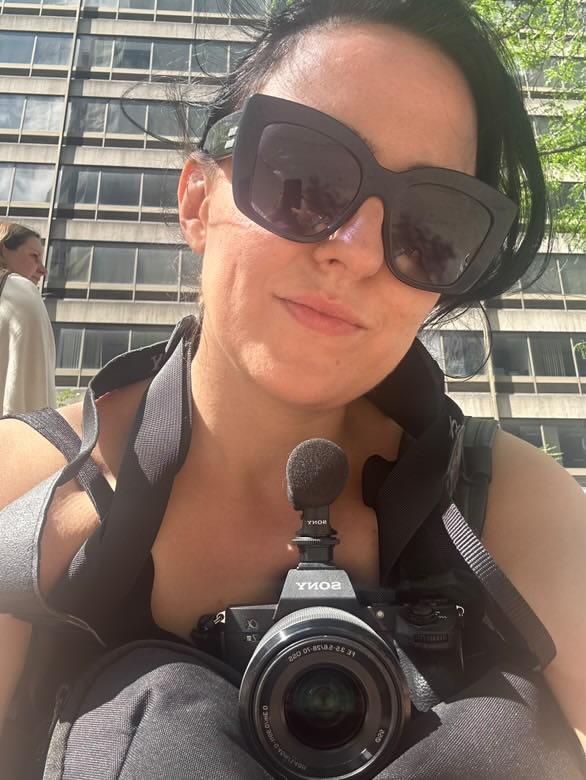
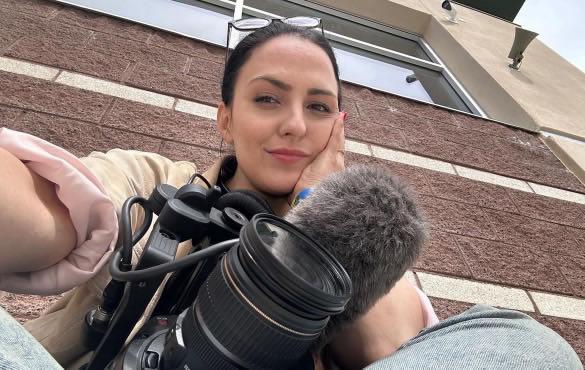
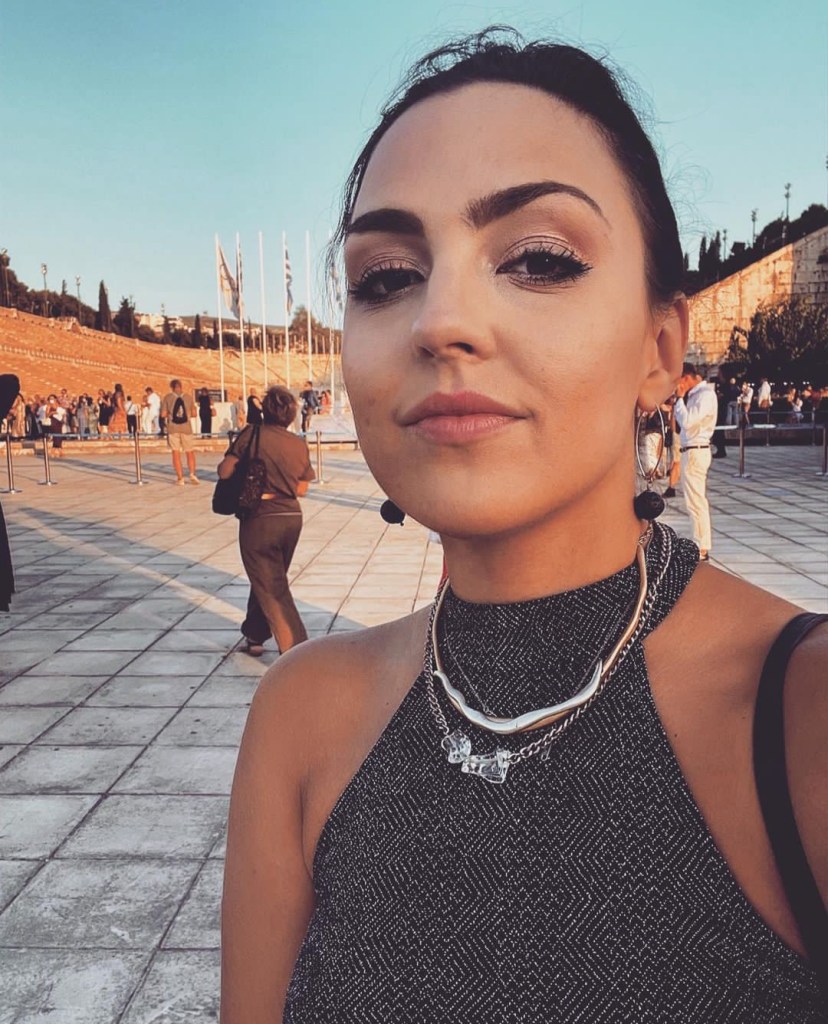
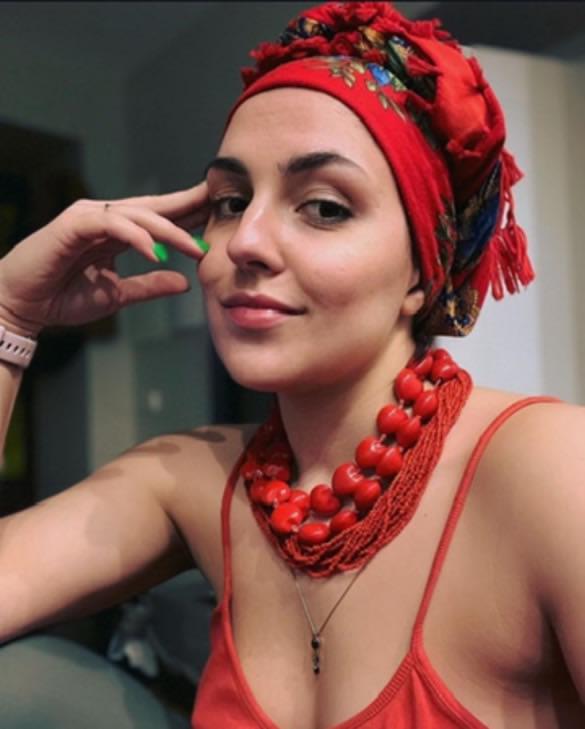
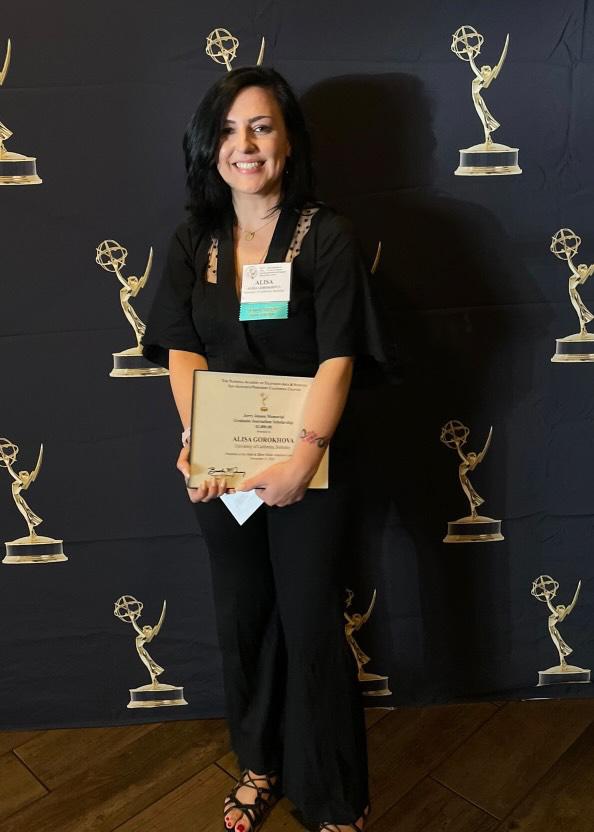
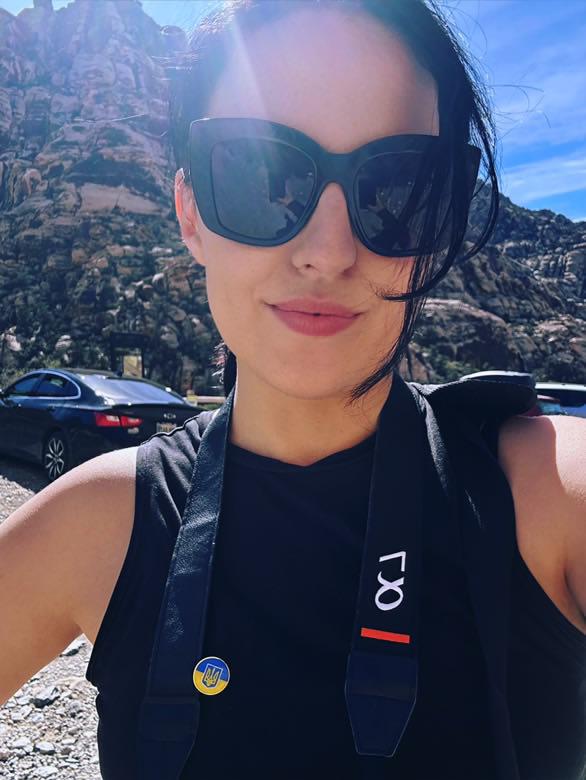
Who is Alisa Gorokhova? Can you tell us a little about yourself?
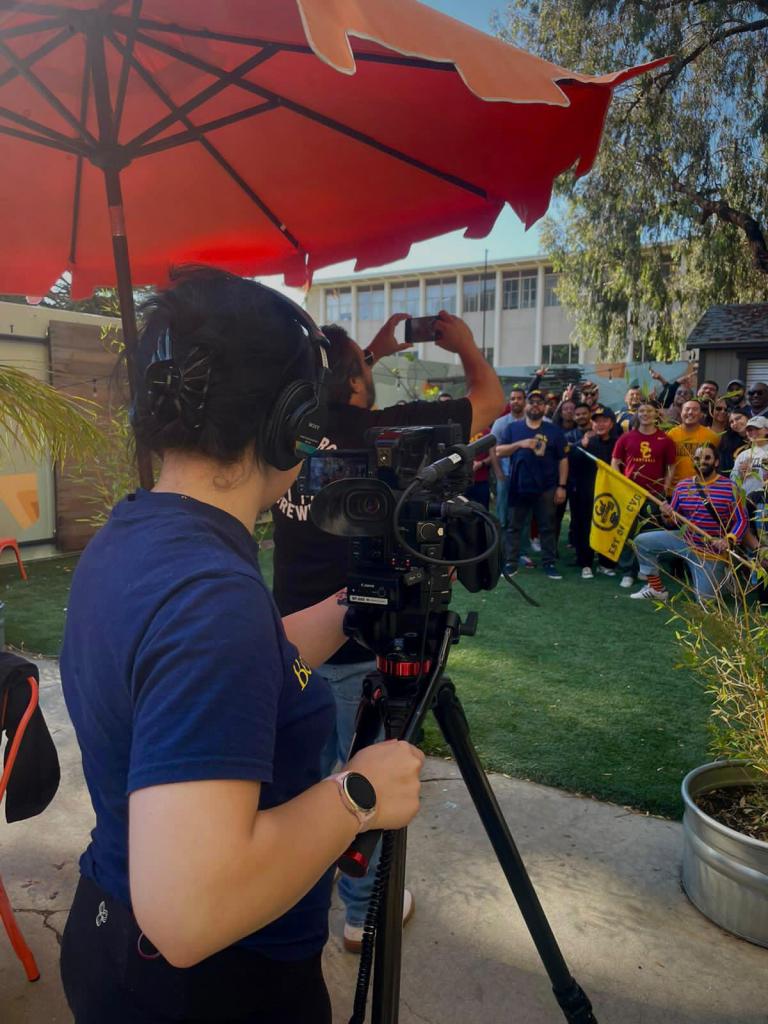
I am a Ukrainian-Canadian documentary filmmaker, writer, and journalist – in no particular order. I spent the first 10 years of my career in commercial copywriting. Unlike most people, I actually enjoyed the peace and quiet the pandemic brought because it gave me time to re-evaluate my life thus far and priorities going forward. I was in my early 30s, a perpetual expat living in a foreign country, with a handful of close friends, no family nearby, and a career I wasn’t in love with. After months of deliberation during lockdown, I decided to change everything about my life until it had not only more meaning, but love and joy within it.
I decided to move back to North America from Europe after 10 years, and to begin investing in building a network and support system that would be with me for the rest of my life. I also applied to the University of California, Berkeley Graduate School of Journalism to study documentary filmmaking. I had always considered documentaries to be the highest art form. Most importantly, I decided to wholeheartedly embrace the creativity within me that I had been running away from my entire life. I graduated with a Master of Journalism degree from Berkeley in May 2024. What’s next? I wish I knew. What I do know is that I am finally fulfilling my full potential and that alone is a priceless investment.
Could you tell us about your work as a Documentary Filmmaker?
I started filmmaking relatively late in life – in my mid 30’s. But I do sincerely believe that my life experiences thus far saturate my work on every level. Berkeley encouraged us to make films that were important to us, and that permitted us to explore topics that were important to us. And when what was close to my heart was too painful to address, I learned to shift focus to a similar issue but within a different community. For instance, I have family that, due to the war in Ukraine, were forced to flee to Germany as refugees. Emotionally, I felt unable to produce a narrative about Ukrainian refugees as it was too painful. Instead, I made a short film about an Iranian refugee to the US and his experiences entering a new country with nothing except the clothes on his back in 1979. With that piece, it was important to me to show that refugees, regardless of their point of origin, are unique, complex individuals, and that more often than not, they would prefer to live in peace in their homeland given the opportunity.
Creatively speaking, I love films that explore different styles, themes and formats of storytelling. I try to bring that into everything I do. Rather than adapt something that has already been made to my taste, I try to push myself into a storytelling style that is unexplored. In that regard, Stanley Kubrick is a hero of mine, as he is to so many filmmakers, from Denis Villeneuve to George Lucas. Obviously, I have a long way to go until I’m in the same dimension as those three, but one can dream. 🙂
What would you like to say about Documentary Films made today? What deficiencies do you see in terms of content and technique? What do you think about the future of Documentary Filmmaking?
Documentaries today are bigger than they have ever been. In fact, I don’t understand how people can say that they don’t like documentaries in this day and age – docs come in every genre, on every topic matter, in every language. How can one dislike them all? That said, there are documentaries made today that should never have been made, let alone screened before a global audience. A recent example, I’m sad to say, is “Russians at War” which does not shy away from acknowledging that it is Russian propaganda about the war they themselves started, made by a journalist who worked for the main propaganda channel in Russia – RT. And yet it was screened at the Toronto International Film Festival. As a Canadian, and as a Ukrainian, it was a slap in the face to the entire Ukrainian diaspora in Canada. Documentaries, unlike fiction films, have to be held to a higher standard of reporting and storytelling overall.
As journalists, we must fight disinformation and propaganda head on, especially when it is produced and funded by a country that uses propaganda as a weapon of war. In spite of the financial struggles rocking the filmmaking industry overall today, I believe that the future of documentary filmmaking is bright. The more people there are that watch docs today, the more future generations of journalists and filmmakers will want to make them. People tend to forget content and filmmaking technique, but they will not forget how a film made them feel. A documentary can make you feel smart, it can make you weep, it can make you feel involved in an important cause, it can make you feel educated, and, most importantly, it can make you fall in love with a topic. As long as documentaries like that continue to be made, the future of doc filmmaking is limitless.
What is the importance of documentary films in raising awareness about social problems?
People are visual beings. It is one thing to learn about a social issue by reading about it, it is another thing to witness it with your own eyes, even if it is on a screen. To see the pain on the face of someone, anyone, suffering massive injustice – that sticks with you. Anyone with an ounce of empathy can find a documentary they relate to emotionally that spurs them on to make a change in their life, to fight for a social cause. That is why, stylistically, we as filmmakers must continue to explore themes and genres. Society evolves, and so must we with it.
Are films festivals effective in promoting documentary films? Do you think that cinema students can promote their films at festivals and famous film studios? Should universities collaborate with film festivals, film studios and famous producers?
Yes and no. I have seen films made by classmates get the attention they deserve at film festivals, and I have witnessed films that I felt absolutely deserved attention be passed over by film festivals. Realistically speaking, film festivals have agendas and they have themes. A film can be excellent, but if its topic is not in tune with the mood of the festival that year, it will not be picked.
I don’t think festivals are very invested in collaborating with universities and film students, and that is their prerogative. Festivals are a for profit business, after all. Universities are there to instill a higher level of knowledge than what is in the mainstream and on the festival circuit. If film students stick to what film festivals want, we will never push the industry forward, expand its boundaries creatively, and it will never grow as a result. And creative sgrowth and exploration is ultimately what keeps us all employed.
But, of course, all students would love to promote their films at festivals. I just don’t think that should be our key goal as student filmmakers. Good films, student or otherwise, will live on regardless, and we have our entire lives left to create. University is the time to learn and better yourself – not necessarily the time to succeed.
Are you considering shooting a documentary film in Türkiye? What topics would you choose for a documentary film shoot in Türkiye?
I would love to shoot a documentary in Türkiye! And not just because of the food, the culture, and the cats 🙂 I have a personal connection to the country that I have never been able to explore. Just last week, I got DNA confirmation (to my utmost surprise) that my ancestors were Pontic Greeks who immigrated from Anatolia in northeastern Türkiye to Crimea, a peninsula in southern Ukraine, in the early 20th century.
They spoke a dialect which is now all but extinct in Crimea because of Stalin’s purges of ethnic minorities in the 1930’s, but is still found in Anatolia. The collapse of the Ottoman Empire is abundant with stories, and this is mine. It would be an honor to go to Anatolia, explore the region, learn about the language and maybe even my family history. My family was forced to hide their Greek ancestry during the years of the Soviet Union – my great-grandmother even had to change her Greek name to a Russian one to avoid deportation of the entire family to a Gulag.
I owe my existence to them and so many others like them who had to abandon their ethnic roots in order to survive Soviet fascism. Especially since Russia once more is targeting ethnic minorities in Ukraine en masse.
Most people outside of Ukraine don’t know, but Mariupol is a city populated by Greek-Ukrainians that originally immigrated to Ukraine from Türkiye centuries ago. Mariupol has been all but destroyed by Russia, its ethnic Greek culture decimated. A genocide within a genocide. It is a story that must be told, whether by me or not, or it will keep happening again and again. I would love to work with Turkish filmmakers, historians, linguists and journalists to discover the stories of Anatolia and its significance on global history and culture in Eastern Europe.
What is the importance of documentary filmmaking for the journalism profession? Do you think documentary journalism is given importance today?
We live in a visual world. Without expanding into video in some capacity, whether feature docs or even social media content, I’m fearful for the future of journalism in general. Gen Z doesn’t read newspapers, all their information is obtained digitally. Instead of blaming young people for the natural progression of technology, or clinging on to a past that simply isn’t there anymore, we should be leaning into the new forms of media. Documentaries are a huge aspect of that. Whereas 20 years ago people might have read an investigative piece 20 pages in length several times per week, people don’t have the attention span for that nowadays. Documentaries can bridge that gap by still telling complex investigative narratives in a way that is visual and works with a contemporary attention span. In this way, narrative journalists can work with visual journalists to create masterpieces in storytelling.
Of course, I am hugely biased 🙂 I am truly obsessed with documentaries. A writer will have their own opinion on the matter and that’s as it should be.
Are woman journalists limited to storytelling in war journalism? Does this traumatise women journalists?
The war in Ukraine has proved beyond a reasonable doubt that female journalists – war correspondents – are capable of anything men are and then some. Not only are we capable of reporting on the most horrific aspects of war, I believe we also bring an empathy that encourages vulnerability in our sources that male journalists have a harder time achieving.
People like to say that war is a man’s game, but that has never been the case. My grandmother was a nurse in World War II. She was also a sergeant in the army. Women are often forced into supporting their families when men leave to fight, and they are often left trying to rebuild families after their warriors return home wounded in ever sense of the word. Not to mention the horrors women go through under occupation. The pure savagery Ukrainian women go through under Russian occupation to this day could and will fill hundreds of war crime tribunals in The Hague one day soon.
Women journalists are well acquainted with all of this, both professionally, and often from their own personal family stories. What we bring to the table is storytelling, yes, but also visions of war that men perhaps don’t often see. As important as it is to see the pure violent destruction war causes, something male journalists tackle beautifully, it is also important to bear witness to the emotions of the soldiers put into inhumane conditions where they have to watch their friends’ bodies rot around them while they lie injured and helpless. Or dig up mass graves of women and children with hands tied behind their backs. Or listen to the stories of psychologists working with women who manage to escape occupation which, when it comes to Russia and Russian soldiers, is akin to sexual slavery.
I have personally interviewed veterans from the wars in Iraq, Afghanistan, and now Ukraine. Things have been shared with me that have been shared with no one else, thing they would never have shared with other men or even their families. There are things that I have not been able to put in my films because they are too traumatic for audiences to watch. And all I do is listen to these stories – there are female journalists out there actually living them.
A Ukrainian female journalist and prisoner of war actually died in Russian captivity only a week ago. In terms of trauma, I don’t believe women and men put through the same circumstances get different levels of trauma because of it. There are men that are more sensitive to trauma than I am, and women that are less so. It comes down to the uniqueness of the individual. I will say this, though. Women are much more likely to seek professional help for their trauma than men are. If anything makes us better war journalists, it’s that.
What do you think of YouTube? What are the effects of YouTube on the journalism profession? Has YouTube become an alternative media space against the male-dominated mainstream media?
I love YouTube! And Instagram and even TikTok. I’ve also fallen in love with podcasts lately, and am planning on starting my own soon which would explore the world of media today. There is a place for all social media and other forms of media in journalistic storytelling. TikTok and Instagram in particular have really democratized the spread of news media. And I’m not just talking about influencers, although we should not ignore their importance in the grand scheme of modern day media.
Journalistic content created for modern media forms is a new industry and as such there is no prejudice as to who may or may not participate in it. For instance, opinion pieces in the New York Times are more often than not penned by a certain class of men because that is the legacy of the NYT. This is not the case for new media. Anyone can become influential based on a confluence of factors. And not just in terms of gender, but also age, race, nationality, geography… you name it. Anything that functions as a democratizer is a good thing in my book.
One thing that I feel I must add though, as a journalist. Misinformation is much easier to spread across new media because new media doesn’t hold itself to the same standards as traditional media. Traditional media requires two independent sources for verification of a fact. Obviously, this is not a requirement for new media. Which is why one of the most important things we learn as student journalists is trust but verify, always.
Do you think that the media and the journalism profession are dominated by men? What kind of psychological trauma are women journalists exposed to in a male-dominated media?
You would be hard-pressed to find a profession that is not dominated by men to some extent. So, yes, of course it is. If you hear the word “journalist” you don’t visualize someone like me. You think of someone like Bob Woodward. I have personally encountered tremendous misogyny in all aspects of journalism and media overall. A sports editor assuring me that women are simply not smart enough to edit sports, which… no. Or renowned Pulitzer winning investigative reporters hobnobbing with male journalists who have been outed as sexual predators, even going so far as introducing them to young female journalists. And then of course the endless complaining among men about hiring quotas, as well as their inability to even recognize their innate privilege in an industry built by them and for them. All of that is traumatic to women, whether in journalism or another industry, undoubtedly. But I will tell you a secret. Something I have personally witnessed among millennial and Gen Z women specifically is that we will go to the ends of the Earth to support each other, both emotionally and professionally.
Traditionally, men like to think that most women are competitive with each other, but that is almost never the case in my experience. There are so few of us in journalism and filmmaking that we will support each other just so that, eventually, there will be more of us. The reason for this evolution is that women can no longer stomach tokenism – the idea that one token woman per team is enough. Instead, if there is one woman on a team, more often than not she will work to bring other women on board. THAT is the future of women in journalism. Girlhood. Girl’s girls. Girl code. Whatever you want to call it. We are here to stay and we are here to slay.






 prcarnetworld.com