Interview Series: Media Arts, Visual Communication Design, and Technologies | Interviewer: Gökhan Çolak
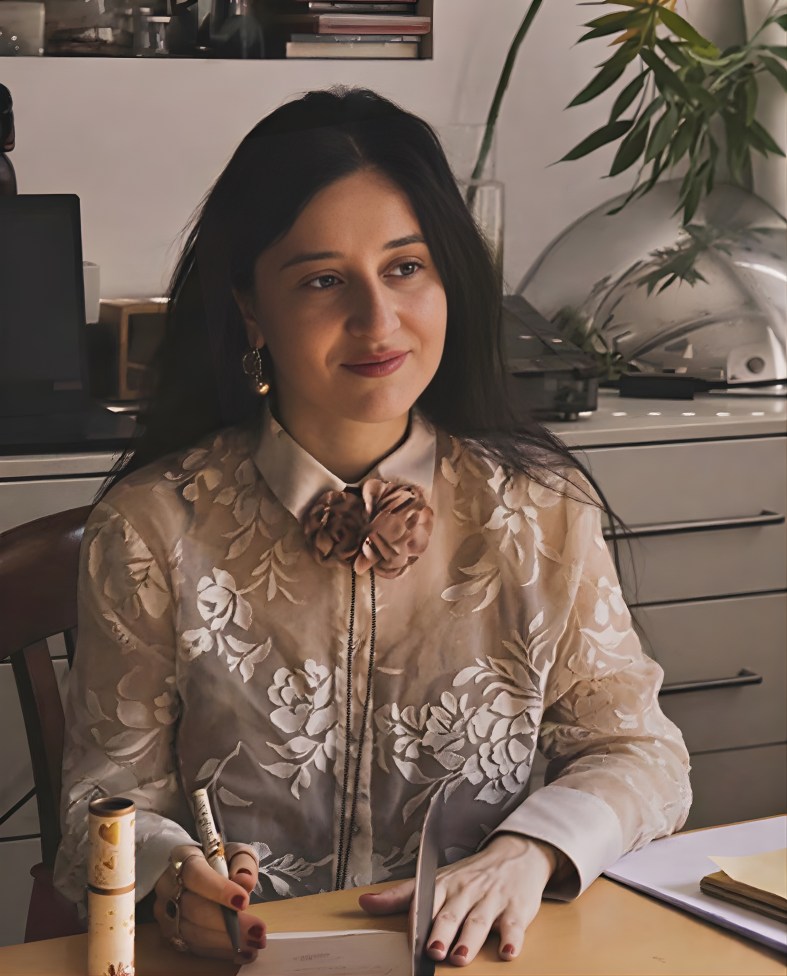
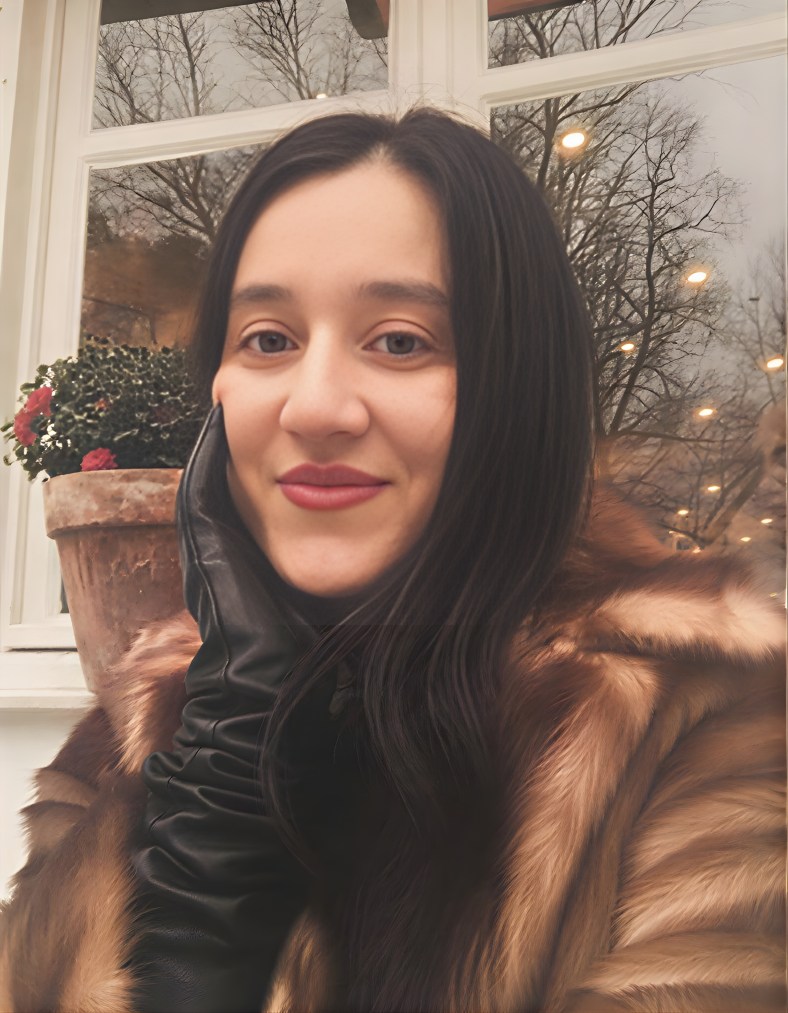
Esen Kunt | Istanbul Nişantaşı University Faculty Member and Author; Founder and Creative Director of Istanbul Deleuze Studies.
Image, Thought, and Film Theory
How do your studies, which center on the relationship between image and thought, establish a theoretical affinity with Gilles Deleuze’s theories of cinema and the image? Laura Mulvey’s concept of the male gaze remains a central reference in film studies. In your view, how should this concept be rethought in the face of digital and post-cinematic images?
I conceive the relationship between image and thought not as a hierarchical link between an image that represents and a consciousness that reads it, but as two thresholds that mutually produce and transform one another. For this reason, the image is not, for me, the visual counterpart or illustration of thought; rather, it is a surface upon which thinking itself takes place—an evental field.
This approach, of course, establishes a direct connection with Deleuze’s texts—particularly Cinema 1: The Movement-Image and Cinema 2: The Time-Image. However, this connection is not so much a mode of reading that applies Deleuze’s concepts as it is a relationship that folds the possibilities of thought he opened toward other directions. Deleuze’s treatment of the image not as a mental representation but as a force operating through the body, space, and time constitutes one of the fundamental thresholds of my work.
I often approach the relationship between image and thought on a cartographic plane. In other words, the image is not an object that carries a fixed meaning; rather, it is a practice of mapping that traverses memory, the body, geography, and time. Deleuze’s notion of the ‘brain-screen’ marks a critical turning point for me: thought is no longer an internal representation but becomes an event that occurs outside—on the surface, on the screen. At this point, the image is no longer a vehicle for thought; it becomes thought itself.
In my own work, I develop this approach particularly through rhizomatic memory, cartographic imagination, and bodily surfaces. I treat the image not as a record that represents the past, but as a passage—continually rewritten—that opens between past and present. This intersects with Deleuze’s understanding of the time-image: a nonlinear, branching, and layered conception of time. For me, however, this temporality is not only cinematic; it is also geological, bodily, and spatial.
For this reason, I interpret the relationship between image and thought less through ‘meaning production’ than through relations of force. What interests me about an image is not what it shows, but what it sets into vibration—which layers of memory, which bodily sensations, and which spatial associations it activates. This orientation leads me not so much to read the image as to think with it, even to observe the image in the act of thinking.
In short, Deleuze’s philosophy of cinema and the image functions in my work less as a reference point than as a threshold for thinking. My effort to remove the image from the domain of representation and approach it instead as a shared surface of thought, memory, and the body establishes a line that both converses with Deleuze and opens toward other directions. I sustain this line as a field of production that moves between text, image, map, and body—fluid, unsettled, and resistant to fixation.
Laura Mulvey’s concept of the male gaze remains powerful because it makes unmistakably clear that the gaze is never innocent—that seeing is always bound up with power, desire, and the body. However, in my view, this concept is no longer sufficient on its own in the face of digital and post-cinematic images. The issue today is not merely who is looking, but where the gaze is constructed, how it circulates, and the extent to which it no longer belongs to any single subject.
In classical cinema, the gaze was largely fixed within a single perspective—anchored in the position of the camera and at the center of the narrative. In digital and post-cinematic images, however, the gaze loses its center. What we now encounter is not merely the gaze of a male subject, but dispersed, fragmented, and plural regimes of vision produced by algorithms, interfaces, platforms, and data flows. For this reason, I believe it is necessary today to rethink the male gaze not as belonging to a stable subject, but as a visual apparatus.
At this point, Deleuze’s understanding of the image becomes decisive for me. The image is no longer an object viewed by a subject; rather, it is a field of force that affects the body, time, and space. In post-cinematic images, the gaze spreads beyond the eye to encompass the entire body—manifesting in scrolling movements, tactile gestures, and repetitive viewing loops. The gaze is no longer purely visual; it transforms into a haptic, temporal, and embodied experience.
For this reason, it seems more meaningful to me today to read the male gaze not merely as a ‘male’ gaze, but as normative modes of looking. Although this normativity may appear independent of gender in digital images, it establishes a regime that re-disciples the body through speed, exposure, transparency, and constant visibility. In other words, the gaze does not disappear; it changes form.
In my work, what interests me about this transformation is not so much reversing the gaze as dispersing it. I engage with images that disrupt the camera’s dominant position, refuse to fix the gaze, and do not place the viewer in a position of comfort. This is less a feminist counter-gaze than a strategy that destabilizes the gaze itself. Here, the image does not satisfy desire; it suspends it, delays it, and leads it astray.
In this sense, post-cinematic images do not invalidate the male gaze; rather, they multiply it, branch it out, and render it less visible. We are no longer speaking of the dominance of a single gaze, but of gazes that intersect, collide, and at times become subjectless. This invites us to ask not so much who wields the gaze, but what the gaze does. For me today, the central issue is this: an image concerns not only whom it belongs to, but also whom it touches. And perhaps the most political question now is not how these images compel us to look, but how they compel us to feel.
Visual Culture and the Agency of the Image
Within the context of W. J. T. Mitchell’s question ‘What do pictures want?’, what does it mean for you to approach visual culture not merely at the level of representation, but as an active and thinking field? How does Hans Belting’s anthropological approach to the image offer a theoretical framework for understanding the historical and cultural circulation of images in your work?
For me, W. J. T. Mitchell’s question ‘What do pictures want?’ became a threshold that radically transformed the direction of how I understand images. This question invites us to move beyond seeing the image as a passive representation and instead to think of it as if it were a subject endowed with desire, demand, and agency. What matters here is not whether images literally ‘want’ anything, but how we come to recognize them as a field of activity.
I approach visual culture not as a display window through which meanings are presented, but as a field in which thought, memory, and the body are set into motion. The image does not merely show something; it calls, compels, unsettles, and delays. Mitchell’s question shifts the focus from ‘What does the image say?’ to ‘What does the image do?’ This is a crucial displacement in my work, because here the image is no longer a representation—it is an event.
At this point, Hans Belting’s anthropological approach to the image provides a complementary theoretical ground for my work. Belting treats the image neither solely as a mental representation nor merely as a material object; rather, he conceptualizes it as an entity that circulates between body, environment, and media. While this approach explains the historical and cultural continuity of images, it also takes into account how they are experienced in embodied ways.My concept of Pellicule Corporalis comes into direct contact with Belting’s line of thought. Here, the body is not the carrier of the image; it is the surface upon which the image takes place. The image inscribes itself onto the body, resonates within it, and is deferred through it. When it comes to cinematic or post-cinematic images, the image no longer resides solely on the screen; it circulates across the skin, within the folds of memory, and along sensory thresholds.
While Belting’s image anthropology demonstrates how images historically change hands and migrate, my interest concentrates on the traces this migration leaves on the body. As images circulate across cultures, they do not merely change form; they also transform regimes of embodied perception. For this reason, visual culture is, for me, not only a domain in which images proliferate, but an ecology in which bodies are recalibrated.
When I think Mitchell and Belting together, the image is no longer a silent object nor merely a text to be read. It becomes an entity that demands, circulates, relocates, and compels us to shift our own positions. In my work, the relationship established with the image aims less at decoding it than at thinking alongside it. Because, to my mind, the image wants this:
Not to be looked at, but to be responded to.
Not to be understood, but to be sustained within the body. And perhaps most of all, to be displaced.
Performativity, Text, and the Body
With the work of Judith Butler in particular, debates on performativity have redefined the relationship between text and body. How do you position performative literary texts within this theoretical framework?
Judith Butler’s notion of performativity fundamentally transformed the relationship between text and body, because it demonstrated that language does not merely represent—it acts. What is spoken, written, and repeated comes to constitute the body, revealing identity, gender, and subjectivity not as outcomes but as processes. This marked a critical threshold for me: the text is no longer about the body; it happens within the body.
I position performative literary texts within the framework opened by Butler, yet by extending it further. I conceive of the text not as a vehicle of expression, but as a bodily event. Writing here is not a structure that carries meaning; it is a sequence of actions that leaves traces on the body, generates rhythm, and organizes breath and time. The reader, in turn, is no longer simply one who ‘reads’ the text, but becomes a body that shifts position along with it.The concept of rhizomatic memory carries this performativity onto a non-linear plane. A performative text is not a structure with a single beginning or end; it is a multi-centered network that connects different temporalities, voices, and bodily sensations. As the text is repeated, it does not become fixed; with each reading, it activates another layer of embodied memory. In this sense, the performative text operates within a regime of repetition, as Butler suggests—but this repetition produces less the reproduction of the norm than a deviation that sets the norm into vibration.
The concept of Pellicule Corporalis defines the surface of the text here. The body is not the carrier of the text; it is the pellicle upon which the text is inscribed. Words come into contact with the skin, spread through the voice, and are cut by the breath. The performative literary text does not exist to be read, but to take place within the body. For this reason, such texts often do not feel complete; they remain open, fragile, and inclined toward incompletion—because the body itself is never a closed whole.
For me, performative literature releases language from representation and places it within a bodily temporality. The text here is not a repository of meaning, but an instruction for movement, a call to gesture, a sensory threshold. The reader does not decode the text; rather, they pause with it, walk with it, wait, and hesitate. In this way, literature ceases to be a silent domain and becomes an encounter between bodies.
In this context, the performative text is also politically significant. Every text written upon the body is simultaneously negotiating with regimes of power, normativity, and visibility. My interest is drawn not to forms that stabilize the body, but to those that displace it—disturbing its comfort and disrupting its rhythm. This constitutes a writing practice that reverses the normative repetitions of Butlerian performativity and opens lines of flight.
Ultimately, for me, the performative literary text is neither merely a literary genre nor simply a theoretical application. It is a form of writing that thinks together with the body.
“The text does the following here: It does not narrate. It touches.
It does not define. It sets into vibration. It does not represent. It happens.
And perhaps most importantly: It remains in the memory of the body.”
Space, Visual Culture, and Poetic Cartography
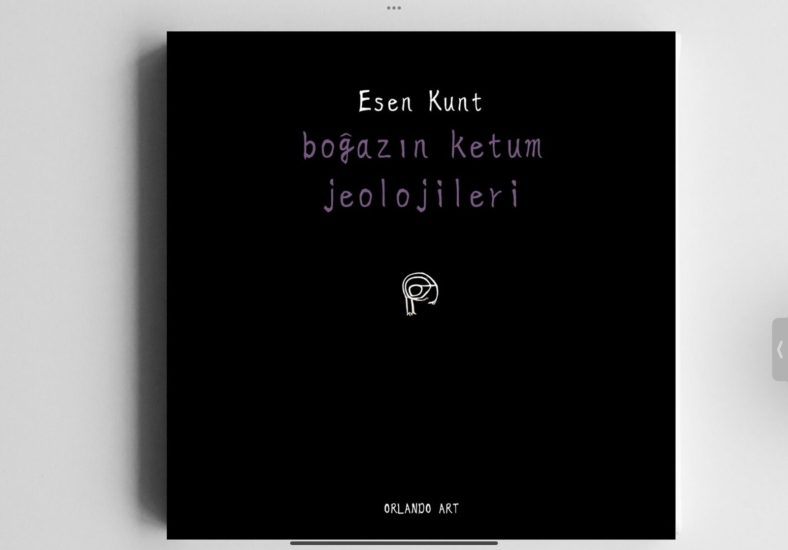
Considering figures such as Edward Soja and Henri Lefebvre, who think visual culture together with space, how does your approach of ‘poetic cartography’ relate to this body of literature? In your work The Tacit Geologies of the Bosphorus, you address space as intertwined with narrative and thought. Is it possible to read this approach alongside Michel de Certeau’s understanding of space and everyday practices?
“To think space together with visual culture does not, for me, mean treating it as a measurable or representable surface. On the contrary, I conceive of space as a process woven through time, memory, and embodied experience. In this respect, Henri Lefebvre’s notion of the production of space and Edward Soja’s concept of Thirdspace mark important thresholds for me, as they demonstrate that space is neither merely a physical nor a mental category, but a domain that is lived, felt, and continuously reconstituted.
However, my approach of poetic cartography establishes less a relation of full alignment with this literature than one of deviation. While Soja and Lefebvre open space through social relations and structures of power, I approach space also as a sensory, fragile, and tacit entity. Poetic cartography is not a map that explains space; it is a practice of drawing that renders perceptible the inner rhythms, gaps, and interruptions of space. The map here is not an outcome. The map is the movement of thought. The line does not impose a boundary; it carries vibration.The Tacit Geologies of the Bosphorus emerged precisely as a result of this approach. I did not treat the Bosphorus as a historical or geographical object, but as a layered memory—an embodied, geological, political, and affective entity. Space here is not the backdrop of the narrative; it is the narrative itself. Stone, water, current, and silence shape the language of the text.
This approach can certainly be expanded—without confining it—by extending the discussion to Giuliana Bruno’s Atlas of Emotion and reading it alongside Michel de Certeau’s understanding of space and everyday practices; indeed, such a reading generates a productive tension. De Certeau’s idea of ‘writing space through walking’ intersects, for me, with the notion of space as a surface of bodily inscription. Yet I do not regard this walking as solely a human-centered practice. In The Tacit Geologies of the Bosphorus, it is not only the body that walks; geological time, currents, sediments, and suppressed memories walk as well.
While de Certeau demonstrates how space is appropriated through everyday practices, my interest lies in how space resists, how it remains tacit, how it never fully discloses itself. Poetic cartography is a practice that respects this reticence. It does not attempt to render everything visible; rather, it deliberately leaves certain gaps and silences outside the map. For this reason, my maps are never complete—because space itself is never complete.
Poetic cartography is not an aesthetic that represents space within visual culture; it is a mode of writing that thinks alongside space. Here, space is not read; it is listened to. It is not merely seen; it is excavated. The map does not orient; it disorients.
And perhaps most importantly, it proposes this:
“Space is not a surface that belongs to us;it is a memory through which we pass.“
The Digital Image, Circulation and the Archive
In the context of the circulation of digital images, Hito Steyerl’s concept of the ‘poor image’ makes visible not only the loss of resolution, but also the historical and spatial layers of images. Within your approach of poetic cartography, what kind of intellectual and aesthetic possibility does this ‘impoverished yet dense’ state of the image offer?
Hito Steyerl’s concept of the ‘poor image’ is highly significant for me because it demonstrates that digital images are not merely copies degraded by a loss of resolution; rather, they are entities that intensify, accelerate, and leave traces through circulation. As the poor image loses visual quality, it gains historical and spatial weight. In a sense, the more the image relinquishes resolution, the closer it moves toward memory.
In my approach of poetic cartography, this ‘impoverished yet dense’ image is not an object to be represented, but a line of circulation to be mapped. The image’s loss of pixels is not, for me, a deficiency; it is the way layered time rises to the surface. Low resolution strips the image of smoothness, producing cracks, gaps, and delays. It is precisely within these fissures that the image begins to think.
A sentence I frequently return to from The Tacit Geologies of the Bosphorus in this context is this:
“Blur is sometimes not the absence of vision, but the density of memory.”
Steyerl’s poor image operates in my poetic cartography as a trace in displacement. The image does not belong to a fixed location; it circulates between screens, loses context, and reconnects. This circulation renders the image less archivable and more experiential. The map here is not a collection, but a network of passages.
When considering questions of the archive, memory, and layered temporality in visual culture, at which points does Georges Didi-Huberman’s approach to the image intersect with your work?
At this point, a strong intersection emerges with Georges Didi-Huberman’s understanding of the image. Didi-Huberman never conceives of the image as a completed whole; for him, the image is a remnant, a shell, a burn mark. It does not represent the past; it carries the wound that the past continues to open in the present. This approach directly resonates with my conception of rhizomatic memory.
Following what glimmers in the dark—what remains unsaid, what is unseen—has profoundly shaped my methodologies of writing and thinking with both passion and insistence. I am, moreover, an ardent and even obsessive reader of Didi-Huberman’s texts—devoted enough to follow the trail of the fireflies.
Didi-Huberman’s relationship with the archive is particularly decisive for me: the archive is not a sealed repository of memory, but a structure that continually reopens, leaks, and remains incomplete. Poetic cartography is concerned precisely with this leakage. The image does not freeze within the archive; on the contrary, it displaces the archive.
In this context, Pellicule Corporalis offers a critical threshold for thinking about the embodied dimension of the digital image. The poor image is not merely a file circulating across screens; it is a vibration that resonates within the body. The condition of ‘survival’ that Didi-Huberman seeks in the image acquires here a form of embodied continuity. The image may lose resolution, yet it does not lose its bodily impact. As I often emphasize in my texts and visual works:
“The more the image becomes impoverished,the closer it moves to the body.“
For this reason, the circulation of digital images is not, for me, a story of loss, but a geography of intensified memory. Steyerl’s poor image and Didi-Huberman’s residual image converge in poetic cartography: both read the image not through lack, but through its capacity to survive. Ultimately, in my work, the digital image is not data to be archived, but a layered sediment of time. It is not mapped; it is traced.
It does not represent; it wounds. And perhaps most importantly, it reminds us of this:
“Even in its poorest state, the image continues to think.“
Theoretical Communities and Interdisciplinarity
How do the discussions carried out under the umbrella of Istanbul Deleuze Studies provide a theoretical opening for visual culture, cinema, and philosophy studies in Türkiye?Rosi Braidotti approaches interdisciplinarity as a mode of thinking that transcends anthropocentric regimes of knowledge while carrying ethical and aesthetic dimensions. In your work—particularly in The Tacit Geologies of the Bosphorus—which brings academic production into dialogue with creative writing, mapping, and aesthetic experience, what kind of intellectual and productive positioning does this posthumanist interdisciplinarity represent for you?
The most significant contribution of the discussions conducted under the umbrella of Istanbul Deleuze Studies to visual culture, cinema, and philosophy in Türkiye lies in approaching Deleuze not as a ‘theoretical authority,’ but as a practice of thinking. Here, Deleuze does not offer a closed system of concepts; rather, he creates an open intellectual field that circulates across disciplines, branches outward, and comes into contact with local experiences. Such a theoretical community functions by decentering theory. As cinema, visual culture, architecture, literature, and philosophy become articulated with one another under this framework, concepts lose their fixed meanings; they shift, relocate, and become re-embodied. In a city like Istanbul—dense with historical, political, and geological layers—discussing Deleuzian thought in this way prevents concepts from remaining abstract, bringing them instead into contact with space, the body, and everyday experience.
For me, the primary space opened by Istanbul Deleuze Studies lies in transforming theory from an individual domain of expertise into a collective ground for thinking. Within this terrain, theory is used not to explain, but to think together, to deviate, and to take risks. This, in turn, offers visual culture and film studies in Türkiye a perspective oriented toward becoming, process, and force—one that moves beyond representation-centered readings. Additionally, there is a long-developed project of mine—emerging from my postdoctoral research, which will begin operating interdisciplinarily in 2026. Let us simply say that it is a multilayered initiative through which we will establish significant entanglements among architecture, contemporary art, visual culture, literature, performance arts, and, of course, philosophy—very soon.
At this point, Rosi Braidotti’s understanding of interdisciplinarity as a posthumanist ethical and aesthetic practice provides a highly formative framework for my own work. Braidotti conceives interdisciplinarity not merely as a passage between methods, but as a positioning that transcends anthropocentric regimes of knowledge. The issue, then, is not simply to place different disciplines side by side; it is to rethink, together, the subject who produces knowledge, the body, and the world.
The Tacit Geologies of the Bosphorus can be read as a work in which this posthumanist interdisciplinarity becomes concrete. In the text, the human is not the center of the narrative. Geological layers, currents, stone, sediment, and silence become active components of thought. Writing here is not a human story, but a field of encounter with nonhuman forces. This approach, as Braidotti suggests, renders thought not only a critical practice, but also an ethically responsible one.
When I think of academic production as intertwined with creative writing, mapping, and aesthetic experience, interdisciplinarity becomes for me not a method, but a mode of existence. Text, map, and image do not explain one another; they displace one another. This disrupts the linear progression of knowledge. In The Tacit Geologies of the Bosphorus, the map does not represent geography; it thinks alongside writing. Writing does not explain; it excavates.
In this context, posthumanist interdisciplinarity signifies, for me, the redistribution of thought—no longer as an activity belonging solely to the human mind, but as something dispersed among bodies, materials, spaces, and images. This distribution is as much an aesthetic gesture as it is an ethical choice. For a mode of thought that does not place the human at the center is also one that is more attentive, slower, and more responsible.
Ultimately, theoretical communities such as Istanbul Deleuze Studies and Braidotti’s posthumanist interdisciplinarity converge in a shared space within my work: theory here is not a closed domain of knowledge, but a common ground opened by thinking, writing, and mapping together.
And perhaps most importantly, it reminds us of this:
“Thought is never produced alone. It gathers, circulates, and transforms— toward what shimmers in the dark.“
I would also like to thank you for these thoughtful and evocative questions; it is truly valuable for us, as a journal, to be part of this collective project. I extend my gratitude to the entire team for their meticulous and dedicated work.

 prcarnetworld.com