
INTERVIEW SUBJECT: I’M WHERE THE BUTTERFIELS SLEEP MOVIE AND CINEMA CULTURE

How did you decide to shoot the film I’m Where the Butterflies Sleep? What gives you inspiration?
I’m Where the Butterflies Sleep is the last film of our trilogy, the first film is Karla, he second is The Stain of the Soul; My inspiration for all three films was my daughter Karla, she was 9 years old when we shot the first film, in the last film we watch Karla, who continues her life journey at the age of 14; in this process that I observed, the changes both in our country and in the world led us to a production process where we also blended our own stories. All three films turned into original scripts written by screenwriter Nafıseh Laleh, based on my own stories, and each of us tried to express our own experiences and feelings through the characters we created.

Can you tell us about the movie you directed called I’m Where the Butterflies Sleep? What does the movie say and what is the message you want to emphasize in the movie?
In a process where a 14-year-old girl wants to reach herself and invest in her future; starting with her visit to her aunt living on the island; the connections and connections the islanders have with themselves and each other; comparing it with the themes of belonging, deterritoriality, and rootlessness; we tried to handle reality with our fairytale-like cinematography. In the previous two movies, we witnessed the loneliness of the characters in their life journeys and their relationships with their environment. In this last film, just like in the first film, we try to make the audience feel the decisions Karla needs to make while questioning what she needs to do in her life journey, by emphasizing the deep loneliness in all three films.
In your opinion, what should be the most important characteristic and professional philosophy of a film director?
It is a very difficult question and one that I will have difficulty answering even if it is thought about and discussed at length; however, the most important characteristic of a film director is the ability to use visual intelligence and visual awareness, and the sharpness of visual expression must be strong; it is very difficult to master the entire filmmaking process, each stage of this process requires meticulous, disciplined and patient work, and if one of the links is missing, the process and its continuation become very difficult. The professional philosophy of the director should be to contribute to the change of society and the development of the audience by making them think and feel with the stories they tell, beyond artistic concerns.
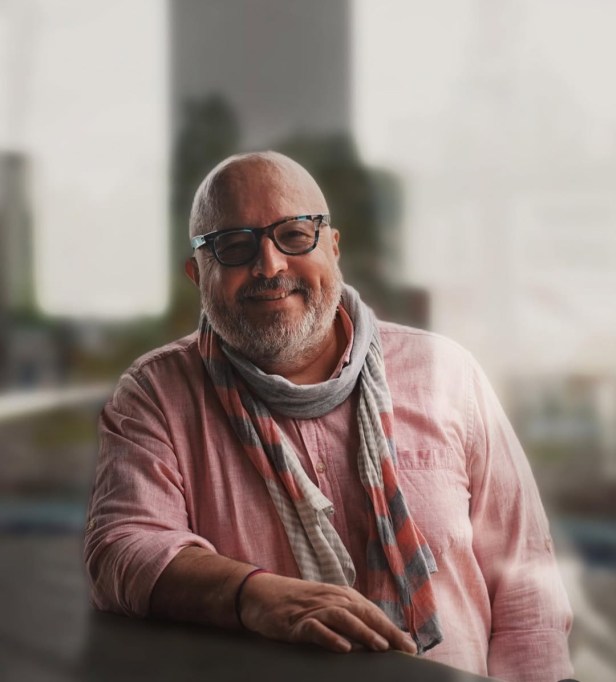
What are your thoughts about Turkish Cinema today? What would you like to say when you compare it with Yeşilçam cinema in terms of technique and content?
Naturally, developing technology and digitalization have also brought about a major transformation in film production techniques. Developments in image technology continue to fascinate the audience on the cinema screen; We watch films with very strong production techniques, but how the content makes anyone happy is always debatable; The social, individual, socio-economic and political dilemmas experienced, future anxiety, our anxious, restless and unhappiness, or the way we exist in different levels of life have transformed the audience; I think we have moved away from art and cinema as good viewers. Unfortunately, the harsh and unfair criticisms we feel in every environment without trying to understand are reflected in the content of the films and the production process; we have forgotten how to love and value… I prefer to live in that naive and warm atmosphere of old Yeşilçam movies. We are one of the rare societies that think the past is better than the future… In today’s cinema, every movie has a problem; the director is addressing the audience from his own world; it’s up to the audience whether you listen or not.
Do you think that popular culture affects filmmakers and the film industry? How do you interpret the presentation of a much-loved movie or series to the audience with similar scenarios? Do you think this overshadows the problem or message addressed in the film?
Is there any sector left that has not been affected and poisoned by popular culture? Unfortunately, the cinema sector, especially the mainstream, has had more than its share of this. Instead of fighting, there is a problem of a sector that adapts to and even supports the negative changes in society. Whenever you try to explain violence, discrimination and marginalization and put the priority of making it popular and interesting before the ethical stance, you are already at the end of your rope… When adapted films and TV series are presented to the audience from a different perspective, they can be interesting with the director’s aesthetic understanding and stylistic differences.

Do you think documentary film production is given importance in Turkey? What can be done to bring documentary films and series to the forefront? What can be done to increase the documentary cinema culture of Turkish audiences?
With the spread of digital platforms, documentary films have gained the opportunity to be screened, documentaries that were previously mostly able to meet their audiences at festivals can now reach a wider audience, documentaries have their own audience; In order to reach this more conscious, interested and aware audience, highly qualified documentaries are being produced today, and fictional documentaries can be increased in order to reach an even wider audience. There is nothing more valuable than the detailed examination of culture, history and recent history, and scientific analysis of facts based on documents. It is extremely important to transfer the pure, unmanipulated reality to today’s and future generations, and this can be created with quality documentaries against all kinds of disinformation. The more broadcasters and documentarians can bring together their productions with viewers, the more effective they will be, but of course this ideal; Media ownership, political order and structural chaos in societies cannot allow the truth to be revealed, and it does not seem like they will. There is a need for an alternative, independent, strong but cultural strategy and perspective that can contribute to the development of every layer of society by distancing itself from the mainstream media, mainstream broadcasters, mainstream festivals and in short, every mainstream structure…

What do you think about the work of RTS students? How can they improve themselves in terms of creativity, technique and content?
RTS students receive both theoretical and practical training, the main problem here is that there are too many faculties and students trying to provide the same training, not all students can receive the same practical training under the same conditions, the most important issue in our disciplines is to be able to transform the theoretical training received into practical training, when this can be achieved, we observe that our students are much more successful in their professional lives in the future. It is also a pleasure to see that many of our students and recent graduates produce successful works in the form of short films, documentaries, music videos, etc. It is also very sad to see that they are lost in the chaos within the industry after years. The only way for students to improve themselves in terms of creativity, technique and content is to produce. Of course, course curricula that need to be constantly updated and the sustainable support of faculty members who are experts in their fields are also issues that should be given importance.

What do you think about the state of independent cinema in Turkey? What can be done to popularize independent cinema? What are the difficulties experienced by independent filmmakers?
Independent filmmakers have never had the means to make films; Although being independent may seem very attractive and appealing at first, it means a tough struggle against impossible odds from the very beginning; however, I am a director who approaches independent cinema from a free cinema perspective, in other words, what the sector understands from independence is not a budgetary situation, it is very difficult or even impossible to produce and make a feature film with a low budget, but good relationship management and being able to meet the right people at the right time always brings success. For the development of independent cinema, the support of universities, local governments and relevant organizations of the business world that provide this education is needed more, we need the artistic trust and interest of institutions and organizations that will not interfere with the content of the productions.
 prcarnetworld.com