
Is bilingual journalism for you merely a method of communication, or is it also a matter of identity and representation?
Bilingual journalism is deeply tied to my identity. As an Ecuadorian video journalist living in New York, being bilingual allows me to tell stories that often go unheard—stories of people who navigate two languages and two cultures. It’s not just about translating words; it’s about representing lived experiences and ensuring that our communities are accurately portrayed, while also highlighting narratives that are often overlooked.
What role does language play in visual storytelling? How do you develop methods to transcend linguistic boundaries?
Language is essential when connecting with the people you’re interviewing—it helps you understand them better and even relate to their story. But visual storytelling allows us to go beyond words; it becomes a universal language. The power of video lies in showing a story in a way that allows viewers to connect with characters, even if they don’t speak the same language.

What kind of connection do you draw between bilingual journalism and documentary filmmaking?
For me, the two are inseparable and work hand in hand. Documentary gives me the space to explore stories in depth, while bilingual journalism lets me represent my community. Both require trust, empathy, and immersion in the context of the story, as well as connecting with the people involved.
Creating multilingual content requires more than just a technical skill. What kind of ethical or cultural responsibility do you believe it entails?
Regardless of language, I believe it’s essential to stay true to what your sources are saying and to their lived realities. When translating, writing, or editing, I always ask myself: Am I keeping the context intact? Could this harm the person or community involved? Am I portraying them fairly? That ethical responsibility is always present.

When telling stories in different languages, is it more important to remain faithful to the spirit of the language or to universal narrative structures?
I don’t believe there’s a single universal narrative structure. There are many ways to tell a story, and as a storyteller, you need to understand your subject to determine how best to tell it. Every story, character, and context is different. So rather than forcing a formula, I prioritize preserving the spirit and authenticity of the story.
How do you manage the processes of translation and subtitling in your multilingual projects?
If the project is in Spanish, I usually do the translation and subtitling myself. I try to maintain the richness of the language, knowing that some expressions may not directly translate. When working in other languages, it’s important to collaborate with someone who understands the language and can provide an accurate, culturally aware translation.
How does this linguistic diversity affect the global circulation of your stories?
Being bilingual is definitely an advantage—it allows me to collaborate with a wider range of publications and outlets and to shape stories for different audiences. It’s also helped me understand how to tailor storytelling styles based on whom the viewer is.
For you, is documentary filmmaking a transmission of reality or a form of creative reconstruction?
I think it’s both. It’s a transmission of reality, but with your vision as the filmmaker. Documentaries allow for creativity and deeper emotional connection while staying rooted in truth. As long as you’re honest with the facts and the people involved, you can bring in creative elements to strengthen the story—otherwise, it becomes fiction.
When choosing your subjects, do you look for a personal connection, or are you more guided by societal needs?
You need to feel connected to a story to tell it well—not necessarily on a personal level, but emotionally and intellectually. That connection helps you invest the time and care the story deserves. At the same time, I also ask myself: Why this story? Why now? What impact can it have? That’s where societal relevance comes in.
What are some of the most difficult ethical dilemmas you’ve faced during fieldwork?
One challenge is deciding whether to include moments of vulnerability—moments that might make a story more powerful but could leave someone feeling exposed. I ask myself: Is this adding something meaningful, or is it just emotional drama? Another dilemma is knowing when to protect someone’s identity and making sure they understand what it means to be on camera or have their name shared.

Compared to classical cinematic language, how would you define the unique expressive power of documentary?
Documentary is cinema—there’s no doubt about it. It might be less polished sometimes, but the goal is the same: to tell a compelling story that connects with audiences. The difference is that documentary is grounded in real life. There’s room for imperfection, but that doesn’t make it any less powerful or cinematic.
Among your projects so far, which story has impacted you the most, and why?
Two projects stand out. One is a short documentary I made about migrant families from Ecuador who journeyed to New York. It opened my eyes to the reality so many face—not just the struggle to arrive, but the continuous challenges they face even after getting here.
The second is a school documentary I did about a local drag artist in Astoria. It explored themes of family, grief, and chosen community. It helped me discover a world full of resilience and passion, and I learned so much from this artist and their journey.

What themes tend to stand out in your documentaries—such as migration, identity, or social struggles?
I’m drawn to stories about identity, gender, and migration—especially within the Latin community. I find power in stories of people who are finding or rebuilding themselves. Those narratives are deeply human and universally resonant.
What is your process of developing a project—from the moment you first conceive the idea to the final edit?
It varies depending on the project. For short stories, I usually start with a question or something I’m curious about. I research, identify potential sources, and start interviewing. After filming, editing is my favorite part—it’s where everything comes together, like solving a puzzle. For me, it’s the moment where the heart of the story really takes shape.
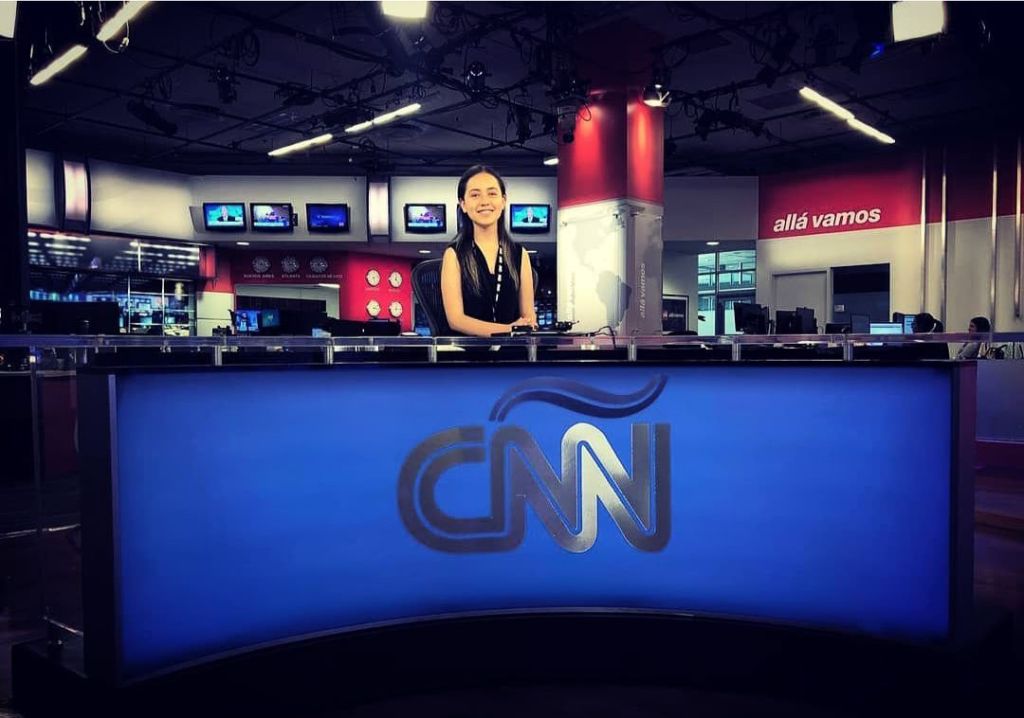
How has your experience at CNN en Español contributed to your independent projects?
It was my first real experience in journalism, and I see it as my school. It taught me how to structure a story, how to shape it in a way that connects with people. I covered stories from many different communities, which made me even more passionate about storytelling. That experience definitely pushed me toward pursuing documentary filmmaking more seriously.
 prcarnetworld.com