
Interview Series: “The Ecology of Narrative Between Writing and Nature”
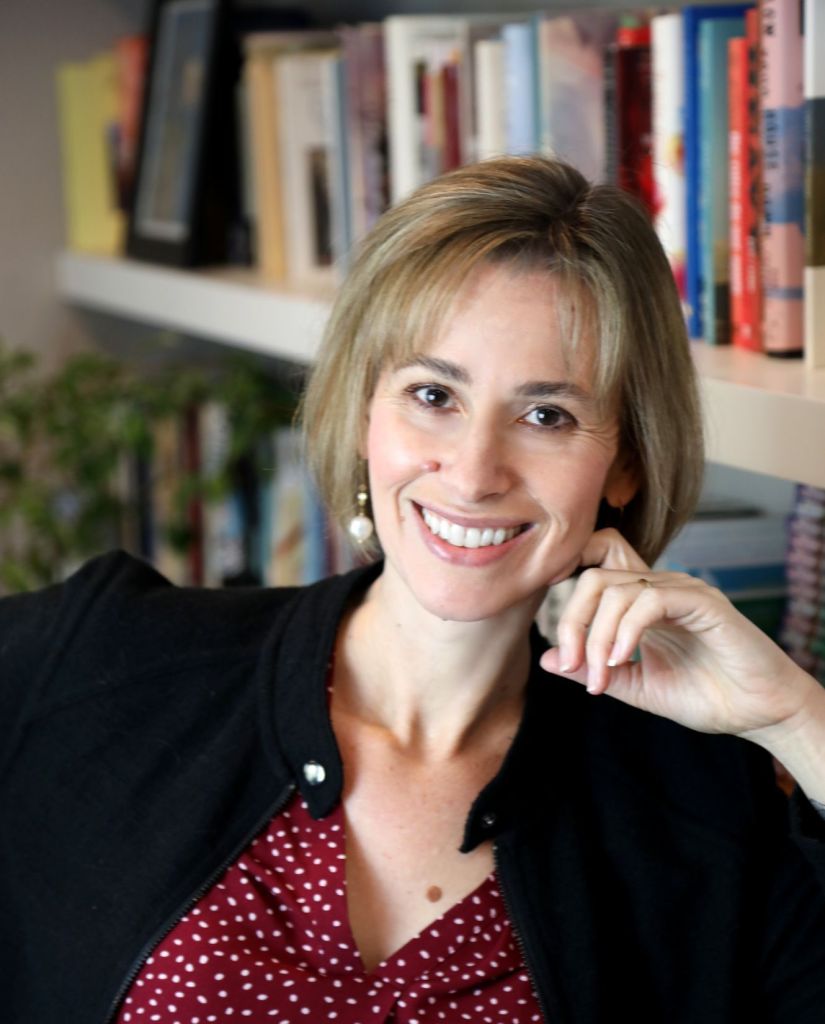
You mentioned that Fallout was the result of a nine-year-long effort. Which phase of this process was the most challenging for you?
I didn’t write it in one pass. It was a process of starting and stopping as the ideas unfolded, and I made time in between my work and childrearing. I think the hardest part was figuring out how I was going to bring the story to a satisfying conclusion without being predictable, or too complicated or stretching plausibility.
How did you craft the psychological connection between Justine’s involvement with the eco-anarchist group and the loss of her child?
The character of Justine already has a connection to the eco-anarchist group before the loss of her child, but it seemed to clear to me that as a character who has suffered her worst fear and greatest loss, she now has “nothing to lose” in a sense. So it made sense that she is now freed in a new way to pursue this group that takes huge risks in pursuit of their goals. But it’s all, in its own way, a part of her avoiding her grief. The book is essentially trying to get her to face that grief.

The novel questions the “dirty” decisions that environmental movements sometimes must make. Do you think activism inherently involves such moral grey areas?
I don’t think of activism as requiring moral grey areas, per se—I think of it as answering and addressing the moral gray areas of larger systemic issues and systems of power that dominate. To undermine systems of power of means to “look” morally grey when really it’s that they’re forced to sidestep traditional, societal and even sometimes “legal” means of achieving their ends because they don’t have the power.
What kind of sensitivity did it require to address ecology and motherhood together?
I wrote from my own experiences as a mother (while not one who experienced child loss directly, I could quite easily connect to that feeling), and as someone watching climate change ravage my own state and the World. Where other kinds of “sensitivity” came to play was to make sure I wasn’t representing anyone of a different race or experience in a harmful way, so I engaged a sensitivity reader.
Your nonfiction books, especially Make a Scene and Writing the Intimate Character, focus on scene creation and character depth. Which of these techniques did you particularly try to implement in your novel Fallout?
I’ve written about writing craft and taught writing for over 20 years, so I think I’ve pretty much internalized these concepts now. Thus I’m not “focusing” on these particular techniques as I write—the story is just playing out in my mind. I think, if anything, I’m starting to focus more intentionally at the sentence level lately, however, as I feel I have the others pretty dialed in.

Your upcoming book, The Sound of Story, focuses on voice and tone. What aspects did you pay attention to when crafting character voices in Fallout?
It was important to me that the characters sounded unique, different from one another, particularly my three main co-protagonists, but also the many women of Project Nemesis. So, for example, I made Zoe a little more terse and to the point, and Justine more longwinded, and Hannah to sound like her youthful age. I tried to think about their lexicon and syntax given their experiences and jobs, etc. But I wrote Sound of Story after Fallout (Though I have been teaching courses on the topic).
Your novel highlights issues faced by low-income and Black communities in the context of environmental justice. What motivated you to include this theme in your fiction?
I credit my parents for always caring about justice of all kinds, and for raising me with maybe a little more awareness than the average person in my position. I also credit a lot of activists and writers that I’ve been exposed to over the last say 15-20 years for having really taught me how to fill in gaps in my own white privileged knowledge. But also reading. When you read widely and by people of all ethnicities and life experiences, it hopefully expands your mind to look at the realities of injustice all around us.

What narrative possibilities did writing an ecological crisis story through a journalist character offer you? How do you think a journalist character adds depth to an ecological crisis-themed narrative?
Well, I think writers are always creating ciphers for the experience of being a writer and I am a journalist, though not an investigative one like Justine, so it wasn’t a total stretch. I needed her to be persistent, someone who doesn’t give up easily, who has tenacity and strives for the truth. Journalism worked on several levels. It also gave her a way “in” to a group that otherwise would probably never have accepted her.
How did you maintain long-term creative motivation while writing your novel? Did your book, A Writer’s Guide to Persistence, serve as a guiding resource during this process?
Long term creative motivation is a process of coming back to my writing practice again and again. In in fact, part of what it means to me now (at nearly age 51) to be a writer is that: you start and stop, and start and stop, and sometimes the stopping goes on longer than before, but I have always always returned to it. I think A Writer’s Guide to Persistence was one of the ways I came back to my writing after my son was born (he’s now 17).
You have taught creative writing courses through the University of Oslo and Brown University’s summer program, as well as teaching online classes and keeping the Substack newsletter, Writing In the Pause. How do you discuss novel writing alongside technical writing practices within these platforms? How do they complement each other?
I teach many aspects of novel writing through my classes, and through my writing books. My Substack blog is where I process aspects of writing craft and personal experiences at the same time, hopefully in ways that keeps it from being dull. I like to talk about process almost more than craft these days, because I’ve grown very interested in the different ways we approach writing, and how we can keep ourselves creatively fulfilled even when so many terrible things are going on in the World around us.

In case you would like it, here is my most current bio:
Jordan Rosenfeld is author of seven books on the craft of writing including How to Write a Page-Turner, the bestselling Make a Scene, Writing the Intimate Character, A Writer’s Guide to Persistence, Writing Deep Scenes and Write Free. She is also the author of three novels Fallout, Forged in Grace and Women in Red. Jordan’s articles and essays have been published in hundreds of publications, such as The Atlantic, LitHub, The New York Times, The Rumpus, Salon, and Scientific American. She teaches online writing classes and at numerous writing conferences, such as the Writers’ Digest Conference, the San Francisco Writers Conference, and the Redwood Writers Conference. She is a freelance manuscript editor and writing coach, and author of the popular Substack, Writing in the Pause. http://www.jordanrosenfeld.net
 prcarnetworld.com