
Interview Series: Sociology of Communication, Public Relations, and Digital Transformation | Interviewer: Gokhan Colak

Theoretical Positioning and Interdisciplinarity
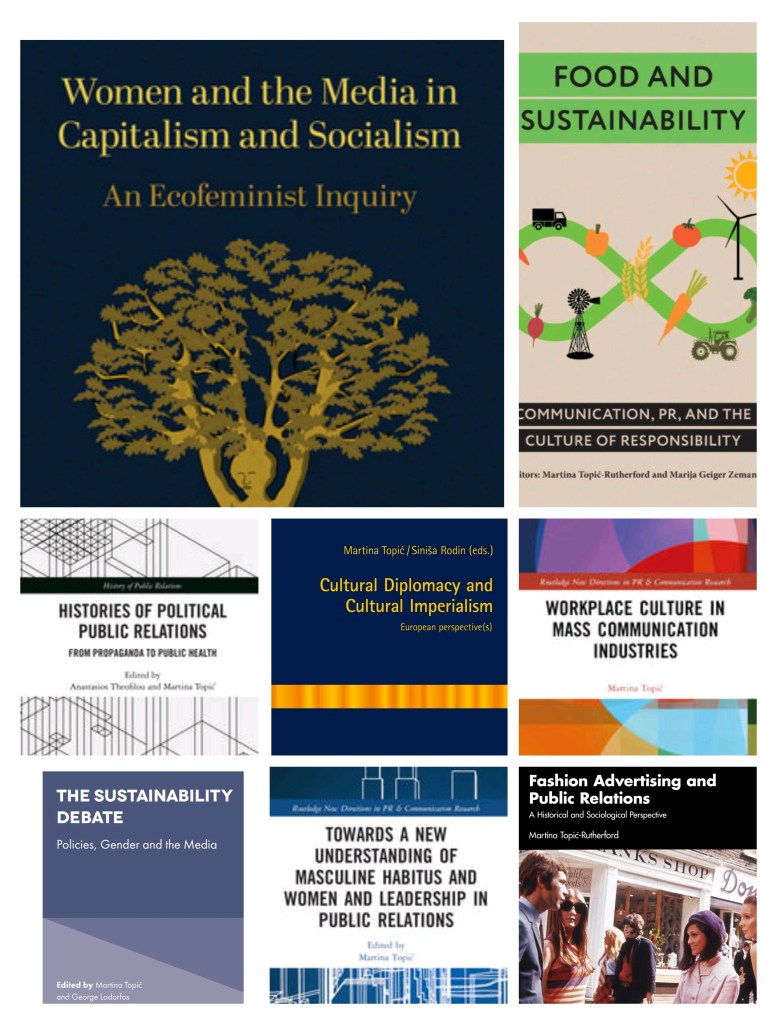
Your book Workplace Culture in Mass Communication Industries approaches communication sectors through a sociological lens. Why is it crucial to place cultural analysis at the center when seeking to understand mass communication industries?
Mass communication industries do not merely produce messages; they produce meaning, legitimacy, and social hierarchy. A purely managerial or instrumental approach cannot explain why certain actors rise, why certain styles of leadership are normalized, or why certain communicative behaviors feel “natural” within organizations.
Cultural analysis allows us to see communication industries as fields structured by power relations, symbolic capital, and historically sedimented practices. Organizational culture is not a decorative layer; it is the mechanism through which legitimacy is distributed and professional belonging is regulated. Without cultural analysis, we misunderstand how authority is constructed and how inequality persists even in seemingly progressive sectors.
There have been ongoing critiques suggesting that historical and sociological perspectives are still underutilized in public relations research. How do you assess the theoretical maturity of the field today?
The field has matured methodologically, but theoretically it remains uneven. There is strong empirical output, yet historical and sociological grounding is still underdeveloped.
Public relations research often emphasizes effectiveness, strategy, or stakeholder management, but less frequently interrogates the structural conditions that shape the profession. Concepts such as legitimacy, capital distribution, field struggle, and habitus allow us to move beyond surface-level analysis and examine the profession as a site of power reproduction. Theoretical maturity requires reflexivity, asking not only what PR does, but what social order it sustains.

Masculine Habitus, Power, and Leadership
In Towards a New Understanding of Masculine Habitus and Women and Leadership in Public Relations, you construct a Bourdieusian framework. Is “masculine habitus” one of the most invisible yet powerful mechanisms operating within contemporary organizations?
Yes, precisely because it is invisible. Masculine habitus operates not as overt discrimination but as embodied normativity. It shapes expectations around confidence, decisiveness, emotional restraint, and leadership style. These dispositions appear neutral, yet they are historically coded.
What makes masculine habitus powerful is that it functions as doxa, as common sense, and a taken-for-granted knowledge. Women entering leadership roles are often evaluated against criteria they did not design and that are presented as universal. The violence here is symbolic, not explicit, which makes it harder to contest.

Despite the strong presence of women in the public relations sector, inequalities persist in leadership positions. How might this paradox be explained through the structural distribution of capital?
Numerical presence does not equal capital ownership. Women may dominate numerically in public relations, but leadership requires access to social capital (elite networks) and symbolic capital (recognition as legitimate authority). These forms of capital remain unevenly distributed.
Additionally, women are often concentrated in relational or communicative roles that generate social capital for organizations but not necessarily symbolic capital for themselves. The paradox reflects structural asymmetry in capital conversion.
Diversity discourse within organizations often remains a normative ideal rather than a lived reality. Do you believe institutions can generate genuine transformation at the level of habitus?
Institutional change is easier at the level of policy than at the level of habitus. Habitus is embodied history. It changes slowly and often unconsciously. Diversity initiatives can alter representation, but unless they shift what counts as legitimate authority, confidence, or professionalism, they leave the underlying structure intact. Transformation requires altering evaluative criteria, not simply who occupies positions, but what dispositions are rewarded.

Social Capital and Organizational Culture
Your research demonstrates that organizational culture is produced not only through formal structures but also through everyday practices. How should we rethink the relationship between networking and professional belonging today?
Networking is often framed as an individual strategy. Sociologically, it is a mechanism of boundary maintenance. Belonging emerges through shared codes, ways of speaking, interacting, and signaling competence. Networking events reproduce culture not only by exchanging contacts but by reinforcing dispositions. Professional belonging today is less about formal membership and more about symbolic alignment. Who “fits” remains a deeply cultural judgment.
With the rise of hybrid and remote work models, is the reproduction of organizational culture becoming more difficult, or are we witnessing the emergence of a new form of professional habitus?
Both. Hybrid work disrupts informal reproduction of culture, spontaneous encounters, embodied observation of leadership styles, and subtle cues of legitimacy. However, it also generates a new digital habitus. Visibility now operates through responsiveness, digital fluency, curated presence, and written communication style. Capital is accumulating differently. We are witnessing the reconfiguration of symbolic capital, not its disappearance.

Media, Capitalism, and Gender
Women and the Media in Capitalism and Socialism compares representations of women across different economic systems. Do you still observe traces of these models within today’s global media environment?
Yes, but in a hybridized form. Capitalist media continue to commodify femininity, linking empowerment to consumption and visibility. Yet traces of collectivist narratives persist in discourses of solidarity and structural critique. Global media now operate within platform capitalism, where algorithms amplify certain gendered performances. The ideological distinction between capitalism and socialism is less rigid, but gender remains mediated through economic logic.

CSR, Environment, and Communication Ethics
In Corporate Social Responsibility and Environmental Affairs in the British Press, you draw attention to the ideological dimensions of environmental discourse. To what extent is corporate sustainability communication ethical, and to what extent is it strategic?
Sustainability communication is rarely purely ethical or purely strategic. It exists within institutional pressures such as reputational management, regulatory compliance, and stakeholder expectations. The ethical question becomes one of alignment. When sustainability discourse reproduces growth imperatives without structural change, it remains strategic. When communication acknowledges limits, trade-offs, and systemic transformation, it approaches ethical practice. The ideological dimension lies in how environmental responsibility is framed, as moral obligation or competitive advantage.
The Future: Intersectional Crises and the Transformation of Communication
Your forthcoming work focuses on intersectional crises such as gender, climate, and migration. What major fault lines do you believe will shape communication research over the next decade?
Three major fault lines are emerging: Legitimacy under algorithmic governance (how authority is constructed in digital infrastructures). Intersectional precarity (how gender, race, migration status, and class intersect within communication labor).
Trust erosion and epistemic instability (the fragmentation of shared realities). Communication research should move beyond tactical analysis toward structural sociology of knowledge, capital flows, and institutional legitimacy.




 prcarnetworld.com
Leave a comment