
Media and Reality: Critique of a New Era A Pr Carnet World Interview Series
1. Academic Background and Motivation
What initially motivated you to work in the field of media literacy and combating misinformation?
My primary field is Media Studies, and in the fall of 2016 I taught an Introduction to Media course that included working on media literacy. I created an in-class assignment to help students evaluate and identify different kinds of online media sources, from fake news and clickbait to satire and political reporting.
I posted that assignment online asking my peers for feedback and it went viral! However, when some news organizations picked up the story, my in-class assignment turned into a “fake news list”! I realized that if such a silly thing could be reported on so wrongly by reputable organizations, it’s going to be an uphill battle for them—for everyone, really—to responsibly engage with media.
Your project “List of Fake News Sites” gained significant public attention. Could you share the motivation behind it and the academic/social impacts it had afterward?
After my work went viral I tried really hard to make it a stand-alone resource or a more public-facing document to help people. I better defined terms, expanded the list of sources, and added tips for evaluating sources. A number of libraries added it to their collections as a resource. Eventually the document expanded to over a thousand different sources with the help of some awesome librarians, and it became a dataset for researchers to use when examining fake news and mis/disinformation sources and networks. Now, that dataset has been folded into other, larger datasets that are more consistently updated to help people analyze these kinds of sources.
Personally, I’ve turned more toward understanding how people engage with mis/disinformation, how it travels from fringe to mainstream social media platforms, how hands-off rules and regulations by both platforms and governments enable its spread, and how reputable news organizations sometimes play a role in amplifying and laundering it for wider audiences.
2. Fake News, Disinformation, and Digital Media
After the 2016 US presidential elections, the term “fake news” became widely discussed. Do you think this term still holds meaning today, or has it become diluted?
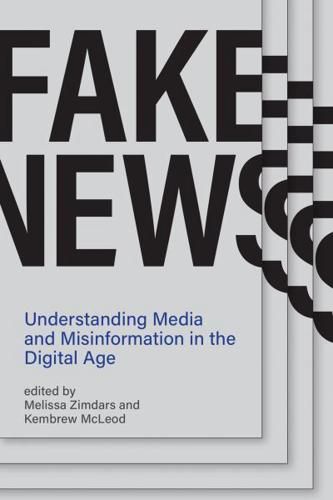
I never found ‘fake news’ to be particularly helpful. In Media Studies, we previously used the term to talk about satire and other comedic forms of news. But around 2016 it became a kind of catchall for problematic content rather than a specific kind of quickly produced false content that mimicked the style of news. Now, non-satirical ‘fake news’ is typically considered a kind of mis/disinformation alongside things like political propaganda, pink slime websites (political sites that look like local news sources), and other types of sources that primarily produce content to persuade rather than to inform.
How does the decline in trust toward traditional media and the rise of social media as a primary news source affect efforts to combat disinformation?
Declining trust (in media, in government institutions, in health and science information and systems, and so much more) is a huge problem, especially among people who identify with the political right.
Whether people trust a source of information is deeply connected to their own political beliefs, and rightwing media figures and organizations within the United States have spent decades undermining and vilifying legacy media institutions while simultaneously building up their own incredibly robust and lucrative rightwing media system. Their system is incredibly insular, repeating the same talking points over and over, regardless of their accuracy, across articles, podcasts, websites, and social media accounts or platforms, creating what is called a propaganda feedback loop. If anyone in that system pushes back and challenges a talking point, they are then also deemed to be untrustworthy and risk losing their credibility with rightwing audiences.
So, basically, we have a situation in the United States where there are two media worlds. One of those worlds connects to legacy media organizations and the other serves the political right and is deeply connected to the Trump administration. Engaging in one means distrusting the other, so trying to reach people who engage the latter with accurate information is unlikely to work because they are very unlikely to trust it.
3. Media Literacy and the Future of Education
In your view, how can media literacy education be made more accessible not just for students, but for the general public as well? Are there any initiatives you find particularly effective?
We definitely need to incorporate media literacy much earlier in our educational systems, but outside of accessible public resources and library events, I’m honestly not sure. I’ve actually become pretty cynical in this area. Media literacy is necessary but it’s not a solution. We really need an overhaul of our media and social media systems: more public service journalism, less profit-motivated and rage-enhancing social media platforms, regulations and policies surrounding AI and the slop it churns out, structural changes to our political institutions and systems, actual political consequences for public figures who repeatedly lie, and so much more. We need to fix fundamental aspects of our media environments before we can fully depend on people to successfully navigate them.
What role should academics, journalists, and content creators play in fostering media criticism? How important are interdisciplinary collaborations in advancing critical media literacy?
Academics and educators obviously play a critical role in helping students develop critical thinking skills and media literacy. Journalists and content creators can and should do more in helping remove the barriers that people face when they have to practice or use those skills when navigating media environments. That means creating news or content with integrity and responsibly and quickly correcting mistakes. But journalists and creators can only do so much as individuals working within and via broken systems. It’s ultimately the organizations and platforms that need to do a lot of the fundamental work.
For example, it would be helpful if news organizations did away with mis/disinformation-spreading sponsored content that litter their own websites in the form of “chumboxes.”
4. Gender and Digital Representations
From the perspective of feminist media studies, what are your observations on the representation of women on digital platforms? How do these representations intersect with the production of misinformation?
We’ve seen a huge amount of political propaganda in the U.S., including mis/disinformation, that is deeply sexist, racist, and xenophobic. For example, anti-abortion mis/disinformation frequently underpins anti-abortion policies across many states. Anti-abortion policies also connect to growing resentment that many young men feel over the gains that women have made in education and in the workforce, and that resentment is manifesting in social media content and propaganda arguing that a woman’s “true” role is to be in the home raising children. Political influencers and propagandists convince young men that the past was better for them, legitimizing their grievances, blaming the gains of women for whatever they feel like they do not have, and inspiring their support of regressive policies that try to exert more control over women’s lives. And the propagandists spewing this nonsense, who are usually but not exclusively men, somehow receive fawning profiles rather than criticism in outlets like The New York Times and applause rather than condemnation for the highest figures in the United States government.
5. Future Outlook
What are your predictions for the next five years regarding media consumption, content production, and access to information? How should we prepare for these changes?
I think things are going to get much worse over the next five years. Public media in the U.S. is being further stripped of funding alongside research into mis/disinformation, legacy media organizations are laundering extremist political information and governmental actions to the general public, social media platforms and search engines are integrating “AI” into everything at a breakneck speed despite its propensity to hallucinate and churn out slop. Thus, our already “enshittified” media environments are on track to become even moreso. There isn’t much any of us can do as individuals since we do not own the means of media production and distribution, but we can be more mindful of how we use social media, particularly in terms of what we might post or reshare and how much time we spend endlessly scrolling. We can and should directly support news organizations that are doing good work, that are holding people in positions of power accountable. Ultimately, we can and should continue to work toward making our media environments better while teaching people how to best navigate them despite the road before us being long and likely quite bumpy.











 prcarnetworld.com