
Interviewer: Pr Carnet Magazine Editor-in-Chief, Academician and Author Semay Buket Şahin.

Mouri-san, we know you as an experimental sound artist, but could you tell us more about yourself? Who is Katsura Mouri?
I am a musician and sound artist who performs using toy turntables as musical instruments.
Rather than engaging in conventional turntablism techniques such as scratching or beat juggling, I amplify the hum noise produced by the turntable and perform with it as if it were a musical instrument. This hum noise can be modified through effects processors to create ambient tones or timbres resembling those of a guitar.
In addition to utilizing hum noise, I also amplify sounds picked up by the cartridge, following an approach similar to John Cage’s Cartridge Music. Furthermore, I incorporate circuit bending techniques that manipulate the internal circuitry of the turntable to generate sound.
In recent years, I have also been engaged in the creation of three-dimensional artworks and sound installations that incorporate turntables.
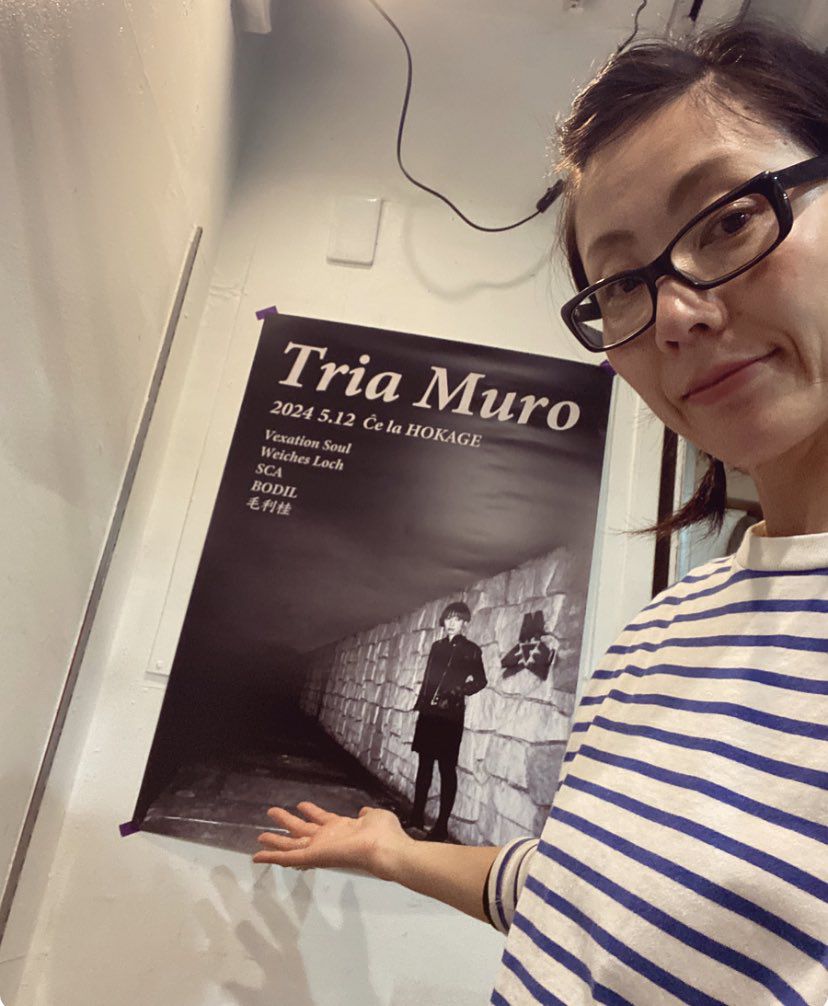
You recently visited Istanbul for Noise Istanbul. Could you share your experience of performing at the Noise Istanbul festival? How did the festival’s atmosphere and audience influence your approach to performance? Additionally, how did you find Istanbul in terms of its cultural and artistic energy? As an experimental sound artist, did you find anything particularly inspiring?
The festival venue was located in the new city district, lined with sophisticated shopping streets. It was a magnificent concert hall housed in a modern European-style building.
I was quite surprised by the number of young people in the festival audience. Some were leaning forward, listening intently, and I could tell that they were genuinely enjoying the music.
At a previous festival where I performed, I was influenced by the audience’s energy, which led to a highly energetic performance on my part. This time, since the audience was deeply engaged in the music, my performance became more focused on sound. While it was not perfect, I believe I was able to deliver a solid performance.
Istanbul was a fascinating city where European and Asian cultures seamlessly merged.
One of the most memorable experiences for me was visiting the Blue Mosque. Its beauty and grandeur far exceeded my imagination, and I was instantly captivated. Inside the mosque, some people sat quietly in meditation while others prayed, creating an atmosphere of tranquility that contrasted sharply with the bustling streets outside.

Although the architectural form, scale, and color palette were entirely different, the sense of sacredness and the slow passage of time reminded me of Japanese Zen temples. I once created a three-dimensional artwork based on the theme of Zen, and I feel that my visit to the mosque might inspire me when I next work on a Zen-themed piece.
I found Istanbul to be a remarkable city that embraces and coexists with diverse cultures, including both historical heritage and modern urban life.
A short walk from the city center led to places where one could enjoy nature, and the presence of numerous travelers from around the world reminded me of Kyoto, where I live. This sense of familiarity gave me a strong feeling of connection to the city.
Experimental music often challenges conventional norms. What drives you to continue working in this niche genre? Through your work, what do you hope to communicate or achieve?
As many may already know, experimental music has been shaped by legendary artists such as Pierre Schaeffer, a pioneer of musique concrète, and John Cage, who explored the full potential of experimental sound and influenced countless artists. I, too, have been deeply inspired by them.
I find great joy in exploring how to innovate new and unconventional sounds. Of course, coming up with groundbreaking innovations like John Cage is no easy feat. However, even achieving small innovations brings me immense satisfaction, and that serves as my motivation.
Additionally, when an audience resonates with my work, I feel a profound sense of happiness, which also fuels my drive.
I do not create my works with the intention of conveying a specific message to others. I am simply doing what I love.
There is no set goal or destination in my artistic practice—I am not striving to achieve something specific. I am simply in pursuit of what is fun and interesting.Moving forward, I want to continue exploring the possibilities of the turntable.
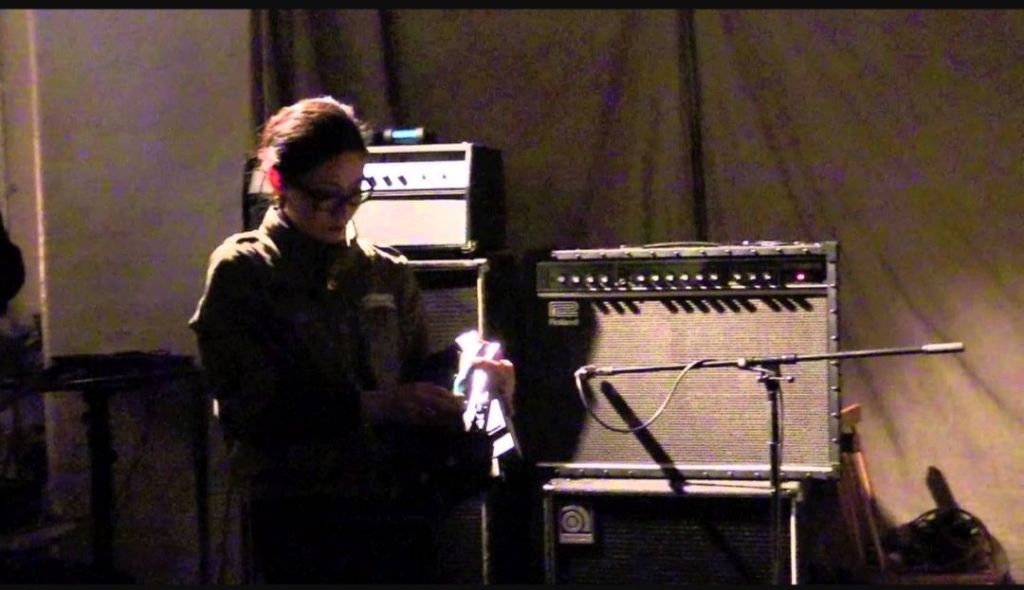
What led you to choose experimental music and turntablism as your primary means of expression? Were there any specific moments or influences that shaped this decision?
When I was 19, I was a rather unconventional DJ—so much so that no one could dance to my sets. In fact, some audience members even left the venue.
Around that time, I started working part-time at Parallax Records in Kyoto, where I met a group of people with whom I formed an ensemble that performed with records simultaneously. Rather than following a typical DJ style, we experimented by striking the turntable cartridge, generating scratch noises, and exploring alternative ways to perform with turntables.
After the group disbanded, I found it difficult to transport two Technics SL-1200 turntables and a large collection of records to live venues on my own. This led me to start using toy turntables, which were lightweight and easy to carry. At the same time, I had grown tired of the conventional DJ setup, where the turntables were placed on a table.
Coincidentally, I was really into Jimmy Page at the time, which inspired me to develop a performance style where I held the turntable like a guitarist rather than using it in a traditional DJ manner.
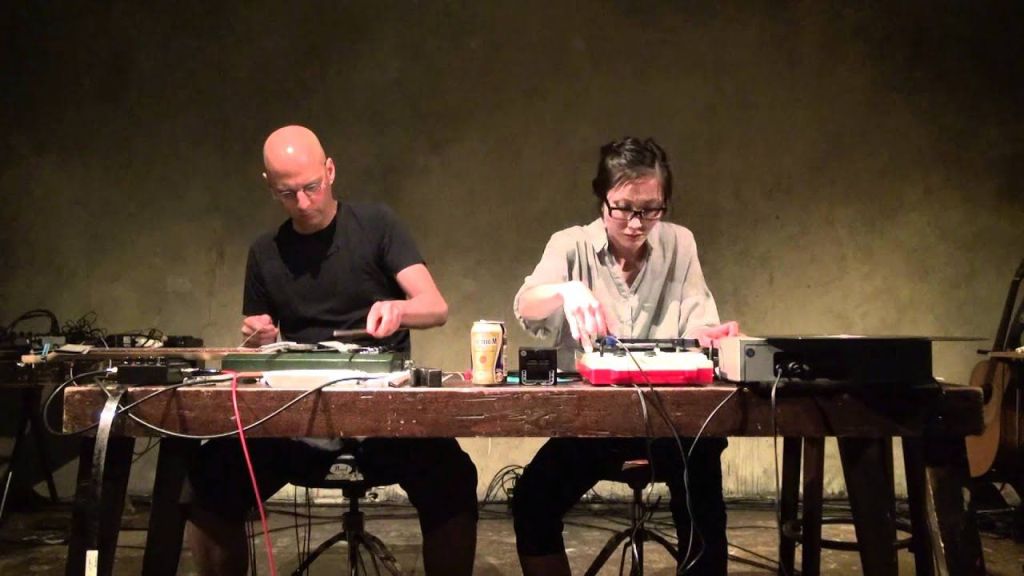
In the collaborative album Various Histories, you explore the fusion of sound textures and soundscapes. Through this collaboration, what have you learned about your artistic identity and the possibilities of experimental music?
For tracks 1 through 4 on this album, I edited and restructured the recordings of our improvised performances. Not just for this project, but in all my works, I compose through a process of re-editing recorded sound. When improvisation is recorded, both the good and the bad elements are captured. By extracting only the best parts and reassembling them, the result can be an entirely new and extraordinary piece that surpasses the original recording.
This album was created by selectively reconstructing the most compelling elements—such as the mechanical noises from Tim Olive’s magnetic pickups, the scratch noises from prepared records, and the drones produced by turntables.
Much like how John Cage used environmental sounds as musical material, I find excitement in treating noise and sound itself as raw material, reconfiguring it with creative intent to transform it into something even greater. Just as environmental sounds are limitless in variation, I see infinite possibilities in the sonic textures and noise generated by musical instruments.
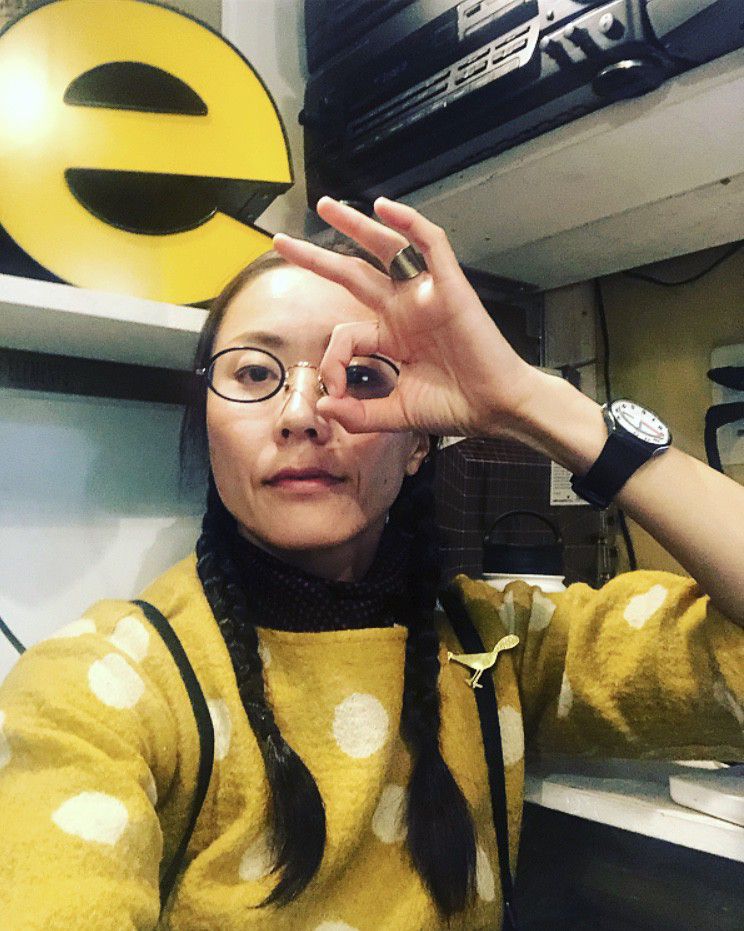
In today’s cultural landscape, why do you think experimental music is important? Do you see it as a means of pushing boundaries, expressing individuality, or responding to social change?
Experimental musicians are, by nature, already highly individualistic simply by constantly challenging new ideas. It goes without saying that experimental music has expanded cultural boundaries—figures like Merce Cunningham and John Cage, who applied chance operations to performance, are prime examples.
However, I believe that not only experimental music but also all forms of culture and art—including visual arts, design, architecture, media, dance, and fashion—are equally important. Engaging with and understanding a wide range of artistic and cultural fields broadens one’s perspective far more than focusing on a single discipline. To adapt to social change, we must be able to respond quickly and flexibly to shifting environments. Understanding experimental music may help eliminate preconceived notions and biases, allowing for a more agile response to various changes.
Recently, emerging technologies such as AI and virtual reality have been gaining attention. AI-driven music production and VR concerts are expanding the possibilities of the future. While it is uncertain how experimental music will be utilized and evolve, I am excited about the transformations that will come with technological advancements. I, too, am eager to continue exploring new challenges in the future.


 prcarnetworld.com
Leave a comment