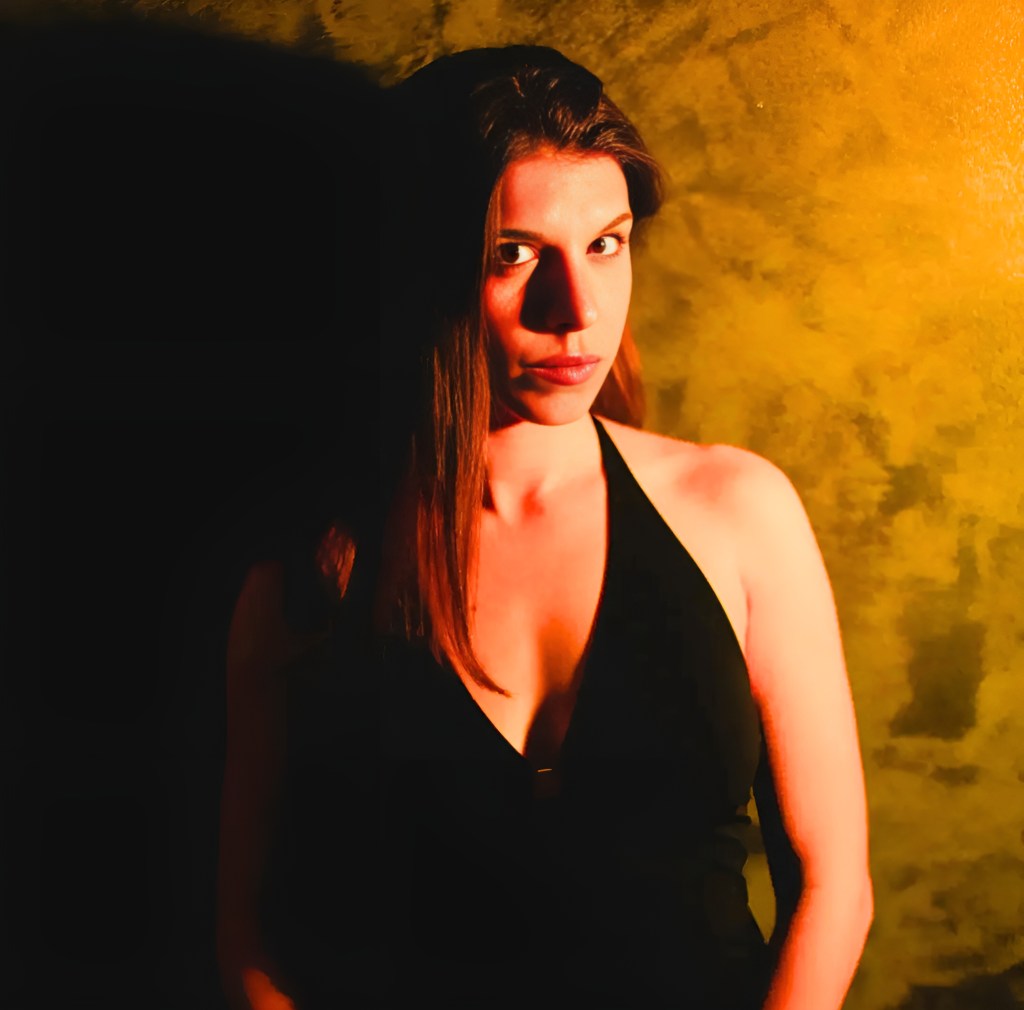
Interview Series: Beyond the Frame — A Journey into Cinema, Storytelling, and the Depths of Human Experience Interviewer: Gökhan Çolak

What inspired me to create “Il figlio di Tarzan” was a very personal encounter that happened a few months before the documentary began. At the time, I was working as an assistant director on a film in Puglia, and during the shoot I met an elderly fisherman who lived and worked on his trabucco, a traditional wooden fishing structure that is very famous in southern Italy.
On one of my free days, driven by curiosity, I went back to visit him. From the very first moment, there was something strangely familiar about him. Maybe it was because he reminded me of my grandfather, who was also from Puglia. I still can’t fully explain what happened, but he immediately started opening up to me and sharing his story in a very intimate and spontaneous way.
I remember he even gave me a necklace he had made himself, using a simple cotton thread and the claw of a crab he had caught weeks before. That encounter stayed with me deeply. It felt human, raw, and authentic, and that emotional connection became the starting point and inspiration for the documentary.
The film explores very delicate and deeply human themes: love within a family, the untouchable values of the past, hidden truths, and above all, the strength it takes to keep living after a life-changing tragedy. At the center of the story there is a question that, for me, is universal: how do we survive the loss of a child? Where do we find the courage to continue when facing the greatest pain a human being can experience? A child is a part of ourselves. I am not a mother yet, but I know my own mother would give her life for me. That bond is something sacred, and losing it leaves an absence that can never truly be filled.
The emotions I wanted to bring to the forefront are pain, acceptance, tenderness, and resilience. I wanted the documentary to place us directly in front of suffering, because pain is not outside of life, it is part of life itself. Why should we always run away from it or hide it? Sometimes escaping pain is inevitable, but I have always believed that, in some way, we must learn to accept it in order to be trasformed.
We live in a society that often wants to erase or silence suTering, but this documentary tries to do the opposite: to give space and dignity to grief, and hopefully help people who have experienced similar losses, even in diTerent ways. Pasquale, the fisherman, expresses this beautifully in the film. His message is simple and powerful: tragedy can happen to anyone, and somehow we must find the courage to go on living. For me, this documentary is also a message of solidarity and compassion for families like Pasquale’s, families who have lost a piece of themselves, yet continue to carry love, memory, and humanity forward every single day.

I believe it is mostly an intuitive process. For me, you have to feel satisfied with what you are creating and with how close the final result is to what you first imagined emotionally and visually. A film always begins in the mind before it becomes reality. You carry an idea, an atmosphere, a feeling, and then you try to shape it through real life, through people, places, and moments. But what I love about documentary filmmaking is that reality often gives you something more than what you expected. Sometimes the camera, the locations, the light, or even an unexpected moment can suddenly oTer images and emotions you had never even imagined before.
I think this sense of surprise and openness is also what connects me deeply with the DOP. We both love the idea that cinema is not only about controlling reality, but also about listening to it and allowing it to reveal something unexpected. Of course there are also practical limits, like budget and production timing, but beyond the technical side, at a certain point you simply feel when the documentary is ready. You intuitively know it. It’s almost like the film itself tells you when it has finally found its complete form.

One of the most difficult parts of this project was confronting the reality that many self- produced documentary filmmakers experience today. When you work independently, you often have to take on multiple roles at the same time with a very small crew. Another challenge is time. The pace of production is often determined by the budget you can personally invest in the project, and independent documentaries require a great amount of patience and sacrifice. Sometimes you have to wait months just to continue filming in the way you truly want.
There is also the difficulty of dealing with an industry that is becoming economically less and less independent. It can be complicated to build direct and human relationships with productions, because cinema today is increasingly influenced by financial structures and market logic. As an independent filmmaker, you constantly find yourself defending your vision and your creative freedom. I believe the only way I managed to overcome these difficulties was through perseverance and a deep love for the story itself, and in this case, also thanks to the great support of my collaborator, Giuseppe Velardi.

For me, choosing a story is never only an intellectual decision, it is something deeply emotional and instinctive. I usually say “yes” to a project when I feel a real human connection with the people or the world I am observing. There has to be something alive inside the story, something unresolved, fragile, or deeply true that continues to stay with me even after I leave. I am interested in stories that reveal hidden emotions and invisible aspects of human life. I think cinema becomes powerful when it is able to create empathy, when it allows us to enter someone else’s pain, memories, contradictions, or silence without judging them. Another important aspect for me is authenticity. I need to feel that the story has honesty, even in its imperfections. I am not attracted to stories that simply want to impress visually; I am more interested in emotional truth and in the small details that make people human. Usually, if a story continues to exist inside my mind for days or months, if I feel emotionally transformed by meeting a person or experiencing a place, then I understand that maybe it is something worth filming. That is often the moment when I say yes to a project.

When I build a scene, my priority is always to first imagine what I have in mind and how I want it to feel once it appears on a screen. I start from emotion and atmosphere before thinking technically. After that, I leave space for interpretation and collaboration. In this documentary, for example, there are no actors. These are real people from the village, and that changes everything. One of the most important elements for me was Pasquale, the fisherman. He has a very strong, rough Pugliese accent, but that roughness says so much about who he is and where he comes from. It immediately gave me the idea of telling the story almost “like talking to a friend,” creating intimacy in every image while also keeping a sense of curiosity for people who don’t know this reality.
Balancing visuals, performance, and narrative means trying to make all of them serve the same feeling. I care a lot about visuals, but not only because they look beautiful, I want every frame to feel alive and honest. Performance, in this case, comes naturally from the authenticity of the people themselves, and the narrative grows from observing them carefully and respectfully. My goal is to create a complete vision of their world and share it with others. For me, cinema is the way I speak. It’s how I tell stories, how I show what I see, and especially how I feel things. Through cinema, I can transform emotions, people, and places into something that can be shared with the world.

My philosophy of cinema is deeply connected to the idea of visual epicness through the reinvention of myth. I’m fascinated by stories that feel both intimate and larger than life, where raw realism can coexist with tragic symbolism. I like cinema that feels alive, imperfect, almost dirty in its realism, but at the same time capable of becoming poetic and mythical.
This vision strongly influences my work because I always try to find humanity inside the image. Even when I portray ordinary people or real places, I look for something universal and symbolic within them. I want every frame to carry emotion, memory, and tension.Something that feels authentic but also cinematic in a timeless way.
I’m very inspired by Sergio Leone and his idea that cinema should be “an immense spectacle” and also “a dream within a dream.” His films taught me that cinema is not only about telling a story, but about creating a world that the audience can emotionally enter. The way he transformed myths through faces, landscapes, silence, and rhythm had a huge impact on how I think about directing. In my work, this translates into trying to balance realism with imagination: making people feel like they are witnessing something true.

At the beginning, working as an assistant director alongside different film crews and departments felt like a dream to me. I wanted to ‘steal’ every craft I saw around me, to learn as much as possible simply by observing. In cinema, people often say that this job is something you ‘steal with your eyes,’ and I truly believe that. Every set became a school for me. Having worked on around thirty film productions, I’ve learned that everyone has to do their job at their best, because filmmaking is completely collective. If even one person is not synchronized with the rest of the crew, the final result becomes weaker. Behind every film, there are huge logistical challenges, and they are never easy to manage. There are many departments, many people leading different areas, and all of them must work together with precision and professionalism.
I’ve also understood how fundamental a strong production is. Good production support helps manage everything — from the smallest details to the biggest problems and allows the creative process to exist in a healthier way. Everyone needs to know their role and perform it with responsibility. Sometimes the artistic side can get lost because you are so focused on technical problems and organization, but the best sets I’ve experienced are always the quiet ones. I love saying this: the most beautiful sets are the silent ones. Silence on set often means harmony, concentration, and trust between people. Being able to experience the backstage reality of filmmaking taught me how cinema truly works beyond the screen. It gave me the chance not only to understand the mechanics behind a film, but also to apply those lessons to my own projects. Above all, I believe organization is one of the most important parts of filmmaking, because without it, even the strongest artistic vision can fall apart. I also believe that cinema cannot truly be learned only from books. Sets are the real film school. You learn cinema by being there, by observing people, solving problems, understanding rhythms, mistakes, pressure, and collaboration. The practical experience of a set teaches you things that theory alone never can.

The directors who have influenced me the most are Sergio Leone, Giuseppe Tornatore with Nuovo Cinema Paradiso, David Lynch, and many others. Their cinema deeply shaped the way I see images, emotions, rhythm, and storytelling. From Leone I learned the power of myth and visual tension, from Tornatore the emotional and nostalgic soul of cinema, and from Lynch the courage to explore mystery, silence, and the subconscious through images. Unfortunately, I never had the chance to work directly with the directors who inspired me the most, but throughout my journey on different film sets I met many other directors, and I always felt happy and honored to be part of their projects as an assistant director.
One experience that left a particularly strong impression on me was working with Luca Guadagnino as a casting coordinator on Queer. It was an incredible experience, and I’m truly grateful for it. Being able to observe such a refined and sensitive approach to filmmaking from close distance taught me a lot about attention to detail, atmosphere, and the emotional depth that cinema can reach.
What I hope to transmit through my films is a world where everyone has the right to exist and to be heard from the strangest characters to the most fragile, to the most powerful. I’m interested in giving space to people who are often unseen or misunderstood. I want my films to create empathy and make audiences feel closer to realities they may normally ignore. I like leaving the audience with something to think about, something that stays with them long after the film is over. I want to create emotions and questions that don’t let them sleep at night, in a positive sense,something that remains inside them for a long time. For me, cinema should not only entertain, but also leave a trace and communicate values. In a certain way, I also want my work to help people who don’t have a voice find one. As a child, I used to stutter a lot, and speaking was never easy for me. Because of that, I think my real way of expressing myself became images. Through cinema, I can finally make myself heard in a way that words alone never fully allowed me to do. I naturally feel close to the invisible people, and giving them space is part of my mission as a filmmaker. I want to create worlds where people can dream, feel seen, and recognize themselves. At the same time, I believe it’s important to tell uncomfortable truths too, because those are often the things that allow us to evolve, both personally and collectively.